Best App to Learn German in 2026: 8 Apps Compared
We compared the best app to learn german for beginners, travelers, and serious learners, covering grammar, speaking practice, price, and free plans in depth.
- Editor's choice
 Duolingo
Free daily German practice
Starts atFreeVisit duolingo.comFull review - Great alternative
 Babbel
Structured German courses
Starts at$13.95 per monthVisit babbel.comFull review - Also consider
 Rosetta Stone
Immersive visual learning
Starts at$11.99 per monthVisit rosettastone.comFull review
TL;DR:
- Babbel is our pick for structured German lessons, while Duolingo is the best free starting point for daily habit building.
- German grammar, cases, and word order need explicit teaching, so a game-only app will leave gaps for most learners.
- Speaking practice matters early: Pimsleur, Busuu, and conversation tools help you say real sentences, not just tap answers.
- A second tool for vocabulary or listening usually beats paying for one expensive app and using it alone.
Quick comparison
| Tool | Best for | Starts at | Free plan? | |
|---|---|---|---|---|
| Duolingo | Free daily German practice | Free | Yes | Visit |
| Babbel | Structured German courses | $13.95 per month | No | Visit |
| Rosetta Stone | Immersive visual learning | $11.99 per month | No | Visit |
 Busuu | Feedback from German speakers | Free | Yes | Visit |
 Memrise | German vocabulary and listening | $8.99 per month | Yes | Visit |
 Pimsleur | Audio-first German speaking | $14.95 per month | Free trial | Visit |
 LingQ | Reading and listening in German | See website | Yes | Visit |
 Mondly | Quick German phrases and vocab | See website | Yes | Visit |
The best app to learn german
We compared official course pages, pricing, lesson design, and speaking tools for the best app to learn german, and we favored apps with clear German courses rather than generic language lists.

Duolingo is the easiest place to start German for free, and that low barrier matters. Its short lessons fit into a commute or a lunch break, and its game style helps many learners return day after day. For a traveler who wants basic phrases, numbers, greetings, and simple sentences, Duolingo covers a useful base quickly.
The limits appear as you move past beginner material. German cases, separable verbs, and word order need clearer teaching than short drills provide, and speaking practice is limited in the free version. We see Duolingo as a habit builder and a first step, not a complete path to fluency. Pair it with a structured course or a conversation partner once the basics feel easy.
- Free core course
- Short daily lessons
- Streaks and games keep practice regular
- Grammar explanations are thin
- Progress stalls at intermediate level
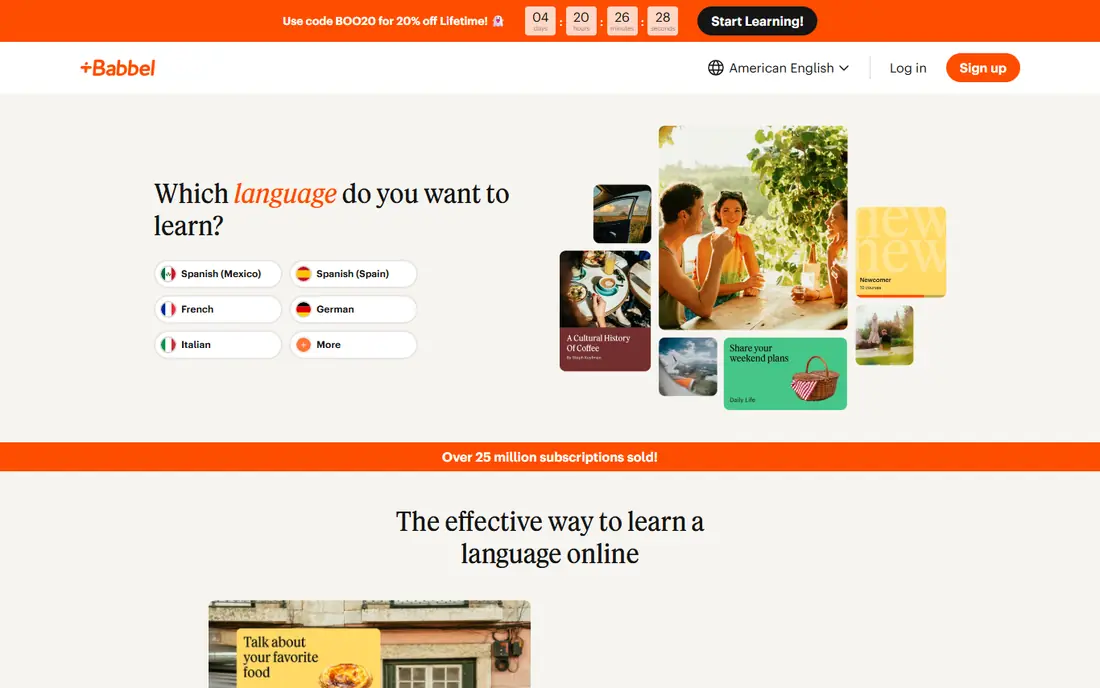
Babbel is our pick for most people who want to learn German in a steady, organized way. Its lessons move from useful phrases to fuller conversations, and grammar is explained when it helps you say something real, rather than as a separate drill. That structure suits learners who want to know why a sentence works, not just repeat it.
Babbel is a paid app, so it suits learners who will use it several times a week. Its German content is strongest at beginner and intermediate levels, and advanced learners will need reading, listening, and conversation outside the app. If you want a clear path and you value lessons that feel like real life in Germany, Babbel is a strong first paid choice.
- Lessons built around real conversations
- Grammar taught in context
- Speech recognition for pronunciation
- No lasting free plan
- Less content for advanced learners

Rosetta Stone teaches German through images, audio, and pattern recognition, with little translation in the early lessons. That approach can help learners think in German sooner, and its pronunciation tool gives useful feedback on sounds that English speakers often miss. It is a calm, consistent app for learners who like visual routines.
The trade-off is speed of understanding. If you want a clear rule for German cases or verb position, Rosetta Stone often expects you to infer it from examples, which can frustrate analytical learners. It works best as a complement to a grammar-friendly course, or as a main app for patient learners who enjoy immersion and repetition.
- Image-based immersion without translation
- Pronunciation feedback
- Offline lessons on paid plans
- Grammar is mostly implicit
- Slower for learners who want explanations
Busuu stands out because other learners, including German speakers, can correct your writing and speaking exercises. That feedback is valuable for German, where a small ending change can alter meaning. Its study plans and level structure also give learners a clearer sense of progress than a purely game-based app.
The free tier is useful for trying the method, but the fuller course, grammar reviews, and offline access sit behind Premium. Feedback quality and speed can vary, since it depends on other users. Still, for learners who want human correction without paying for a tutor, Busuu offers a practical middle path between solo apps and live lessons.
- Free tier to start
- Community corrections from native speakers
- Study plans and level checks
- Full content needs Premium
- Community feedback speed varies
Memrise is best used as a vocabulary and listening booster alongside a main German course. Its short videos show real speakers using words in context, which helps with pronunciation, rhythm, and everyday phrasing. Spaced repetition then brings words back at useful intervals, so new vocabulary has a better chance of sticking.
Memrise alone will not teach German grammar in depth, and its course structure is looser than Babbel or Busuu. That is fine if you treat it as a second app: ten minutes of Memrise for words, plus a structured lesson for grammar and sentences. For learners who forget words fast, that pairing is often the fix.
- Videos of native speakers
- Spaced repetition for vocabulary
- Useful for everyday phrases
- Weak as a standalone grammar course
- Full features need a paid plan
Pimsleur is our pick for learners who want to speak German before they can read it well. Its audio lessons ask you to listen, repeat, and answer in German, which builds speaking confidence and ear training in a way that tapping answers does not. It is ideal for commutes, walks, and other times when a screen is not practical.
The method is slower for reading and writing, and it covers less grammar detail than a text-based course. Pimsleur also costs more than some rivals, so it suits learners who will use the audio format daily. If your main goal is to talk with people in Germany, rather than pass a written test, Pimsleur deserves a close look.
- Speaking from the first lesson
- Strong for pronunciation and listening
- Works well while driving or walking
- No lasting free plan
- Reading and writing get less attention
LingQ takes a different route: you learn German by reading and listening to content you choose, from news-style texts to stories and podcasts, and the app tracks the words you know. That approach suits intermediate learners who are ready to move past textbook sentences and meet German as it is actually used. It also makes review efficient, since you can revisit words in context.
Beginners may find LingQ less guided than Babbel or Duolingo, since there is no fixed lesson path to follow. The interface also has a learning curve. If you already know basic German and you want more reading and listening, LingQ is a strong next step, especially when paired with conversation practice.
- Learn from real German texts and audio
- Tracks known words
- Good for intermediate learners
- Less guided than a course app
- Interface takes time to learn
Mondly is a good fit for travelers and casual learners who want useful German phrases fast. Its daily lessons are short, its speech tool checks pronunciation, and its conversation practice gives beginners a low-pressure way to answer simple questions. The app covers many languages, so its German content is broad rather than deeply specialized.
For serious learners, Mondly works best as a second app for review and speaking confidence, not as the only course. Grammar explanations are lighter than Babbel, and advanced German content is thinner. If you want a light, daily German habit with some speaking practice, Mondly is easy to start and easy to keep up.
- Short daily lessons
- Speech recognition
- Chatbot-style conversation practice
- Grammar depth is limited
- Best as a supplement rather than a full course
How we picked these
We compared official lesson pages, pricing, free tiers, and the way each app teaches speaking, grammar, and vocabulary. We favored apps with a real German course, not just a language list, and we included free, structured, audio, and reading options so different learners can find a fit. We also weighed how well each app handles German-specific challenges, such as cases, gender, and verb placement.
How to choose the best german learning app for you
Match the app to your goal
A traveler needs phrases and listening, a student needs grammar and reading, and a future resident needs speaking confidence. Babbel suits structured study, Pimsleur suits speaking, LingQ suits reading, and Duolingo suits a free daily start. Naming your goal first prevents paying for features you will not use.
Pair a course with speaking and vocabulary
No single app covers grammar, vocabulary, listening, and speaking equally well. A practical pairing is one main course plus one speaking or vocabulary tool, used for short sessions most days. Add real German media, such as news, podcasts, or shows with subtitles, once beginner lessons feel easy.
Check the free plan before you pay
Free tiers and trials vary a lot, and some apps limit lessons, offline use, or speaking tools on free plans. Try the free version for a week, check whether German lessons at your level are included, and confirm the renewal price. A cheaper annual plan only saves money if you still use the app in month six.
FAQ
What is the best app to learn german for free?
Duolingo is the best free starting point, with a full beginner course and daily lessons at no cost. Busuu and Memrise also offer free tiers, though fuller content needs a paid plan. For a free path with more depth, pair Duolingo with free German media and community feedback.
What are the best apps to learn german for beginners?
Babbel, Duolingo, and Busuu are strong beginner picks. Babbel gives the most structure, Duolingo gives the easiest daily habit, and Busuu adds feedback from other speakers. Beginners should focus on common phrases, basic cases, and listening before worrying about advanced grammar.
Is Babbel or Duolingo better for German?
Babbel is better for structured progress and grammar in context, while Duolingo is better for free, daily practice and habit building. Many learners use Duolingo to stay consistent and Babbel as the main course. If you can pay for one app and want a clear path, Babbel is our pick.
Can an app alone make me fluent in German?
An app alone rarely leads to fluency, since real conversation, reading, and listening matter just as much. Apps build vocabulary, grammar, and confidence, but you also need speaking practice with people and exposure to natural German. Treat an app as the core of a routine, not the whole routine.
What is the best german language learning app for speaking?
Pimsleur is our pick for speaking, because its audio lessons require you to answer aloud from the start. Busuu adds human corrections, and Mondly offers chatbot-style conversation practice for beginners. For the fastest speaking gains, add live conversation with a tutor or language partner.