Best Alternatives to HaloITSM in 2026: 8 Platforms Compared
Looking for the best alternatives to HaloITSM? We compare 8 ITSM platforms for incident, change and asset management, with pricing and honest trade offs.
- Editor's choice
 Freshservice
Mid market ITSM
Starts at$19 per agent per monthVisit freshservice.comFull review - Great alternative
 Jira Service Management
Atlassian based IT teams
Starts atFreeVisit atlassian.comFull review - Also consider
 ManageEngine ServiceDesk Plus
Budget ITSM with on premise option
Starts at$13 per technician per monthVisit manageengine.comFull review
TL;DR:
- Freshservice and Jira Service Management are the easiest mid market moves, with published pricing and fast setup.
- ManageEngine ServiceDesk Plus is the value pick, with a free edition for small technician teams.
- ServiceNow and SysAid suit larger or more complex estates, but expect quote based pricing and longer rollouts.
- Check asset limits, automation and portal options before you buy, because those three items drive most ITSM bills.
Quick comparison
| Tool | Best for | Starts at | Free plan? | |
|---|---|---|---|---|
| Freshservice | Mid market ITSM | $19 per agent per month | Free trial | Visit |
| Jira Service Management | Atlassian based IT teams | Free | Yes | Visit |
| ManageEngine ServiceDesk Plus | Budget ITSM with on premise option | $13 per technician per month | Yes | Visit |
 ServiceNow IT Service Management | Large enterprise ITSM | See website | No | Visit |
 SysAid | AI led service management | $89 per agent per month | Free trial | Visit |
 SolarWinds Service Desk | Asset led service desks | $39 per technician per month | Free trial | Visit |
 TOPdesk | Public sector and education | See website | No | Visit |
 InvGate Service Management | Fixed budget small teams | See website | Free trial | Visit |
The best alternatives to HaloITSM
HaloITSM is known for all inclusive ITSM pricing, but teams leave it for many reasons: a move to a larger enterprise platform, a need for deeper Atlassian or Microsoft integration, or a simpler setup for a small IT team. We compared official pricing, feature pages and documentation for platforms that cover incident, problem, change and asset work in October 2026.
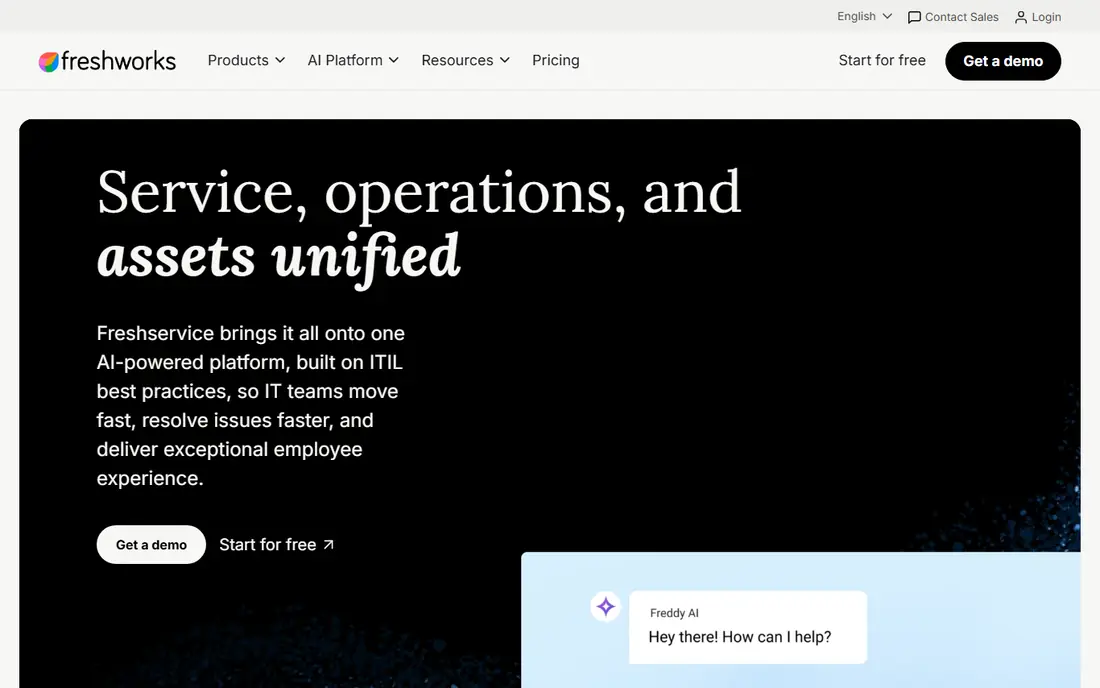
Freshservice is the most straightforward HaloITSM replacement for mid sized teams. It covers incidents, problems, changes and assets in a clean interface, with automation that small IT teams can set up without a consultant. For buyers, the practical test is simple: try it with your real content, your real team and your real audience, and see whether the daily workflow feels easier than the tool you use now. The watch item is add on pricing. AI assistance and some advanced features sit on higher tiers, so price the plan your team will actually use, not the entry tier alone. Before you commit, confirm the current price and free plan on the official site, since plans change and add ons can alter the total cost. If this product fits your main use case and its main weakness does not affect you, it is a strong shortlist pick.
- Clear published pricing
- ITIL aligned workflows
- Fast setup
- Advanced AI costs extra
- Costs rise with agents and add ons
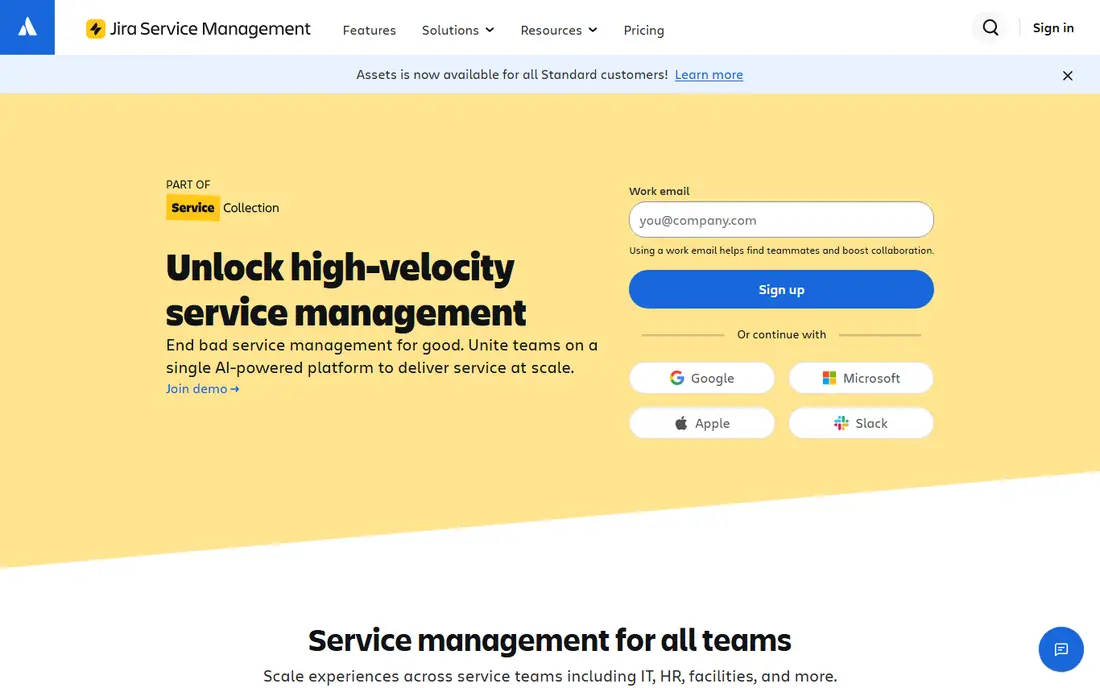
Tickets can link to development work, knowledge base articles and change records, which helps IT and engineering work from one queue. Jira Service Management fits teams that already live in Atlassian tools. That focus makes it easy to judge: if the strength above matches your biggest need, this product deserves a trial. The trade off is setup. Out of the box it is flexible rather than prescriptive, so teams that want a ready made ITIL process may need time to configure it. Check the official pricing page for the plan that includes the features you need, and test the free plan or trial with a small group first. A short pilot will confirm whether the trade off is acceptable for your team.
- Free for up to 3 agents
- Deep Jira and Confluence links
- Flexible workflows
- ITSM depth needs configuration
- Pricing rises with team size
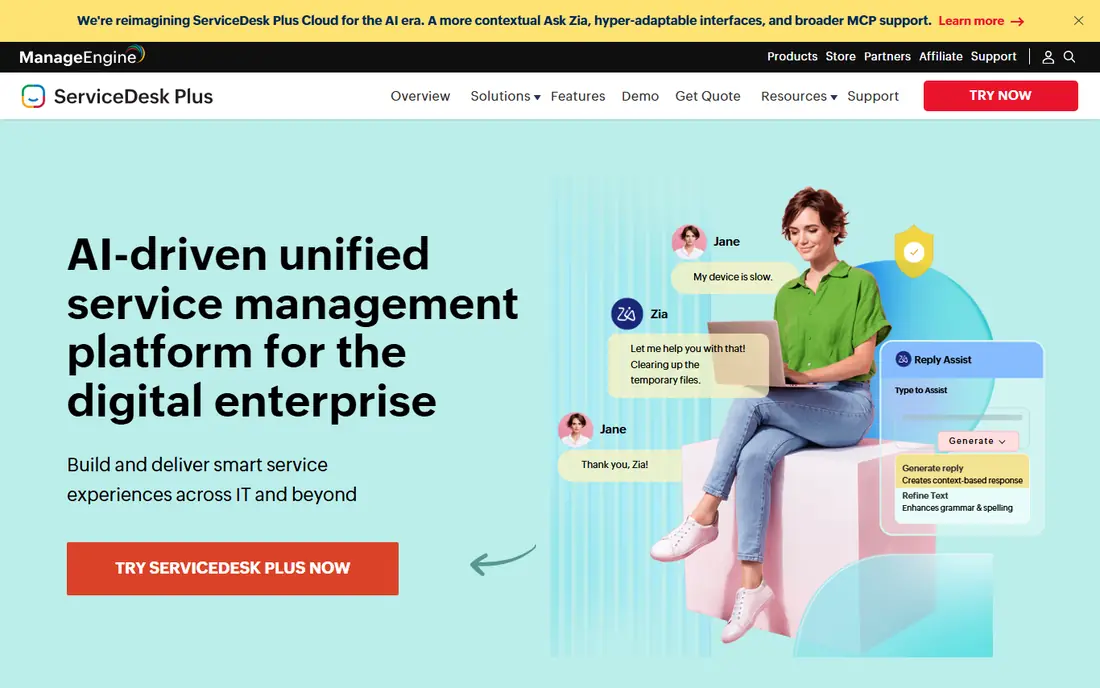
ManageEngine is the value leader for teams that want ITSM depth without enterprise pricing. It covers incident, problem, change and asset management, and the choice of cloud or on premise deployment suits regulated or cost sensitive teams. For buyers, the practical test is simple: try it with your real content, your real team and your real audience, and see whether the daily workflow feels easier than the tool you use now. The interface is less polished than Freshservice or Jira, and you should check which edition holds the automation and reporting features you need. Before you commit, confirm the current price and free plan on the official site, since plans change and add ons can alter the total cost. If this product fits your main use case and its main weakness does not affect you, it is a strong shortlist pick.
- Free edition for small teams
- On premise or cloud
- Strong asset features
- Interface feels older
- Some advanced features sit on higher editions
It can run service management across many departments, with a strong configuration database and automation at a scale smaller tools cannot match. ServiceNow is the enterprise standard when scale and governance matter most. That focus makes it easy to judge: if the strength above matches your biggest need, this product deserves a trial. The cost and effort are real. Pricing is quote based, implementations often need specialists, and small teams will find it far more than they need. Check the official pricing page for the plan that includes the features you need, and test the free plan or trial with a small group first. A short pilot will confirm whether the trade off is acceptable for your team.
- Deep enterprise workflows
- Unified CMDB
- Wide integration catalogue
- Quote based pricing
- Long implementation for large estates
SysAid suits teams that want AI help built in rather than bolted on later. Its automation and AI features aim to cut ticket volume and speed up routine fixes, while asset tracking keeps hardware and software in view. For buyers, the practical test is simple: try it with your real content, your real team and your real audience, and see whether the daily workflow feels easier than the tool you use now. The entry price is higher than Freshservice or ManageEngine, so it makes most sense for teams that will actually use the automation every day. Before you commit, confirm the current price and free plan on the official site, since plans change and add ons can alter the total cost. If this product fits your main use case and its main weakness does not affect you, it is a strong shortlist pick.
- AI automation included in tiers
- Cloud or on premise
- Asset management
- Higher entry price
- Smaller community than the largest vendors
When a ticket arrives, the linked device, user and history are close at hand, which speeds up troubleshooting and replacement decisions. SolarWinds Service Desk is a good fit for teams that think in assets first. That focus makes it easy to judge: if the strength above matches your biggest need, this product deserves a trial. It is less of a full enterprise ITSM suite than ServiceNow, so teams with complex multi department service catalogues should test those workflows first. Check the official pricing page for the plan that includes the features you need, and test the free plan or trial with a small group first. A short pilot will confirm whether the trade off is acceptable for your team.
- Asset management included
- Unlimited requesters on some plans
- AI features
- Fewer deep ITSM extras than ServiceNow
- Pricing varies by plan
TOPdesk works well for organisations that run several service teams from one platform. Facilities, HR and IT can share a service design while keeping their own queues, which suits universities, councils and larger shared service centres. For buyers, the practical test is simple: try it with your real content, your real team and your real audience, and see whether the daily workflow feels easier than the tool you use now. Quote based pricing means you will need a sales conversation to get a firm number, and US buyers should check local support and partner coverage. Before you commit, confirm the current price and free plan on the official site, since plans change and add ons can alter the total cost. If this product fits your main use case and its main weakness does not affect you, it is a strong shortlist pick.
- Strong shared services design
- Cloud or on premise
- Good for multi team use
- Pricing is quote based
- Less well known in some US markets
Its fixed pricing for small agent counts makes budgeting simple, and it covers tickets, assets and service catalogue work in one place. InvGate suits small teams that want a predictable annual bill. That focus makes it easy to judge: if the strength above matches your biggest need, this product deserves a trial. The trade off is scale. Very large estates and complex enterprise integrations are better served by ServiceNow or SysAid, so test your must have integrations early. Check the official pricing page for the plan that includes the features you need, and test the free plan or trial with a small group first. A short pilot will confirm whether the trade off is acceptable for your team.
- Fixed annual pricing for small agent counts
- ITSM and asset tools
- Gamification options
- Smaller integration catalogue
- Less enterprise depth than ServiceNow
How we picked these
We compared official feature pages, pricing pages, documentation and public user reviews, and we only listed products that are available and working in October 2026. We favoured products with clear pricing or a clear quote model, active maintenance and a genuine fit for the topic, rather than tools that only match by keyword. We also weighed the honest trade offs. A cheap tool that lacks a must have feature is not a bargain, and an enterprise tool that needs a long rollout is not a good fit for a small team. Use the comparison table to shortlist two or three options, then run a trial on real work before you buy.
How to pick an ITSM platform without overbuying
Start with the work your team actually does. A small internal IT team needs a clean ticket queue, a self service portal and basic automation, not a full enterprise service catalogue on day one. Larger teams should test change approvals, problem records and asset links on real tickets, because those workflows are where weak ITSM tools slow down. Also check how requesters submit tickets, since a portal nobody uses will not cut email volume. Then price the whole team, not just the entry tier. Count agents, check asset limits and automation caps, and ask what AI or advanced reporting costs as an add on. A low starting price can rise fast once you add the features your team needs. Run a trial with a real queue, import a sample of old tickets, and ask support a hard question before you sign.
FAQ
What is the closest alternative to HaloITSM?
Freshservice is often the closest mid market match, with ITIL aligned incident, problem, change and asset features and published per agent pricing. Jira Service Management is closer if your team already uses Atlassian tools.
Which ITSM tool is cheapest for a small team?
ManageEngine ServiceDesk Plus has a free edition for up to five technicians, and Jira Service Management is free for up to three agents. Both are worth testing before you pay for a larger platform.
Do I need ServiceNow for ITSM?
Only if you run a large, complex estate with many departments and integrations. Smaller teams often get the same core ticket and change work done faster and cheaper on Freshservice, Jira or ManageEngine.
Can I migrate tickets from HaloITSM?
Most platforms support ticket import through CSV or API tools, but custom fields, workflows and asset links need mapping. Plan a pilot migration with a small ticket set before you move the full history.
Is ITSM the same as a help desk?
A help desk handles tickets, while ITSM adds structured incident, problem, change, release and asset processes. If you only need ticket handling, a simpler help desk may cost less and be easier to run.