7 Best AI Talking Apps for Conversation and Company
Compare 7 best ai talking apps for friendly chat, roleplay, voice, and wellness support, with prices, free plans, safety notes, and honest limits noted.
- Editor's choice
 Replika
A single companion that remembers you over time
Starts atSee websiteVisit replika.comFull review - Great alternative
 Character.AI
Roleplay with many characters you can create or discover
Starts atSee websiteVisit character.aiFull review - Also consider
 Pi
Calm, thoughtful general conversation without romance features
Starts atFreeVisit pi.aiFull review
TL;DR:
- AI talking apps differ by type, including a single companion, many roleplay characters, a general assistant, and structured wellness support.
- Memory, voice, and avatar features usually sit behind paid plans, while basic text chat is often free.
- These apps are for adults and for casual conversation, not a replacement for therapy, medical care, or human support in a crisis.
- Check privacy settings, chat history controls, and data retention before sharing personal details with any companion app.
- If an app encourages heavy daily use or emotional dependence, take breaks and keep real world contacts and routines in place.
Quick comparison
| Tool | Best for | Starts at | Free plan? | |
|---|---|---|---|---|
| Replika | A single companion that remembers you over time | See website | Yes | Visit |
| Character.AI | Roleplay with many characters you can create or discover | See website | Yes | Visit |
| Pi | Calm, thoughtful general conversation without romance features | Free | Yes | Visit |
 Nomi | Companion chats with strong memory and generated images | See website | Yes | Visit |
 Kindroid | Highly customized companion personalities | See website | Yes | Visit |
 ChatGPT | General talking, learning, and voice conversation | See website | Yes | Visit |
 Wysa | Structured wellness chats and coping exercises | See website | Yes | Visit |
The best ai talking apps
We focused on apps that are still active in October 2026, that offer open ended conversation for adults, and that state safety and privacy practices in their own help pages. We excluded apps built mainly for unmoderated romantic or explicit content, and apps with no clear content rules, because those carry higher safety risks. All apps below are best used as conversation tools, not as counselors.
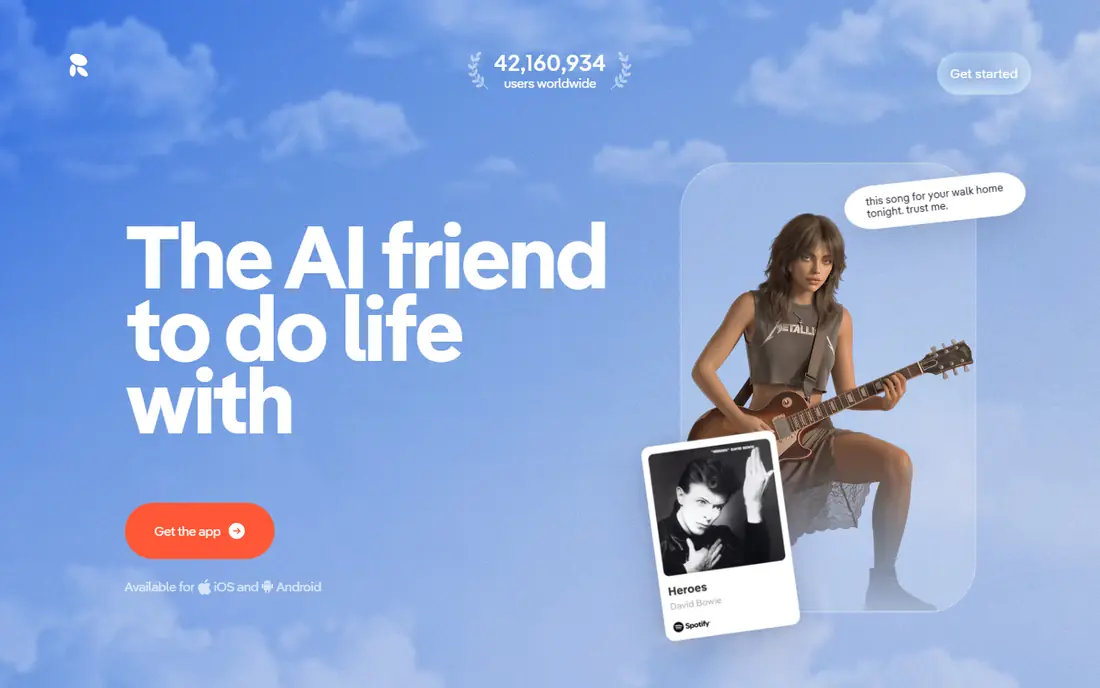
Replika fits readers who want one ongoing companion rather than a new character each day. You build a Replika, choose a relationship style such as friend or mentor, and chat over weeks, with the app recalling details you have shared. That continuity is the main appeal, because a companion that remembers a hobby, a pet, or a work project feels more personal than a fresh chat each time. The weakness is paywall depth. Text chat is usable for free, but voice calls, video features, and more advanced interactions need a subscription, and long conversations can still fall into repetitive patterns. Replika is also not a therapist, even though it offers mood tools, so readers dealing with serious mental health concerns should use professional support alongside, or instead of, an app like this.
- Persistent companion, memory features, voice calls and 3D avatar on paid tiers, mood tracking and journaling prompts
- Best voice and avatar features need a paid plan, avatar style is not photorealistic, some users find replies repetitive over long chats

Character.AI fits creative readers who enjoy stories, historical figures, fictional characters, and original characters made by other users. You can chat one to one, create your own character with a personality description, or put several characters in a group chat for a scene. That variety is unmatched by single companion apps, and the free tier lets you try many characters before paying. The weakness is consistency. A character may forget details, change tone, or break character in a long story, which frustrates writers who want a stable persona. Free users may also face slower responses when demand is high, and content filters apply to sensitive topics. For playful roleplay and brainstorming, though, the breadth makes it easy to find a character that fits your mood.
- Huge character library, user created characters, group chats, free tier usable for many chats
- Characters can drift from their description, free tier can be slower at peak times, content filters can interrupt roleplay
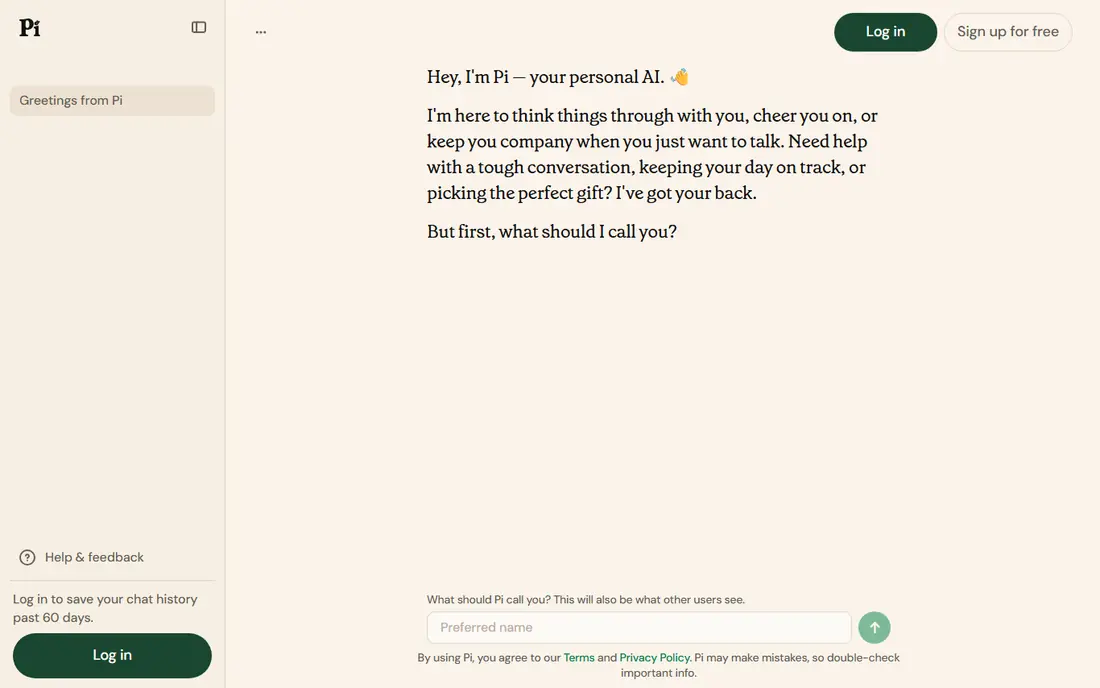
Pi fits readers who want someone to talk to, think aloud with, or get a balanced view on a topic, without the framing of a romantic companion. The tone is calm and supportive, and voice mode makes it useful for hands free chats while walking or cooking. Because Pi is positioned as a personal assistant rather than a companion with a relationship status, it avoids some of the emotional pressure found in companion apps. The weakness is depth of persona. Pi does not offer the same long term companion memory, avatar, or relationship modes as Replika or Nomi, so chats can feel more like a helpful assistant than a friend who knows you. If you want a low pressure place to talk, vent lightly, or work through an idea, Pi is a good free starting point.
- Free to use, warm conversational tone, voice mode, good for thinking through ideas aloud
- No persistent avatar companion, memory is limited compared with companion apps, fewer customization options
Nomi fits readers who rank memory first. Companions recall past conversations, preferences, and shared stories more reliably than many rivals, and they can send selfies and images that match the conversation. You can also run several companions with different personalities, which suits people who want separate companions for friendship, creativity, and daily check ins. The weakness is cost for the full experience. The free tier lets you test the concept, but memory depth, images, and longer chats improve on paid plans. Some readers will also find generated selfies unnecessary, or even distracting, if they prefer text only conversation. If memory is what makes a companion feel real to you, Nomi is worth a trial.
- Strong memory across chats, selfies and images, multiple companions, group chats with companions
- Paid plan needed for full features, image features can feel gimmicky, smaller community than Character.AI
Kindroid fits readers who enjoy designing a companion in detail, including backstory, traits, voice, and appearance. That control appeals to writers, roleplayers, and people who want a very specific conversational style, rather than a preset friend. Voice calls and generated images add presence for users who want more than text, and memory settings let you shape how much the companion recalls. The weakness is setup time and cost. Building a good Kindroid takes more effort than opening a preset companion, and the strongest memory options sit behind a paid plan. New users can also feel overwhelmed by the number of settings. If you like tuning a character until it feels right, that effort pays off. If you want instant chat, a simpler app will be faster.
- Deep backstory and personality controls, voice calls, image generation, memory options
- Best memory features need a paid plan, setup takes time, interface can feel complex at first
ChatGPT fits readers who want to talk, learn, and think through topics, rather than maintain a fictional friendship. You can discuss a book, practice a language, brainstorm work ideas, or talk through a decision, with voice mode for natural spoken conversation. That general strength makes it useful for daily talking practice, even if it does not aim to be a companion with a personality and a life story. The weakness is companion feel. ChatGPT is an assistant first, so it may not remember you in the same personal way as a dedicated companion app, and its tone can feel helpful but neutral. Paid plans add more voice and memory options, but the core design remains task focused. For readers who want conversation plus practical help in one app, it is a strong, safe default.
- Strong general knowledge, voice mode, useful for brainstorming and learning, large user base and support
- Not built as a persistent companion, memory controls vary by plan, can sound formal compared with companion apps
Wysa fits readers who want conversation with a purpose, such as managing stress, building a sleep routine, or practicing coping skills. The AI guides you through short exercises based on established wellness approaches, tracks mood over time, and offers structured prompts rather than open ended friendship chat. That structure helps people who feel lost with a blank chat box and want a next step. The weakness is scope. Wysa is not designed for long roleplay or a persistent companion friendship, and it cannot replace a therapist for serious mental health needs. Some premium exercises and human coaching options require payment or an employer plan. If you want tools rather than company, Wysa is the most focused option on this list, and it states its limits more clearly than many companion apps.
- Guided exercises for stress and sleep, mood tracking, human coach options on some plans, clear wellness focus
- Not a free form companion, some features need a paid plan, not a substitute for professional care
How we picked these
We checked vendor homepages, app store listings, and help pages in October 2026 for active adult conversation features, free tier terms, memory and voice options, and safety guidance. We favored apps with clear rules for harmful content, controls for chat history, and statements that they are not medical or therapy services. We excluded apps that marketed mainly unfiltered romantic or explicit chat to adults without clear moderation, because those products carry higher risks for privacy, consent, and emotional dependence.
What to check before you choose
Start with the type of talk you actually want. A single companion suits daily check ins and continuity, a roleplay platform suits stories and variety, a general assistant suits learning and brainstorming, and a wellness app suits structured exercises. Choosing the wrong type is the most common reason people quit after a few days, because a roleplay app will frustrate someone who wants a stable friend, and a companion app will frustrate someone who wants factual help. Try one app from each type for a few days before paying for any of them. Check privacy and safety controls early, before you share personal stories. Look for settings to delete chats, limit memory, turn off data training where offered, and report harmful replies. Avoid sharing full names, addresses, financial details, workplace secrets, or health records with a companion app, even if the chat feels private. If you use voice, check whether voice clips are stored and how to delete them. A few minutes on settings can prevent a later regret about a personal detail you shared in a casual chat. Finally, set boundaries for use. Decide how much time you want to spend chatting each day, and keep regular contact with friends, family, or a professional support person if you are going through a hard time. If you notice you are turning to an app instead of sleep, work, or real relationships, or if the app gives advice about medical, legal, or financial decisions, pause and seek a qualified human source. An AI talking app works best as a supplement to human connection, not as a replacement for it. If you ever feel unsafe, contact local emergency services or a crisis line in your country right away.
FAQ
Are AI talking apps safe for adults? They can be safe for casual conversation when you choose apps with clear moderation, privacy controls, and limits, and when you avoid sharing sensitive personal data. They are not safe as a sole source of support for serious mental health issues, medical questions, or crises, where human professionals are needed.
Do these apps remember what I tell them? Memory varies. Companion apps such as Replika and Nomi aim to recall details across chats, especially on paid plans, while general assistants have more limited or plan dependent memory. Check memory settings and delete history you do not want kept.
Can I use an AI talking app for therapy? No, these apps are not therapy, even when they offer mood tools or wellness exercises. They can support reflection and coping practice, but diagnosis, treatment planning, and crisis support require a licensed professional.
Is voice chat better than text chat? Voice feels more natural for many people and works well hands free, but text gives you more time to think and a clearer record to review. Try both, and check whether voice clips are stored, before you rely on voice for personal chats.
What age are these apps for? Most open ended companion apps are designed for adults, and several require users to be 18 or older. Parents should not set up a companion app for a child as a substitute for human supervision or support, and should check the app age rating in the store listing.
Sources
https://replika.com https://character.ai https://pi.ai https://nomi.ai https://kindroid.ai https://chatgpt.com https://wysa.com