Best AI Software for Legal Research in 2026: 8 Tools Compared
Best AI software for legal research compared for 2026: 8 tools for case law, citations, drafting, and review, with accuracy checks, trials, and pricing notes.
- Editor's choice
 CoCounsel
Westlaw-linked research and drafting
Starts atSee websiteVisit thomsonreuters.comFull review - Great alternative
 Lexis+ AI
LexisNexis research with citation checks
Starts atSee websiteVisit lexisnexis.comFull review - Also consider
 Westlaw AI
US litigation research and analysis
Starts atSee websiteVisit westlaw.comFull review
TL;DR:
- Note: this article gives general information only, not legal advice. Always verify citations and advice with a qualified lawyer.
- CoCounsel, Lexis+ AI, and Westlaw AI lead for deep US case law research, since they link answers to established legal databases.
- Harvey suits large firms that want AI across research, drafting, and document review on one platform.
- vLex Vincent AI is the strongest pick for multi-country research, with coverage across many jurisdictions.
- Every AI legal tool can make citation errors, so a verification step is not optional before filing or advising.
Quick comparison
| Tool | Best for | Starts at | Free plan? | |
|---|---|---|---|---|
| CoCounsel | Westlaw-linked research and drafting | See website | No | Visit |
| Lexis+ AI | LexisNexis research with citation checks | See website | No | Visit |
| Westlaw AI | US litigation research and analysis | See website | No | Visit |
 Harvey | Large-firm AI across matters | See website | No | Visit |
 vLex Vincent AI | Multi-country legal research | See website | Free trial | Visit |
 Luminance | Contract and document review at scale | See website | No | Visit |
 Litera Kira | Clause extraction and due diligence | See website | No | Visit |
 Robin AI | Contract review with human oversight | See website | Free trial | Visit |
The best ai software for legal research
AI legal research tools search case law, statutes, and secondary sources, then draft summaries, compare documents, and flag relevant passages. They can save hours, but they can also invent or misstate citations, so they work best as research assistants under a lawyer's review. We compared official product pages and public documentation for tools in active use in October 2026. This article gives general information, not legal advice.
CoCounsel, from Thomson Reuters, combines AI assistance with Westlaw research, Practical Law guidance, and document review in one workflow. Lawyers can ask research questions, review large document sets, prepare deposition summaries, and draft with source links back to primary law. That link to established databases is its main strength, since answers can be checked against the underlying cases and statutes.
The catch is cost and ecosystem. CoCounsel is priced for firms, not casual users, and it delivers the most value to teams already running Westlaw. Solo lawyers should check whether a smaller plan or a bar association option fits better. In every case, verify each citation in the database before relying on it.
- Built on Westlaw and Practical Law content
- Research, review, and drafting workflows
- Deposition and document tools
- Enterprise pricing
- Works best for firms already using Thomson Reuters products
Lexis+ AI adds conversational research, document analysis, and drafting help to the Lexis+ platform, with links to cases, statutes, and secondary sources. Its citation validation through Shepard's helps lawyers check whether a case is still good law, which is a critical step that generic AI tools cannot do reliably. Firms already using LexisNexis get the most from it, since research history and content sit in one place.
The catch is access. Lexis+ AI builds on a LexisNexis subscription, and pricing is set by quote, so small firms should ask for a clear breakdown of content, AI, and seat costs. It also still needs human review: an AI summary is a starting point, not a brief. Confirm pricing and trial options on the LexisNexis site.
- Deep LexisNexis case and statute coverage
- Shepard's citation validation
- Drafting and summarization tools
- Requires a LexisNexis subscription base
- Pricing is quote based
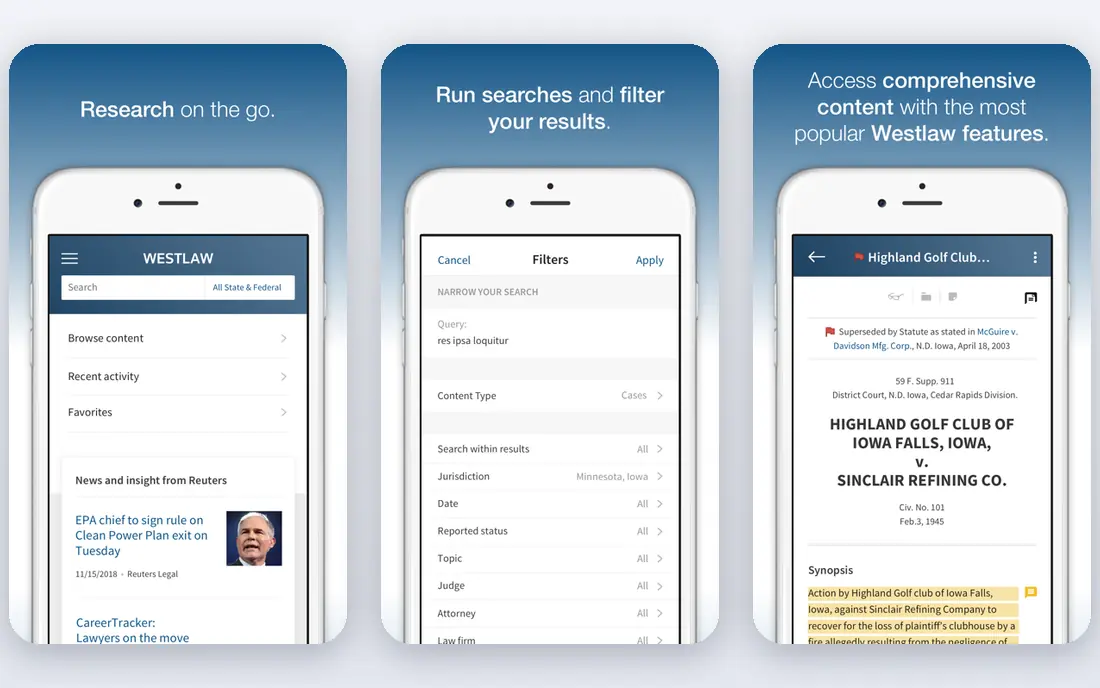
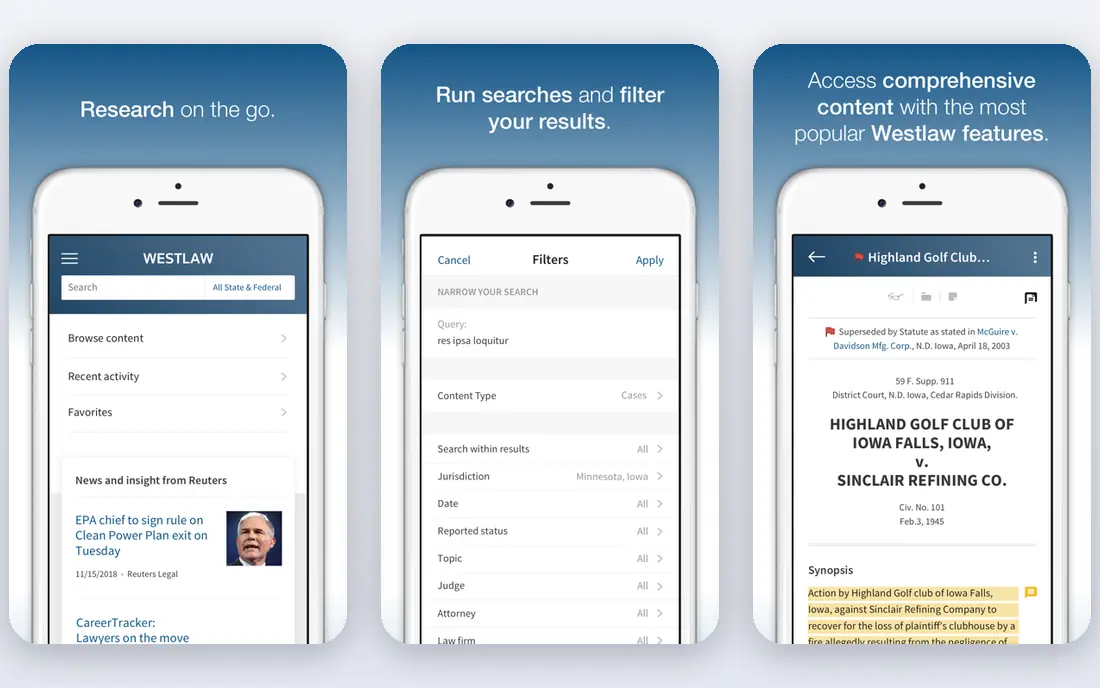
Westlaw AI, including tools under the Westlaw Advantage platform, helps lawyers research US case law, analyze documents for misstatements of law, and prepare litigation materials with source links. KeyCite validation lets users check the status of a case, which matters when a single bad citation can damage a filing. Litigation teams value the document analyzer, which can compare arguments against the cases cited.
The catch is price and scope. Westlaw is a premium subscription, and its AI tools add to that cost. It suits litigation-focused firms and lawyers who research US law daily. Smaller practices should weigh whether their case volume justifies the subscription, or whether a bar-provided research option covers the basics.
- Deep US case law and KeyCite validation
- Litigation document analysis
- Research summaries tied to sources
- Subscription cost
- Best value inside the wider Westlaw platform
Harvey is an AI platform for law firms and in-house teams that covers research, contract review, due diligence, and drafting across practice areas. Its strength is breadth: one platform can support many matter types, and it can draw on a firm's own documents and knowledge base alongside legal sources. That firm-wide view appeals to large firms handling complex, document-heavy matters.
The catch is scale. Harvey is priced and deployed as an enterprise product, with onboarding and change management work that small firms cannot easily absorb. It also needs the same citation verification discipline as every tool here. Harvey suits large firms that can staff deployment and review; smaller firms will find better value elsewhere.
- Works across research, drafting, and diligence
- Firm knowledge integration
- Used by many large firms
- Enterprise pricing and deployment effort
- Not built for solo budgets
vLex Vincent AI pairs the vLex legal database with AI research, summarization, and drafting tools, and it stands out for cross-border work. Lawyers handling matters in several countries can search laws and cases across jurisdictions in one place, rather than juggling separate national databases. Vincent also supports survey-style workflows that compare rules across states or countries.
The catch is depth by area. For pure US litigation research, Westlaw and LexisNexis still lead on editorial depth. vLex suits firms with international clients, arbitration work, or multi-jurisdiction surveys. Check coverage for your specific countries and practice areas during a trial, since global databases vary in depth.
- Legal content from over 100 countries
- AI research and drafting help
- Survey workflows across jurisdictions
- US depth varies by practice area
- Pricing is quote based for larger plans
Luminance uses AI to review contracts and large document sets, flagging unusual clauses, missing terms, and risks across hundreds of documents at once. That scale suits due diligence, M and A review, and portfolio contract checks, where manual review of every page would take weeks. It also offers drafting and negotiation help inside Word, so reviewers can act on findings without switching tools.
The catch is focus. Luminance is a review tool first, not a case law research database, so it does not replace Westlaw or LexisNexis for litigation research. Pricing is enterprise level, and deployment needs planning for large document sets. It suits firms and legal teams with heavy review volume.
- Fast review of large contract sets
- Anomaly and clause flagging
- Negotiation drafting help
- Enterprise pricing
- Review focus rather than case law research
Litera Kira, formerly Kira Systems, extracts clauses and data points from contracts and organizes them for due diligence, compliance checks, and deal review. Teams can search across a whole data room for change-of-control clauses, termination terms, or assignment limits, and export findings into reports. That structured extraction is why diligence teams trust it for large transactions.
The catch is setup. Custom clause models and review workflows take configuration, and pricing is set for firms and legal teams rather than solo users. Kira suits transaction teams that run diligence often and need consistent, auditable extraction. For occasional contract review, a broader AI assistant may be enough.
- Proven clause extraction across contract types
- Built-in analysis models
- Due diligence reporting
- Enterprise pricing
- Setup needed for custom clause models
Robin AI reviews contracts against a team's playbook, flagging terms that fall outside agreed positions and suggesting edits, with human lawyers involved in review where needed. That human-in-the-loop model suits in-house teams that want speed without handing final judgment to software alone. Word integration keeps review inside the document lawyers already use.
The catch is scope. Robin AI is built for contracts, not for case law research or litigation drafting, so it pairs with a research database rather than replacing one. Pricing is quote based for team plans, with a trial available to test playbook fit. It suits in-house legal teams with repeatable contract types and clear negotiation rules.
- Contract review with lawyer-in-the-loop checks
- Playbook enforcement
- Word integration
- Review focus rather than case research
- Paid plans needed for full workflows
How we picked these
We compared official product pages and public documentation for AI legal tools in active use in October 2026, and we favored tools with a clear role: case law research, multi-country research, firm-wide AI, contract review, or clause extraction. We left out general chatbots without legal databases, since they cannot validate citations, and we left out tools whose current availability we could not confirm. Where pricing is quote based, we list See website rather than repeating unverified price claims.
What to check before you buy
First, match the tool to the task. Case law research needs a database with citation validation. Contract review needs playbooks and extraction. A tool that does one well may do the other poorly, so do not buy on a generic AI label. Next, check data handling: how client documents are stored, whether they train models, and what security certifications the vendor holds. Confidentiality is a professional duty, not a feature to skim.
Build a verification routine
Require every AI answer to link to a primary source, then open that source and confirm the quote, holding, and current status. Keep a short checklist for filings: citation checked, quote checked, jurisdiction checked, and reviewer named. That routine takes minutes and prevents the most common AI legal error, which is a confident citation that does not say what the tool claims.
Trial on your own matters
Run a trial on closed matters where you already know the answers, and compare the tool's research against your own memos. Test citation accuracy, coverage for your practice area, and how the tool handles a question with no clear answer. A tool that admits uncertainty is safer than one that always sounds certain.
FAQ
Which AI tool is best for legal research?
For deep US case law research, CoCounsel, Lexis+ AI, and Westlaw AI lead, since they link answers to established databases with citation validation. The best pick depends on which database your firm already uses. For multi-country work, vLex Vincent AI is the stronger choice.
Can AI legal research replace a lawyer?
No. AI tools speed up searching, summarizing, and drafting, but they can invent citations and miss nuance, and they do not carry professional responsibility. A lawyer must verify sources, apply judgment, and take responsibility for filings and advice. This article gives general information, not legal advice.
How do I check AI-generated citations?
Open each cited case or statute in the underlying database, confirm the quote and holding, and check its current status with KeyCite or Shepard's. Do not rely on the AI summary alone, and do not file a citation you have not opened yourself. Keep a record of who verified each citation.
Is client data safe in AI legal tools?
It depends on the vendor's terms. Check whether client documents are used to train models, how data is encrypted and retained, and what happens on cancellation. Prefer vendors with clear no-training commitments for client data and strong security practices, and follow your firm's confidentiality rules.
What is the best AI legal tool for small firms?
Small firms often do best with the research tool tied to a database they already access, such as a bar association plan, plus a contract tool only if review volume justifies it. Standalone enterprise platforms like Harvey suit larger firms better. Ask vendors for small-firm pricing and trial access before committing.
Do AI legal tools work for non-US law?
Some do, and vLex Vincent AI leads for multi-country coverage. Depth varies by country and practice area, so check coverage for your specific jurisdictions during a trial. For local law in a single country, a national database may still beat a global AI tool on depth.