Best AI Search Analytics Platforms in 2026: 8 Tools Compared
Compare the best AI search analytics platforms for tracking brand mentions in ChatGPT, Gemini and Perplexity, with citations, sentiment and share of voice data.
- Editor's choice
 Profound
AI visibility across models
Starts atSee websiteVisit tryprofound.comFull review - Great alternative
 Peec AI
Fast prompt tracking for small teams
Starts atSee websiteVisit peec.aiFull review - Also consider
 Otterly AI
Simple AI search monitoring
Starts atSee websiteVisit otterly.aiFull review
TL;DR:
- AI search analytics track how often your brand appears in AI answers, which sources are cited, and how sentiment shifts over time, which classic rank trackers do not show.
- Profound is our pick for most teams starting with AI visibility, because it covers major AI models, prompts and citations in one dashboard.
- Peec AI and Otterly AI suit smaller teams that want fast setup and prompt level tracking, while Semrush and Ahrefs suit teams that already use SEO tools.
- Citation data changes fast, so treat AI visibility as a weekly trend to act on, not as a single score to chase.
Quick comparison
| Tool | Best for | Starts at | Free plan? | |
|---|---|---|---|---|
| Profound | AI visibility across models | See website | Free trial | Visit |
| Peec AI | Fast prompt tracking for small teams | See website | Free trial | Visit |
| Otterly AI | Simple AI search monitoring | See website | Free trial | Visit |
 Scrunch | AI search and agent analytics | See website | Free trial | Visit |
 Semrush AI Toolkit | SEO teams adding AI tracking | See website | Free trial | Visit |
 Ahrefs Brand Radar | Brand mentions in AI answers | See website | Free trial | Visit |
 Brandlight | Enterprise AI visibility | See website | No | Visit |
 ZipTie | AI search tracking for agencies | See website | Free trial | Visit |
The best AI search analytics platforms
We compared official feature pages, model coverage, prompt tracking, citation reporting and pricing notes for tools that monitor AI search. These eight cover dedicated AI platforms and established SEO tools that added AI features.
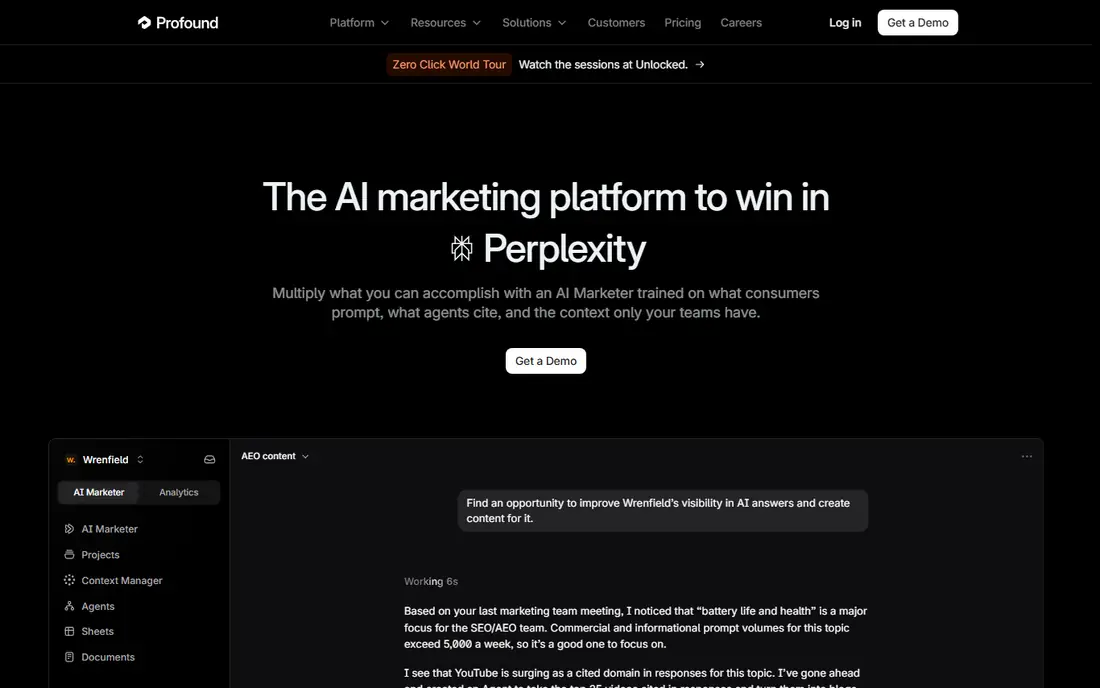
Profound is the most cited dedicated AI search analytics platform, and its strength is breadth. It tracks how your brand appears in answers from major AI models, which prompts trigger a mention, which sources get cited, and how your share of voice compares with rivals. For a marketing team that needs to report AI visibility to leadership, that dashboard view is easier to use than running the same prompts by hand each week. Profound also tracks sentiment and topic themes, so you can see not just whether you appear, but how you are described.
The catch is price and scope. Small teams with one website and a handful of core topics may find Profound more than they need, at least at first. For mid sized and larger brands, agencies and teams that already track SEO and content performance, Profound is a strong central tool. Start with a trial, load your top 50 prompts, and check whether the citation data leads to content changes you can actually make.
- Tracks prompts across major AI models
- Shows citations and sources
- Share of voice and sentiment reporting
- Pricing is quote based for many plans
- Smaller teams may need only a subset of features
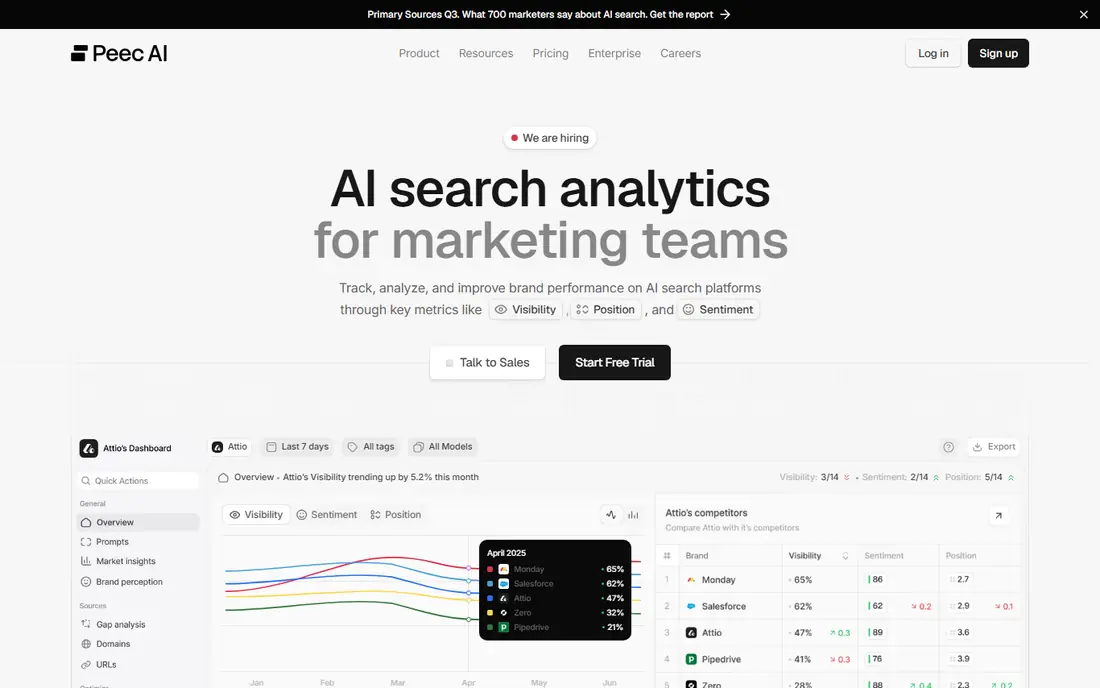
Peec AI appeals to small teams because setup is fast. You add your brand, rivals and a list of prompts, and the tool runs them across AI models and reports mentions, rankings and citations. That simplicity matters for a team that wants a weekly AI visibility check without a long onboarding process. The layout focuses on the questions customers actually ask, which helps content teams decide which pages to update first. Peec AI also suits agencies that need a separate workspace per client without a heavy enterprise contract.
The limit is depth. Prompt volume also drives price, so a team that tracks thousands of prompts will pay more than a team tracking a focused set. For most small businesses, a focused prompt list of 50 to 200 questions is enough to spot gaps. Start there, expand only when the data leads to real content work.
- Quick setup with prompt lists
- Tracks major AI models
- Competitor comparison in a clear layout
- Depth of analysis is thinner than enterprise platforms
- Pricing varies by prompt volume
Otterly AI is built for teams that want AI search monitoring without learning a complex analytics suite. The dashboard shows brand mentions, citations, sentiment and share of voice across AI search tools, with reports you can share with clients or managers. That clarity helps a small marketing team answer a simple question each week: are we showing up in AI answers for the topics that matter, and are the sources cited ones we control or influence. Otterly AI also tracks how answers change over time, which is useful because AI models update often.
The honest weakness is scale. Check the plan limits on prompts, models and seats before you buy, and test the weekly report format with your team. If the report is clear enough that a non technical manager can act on it, Otterly AI has done its job. For many small teams, that is the right level of tool.
- Easy dashboard for AI mentions and citations
- Weekly reports for teams
- Prompt tracking across models
- Smaller feature set than larger platforms
- Some advanced reporting needs a higher plan
Scrunch positions itself for a shift beyond classic search, where AI agents and answer engines shape discovery before a user ever visits a website. It tracks brand presence in AI answers, which sources are cited, and how AI driven traffic and referrals flow to your site. For brands in travel, software and services, where an AI answer can recommend a provider directly, that view is becoming more important than a single keyword rank. Scrunch also offers content gap reports that show which topics rivals own in AI answers and which pages you need to improve.
The catch is that the category itself is still settling, so feature names and plan details change fast. Test it with a focused set of buyer intent prompts, and check whether the referral and citation data matches what you see in your own analytics. Scrunch is best for teams that already see AI traffic in their data and want to understand it, rather than teams that are just curious about AI search in general.
- Tracks AI search and agent driven discovery
- Customer journey and citation analysis
- Content gap reports
- Newer category with fast changing features
- Pricing is quote based on many plans
Semrush is a familiar name for SEO teams, and its AI Toolkit adds AI search tracking to a platform many teams already use for keywords, backlinks, content and site health. That bundling is the main appeal. Instead of buying a separate AI tool and learning a new dashboard, an SEO team can add AI visibility, prompt tracking and brand mention data alongside existing reports. For agencies that report SEO and AI visibility together, that single account view saves time and keeps clients in one reporting flow.
The limit is that Semrush is first an SEO suite, not a dedicated AI platform. Cost also reflects the full suite, so a team that only wants AI tracking may pay for SEO tools it does not use. Semrush AI Toolkit is best for SEO teams that want AI data inside their existing workflow, and who already get value from the wider Semrush tools.
- Adds AI visibility to a full SEO suite
- Keyword, content and site audit tools in one account
- Familiar reporting for SEO teams
- AI features are part of a larger suite, so cost includes tools you may not need
- AI model coverage varies by plan
Ahrefs Brand Radar tracks how brands appear in AI generated answers, alongside web mentions, so teams can see both classic brand coverage and AI visibility in one place. That pairing helps, because AI answers often cite web pages, and improving the cited pages is a practical way to improve AI presence. Ahrefs also brings strong data on backlinks, content and competitors, which helps a team decide whether an AI gap is a content gap, an authority gap, or both. For SEO led teams, Brand Radar fits a familiar workflow.
The catch mirrors Semrush. Check which AI models and prompt types are included in your plan, and test a set of brand and rival prompts before you rely on the data for reporting. Ahrefs Brand Radar is a strong pick for teams already using Ahrefs for SEO and brand monitoring who want AI data without a second vendor.
- Tracks brand mentions across AI answers and web sources
- Strong backlink and content data in the same suite
- Clear competitor views
- AI features are newer and still expanding
- Full Ahrefs cost includes a large SEO suite
Brandlight targets larger brands and agencies that need AI visibility at scale, with custom dashboards, large prompt libraries and reporting for many stakeholders. For a global brand tracking hundreds of products across regions and languages, that scale matters. Brandlight reports share of voice, citations, sentiment and competitor movement in a format that suits executive reporting, and it can handle the volume that smaller tools may limit. Enterprise support and onboarding also help big teams roll the tool out across regions.
The downside for small teams is cost and complexity. A small business with a focused prompt list will get the same core insight faster from Peec AI or Otterly AI. Brandlight is best for enterprises, large agencies and brands where AI visibility is a board level metric. If that describes your team, ask for a demo with your own prompts and rivals, not just a generic sales deck.
- Enterprise grade AI visibility and reporting
- Large prompt and model coverage
- Custom dashboards for big teams
- Price and setup suit large teams, not small businesses
- Trial access is limited compared with smaller tools
ZipTie, also written as ZipTie.dev, is an AI search analytics tool that suits agencies and growing brands. It tracks prompts across AI models, shows share of voice against rivals, and produces reports that agencies can share with clients. That client focus matters, because agencies need a clear weekly view per client without building custom reports by hand. ZipTie also tracks citations and mentions, so an agency can show a client not just a score, but which sources and pages drove the result.
The limit is scale and brand depth compared with Profound and Brandlight. Check prompt limits, model coverage and report formats on the plan you are considering, and run a trial with two or three real clients before you switch agency reporting to it. For agencies and mid sized brands that want clear AI tracking without enterprise cost, ZipTie is a practical pick.
- Prompt tracking and share of voice for agencies
- Client friendly reporting
- Tracks major AI models
- Smaller brand presence than larger platforms
- Feature depth varies by plan
How we picked these
We compared official feature pages, model coverage, prompt tracking, citation reporting and pricing notes for dedicated AI search tools and SEO suites with AI features. We favored tools that track real AI answers, not just keyword ranks, and that show citations and sources, because citation data is what turns a visibility score into content work. We also kept a mix of dedicated platforms, small team tools and enterprise options, so teams of different sizes can find a fit. We did not claim hands on audits of every model output, and AI answers change often, so treat the data as a trend to monitor weekly, not as a fixed rank.
How to use AI search analytics well
Start with prompts your customers actually ask, not with generic brand terms. List the top 50 questions from sales calls, support tickets, search data and chat logs, then add rival comparison prompts and buying intent prompts. Track those prompts weekly, and note which pages are cited when you appear and which rival pages are cited when you do not. That citation list is your content brief. Update the cited pages, add clear facts, pricing, comparisons and FAQs, and check whether your mention rate moves over the next month.
Also set realistic goals. AI visibility is not a single number you can force up in a week, and model updates can shift results without any change on your site. Track share of voice, citation rate and sentiment together, and look for trends over four to eight weeks rather than day to day swings. Share a simple weekly report with content, product and sales teams, so AI insights lead to page updates, not just dashboard views. The best AI search analytics platform is the one whose reports your team actually acts on.
FAQ
What is the best AI search analytics platform?
Profound is our pick for most teams starting with AI visibility, because it covers major AI models, prompts, citations and share of voice in one dashboard. Peec AI and Otterly AI suit smaller teams that want faster setup, while Semrush and Ahrefs suit SEO teams that want AI data inside an existing suite. The best tool depends on team size, prompt volume and reporting needs.
Which tool is best for AI search analytics for small businesses?
Peec AI and Otterly AI are strong small business picks, because they offer fast setup, clear prompt tracking and trial access without enterprise contracts. Start with 50 to 200 real customer prompts, track weekly, and expand only when the data leads to content changes. A focused prompt list gives more useful insight than a large list you never review.
How do AI search analytics platforms track brand mentions?
They run a set of prompts through AI models, record whether your brand appears in the answer, which sources are cited, and how sentiment and share of voice compare with rivals. Some tools also track AI driven referrals to your site. Results vary by model, region and prompt wording, so run the same prompts on a regular schedule for trend data.
What is share of voice in AI search?
Share of voice in AI search is your share of brand mentions across a set of prompts, compared with rivals in the same set. A higher share means AI answers mention your brand more often for those topics, not that you rank first in classic search. Track it alongside citation rate and sentiment, since a mention with a poor description is less useful than a cited mention on a trusted page.
Do AI search analytics replace SEO tools?
No, they add to them. Classic SEO tools track keyword ranks, backlinks and site health, while AI search analytics track mentions and citations in AI answers. Many teams use both, and tools like Semrush and Ahrefs now combine both views. Use SEO data to improve pages, and AI data to check whether those pages are cited in answers.