Best AI Decisioning Platforms in 2026: 8 Platforms Compared
Compare the best ai decisioning platforms for 2026, from credit and fraud decisions to real-time offers, with governance, testing, and pricing notes now.
- Editor's choice
 Pega Customer Decision Hub
Real-time enterprise decisioning
Starts atSee websiteVisit pega.comFull review - Great alternative
 FICO Decision Management Platform
Credit, fraud, and collections
Starts atSee websiteVisit fico.comFull review - Also consider
 SAS Intelligent Decisioning
Analytics-led decisions
Starts atSee websiteVisit sas.comFull review
TL;DR:
- Pega and FICO lead for high-volume, regulated decisions where an explanation matters as much as speed.
- SAS and Experian suit teams that need analytics and risk models close to the decision itself.
- InRule, Sparkling Logic, and Actico suit business teams that want to change rules without waiting for developers.
- Most enterprise decisioning is quote-only, so governance, audit trails, and model controls matter more than a sticker price.
Quick comparison
| Tool | Best for | Starts at | Free plan? | |
|---|---|---|---|---|
| Pega Customer Decision Hub | Real-time enterprise decisioning | See website | No | Visit |
| FICO Decision Management Platform | Credit, fraud, and collections | See website | No | Visit |
| SAS Intelligent Decisioning | Analytics-led decisions | See website | No | Visit |
 Experian PowerCurve | Credit risk decisions | See website | No | Visit |
 InRule | Business-owned rules | See website | Free trial | Visit |
 Sparkling Logic SMARTS | Decision management for business teams | See website | Free trial | Visit |
 Actico | Rules and decision automation | See website | No | Visit |
 IBM Operational Decision Manager | Rules in IBM environments | See website | Free trial | Visit |
The best ai decisioning platforms
An AI decisioning platform makes a choice in real time, such as approving a loan, flagging a transaction, choosing the next best offer, or routing a claim. The best tools combine business rules, machine learning models, and testing, so a team can prove why a decision was made and change it without rebuilding the whole system. We compared official product pages and documentation, and we favored tools with clear governance, simulation, and audit features.
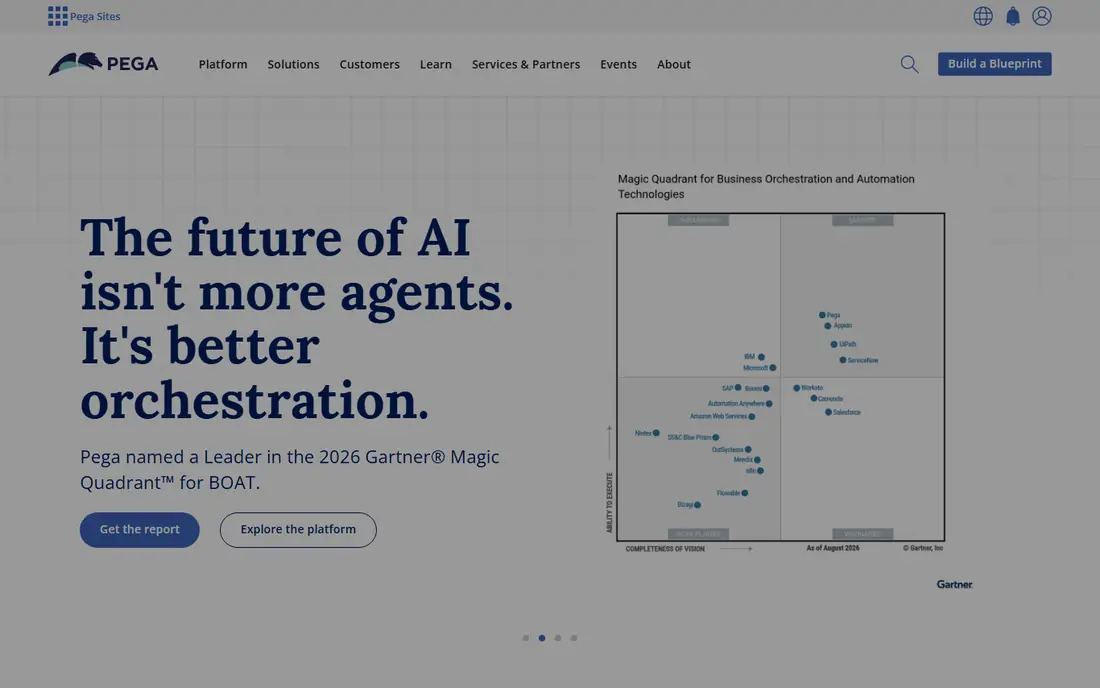
Pega Customer Decision Hub is built for organizations that make millions of decisions across channels and need them to stay consistent. A customer who calls, opens an app, and visits a branch should get decisions based on the same rules, models, and context. Pega ties decisioning to workflows, so an approved offer or a flagged case can move straight into the next step without manual handoffs.
The cost and effort are real. Pega does not publish a simple price, and enterprise deals are negotiated around volume, channels, and cloud deployment. Teams also need skilled staff or partners to model decisions well. For a single approval workflow, Pega is too much. For large banks, insurers, and telecom firms, it is often the reference choice.
- Real-time next-best-action decisions
- Strong governance and audit trails
- Low-code decision design
- Quote-only enterprise pricing
- Implementation takes time
- Best value at large scale
FICO has a long history in credit decisions, and its platform reflects that focus. Rules, scores, and machine learning models work together to decide loan origination, fraud checks, and collections strategy in real time. The strength is not just speed. It is the ability to explain a decision, test a strategy before release, and show regulators and auditors how a model behaved.
That depth comes with a relationship sale and enterprise contracts, not a free trial. Teams outside banking and insurance can use FICO, but they will do more work to fit its vocabulary and workflows to their domain. When the decision is about lending money or stopping fraud, FICO belongs on every shortlist.
- Proven at huge transaction volumes
- Rules plus analytics and machine learning
- Explainable decisions
- Quote-only pricing
- Financial services focus
- No self-serve trial

SAS Intelligent Decisioning suits organizations that already trust SAS for analytics and want decisions close to their models. Business users can build decision flows that combine rules, models, and data, then test outcomes before deployment. That testing step matters, because a small rule change can shift approvals, losses, or customer experience in ways that are hard to see without simulation.
SAS is not a light tool for a single team. Pricing is negotiated, and teams need analytics skills to get full value. If your decisions depend on complex models and you need strong model governance, SAS is a strong fit. If you only need simple if-then rules, a smaller tool will move faster.
- Strong analytics and model management
- Decision flows with testing
- Enterprise governance
- Quote-only pricing
- Learning curve for new teams
- Heavier than a rules-only tool
Experian PowerCurve connects credit decisioning to the data and scores that lenders already use. Teams can design strategies, test them against historical portfolios, and run champion and challenger versions side by side to see which approach performs better. That evidence-based approach helps risk teams defend a change to credit policy.
The trade-off is focus. PowerCurve is strongest for credit and risk decisions, and less natural for general marketing or operations decisions. Pricing is quote-based, and implementation usually involves Experian services or partners. For lenders, that pairing of data and decisioning is the main reason to choose it.
- Credit data and decisioning together
- Strategy testing and champion and challenger tests
- Scalable deployment
- Quote-only pricing
- Credit-centric focus
- Implementation support often needed
InRule gives business teams more control over the rules that drive decisions. Rules are written in a form that non-developers can read, test, and update, which shortens the wait between a policy change and a live change. Decision testing helps teams check outcomes before release, and the platform integrates with common enterprise systems.
InRule is not a full analytics platform, so teams that need deep model management may pair it with another tool. Pricing is quote-based for enterprise use, even though a trial helps evaluation. Choose InRule when rule ownership and speed of change matter more than built-in scoring models.
- Rules that business users can read and change
- Decision testing
- Microsoft-friendly deployment
- Less built-in machine learning depth than SAS or FICO
- Enterprise pricing still requires a quote
- Smaller partner network than Pega
Sparkling Logic SMARTS focuses on decision modeling that business and IT teams can share. Decision models show how inputs, rules, and outcomes connect, which makes it easier to review a decision before it goes live. Simulation lets teams test changes against sample cases and see the effect on outcomes, a feature that matters when a rule affects pricing, eligibility, or risk.
The vendor is smaller than the enterprise leaders, which can mean more direct support and less market presence. Pricing requires a quote for full deployment. For mid-size organizations that want governed decisioning without a full enterprise suite, SMARTS is a practical middle ground.
- Clear decision modeling
- Simulation and testing
- Business-friendly authoring
- Quote-only enterprise pricing
- Smaller vendor than Pega or SAS
- Needs discipline to keep models tidy
Actico combines business rules, decision tables, and machine learning models in a visual platform. Teams can model a decision, test it, and deploy it as a service that other systems call in real time. Industry templates for areas such as insurance and finance can shorten the first project, since common decision patterns are already structured.
Actico is less well known in the US than Pega, FICO, or SAS, so reference customers in your industry deserve a check. Pricing is negotiated, and complex projects still need implementation support. If you want a single platform for rules and models with a visual design approach, Actico deserves a demo.
- Rules, decision tables, and machine learning in one platform
- Visual modeling
- Industry templates
- Quote-only pricing
- Less name recognition in the US
- Implementation help often needed
IBM Operational Decision Manager, often called ODM, is a mature rules platform for organizations that already run IBM systems. Business rules live as decision services that applications call, with versioning and governance to control changes. That separation helps teams update a rule without redeploying every application that uses it.
The user experience is not as modern as newer decision tools, and IBM licensing can be hard to model without a quote. Teams outside the IBM ecosystem may find lighter tools easier to adopt. For IBM shops with long-lived rules and strict change control, ODM remains a dependable choice.
- Mature rules engine
- Decision services for existing IBM systems
- Governance and versioning
- Interface feels dated to some teams
- Pricing and licensing can be complex
- IBM ecosystem gravity
How we picked these
We compared official vendor pages, product documentation, and public buyer guides, and we kept only platforms that support real-time or near-real-time decisions with rules, models, or both. We gave weight to simulation, testing, audit trails, and governance, because a decision platform that cannot explain itself creates risk. We did not rank tools on price alone, since most enterprise decisioning is sold by quote and total cost depends on volume, channels, and implementation.
What to check before you buy
Start with the decision itself, not the vendor list. Write down the inputs, the rules, the models, the required response time, and the explanation you must give when a customer or regulator asks why. That one-page decision spec will quickly show which tools fit and which are too heavy or too light.
Governance and explainability
Ask how the platform logs each decision, which model version was used, and how you can replay a decision later. Check who can change a rule, who approves it, and how a bad change is rolled back. In regulated work, these controls matter more than a slick authoring screen.
Testing before you go live
Use simulation and champion and challenger testing on your own historical cases. A vendor demo with clean data hides the messy cases that cause real losses or complaints. Measure approval rates, fraud rates, and customer outcomes, not just technical speed.
Total cost and scale
Get a quote based on decision volume, not user seats alone. Ask about model hosting, data fees, implementation, and support, and model what happens when volume doubles. A platform that looks affordable at pilot scale can become expensive at production scale.
FAQ
What is an AI decisioning platform?
It is software that combines business rules and machine learning models to make a decision in real time, such as approving credit, flagging fraud, or choosing an offer. It also records how the decision was made so teams can test, audit, and improve it.
What is the best AI decisioning tool?
There is no single best tool for every team. Pega and FICO suit large, regulated, high-volume decisions. SAS suits analytics-led teams. InRule, Sparkling Logic, and Actico suit teams that want business-owned rules with faster change cycles.
How much do AI decisioning platforms cost?
Most enterprise platforms in this list are quote-only, and costs depend on decision volume, channels, and implementation. Smaller rules tools may start with a trial and a negotiated annual contract, while large platforms often run into six figures per year at scale.
Do decisioning platforms replace human review?
No. They automate routine decisions and route uncertain or high-risk cases to people. Human review remains essential for edge cases, appeals, and model oversight, especially in lending, insurance, and fraud work.
How is decisioning different from a workflow tool?
A workflow tool moves work from step to step. A decisioning platform decides what should happen at a step, using rules and models, and it can explain and test that choice. Many teams use both, with decisioning inside a workflow.
What should a small team use for simple decisions?
A rules-focused tool such as InRule or Sparkling Logic is usually a better start than a full enterprise suite. Begin with one clear decision, prove the testing and audit process, and expand only when volume or risk justifies it.