Best Ad Tracking Software in 2026: 8 Tools Compared
Compare the best ad tracking software for affiliates, agencies and ecommerce brands, with pricing, server-side tracking and attribution tools that work.

- Editor's choice
 Voluum
High-volume affiliate tracking
Starts at$149 per monthVisit voluum.comFull review - Great alternative
 RedTrack
Campaign control plus attribution
Starts at$79 per monthVisit redtrack.ioFull review - Also consider
 ClickMagick
Solo marketers and funnels
Starts at$79 per monthVisit clickmagick.comFull review
TL;DR:
- Ad tracking splits into two jobs: campaign routing for affiliates and media buyers, and revenue attribution for ecommerce brands.
- Voluum and RedTrack lead for high-volume campaign tracking, while ClickMagick is the friendlier pick for solo marketers.
- Northbeam, Triple Whale and Hyros focus on tying ad spend to orders and lifetime value, which matters more than click counts for stores.
- Always compare event or visitor limits, not just the headline price, since overage and plan caps decide the real monthly bill.
Quick comparison
| Tool | Best for | Starts at | Free plan? | |
|---|---|---|---|---|
| Voluum | High-volume affiliate tracking | $149 per month | Free trial | Visit |
| RedTrack | Campaign control plus attribution | $79 per month | Free trial | Visit |
| ClickMagick | Solo marketers and funnels | $79 per month | Free trial | Visit |
 Hyros | Multi-touch revenue attribution | See website | No | Visit |
 Triple Whale | Ecommerce analytics and attribution | See website | Yes | Visit |
 Northbeam | Media mix and attribution for brands | See website | No | Visit |
 SegMetrics | Person-level funnel attribution | $57 per month | Free trial | Visit |
 Everflow | Affiliate programmes and networks | See website | Free trial | Visit |
The best ad tracking software
Good tracking tells you which ad, landing page and offer actually produced a sale, not just which one got a click. These eight tools cover that need for different buyers, from solo affiliates to growing brands.
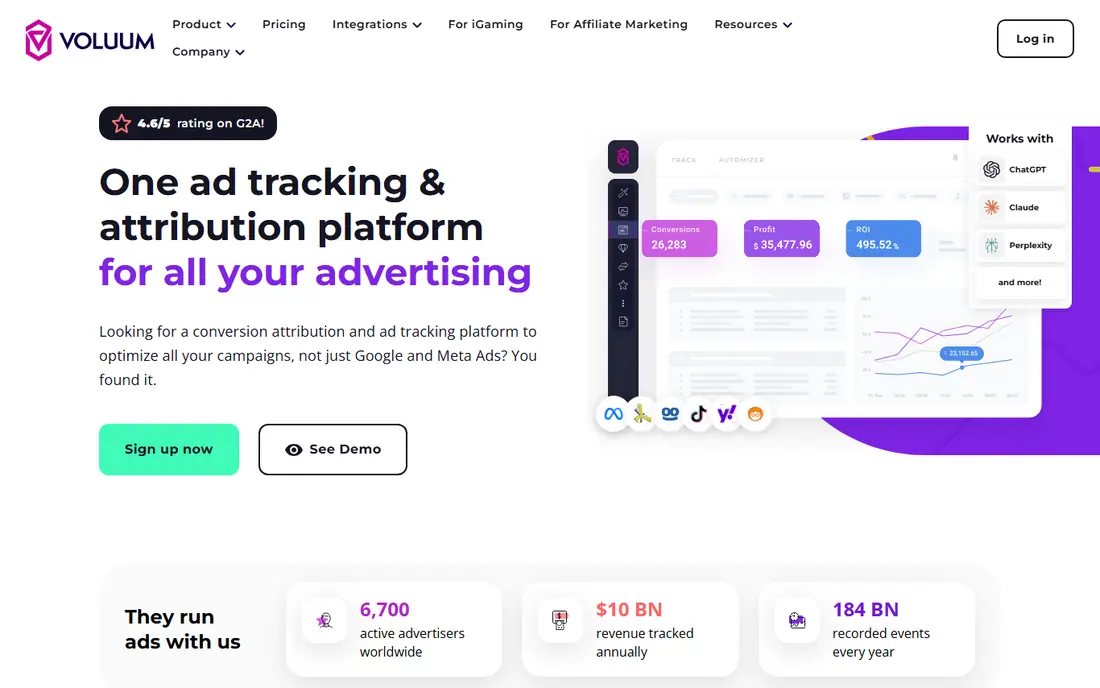
Voluum has long been a standard for affiliates and media buyers who run many campaigns across many traffic sources. It tracks visits, clicks and conversions, routes traffic by rules you set, and offers automation tools that pause or shift spend based on performance. Its global server network and reporting depth help larger buyers spot a losing campaign before it burns much budget.
The price is the main barrier. The Profit plan starts at $149 per month on monthly billing, with lower monthly equivalents on annual billing, and it caps events and campaigns, so high-volume buyers must choose a tier that fits their traffic. Beginners with one small campaign will find cheaper tools that cover the basics. For serious volume, though, Voluum remains a strong, proven choice.
- Fast campaign routing
- Traffic distribution tools
- Integrations with many ad platforms
- Entry price is high for beginners
- Event limits require careful planning
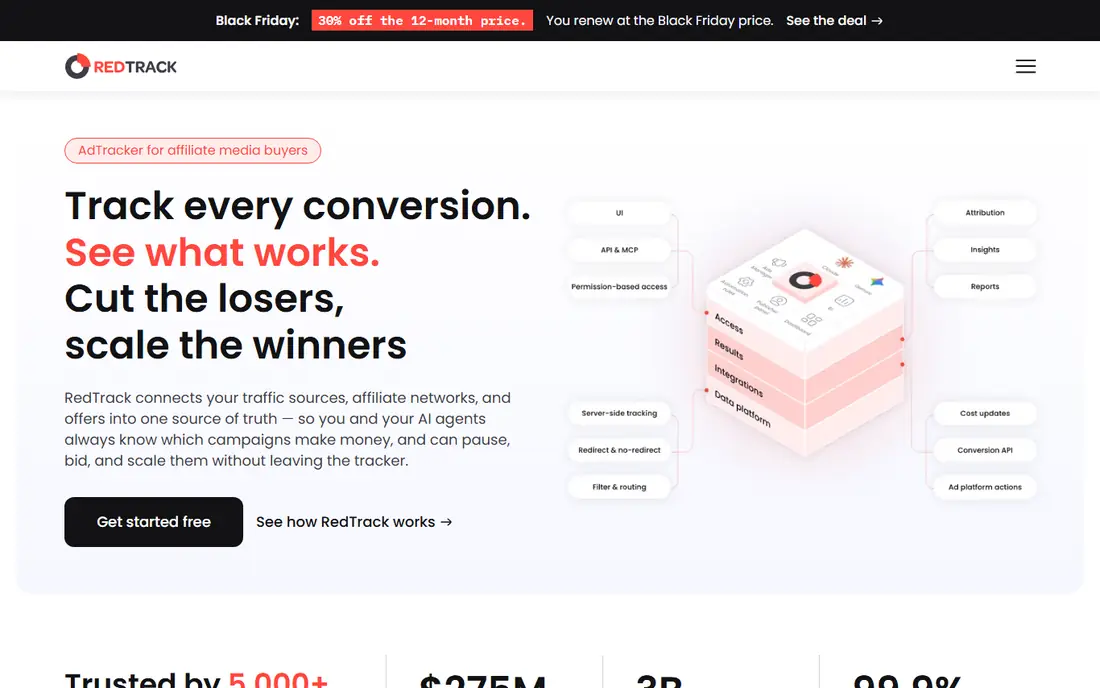
RedTrack combines campaign tracking with a control layer inside ad platforms, which is its key difference from simpler link trackers. Its Builder plan at $79 per month includes 2 million events, cost sync, and automation that can pause or scale campaigns in the ad platforms themselves, rather than only reporting after the fact. For ecommerce and agency teams, it also adds customer, order and lifetime value reporting on higher plans.
That power comes with setup work. Server-side tracking and conversion APIs need correct configuration, and the range of reports can feel heavy for a solo affiliate who only needs click and conversion counts. If you run spend across several platforms and want fresher cost data plus automation, RedTrack offers strong value at its entry price.
- Server-side tracking
- Ad platform automation
- 2 million events on the Builder plan
- Setup takes care for server-side features
- Reporting depth can overwhelm new users
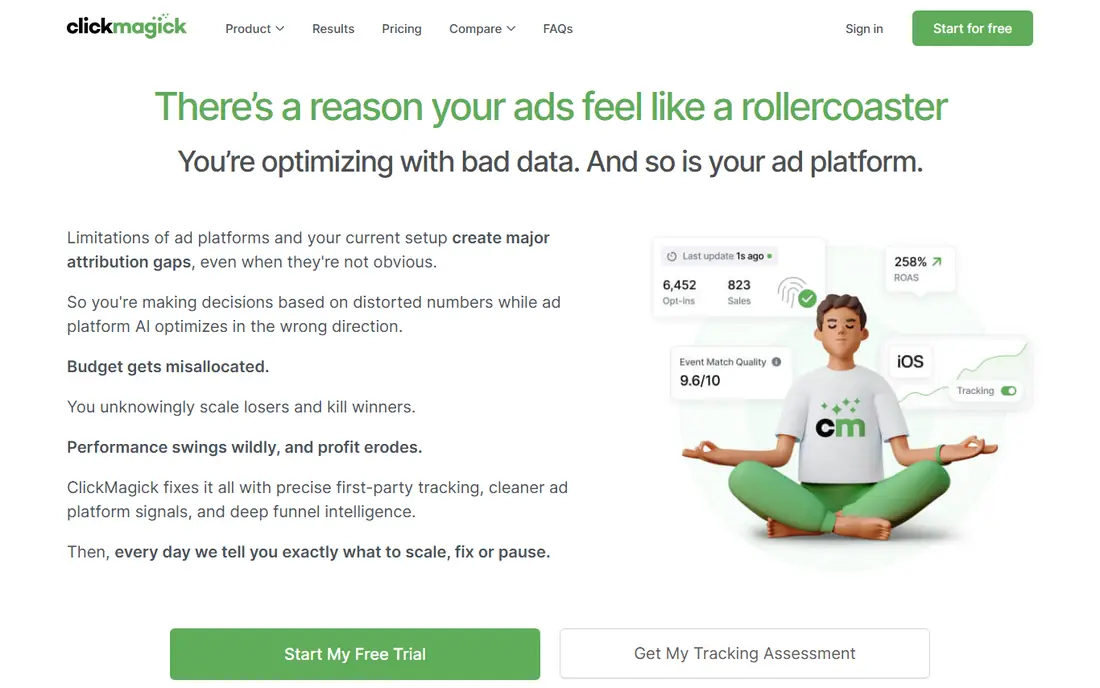
ClickMagick is built for solo marketers and small teams who track links, funnels and affiliate commissions without an enterprise stack. Its Click Shield bot filtering, cross-device attribution and deep funnel reports help you see where a funnel leaks, from first click to sale. The Starter plan at $79 per month, Standard at $199 and Pro at $349, gives a clear ladder as volume grows.
The Starter limit is the catch: 10,000 tracked visitors per month will not suit a busy campaign, and ClickMagick does not execute automation inside ad accounts the way RedTrack does. It also lacks customer and lifetime value reporting on the entry plan. For a marketer who wants reliable link tracking and funnel insight at a manageable price, it remains a very practical pick.
- Strong bot filtering
- Funnel and step-by-step conversion reporting
- 14-day free trial
- Starter plan caps tracked visitors at 10,000
- No automation inside ad accounts
Hyros focuses on a problem that click trackers miss: customers who see several ads, buy later, and buy again. It aims to attribute revenue across touchpoints and over longer journeys, which helps brands with higher acquisition spend decide where money is really working. Its team-assisted setup is a plus for buyers who do not want to configure tracking alone.
The trade-off is price structure. Hyros pricing is tied to tracked monthly revenue and is not a simple flat monthly figure, so smaller advertisers may find it costly relative to their spend. It also works best when you already have meaningful paid spend to analyse. For brands spending enough that a misattributed budget decision costs real money, Hyros can pay for itself in clearer decisions.
- Long-journey attribution
- Tracks repeat purchases
- Staff-assisted setup
- Pricing is tied to tracked revenue and not published as a flat rate
- Best for higher spend
Triple Whale is made for ecommerce brands, especially Shopify stores, that want attribution plus business analytics in one place. It pulls ad, order and site data together, shows creative performance, and lets teams adjust attribution rules to match how they judge channels. A free plan is available, which lets a small store test the dashboards before paying.
Paid pricing is less transparent than a simple per-month list, and the full platform can feel large for a store with one product and one ad channel. For growing brands that run Meta, Google and TikTok together and need to see profit, not just revenue, Triple Whale is a strong shortlist candidate alongside Northbeam.
- Ecommerce dashboards
- Creative analytics
- Customisable attribution rules
- Paid pricing is quote-based for many plans
- Depth can exceed small store needs
Northbeam serves ecommerce brands that need to defend media budgets with finance-friendly reporting. It combines multi-touch attribution with media mix modelling, so teams can compare channels on a shared basis rather than trusting each platform's own numbers. That independence is valuable when Meta, Google and TikTok each claim credit for the same sale.
Northbeam is not a cheap affiliate tracker, and its pricing is quote-based, which puts it out of reach for solo buyers. It also fits brands better than agencies running short affiliate campaigns. If your question is how to split a serious monthly budget across channels, rather than how to route a single link, Northbeam belongs on the demo list.
- Multi-touch attribution plus media mix modelling
- Clean reporting for finance teams
- Strong ecommerce focus
- Quote-based pricing
- Aimed at brands, not solo affiliates
SegMetrics takes a person-level view of marketing, linking ad clicks to leads, sales and lifetime value for each contact. That view helps course sellers, SaaS firms and lead-generation businesses see which campaigns bring customers who stay, not just customers who click. Its entry price from $57 per month is lower than many attribution tools, which makes it accessible to smaller teams.
It is not a campaign router in the Voluum sense, so affiliates who need traffic distribution and offer rotation should look elsewhere. Setup also rewards care, especially for server-side and CRM connections. For a business that sells through funnels and wants to judge ads by customer value, SegMetrics offers a clear and affordable angle.
- Person-level multi-touch reporting
- Clear funnel and lifetime value views
- Lower entry price
- Server-side setup needs care
- Less campaign routing than Voluum or RedTrack
Everflow is for brands and networks that run their own affiliate programmes, rather than for affiliates tracking other people's offers. It manages partners, tracks referrals and conversions, handles payouts and includes fraud controls, so a brand can grow a partner channel without stitching together several tools. A free trial lets teams test the partner workflow before a quote.
The price is quote-based, and the platform is larger than a solo marketer needs for simple link tracking. If you are the advertiser, and you need to recruit, track and pay partners while keeping paid media tracking in view, Everflow fits that brief better than a pure campaign tracker. If you are the affiliate, start with Voluum, RedTrack or ClickMagick instead.
- Affiliate programme management
- Partner tracking
- Fraud and payout tools
- Quote-based pricing
- More than a solo tracker needs
How we picked these
We compared official pricing and feature pages, attribution guides and public user reviews for campaign trackers, affiliate platforms and ecommerce attribution tools that are actively sold in October 2026. We favoured tools with clear tracking, conversion sync or attribution features, and we covered affiliate, agency and ecommerce buyers rather than only one group. Prices are from vendor pages or recent verified listings, with See website where pricing is quote-based. We did not claim hands-on testing.
What to check before you buy ad tracking software
Start with the decision you need to make each week. An affiliate needs to know which offer and landing page to scale or kill, while a brand needs to know which channel deserves more budget. Those are different reports, and buying the wrong type will leave you with data you cannot act on.
Count events, visitors and orders correctly
Ask how the vendor counts an event, a visitor or an order, and model your cost at your peak month, not your quiet month. A plan that looks cheap at 10,000 visitors can become costly at 100,000, and overage charges can erase a saving. Check data retention too, since seasonal analysis needs more than a few months of history.
Check privacy and platform rules
Confirm first-party and server-side tracking options, consent handling and conversion API support for the platforms you use. Browser privacy changes and ad blockers reduce the accuracy of old redirect-only tracking, so a tool that relies only on third-party cookies will under-report. Also confirm that your tracking complies with each ad platform's rules and with privacy law in your markets.
Test with a real campaign
Run a small live campaign through any finalist before you commit, and compare its numbers with the ad platform and with your order system. Look for missing conversions, duplicate sales and delayed cost data. A two-week test will reveal setup problems that a sales demo will not.
FAQ
What is ad tracking software?
Ad tracking software records clicks, visits and conversions from your ads and links, then reports which campaigns, ads, landing pages and offers produced results. Some tools also route traffic and automate spend, while others focus on attributing revenue across channels.
Do I need ad tracking if I already use Google Analytics?
Google Analytics shows site behaviour well, but it does not always tie ad spend to orders, lifetime value or partner payouts with the same detail. Dedicated trackers add campaign routing, bot filtering, server-side tracking and platform conversion sync that many advertisers need alongside analytics.
How much does ad tracking software cost?
Entry prices in this list range from $57 per month at SegMetrics and $79 per month at RedTrack and ClickMagick, to $149 per month at Voluum, with several enterprise tools priced by quote or by tracked revenue. Always model the cost at your real event or visitor volume.
What is server-side tracking?
Server-side tracking sends conversion data from your server to ad platforms, rather than relying only on browser pixels. It tends to be more reliable when browsers block cookies or scripts, but it needs correct setup, testing and privacy controls.
Can ad tracking software stop click fraud?
No tool can stop all invalid traffic, but good trackers filter bots, flag suspicious patterns and help you block bad sources. Use bot filtering alongside platform controls, and review traffic sources regularly rather than trusting any single fraud score.