Best Ad Networks Software in 2026: 9 Networks Compared
Compare the best ad networks software for 2026, with publisher requirements, revenue models, ad formats, and app monetization options. See our top pick.
- Editor's choice
 Google AdSense
New publishers
Starts atFreeVisit google.comFull review - Great alternative
 Ezoic
Growing sites
Starts atFreeVisit ezoic.comFull review - Also consider
 Mediavine
Large lifestyle sites
Starts atFreeVisit mediavine.comFull review
TL;DR:
- Google AdSense is our pick for new publishers, because it accepts smaller sites, offers many formats, and pays on a clear schedule.
- Ezoic suits growing sites that want testing and optimization without a high traffic minimum, while Mediavine and AdThrive suit larger sites with higher traffic.
- Media.net works well for sites with strong US and UK search traffic, while Taboola and Outbrain suit content discovery and native placements.
- App publishers should look at AppLovin and Unity Ads, which focus on in-app ads, rewarded video, and mobile game monetization.
- Check traffic minimums, payout thresholds, ad quality controls, and policy rules before applying, since rejection or policy issues can cost weeks.
Quick comparison
| Tool | Best for | Starts at | Free plan? | |
|---|---|---|---|---|
| Google AdSense | New publishers | Free | Yes | Visit |
| Ezoic | Growing sites | Free | Yes | Visit |
| Mediavine | Large lifestyle sites | Free | No | Visit |
 AdThrive | Large premium sites | Free | No | Visit |
 Media.net | Search-led sites | Free | No | Visit |
 Taboola | Native content discovery | Free | No | Visit |
 Outbrain | Native recommendations | Free | No | Visit |
 AppLovin | Mobile apps and games | Free | Yes | Visit |
 Unity Ads | Mobile games | Free | Yes | Visit |
The best ad networks software
Ad networks connect publishers with advertisers, serve ads, and handle payments. For websites, the right network depends on traffic size, niche, and audience location. For apps, it depends on format, user experience, and mediation. These nine cover both sides.
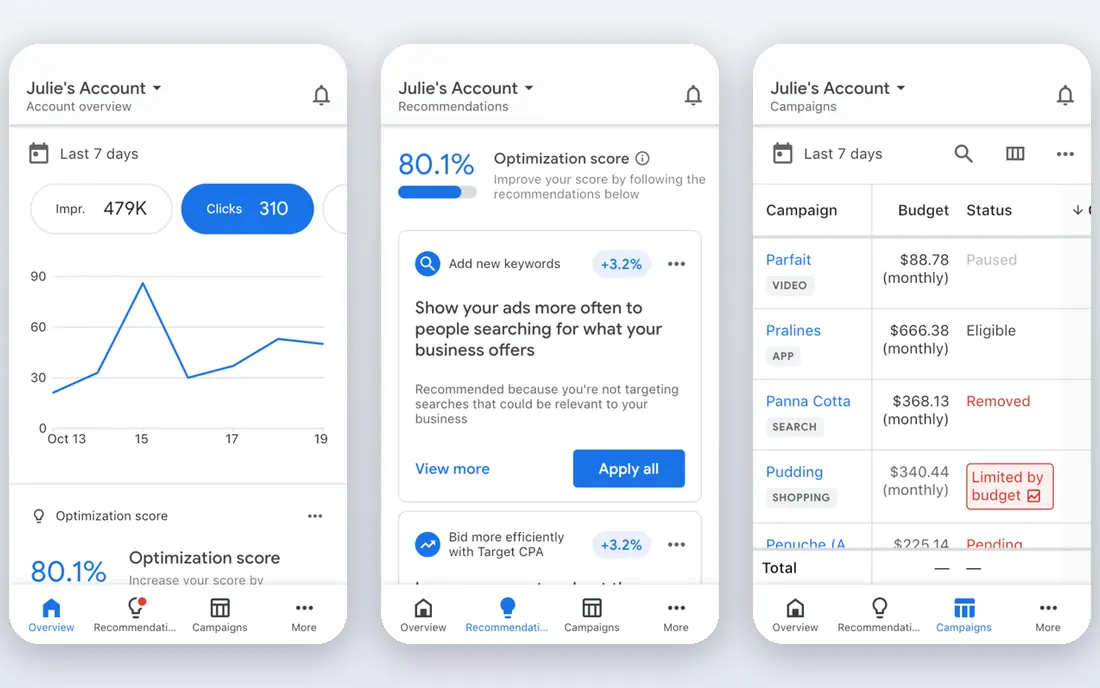
AdSense remains the default first network for many small publishers. It offers display, in-feed, in-article, and matched content formats, plus auto ads that place units for you. Payments are reliable, and the dashboard shows earnings, clicks, and page RPM in one place.
The trade-off is control and revenue in low-value niches. AdSense can pay less than premium networks for large sites, and policy violations can limit ads or close an account. Follow content and traffic policies closely, and avoid invalid clicks or misleading placements.
- Low barrier for new sites
- Many ad formats
- Trusted payments
- Earnings can be low in some niches
- Policy enforcement can be strict
Ezoic suits sites that have outgrown AdSense but are not yet large enough for Mediavine or AdThrive. Its testing tools try different ad placements, layouts, and densities to find a balance between revenue and user experience. Analytics and site speed tools add value beyond ads alone.
Setup takes more work than AdSense, including DNS or plugin steps, and you should watch ad density closely. Too many ads can slow a site and push readers away, even if short-term revenue rises. Test changes slowly and check core web vitals and bounce rates.
- AI testing for layouts and ads
- No high traffic minimum on some plans
- Analytics tools
- Setup can be complex
- Ad density needs careful tuning to protect user experience
Mediavine is a favorite for food, travel, parenting, and lifestyle publishers with strong traffic. It focuses on premium advertisers, video ads, and a good reader experience, with support that many publishers praise. Revenue per thousand views is often higher than AdSense for sites that qualify.
You need to meet a traffic minimum, currently published as 50,000 sessions in the prior 30 days for its main program in recent listings, so check the current requirement before applying. Sites outside its core niches may earn less, so compare with AdThrive and Ezoic for your topic.
- High-quality advertisers
- Strong support
- Good revenue for food, travel, and lifestyle niches
- Traffic minimum applies
- Niche fit matters
- Application review takes time
AdThrive, now part of Raptive, targets larger publishers with high traffic and strong content quality. It offers premium display and video demand, hands-on support, and optimization for page speed and ad layout. Many large food, lifestyle, and niche sites report strong earnings after moving from smaller networks.
The barrier is high, with a traffic minimum published around 100,000 monthly pageviews in recent listings, so check current terms. Smaller sites should start with AdSense or Ezoic and apply later, rather than waiting for revenue while traffic grows.
- Premium demand and revenue
- Dedicated support
- Video and display expertise
- High traffic minimum
- Stricter site quality review
- Less suited to small sites
Media.net serves contextual ads powered by the Yahoo Bing network. It works best for sites with strong search traffic from the US, UK, and Canada, especially in finance, tech, and shopping topics. Ad units blend with content and can complement AdSense rather than replace it.
Sites with mostly non-English or non-US traffic may see lower fill and earnings. Test Media.net on a section of pages first, compare RPM with your current network, and keep an eye on ad relevance and page speed.
- Contextual ads from Yahoo and Bing network
- Clean formats
- Good for US and UK traffic
- Earnings vary by niche and geography
- Approval and ad fill can be uneven
Taboola places native recommendation widgets at the end of articles and in feeds, showing sponsored stories, videos, and products. Large news, entertainment, and lifestyle sites use it to earn from readers who finish an article. It can add revenue without a full display ad overhaul.
Widget quality needs active control. Block low-quality categories, set frequency limits, and check what readers actually see. A poorly tuned Taboola widget can harm trust, even if it pays in the short term.
- Large native advertiser base
- Recommendation widgets
- Video options
- Ad quality varies
- Widgets can feel clickbait-led if not tuned
- Minimums apply
Outbrain is a close rival to Taboola, with a focus on premium publishers and brand-safe recommendations. It offers article-end widgets, feed placements, and video, with tools to control categories and advertisers. For large publishers, it can be a strong native complement to display ads.
Smaller sites may not meet its bar, and earnings depend heavily on audience geography and engagement. If you run a large site, test Outbrain against Taboola on matched pages rather than assuming one always pays more.
- Premium publisher network
- Recommendation and video formats
- Brand-safe controls
- Minimum traffic and quality bar
- Revenue depends on audience and placement
AppLovin suits mobile app and game publishers who want mediation, bidding, and a range of ad formats. Its MAX mediation helps apps compare demand sources, while rewarded video lets users choose to watch an ad for an in-game benefit. That choice often keeps retention higher than forced ads alone.
It is not a website network, and setup needs developer time for SDK integration and testing. Small apps should start with one or two formats, measure retention and revenue per user, and add formats only when the data supports them.
- Mediation and in-app bidding
- Rewarded video and interstitials
- Analytics for games
- Best for apps with scale
- Setup needs SDK work
- Ad experience needs tuning
Unity Ads is the natural choice for games built in Unity. Integration is straightforward, rewarded video fits game loops well, and interstitials can monetize between levels. It also offers mediation through Unity LevelPlay for developers who want more demand sources.
For non-Unity apps, AppLovin or AdMob may be a better fit. Even for Unity games, test ad frequency and placement, since too many interstitials can push players away faster than revenue grows.
- Built for Unity games
- Rewarded and interstitial video
- Easy integration for Unity developers
- Less relevant outside Unity
- Earnings depend on game genre and geography
How we picked these
We compared official publisher pages, traffic requirements, ad formats, and payment terms for networks that operate in October 2026 and serve websites, apps, or both. We favored networks with clear publisher programs, real advertiser demand, and published requirements, and we left out networks with no public publisher route or a history of policy complaints that we could not verify. Revenue figures vary by niche, geography, and season, so we focus on fit and requirements rather than promising a rate.
How to choose an ad network without hurting your site or app
Match the network to traffic and format
Small sites should start with AdSense or Ezoic. Large sites should compare Mediavine and AdThrive. Native-heavy sites should test Taboola or Outbrain. App developers should compare AppLovin and Unity Ads, plus AdMob where relevant. A network that pays well for one niche can pay poorly for another, so niche fit matters more than brand size.
Protect speed, trust, and policy standing
Limit ad density, use lazy loading where supported, and check page speed after adding any network. Block low-quality ad categories, keep ads clearly labeled, and never click your own ads or buy traffic to inflate clicks. Policy issues can lead to limited ads or account closure, which costs far more than a short-term revenue bump.
Test on matched pages and track RPM honestly
Run a new network on a set of similar pages, track revenue per thousand pageviews, page speed, and bounce rate, and compare over at least two to four weeks. Season, traffic source, and geography all affect earnings, so a one-day test can mislead. Keep a simple log of changes, so you know what caused a rise or fall.
FAQ
What is the best ad network software for beginners?
Google AdSense is the best start for most new website publishers, because it has a low barrier, many formats, and reliable payments. Ezoic is a good next step as traffic grows. For apps, start with the network that fits your platform, such as Unity Ads for Unity games or AppLovin for broader mobile apps.
What is the best ad network platform for apps?
AppLovin and Unity Ads lead for mobile apps and games, with mediation, rewarded video, and interstitial formats. AdMob is also a major option for Android and iOS apps. The best choice depends on your engine, audience geography, and whether rewarded video fits your app loop.
How much traffic do I need for Mediavine or AdThrive?
Mediavine has published a 50,000 sessions in 30 days bar for its main program in recent listings, while AdThrive has published around 100,000 monthly pageviews. Both requirements and programs change, so check the current publisher pages before applying. Smaller sites should build traffic with AdSense or Ezoic first.
Do ad networks pay per click or per thousand views?
Both models exist. Display networks often pay per thousand impressions, known as CPM, and per click, known as CPC, depending on the ad and advertiser. Native and video networks may pay per click, per view, or per completed action. Check the network dashboard for your actual mix, since a single rate rarely tells the full story.
Can I use more than one ad network at once?
Yes, many publishers combine networks, such as AdSense with Media.net, or a display network with a native widget. Use mediation or header bidding where supported, avoid overlapping units that hurt speed, and make sure each network allows the combination under its policies.