Switching From Ad Astra? 5 Alternatives for 2026
Searching for Ad Astra alternatives? Here are 5 options with prices and free plans. Each tool is judged on the same checks. Reviewed in November 2026.
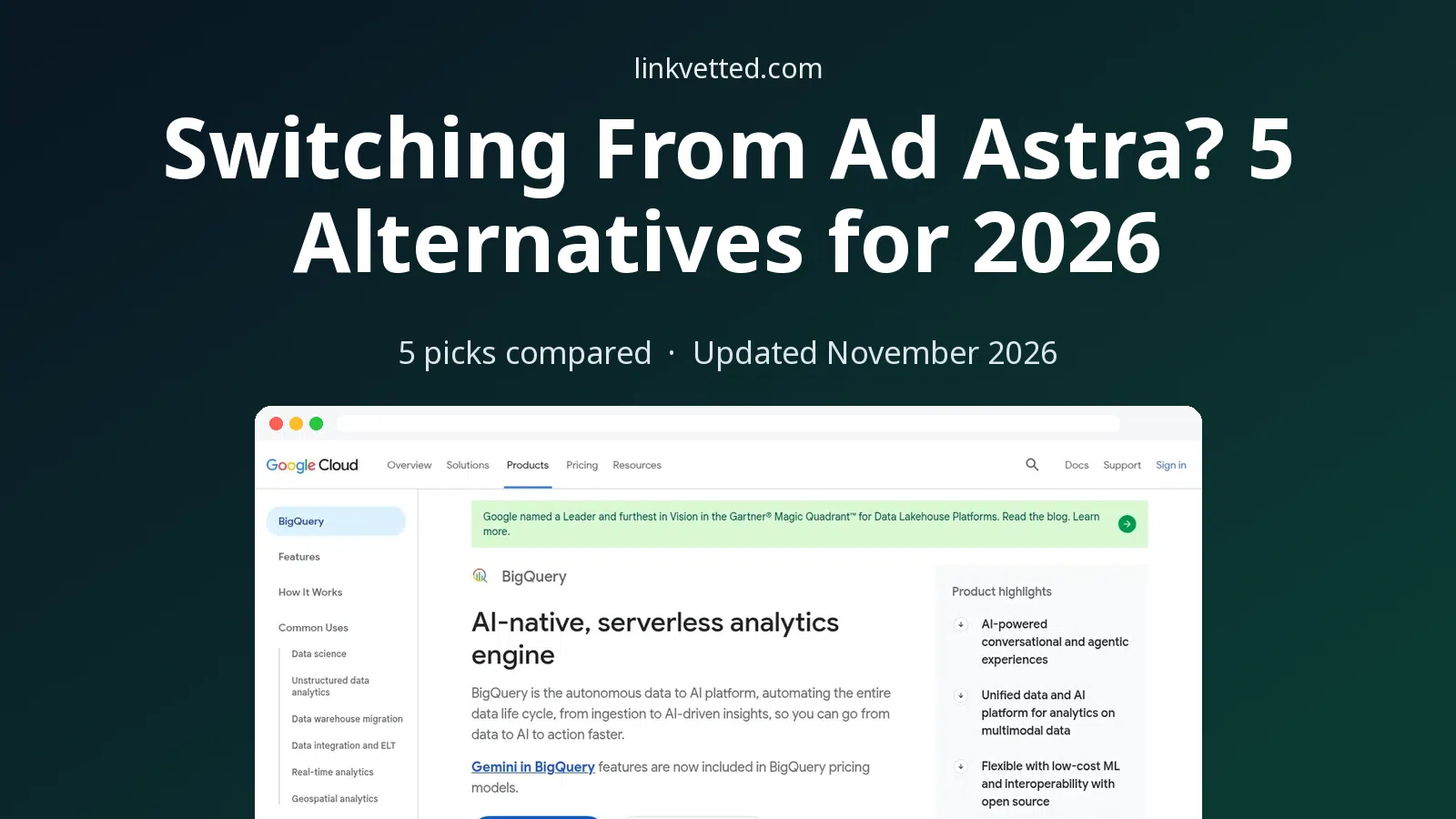
- Editor's choice
 Google BigQuery
Automatic, serverless data and AI
Starts atSee websiteVisit cloud.google.comFull review - Great alternativeCloudera Data Platform
Hybrid data and AI anywhere
Starts at$0.04 per CCU per hourVisit cloudera.comFull review - Also consider
 Databricks
Unified data, analytics and AI work
Starts atSee websiteVisit databricks.comFull review
Direct answer
Google BigQuery comes first here, mainly for automated, serverless data and AI. Listed starting prices: Cloudera Data Platform from $0.04 per CCU per hour. Cloudera Data Platform is better for hybrid data and AI anywhere, and Databricks is better for unified data, analytics and AI work. Prices, free plans and limits for all 5 tools follow.
TL;DR:
- Google BigQuery takes the first slot, best suited to automatic, serverless data and AI.
- Microsoft Azure Synapse Analytics comes with a trade-off: several integrated services to learn.
- Neither Google BigQuery nor Teradata Vantage, nor any of the other 3 tools, has a permanent free plan; trials and quotes are the norm.
- Google BigQuery, Databricks, Microsoft Azure Synapse Analytics and Teradata Vantage: pricing is by quote only, so plan time for a sales conversation.
Last checked November 2026. Prices and plan details were read from the vendors' own pages in November 2026; vendors change plans often, so confirm the current price on the vendor site before you buy.
Quick comparison
| Tool | Best for | Starts at | Free plan? | |
|---|---|---|---|---|
| Google BigQuery | Automatic, serverless data and AI | See website | Not stated | Visit |
| Cloudera Data Platform | Hybrid data and AI anywhere | $0.04 per CCU per hour | Not stated | Visit |
| Databricks | Unified data, analytics and AI work | See website | Not stated | Visit |
| Microsoft Azure Synapse Analytics | SQL warehousing plus big data analytics | See website | Not stated | Visit |
| Teradata Vantage | Enterprise-scale autonomous analytics | See website | Not stated | Visit |
Our 5 picks for Ad Astra
Short on time? The summary and table above give the quick view of 5 tools for Ad Astra, and the profiles that follow give the detail behind each entry.
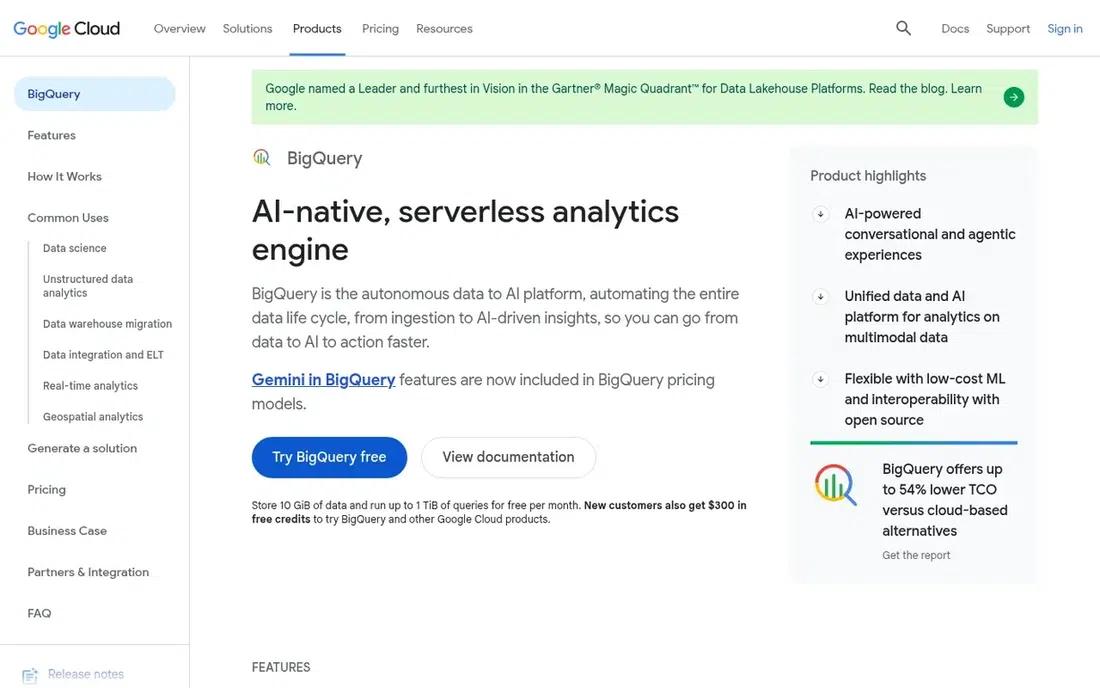
In short, Google BigQuery is for automatic, serverless data and AI. The automation that simplifies operations can make it harder to predict how usage translates into spend, so monitoring matters.
Honest limits: Automation can obscure cost drivers.
Google BigQuery is described as an autonomous data and AI product that automates the whole data life cycle so teams can move from data to AI to action quicker. Teams heavily invested in another cloud may prefer a warehouse native to that environment. Google BigQuery shows no starting price here, so confirm the cost on the vendor site. Free access: Not stated.
- Automates the data life cycle
- Positions data and AI together
- Best fit within Google Cloud
Cloudera Data Platform
Best for: Hybrid data and AI anywhere
Cloudera Data Platform is built with hybrid data and AI anywhere in mind. Teams that are completely standardized on one cloud may find a native service more straightforward.
On top of that, pick Cloudera when bringing analytics and AI to data wherever it resides is the deciding requirement. Price to start with Cloudera Data Platform: $0.04 per CCU per hour. Free options: Not stated.
Limits to weigh: Hybrid setups need operational skill.
- Brings AI to where data lives
- Extends to edge deployments
- Wide system needs governance planning
Databricks works best for unified data, analytics and AI work. It tends to fit organizations that want engineering, analytics and machine learning work to share one environment instead of stitching together separate services.
Pricing for Databricks is not stated here, so ask the vendor for current figures. Trial and free access: Not stated.
Downsides: Feature depth varies by workload.
- Single system for data and AI
- Built-in governance capabilities
- Broad scope can need planning
Microsoft Azure Synapse Analytics
Best for: SQL warehousing plus big data analytics
Microsoft Azure Synapse Analytics was built for SQL warehousing plus big data analytics. Microsoft Azure Synapse Analytics is positioned to accelerate time to insight across enterprise data warehouses and big data systems. It brings together enterprise SQL data warehousing and big data analytics services, which fits organizations that want both relational warehousing and large-scale analytics under one Azure offering.
Points against: Configuration choices affect outcomes.
Beyond that, organizations outside the Azure ecosystem may find integration less natural. As for the details, since Synapse bundles multiple services, teams face a ramp-up time and must make deliberate configuration choices that affect performance and cost. No starting price is listed for Microsoft Azure Synapse Analytics here; confirm pricing on the vendor site. Trial and free access: Not stated.
- Pitched at accelerating time to insight
- Suits Microsoft Azure estates
- Multiple integrated services to learn
Teradata Vantage
Best for: Enterprise-scale autonomous analytics
Choose Teradata Vantage for enterprise-scale autonomous analytics. Teradata Vantage is described as the AI product for the autonomous era, connecting and scaling across any environment. From a buyer's view, choose Vantage when enterprise scale, governance and AI readiness across environments are central requirements.
Beyond that, engagement and planning usually involve more organizational effort. Beyond that, Teradata's positioning is enterprise-focused, so smaller teams or straightforward warehouse needs may find the product more than necessary. From a buyer's view, the vendor's long enterprise analytics background displays in a product oriented toward large, governed data estates that require to support analytics and AI together. This comparison lists no price for Teradata Vantage; ask the vendor. On free options: Not stated.
Limits to weigh: Enterprise-oriented engagement.
- Enterprise analytics heritage
- Scales across environments
- Less suited to small, straightforward needs
How these tools were picked
A buyer's checklist
- Get a written quote from Google BigQuery, Databricks, Microsoft Azure Synapse Analytics and Teradata Vantage; the list shows no starting price for them.
- Read the limits listed for Google BigQuery first: best fit within Google Cloud.
- Ask whether Teradata Vantage integrates with your current software, and whether that comes standard or as an add-on.
- Check the support hours and onboarding help Databricks offers; smaller vendors vary a lot here.
- Read the plan comparison for Google BigQuery carefully; key features often start on a higher tier.
FAQ
Can I try these tools before paying?
Not by default. None of the tools, from Google BigQuery to Teradata Vantage, lists a free plan or a free trial here, so ask each vendor for a demo before committing. For the full picture, the cards above cover all 5 entries of this Ad Astra alternatives list, including price, free plan and limits.
How are the tools for Ad Astra ordered?
Google BigQuery sits first and Teradata Vantage last because the order follows typical fit for Ad Astra, then price clarity and free access. It is a judgement call, so read each profile for fit and limits.
Does any tool for Ad Astra here have a free plan?
A permanent free plan is not offered by Google BigQuery, Teradata Vantage or the other tools here. Plan a short evaluation period instead. Prices, free plan details and limits for all 5 tools in this Ad Astra alternatives roundup sit on the individual cards above.
Do these tools publish their prices?
Not all of them. Google BigQuery, Databricks, Microsoft Azure Synapse Analytics and Teradata Vantage publish no starting price, so expect a quote request for those. The rest, Cloudera Data Platform included, show a starting price, though seats and billing terms still change the final cost.
Sources
- https://cloud.google.com/bigquery
- https://www.cloudera.com
- https://www.databricks.com
- https://azure.microsoft.com/en-us/products/synapse-analytics
- https://www.teradata.com