Best Amino Alternatives in 2026: 8 Community Apps Compared
Looking for amino alternatives? We compare 8 community apps for fandoms, hobbies, and creators, with free plans, moderation tools, and safety notes today.

- Editor's choice
 Discord
Fandom and hobby servers
Starts atFreeVisit discord.comFull review - Great alternative
 Reddit
Topic discussion
Starts atFreeVisit reddit.comFull review - Also consider
 Geneva
Small private groups
Starts atFreeVisit geneva.comFull review
TL;DR:
- Discord and Reddit are the closest free replacements for finding people who share a niche interest.
- Geneva is the best low pressure option for small private groups that want chat, events, and polls in one place.
- Circle, Mighty Networks, and Skool suit creators who want to run their own paid or private community.
- Moderation and age rules vary widely, so check each app's safety tools before joining or building a group.
Quick comparison
| Tool | Best for | Starts at | Free plan? | |
|---|---|---|---|---|
| Discord | Fandom and hobby servers | Free | Yes | Visit |
| Reddit | Topic discussion | Free | Yes | Visit |
| Geneva | Small private groups | Free | Yes | Visit |
 Telegram | Large public groups and channels | Free | Yes | Visit |
 Circle | Creator communities | $89 per month | Free trial | Visit |
 Mighty Networks | Courses plus community | $79 per month | Free trial | Visit |
 Skool | Paid membership groups | $99 per month | Free trial | Visit |
 Discourse | Forum-style communities | See website | Yes | Visit |
The best amino alternatives
Amino built its appeal on topic-based communities where fans could post art, stories, polls, and chat in one app. The alternatives below split into two groups: free apps where you join existing communities, and platforms where you build and run your own community with more control.
Please note: community apps can include content that is not suitable for younger users, and rules differ by group. Use the block, report, and mute tools, keep personal details private, and check age requirements before joining. Parents should review the app and the specific group with a younger teen, rather than relying on the app name alone.

Discord is the closest free replacement for Amino for most people. Servers are organized by topic, with text channels, voice rooms, events, and bots for polls, roles, and games. You can join a large fandom server or a small private server for friends, and move between them in one app.
The trade-off is discovery and moderation. Unlike Amino, Discord does not hand you a feed of topic communities in the same way, so you will need invite links or server directories. Moderation also depends on each server owner, so check the rules and mod team before settling into a large group.
- Huge range of servers
- Voice, video, and text in one place
- Strong server controls
- You must find servers yourself
- Moderation quality varies by server
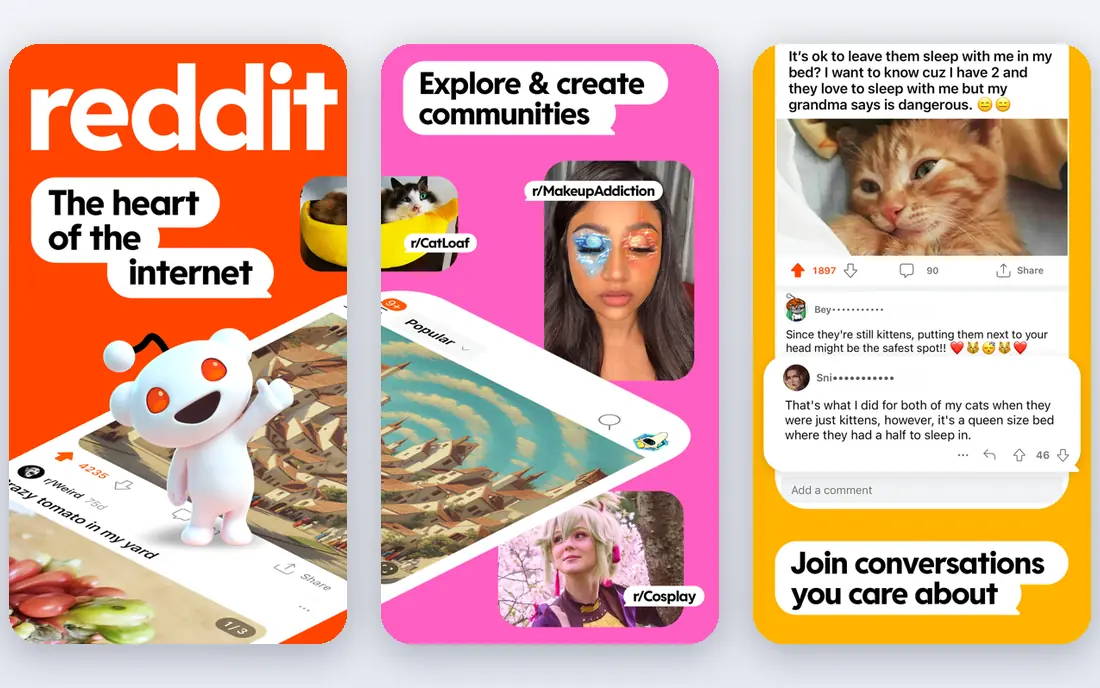
Reddit is the best pick if you mainly want discussion, recommendations, and fan content rather than live chat. Subreddits cover anime, games, books, crafts, sports, and thousands of smaller niches, and old threads remain searchable, which helps when you want answers rather than a live conversation.
It feels less like a hangout than Amino. Live chat exists, but the core experience is posts and comments, and each subreddit has its own culture and rules. Read a subreddit for a few days before posting, and you will get a better sense of what fits.
- Subreddits for almost any interest
- Strong search for old threads
- Free to join
- Less chat-focused than Amino
- Tone varies widely by subreddit

Geneva is a good middle ground between a group chat and a full community platform. A home can hold chat rooms, forums, events, and polls, which suits friend groups, clubs, and small fandom circles that want one place to plan and talk. The design feels calmer than a busy server with dozens of channels.
The limit is scale. You will not find the same huge public fandom base as on Discord or Reddit, so Geneva works best when you bring your own group or join through an invite. For a private circle, that smaller feel is a benefit, not a drawback.
- Chat, events, polls, and forums in one home
- Calm design
- Good for private groups
- Smaller public discovery than Discord or Reddit
- Fewer large fandom communities
Telegram suits people who follow channels and join large interest groups without building a server. Channels let creators broadcast updates to many followers, while groups support discussion, polls, and shared media. It is fast, free, and available on most devices, which makes it easy to keep up with a fandom on the move.
Large public groups need care. Spam, impersonation, and off-topic posts are common, and admin controls vary. Stick to groups with active moderators, avoid sharing personal details, and use the report and block tools when a group feels unsafe.
- Large groups and broadcast channels
- Fast messaging
- Works on phone and desktop
- Moderation varies by group
- Spam is common in large public groups
Circle is built for creators and brands that want their own community space, not a corner of a larger social app. Hosts can create spaces for discussion, events, and courses, customize the look, and keep the experience free of ads and unrelated feeds. That control suits coaches, course sellers, and fan clubs that want a calm home base.
The catch is cost and discovery. Only the host pays, but the entry plan is a real monthly cost, and members usually arrive through the host rather than browsing a public directory. It is a tool for running a community, not for finding one from scratch.
- Clean community design
- Spaces, events, and courses
- No ads in your community
- Paid only for hosts
- Members join through the host, not public discovery
Mighty Networks combines community, courses, events, and live streaming in one platform, which suits creators who teach and gather people around a topic. Members get a mobile app experience, hosts get spaces for different topics, and paid memberships can be managed in the same place.
For a casual fandom group, the price is hard to justify. It fits best when the community supports a business, a course, or a paid membership, where the monthly cost is covered by member revenue. Hobby groups should start with a free app first.
- Community plus courses and events
- Mobile app for members
- Live streaming
- Entry price is high for hobby groups
- Some features need higher tiers
Skool keeps community design simple: a feed, a classroom for lessons, a calendar for events, and a leaderboard for activity. That simplicity helps paid groups stay focused, because members always know where to post, where to learn, and what is happening next. Setup is quick compared with larger community platforms.
The flat monthly price makes most sense for a paid or business community. A free hobby group may find Discord or Geneva cheaper and just as effective. Skool earns its price when you charge members or sell a course and want one tidy home for both.
- Simple community plus classroom layout
- Gamification keeps members active
- Easy setup
- Flat price suits paid groups more than free hobby groups
- Fewer customization options
Discourse is the modern forum option for communities that want lasting discussion rather than fast chat. Topics stay organized, search works well, and moderation tools help admins keep conversations civil. Many open source projects, fan groups, and support communities run on Discourse for exactly that reason.
It is not a casual mobile hangout in the Amino sense. You can self-host the open source version for free, or pay for hosted plans, but either route needs someone to run the forum. Choose Discourse when your group values searchable, long-form discussion over live chat.
- Open source forum software
- Strong search and threading
- Good moderation tools
- Needs hosting or a paid plan
- Less chat-like than Amino
How we picked these
We compared official feature pages, pricing pages, and community platform guides for apps that are currently available and truly support topic-based groups, discussion, or member communities. We favored apps with a working vendor homepage, clear safety and moderation tools, and a free way to join or try. We excluded single-purpose chat apps without group discovery or community structure.
How to choose a community app that actually fits
Start with how you want to spend time. If you want live chat and voice hangouts, Discord or Geneva will feel natural. If you want to read, post, and search old threads, Reddit or Discourse will fit better. If you want to follow updates without joining a chat, Telegram channels are the lightest option.
Next, check moderation before you invest time. Look for clear group rules, active moderators, and easy block and report tools. A large community with weak moderation can feel worse than a small one with firm rules, especially for fandoms that attract heated debate.
Finally, separate joining from hosting. Free apps are best for joining existing communities. Paid platforms like Circle, Mighty Networks, and Skool are best for hosting your own community with control over design, membership, and revenue. Picking the wrong side of that line is the most common reason a community app feels like a poor fit.
FAQ
What is the closest app to Amino?
Discord is the closest free option for live fandom communities, with servers, chat, and voice in one app. Reddit is closer if you prefer topic discussion and searchable threads over live chat. Neither copies Amino exactly, so the best pick depends on whether you want chat or discussion first.
Is there a free Amino alternative?
Yes. Discord, Reddit, Geneva, and Telegram are all free to join, and Discourse offers a free open source version for hosts. Paid platforms like Circle and Skool are for running your own community, not for casual joining, so start free unless you plan to host.
Are Amino alternatives safe for teens?
Safety depends on the specific group, not just the app. Look for active moderation, clear rules, and private group options, and avoid sharing personal details or photos with strangers. Parents should review the app and the group together with a younger teen and check the app's age policy.
Can I run my own community like an Amino community?
Yes. Discord servers, Geneva homes, and Discourse forums all let you run a free community, while Circle, Mighty Networks, and Skool add paid membership, courses, and branding. Start free to learn what your members actually use, then move to a paid platform if you need those extras.
Why did people leave Amino?
People often leave when a community changes, moderation feels uneven, or their friends move to another app. Discord and Reddit attract former Amino users because they offer larger fandom bases and more control over servers and subreddits, even though the experience is not identical.