Best Alternatives to Heroku for Hobby Projects in 2026: 8 Platforms Compared
Compare alternatives to heroku for hobby projects: 8 hosting platforms with free tiers, low paid plans and Git deploy, for side projects and MVPs in 2026.
- Editor's choice
 Render
Closest Heroku-like hosting
Starts at$7 per monthVisit render.comFull review - Great alternative
 Railway
Fast hobby setup
Starts at$5 per monthVisit railway.comFull review - Also consider
 Fly.io
Global low-cost apps
Starts atSee websiteVisit fly.ioFull review
TL;DR:
- Heroku no longer offers a free tier, with Eco dynos from $5 per month, so hobby projects can often run cheaper elsewhere.
- Render and Railway are the closest Heroku-like experiences, with Git deploy, managed databases and simple pricing.
- Fly.io and Cloudflare Workers suit low-cost, global or edge apps, but they need more setup than a classic platform as a service.
- Free tiers usually sleep, spin down or limit hours, so pay a few dollars for always-on hosting if your app must answer at once.
Quick comparison
| Tool | Best for | Starts at | Free plan? | |
|---|---|---|---|---|
| Render | Closest Heroku-like hosting | $7 per month | Yes | Visit |
| Railway | Fast hobby setup | $5 per month | Yes | Visit |
| Fly.io | Global low-cost apps | See website | Free trial | Visit |
 DigitalOcean App Platform | DigitalOcean users | $5 per month | Yes | Visit |
 Vercel | Frontend and full-stack hobby apps | Free | Yes | Visit |
 Netlify | Static and frontend hobby sites | Free | Yes | Visit |
 Cloudflare Workers | Edge APIs on a budget | $5 per month | Yes | Visit |
 Google Cloud Run | Usage-based containers | See website | Yes | Visit |
The best alternatives to Heroku for hobby projects
Heroku made Git-push deploys simple, but its free dynos ended in 2022 and its cheapest paid dyno now starts at $5 per month. The platforms below bring back low-cost hobby hosting, with different trade-offs for sleep, databases and always-on use.

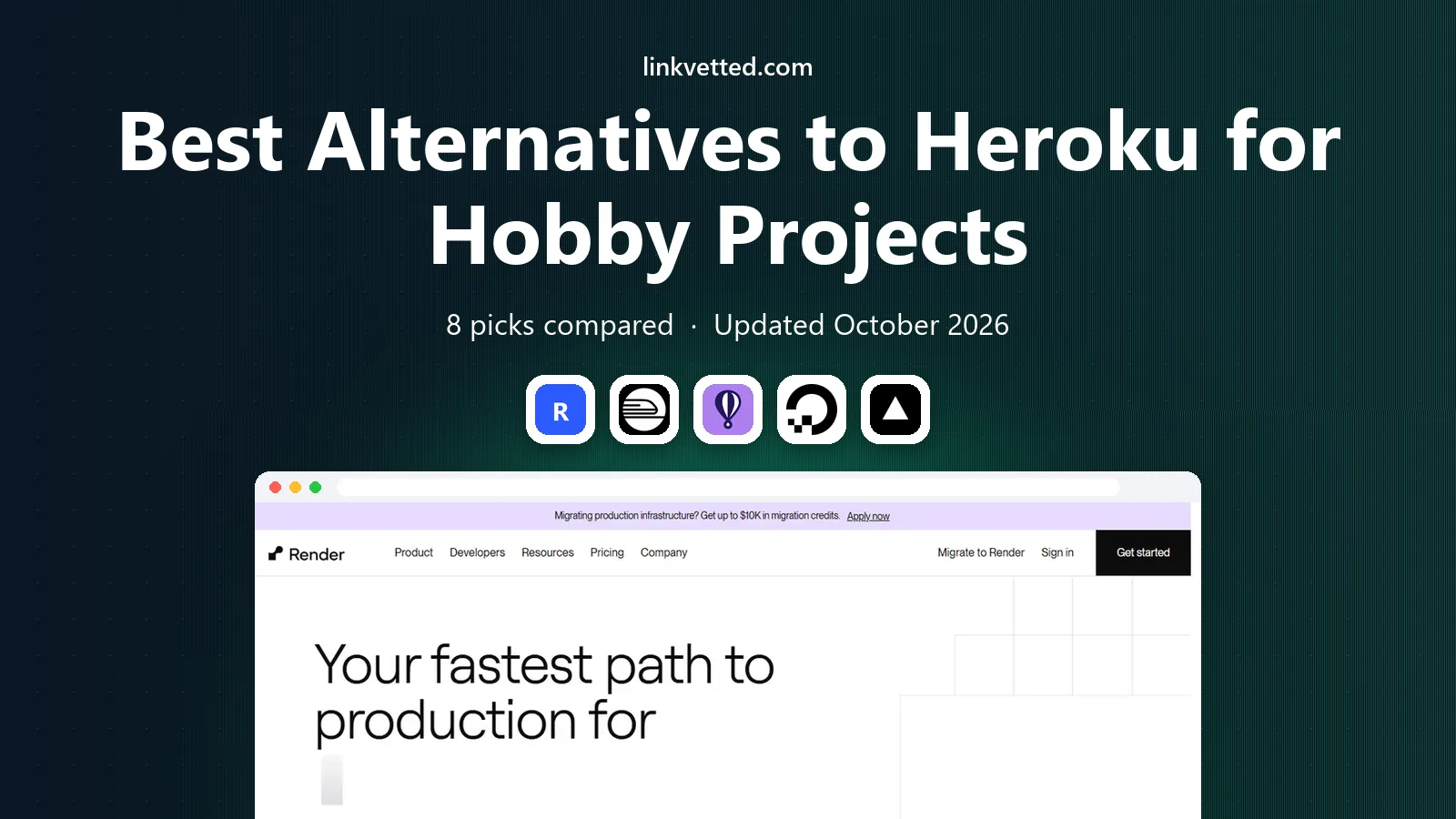
Render is the closest Heroku replacement for most hobby developers. You connect a Git repo, Render builds and deploys it, and you can add managed Postgres, Key Value storage, background workers and cron jobs in the same dashboard. That familiar model makes migration from Heroku straightforward. Our pick for most hobby projects is Render, because it matches Heroku workflow with a free tier for experiments.
The catch is sleep and price. Free web services spin down after 15 minutes idle, so the first request after a pause is slow, and paid Starter instances start at $7 per month. If your hobby app must stay awake, budget for a paid instance. If it is a side project you check occasionally, the free tier is a good start.
- Heroku-like Git deploy
- Managed Postgres and Key Value
- Background workers and cron jobs
- Free web services spin down after idle time
- Paid instances cost more than Heroku Eco
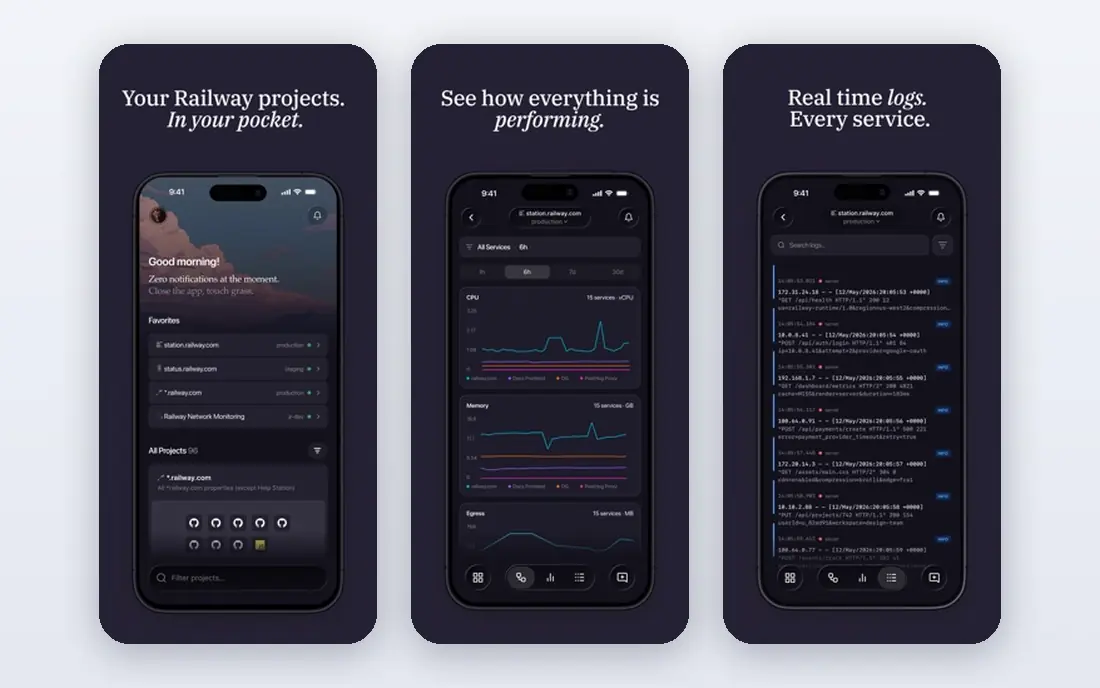
Railway suits developers who want to ship a full-stack hobby app quickly. Its visual canvas, templates and one-click Postgres and Redis services make a web app plus database plus worker easy to assemble. The Hobby plan starts at $5 per month including $5 of usage, which covers many small apps. For a weekend project or MVP, Railway is one of the fastest routes from code to live app.
The weakness is bill predictability. Usage-based pricing means a traffic spike or a runaway job can raise the bill beyond the included amount. Watch usage in the dashboard and set limits where you can. If you want a fixed monthly price, Render or DigitalOcean may be easier to budget.
- Very fast setup
- Visual project canvas
- Postgres, Redis and templates
- Usage-based billing is harder to predict
- Hobby plan includes limited usage
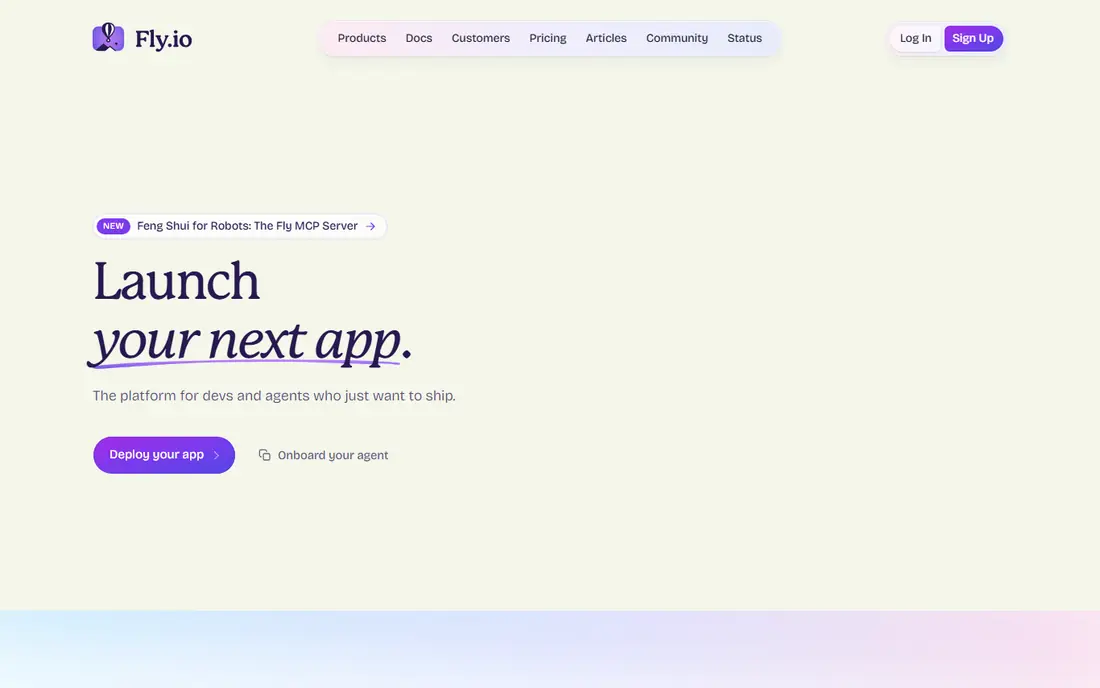
Fly.io fits hobby apps that need low latency in several regions or very low-cost always-on machines. It runs apps as Machines close to users, with small shared-CPU machines starting at a few dollars per month. That global reach is a real advantage for an app with users on several continents. Developers who like Docker and command-line control will enjoy Fly.io.
The trade-off is database cost and setup. Managed Postgres on Fly.io is expensive for a hobby budget, so many small apps run their own Postgres or use an external database. Fly.io also needs more configuration than Render. If global latency matters, Fly.io is worth the extra setup. If simplicity matters more, start with Render or Railway.
- Run close to users worldwide
- Low-cost small machines
- Docker-first
- Managed Postgres is pricey
- More setup than Render or Railway
DigitalOcean App Platform suits developers already using DigitalOcean Droplets, Spaces or managed databases. It deploys from Git, offers container tiers from $5 per month, and lets you add managed Postgres and Redis in the same account. The free tier covers up to three static sites, which is handy for frontend hobby projects. For a DigitalOcean user, App Platform keeps everything in one bill.
The limit is database pricing. Managed Postgres starts higher than a hobby database on Render or Railway, so the full-stack total can grow. If you only need a web service and a small database, compare the full total, not just the container price. For DigitalOcean shops, the integration still makes App Platform a strong pick.
- Simple container tiers
- Managed databases nearby
- Free static sites
- Managed databases start higher
- Fewer templates than Railway
Vercel fits frontend developers and full-stack hobby apps built with Next.js or similar frameworks. The Hobby plan is free for personal, non-commercial use, with Git deploys, previews for pull requests and a global edge network. That preview workflow is excellent for hobby projects, because every pull request gets its own live URL.
The catch is scope. The Hobby plan is for personal use, not commercial projects, and serverless functions have limits that suit frontend-first apps better than long-running workers. For a personal side project, Vercel is hard to beat. For a commercial MVP with heavy background work, Render or Railway may fit better.
- Free Hobby plan for personal use
- Fast Git deploys
- Strong Next.js support
- Hobby plan is for non-commercial use
- Serverless limits suit frontend-first apps
Netlify suits static sites, frontend apps and Jamstack hobby projects. Its free plan covers Git deploys, previews, forms and serverless functions, with a simple dashboard. For a portfolio, docs site or frontend demo, Netlify is one of the easiest free hosts available.
The limit is backend depth. Netlify is not a direct replacement for a Heroku dyno plus worker plus database, because long-running backend services fit better on Render, Railway or Fly.io. Use Netlify for the frontend, and pair it with a backend host if your hobby app needs a persistent server.
- Free plan for personal sites
- Easy Git deploys
- Forms and serverless functions
- Not a full Heroku replacement for long-running backends
- Paid plans for teams
Cloudflare Workers fits hobby APIs and edge apps that need low cost and global speed. The free tier covers a generous request allowance, and the paid plan starts at $5 per month with no egress fees. Paired with D1 for data and KV for caching, Workers can run a small API very cheaply. For spiky or global hobby traffic, that cost model is attractive.
The trade-off is architecture. Workers run as isolates, not as traditional long-running servers, so apps built for a Heroku dyno may need rework. If your app is a stateless API, Workers is excellent. If it needs long-running processes or a traditional server model, Render or Fly.io will be simpler.
- Free tier for edge functions
- No egress fees
- D1 and KV storage options
- Edge isolate model needs architecture changes
- Not for long-running servers
Google Cloud Run suits developers comfortable with Google Cloud who want usage-based container hosting. It runs Docker containers, scales to zero when idle, and offers a generous free request allowance, with new Google Cloud customers also receiving welcome credit. That pay-for-use model is ideal for a hobby app with irregular traffic.
The catch is setup complexity. Google Cloud accounts, projects, billing and IAM take more steps than Render or Railway, and you still need a separate database service. For a developer already on Google Cloud, Cloud Run is a cheap, powerful hobby host. For a beginner, Render or Railway will be faster to learn.
- Pay only for use
- Generous free request allowance
- Docker containers
- Google Cloud setup is heavier
- Database needs a separate service
How we picked these
We compared official pricing pages and documentation for platforms that offer Git deploy, a free tier or a low paid plan, and a path to a managed database or serverless data store. We favored platforms still actively offered in 2026, with a clear hobby fit, and we used See website where pricing is usage-based rather than inventing a fixed rate.
What to check before you switch
Check sleep behavior first, because a free tier that sleeps will feel slow for a demo or a shared link. Check database cost separately, because a cheap container plus an expensive database is not a cheap app. Also check how long a free tier lasts and whether a card is required, because some trials end after a set period.
Budget for always-on if it matters
If your app must answer at once, pay for a paid instance on Render, Railway or Fly.io, or use a usage-based service that scales from zero quickly. Free tiers are for experiments and occasional use, not for a demo you share with a hiring manager or a customer.
Keep the migration simple
Export config vars and database dumps from Heroku, push to a new Git remote, and recreate add-ons as managed services on the new platform. Test the app end to end before you cancel Heroku, and keep the old app running until the new one passes real traffic.
FAQ
Does Heroku still have a free tier?
No. Free dynos and free Heroku Postgres ended in 2022, and the cheapest paid option is Eco dynos from $5 per month. Eco dynos sleep after 30 minutes without traffic, and Eco is for personal apps only.
What is the closest Heroku alternative for hobby projects?
Render is the closest Heroku-like experience, with Git deploy, managed Postgres, workers and cron jobs. Railway is a close second, with faster setup and a visual canvas, but usage-based billing.
Which Heroku alternative is cheapest for always-on hobby apps?
Fly.io offers very low-cost small machines for always-on use, while Render Starter and DigitalOcean App Platform offer fixed-price containers from $5 to $7 per month. Compare the full cost including database before you choose.
Can I host a hobby project for free in 2026?
Yes, for experiments and occasional use. Render, Railway, Vercel, Netlify, Cloudflare Workers and Google Cloud Run all offer free tiers, but free web services often sleep or limit hours. Pay a few dollars if the app must stay awake.
How do I migrate from Heroku to Render or Railway?
Connect your Git repo to the new platform, set config vars, add a managed database, and import a database dump from Heroku. Test the app fully, then update DNS and cancel Heroku only after the new app handles real traffic.