Best Aha Alternatives in 2026: 8 Tools Compared
Searching for aha alternatives? We compare 8 roadmapping and product tools on price, feedback, prioritization, and how well they fit small teams for 2026.
- Editor's choice
 Productboard
Feedback, prioritization, and roadmaps together
Starts at$19 per monthVisit productboard.comFull review - Great alternative
 ProductPlan
Roadmaps that executives can read quickly
Starts at$39 per user per monthVisit productplan.comFull review - Also consider
 Roadmunk
Timeline roadmaps on a smaller budget
Starts at$19 per user per monthVisit roadmunk.comFull review
TL;DR:
- Productboard is the strongest all-round replacement for product teams that need feedback, prioritization, and roadmaps in one place.
- Roadmunk and ProductPlan are the simplest roadmap-first picks, with timeline views that non-technical stakeholders can read at a glance.
- Jira Product Discovery fits teams already building in Jira, since ideas and delivery stay connected without a second system.
- ClickUp, monday, and Asana work when roadmapping is one job among many, and you want one workspace for plans, tasks, and docs.
- Craft.io is worth a look for teams that want strategy, discovery, and delivery planning tied together in a single product workspace.
Quick comparison
| Tool | Best for | Starts at | Free plan? | |
|---|---|---|---|---|
| Productboard | Feedback, prioritization, and roadmaps together | $19 per month | Yes | Visit |
| ProductPlan | Roadmaps that executives can read quickly | $39 per user per month | No | Visit |
| Roadmunk | Timeline roadmaps on a smaller budget | $19 per user per month | No | Visit |
 Jira Product Discovery | Product discovery inside Jira | See website | Yes | Visit |
 ClickUp | Roadmaps plus tasks, docs, and goals in one workspace | $7 per user per month | Yes | Visit |
 monday | Visual boards for product and cross-team planning | $9 per seat per month | Yes | Visit |
 Asana | Cross-team plans with timelines and portfolios | $10.99 per user per month | Yes | Visit |
 Craft.io | Strategy, discovery, and delivery in one product workspace | See website | No | Visit |
The best aha alternatives
Aha covers a lot: strategy, idea capture, roadmapping, and release planning. That breadth is powerful, but it also means many teams pay for depth they never use. The tools below split that job in useful ways, from a focused roadmap to a full product workspace.
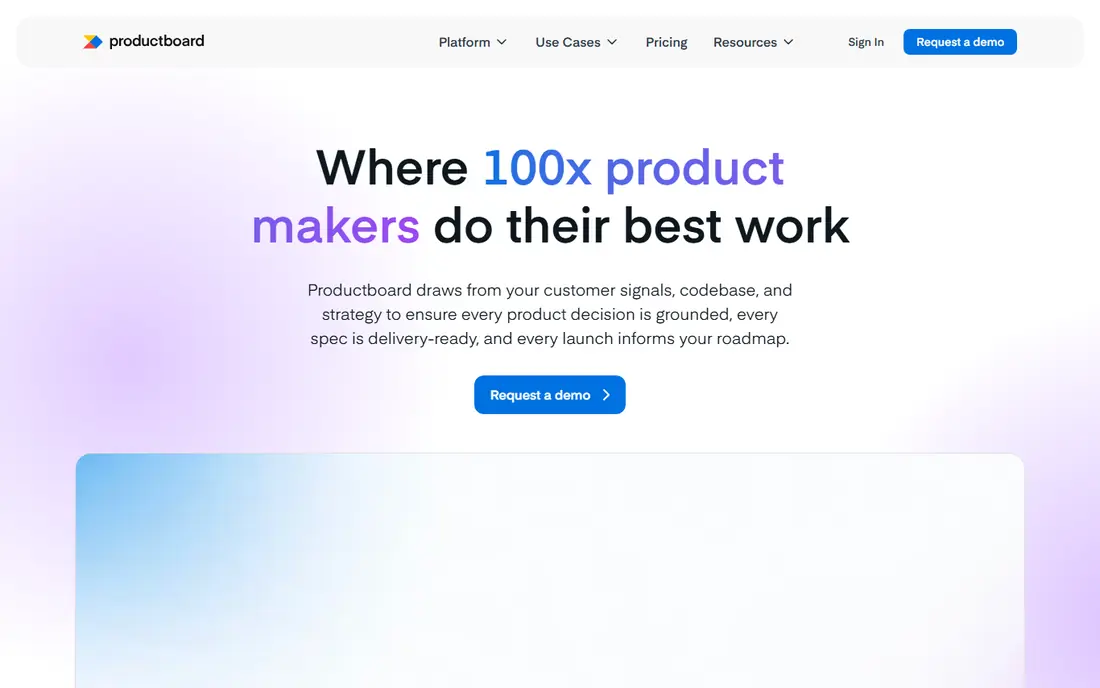
Productboard is the closest like-for-like replacement for many Aha users. It collects customer feedback in one place, links that feedback to features, and lets you score ideas before they reach a roadmap. That chain, from a customer comment to a planned release, is what product teams miss when they switch to a generic project tool.
The pricing model needs a careful read, because it charges for makers who create and edit, while viewers often cost less or nothing. That can make Productboard cheaper than a per-seat tool for a large stakeholder group, or more expensive if everyone edits. For a product team that lives on prioritization, it is our pick for most people.
- Strong feedback portal
- Prioritization frameworks built in
- Clear roadmap views
- Per-maker pricing can confuse budgeting
- Advanced features sit on higher tiers
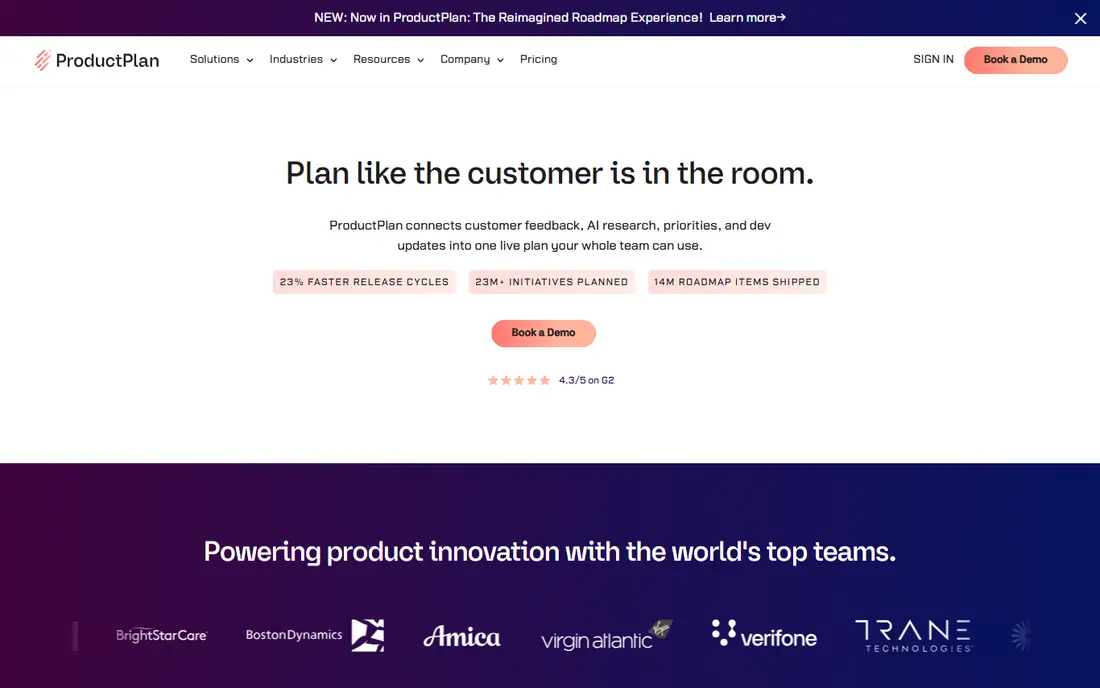
ProductPlan keeps roadmapping simple on purpose. You build bars on a timeline, color them by theme or status, and share a link that a non-technical reader can understand without training. That clarity is why product managers use it for board updates, customer reviews, and quarterly planning, even when delivery lives elsewhere.
The trade is depth. ProductPlan is not a full discovery platform, and teams that need detailed feedback scoring or complex prioritization will want Productboard or Craft.io instead. If your main pain is a roadmap nobody reads, ProductPlan fixes that specific problem well.
- Very clear timeline and bar roadmaps
- Easy sharing
- Good for stakeholder updates
- Less depth for idea management
- Higher entry price than Roadmunk
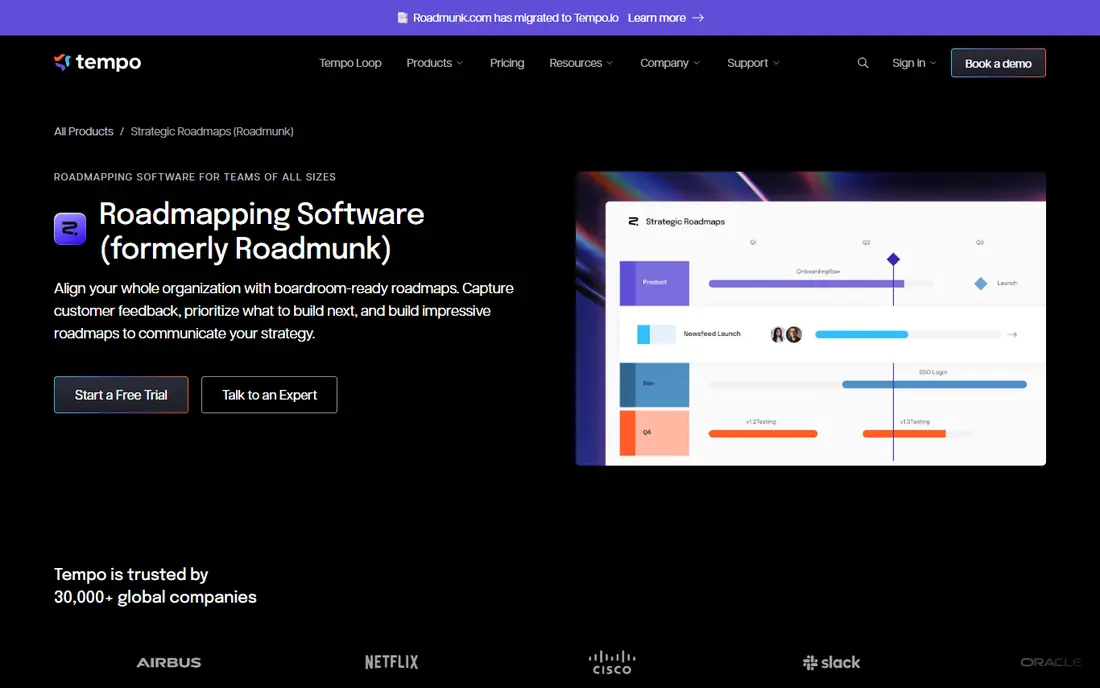
Roadmunk offers a similar timeline approach to ProductPlan at a lower starting price. You can switch between timeline, swimlane, and board views, which helps when one audience wants dates and another wants themes. For a small product team that needs a presentable roadmap without an enterprise contract, Roadmunk is a practical choice.
Lower tiers do limit reviewers, integrations, and some advanced fields, so check those caps before you build a roadmap that fifty stakeholders need to view. A short trial with your real roadmap data will show whether the Starter plan is enough or whether Business is the honest price.
- Low entry price
- Multiple roadmap views
- Straightforward sharing
- Reviewer and integration limits on lower tiers
- No free plan
Jira Product Discovery suits teams that already plan delivery in Jira and do not want a second source of truth. Ideas, insights, and prioritization live beside the backlog, so a feature that moves from discovery to delivery keeps its context. Views, fields, and scoring can adapt to how your team already works, rather than forcing a new method.
As a standalone executive roadmap, it feels less refined than ProductPlan or Roadmunk, and non-technical stakeholders may need guidance to read it. The value here is connection, not presentation alone. If your engineers live in Jira, that connection often matters more than a prettier timeline.
- Ideas connect directly to delivery work
- Familiar for Jira teams
- Flexible views
- Less polished as a standalone roadmap for executives
- Needs Jira knowledge
ClickUp is not a dedicated product tool, but it covers roadmapping well enough for many small teams, at a price far below Aha. Timeline and Gantt views, custom fields, goals, and docs sit in one workspace, so a roadmap, a launch checklist, and a spec can live together. The free plan also lets a small team start without a budget approval.
The catch is setup. ClickUp ships so many features that a roadmap can look messy until someone owns the workspace, hides unused views, and sets a consistent field structure. Teams with a clear owner will get excellent value. Teams without one may prefer a focused tool like Roadmunk, even at a higher price.
- Very low price for the breadth
- Gantt and timeline views
- Goals and docs included
- Can feel overwhelming
- Roadmap views need setup to look clean
monday works well when product planning shares a workspace with marketing, operations, or customer success. Boards are visual, automations handle status changes and reminders, and templates give you a fast start for a roadmap, a launch plan, or a feedback tracker. Non-technical teammates tend to adopt it quickly, which helps when a roadmap needs input from many departments.
Roadmap depth is the limit. monday does not match Productboard on feedback scoring or Aha on strategy layers, so product teams with complex prioritization may outgrow it. For a team that wants one visual workspace for everything, monday is a friendly, flexible alternative.
- Highly visual boards
- Easy automations
- Broad templates
- Three-seat minimum on paid plans
- Roadmap depth is less than dedicated tools
Asana is a strong pick when a product roadmap must coordinate work across teams. Timeline views show how releases, marketing launches, and support readiness line up, while portfolios give leaders a view across several projects at once. The interface is clean enough that new teammates usually need little training, which matters when a roadmap is a shared document.
Product-specific features are thinner than Productboard, and the free plan is now limited to two users, so small teams should check that cap. Asana Advanced adds goals, workload, and deeper reporting, at a higher price. If your roadmap is really a cross-team plan, Asana fits well. If it is a discovery tool, look at Productboard first.
- Clean timelines
- Portfolios for multiple projects
- Strong adoption
- Free plan now covers only two users
- Advanced reporting sits on higher tiers
Craft.io aims at the same broad job as Aha: connect company strategy to product discovery and then to delivery planning. You can capture feedback, score ideas, build roadmaps, and track capacity in one place, which reduces the copy-and-paste work between a roadmap tool and a delivery tool. Multiple views help different audiences read the same plan.
The downsides are a lack of a free plan and a smaller integration ecosystem than the biggest platforms, so check the connectors your team relies on before switching. For a product team that wants Aha-like breadth without Aha pricing or complexity, Craft.io is a credible alternative worth a demo.
- Connects strategy to delivery
- Feedback and prioritization included
- Multiple roadmap views
- No free plan
- Smaller ecosystem than Jira or monday
How we picked these
We compared official pricing pages, feature lists, and public reviews for tools that cover Aha jobs: strategy, feedback, prioritization, roadmapping, and release planning. We favored tools actively sold in 2026, with clear pricing or a free tier, and with distinct strengths, from focused timelines to full product workspaces. Prices are starting prices and change often, so verify on the vendor page before you buy.
How to pick a roadmap tool without overbuying
A roadmap tool should make decisions easier, not create a second job of maintaining the tool itself.
Decide what the roadmap must do
List the decisions your roadmap supports. If it only communicates dates and themes, Roadmunk or ProductPlan will do. If it must justify why one feature beats another, you need feedback and scoring, which points to Productboard or Craft.io. If it must track delivery, Jira Product Discovery or ClickUp keeps plans close to work.
Test with a real roadmap, not a demo template
Import one current roadmap, with real themes, dates, and owners, and share it with the people who actually read it. Watch whether executives, engineers, and customer-facing staff all understand it without a walkthrough. A tool that looks good in a vendor demo but confuses your stakeholders in a trial will not improve after you pay.
Count editors, not just viewers
Many product tools charge differently for people who edit versus people who view. Count how many product managers, designers, and engineers will edit, and how many stakeholders only need to view. That split often decides whether Productboard, monday, or Asana is cheapest for your real team.
Keep the roadmap honest
A roadmap is a plan, not a promise. Mark confidence levels, separate committed work from ideas under review, and update it on a fixed cadence. Tools help with presentation, but trust comes from a team that updates the plan when priorities change and explains why.
FAQ
What is the best overall Aha alternative?
Productboard is the best overall pick for most product teams, because it covers feedback, prioritization, and roadmaps in one system. Roadmunk is better if you only need a clean timeline, and Jira Product Discovery is better if your team already builds in Jira.
Is there a free Aha alternative?
Yes. ClickUp, monday, and Asana offer free plans, and Productboard and Jira Product Discovery offer free options for small teams. Free plans have limits on users, views, or features, so check whether your roadmap, feedback, and reporting needs fit before relying on one.
Which Aha alternative is cheapest?
ClickUp is cheapest among the tools here, starting at $7 per user per month on annual billing, with a free plan for small teams. Roadmunk and Productboard start at $19 per month, but their billing models differ, so compare the total for your editor and viewer count.
Can I import my Aha roadmaps into these tools?
Most of these tools accept CSV imports, and several offer migration help or integrations that bring in features, roadmaps, and feedback. Export a sample from Aha first, test the import, and check that dates, owners, and custom fields survive before moving a full workspace.
Do I need a dedicated product tool, or will Asana or ClickUp work?
A general workspace works when roadmapping is mainly about dates, owners, and cross-team coordination. A dedicated product tool is worth it when you need feedback scoring, prioritization frameworks, and a clear link from customer insight to a planned feature.
What is the difference between Productboard and ProductPlan?
Productboard focuses on feedback collection and prioritization before a feature reaches a roadmap. ProductPlan focuses on presenting a clear, visual roadmap to stakeholders. Many teams use Productboard to decide what to build and ProductPlan-style views to communicate when it will ship.