Best AEM Alternatives in 2026: 8 Platforms Compared
Compare the best AEM alternatives for 2026, including headless CMS, traditional CMS, and hybrid platforms, with pricing and fit for teams in full detail.
- Editor's choice
 Contentful
Enterprise headless publishing
Starts at$300 per monthVisit contentful.comFull review - Great alternative
 Sanity
Custom editorial experiences
Starts at$15 per seat per monthVisit sanity.ioFull review - Also consider
 Strapi
Self hosted headless CMS
Starts atSee websiteVisit strapi.ioFull review
TL;DR:
- Adobe Experience Manager is powerful but expensive and heavy, so many teams move to a lighter headless or hybrid CMS.
- Contentful and Sanity lead the headless field, while WordPress and Drupal remain the low cost traditional options.
- Storyblok suits marketing teams that want visual editing on a headless base.
- Match the category first: headless, traditional, or hybrid, then compare vendors inside that category.
Quick comparison
| Tool | Best for | Starts at | Free plan? | |
|---|---|---|---|---|
| Contentful | Enterprise headless publishing | $300 per month | Yes | Visit |
| Sanity | Custom editorial experiences | $15 per seat per month | Yes | Visit |
| Strapi | Self hosted headless CMS | See website | Yes | Visit |
 WordPress | Classic websites at low cost | Free | Yes | Visit |
 Drupal | Complex sites with strict access | Free | Yes | Visit |
 Storyblok | Visual editing for marketers | $99 per month | Yes | Visit |
 Webflow | Design led marketing sites | $15 per month | Yes | Visit |
 Sitecore | Enterprise digital experience | See website | No | Visit |
The best AEM alternatives
Adobe Experience Manager, or AEM, combines content management, digital assets, and personalization in one enterprise platform. The alternatives below replace different parts of that job, from headless content APIs to classic websites.
Contentful is the most established headless alternative to AEM for enterprise teams. Content is modeled once, then delivered by API to websites, apps, and other channels, with roles, locales, and workflows to control publishing. That structure suits global brands that publish the same content in many places and need governance around who can change what.
Cost is the main drawback. The entry paid plan starts at $300 per month, and larger needs push the price up quickly, so a small team will find it heavy. Editors also work in structured forms rather than a visual page builder, which can feel less direct than AEM page editing. For an enterprise team moving to headless, Contentful remains a safe, well supported choice.
- Mature headless APIs and SDKs
- Strong governance and locales
- Scales to many channels
- Expensive at scale
- Structured editing can feel rigid
- Implementation needs developer time
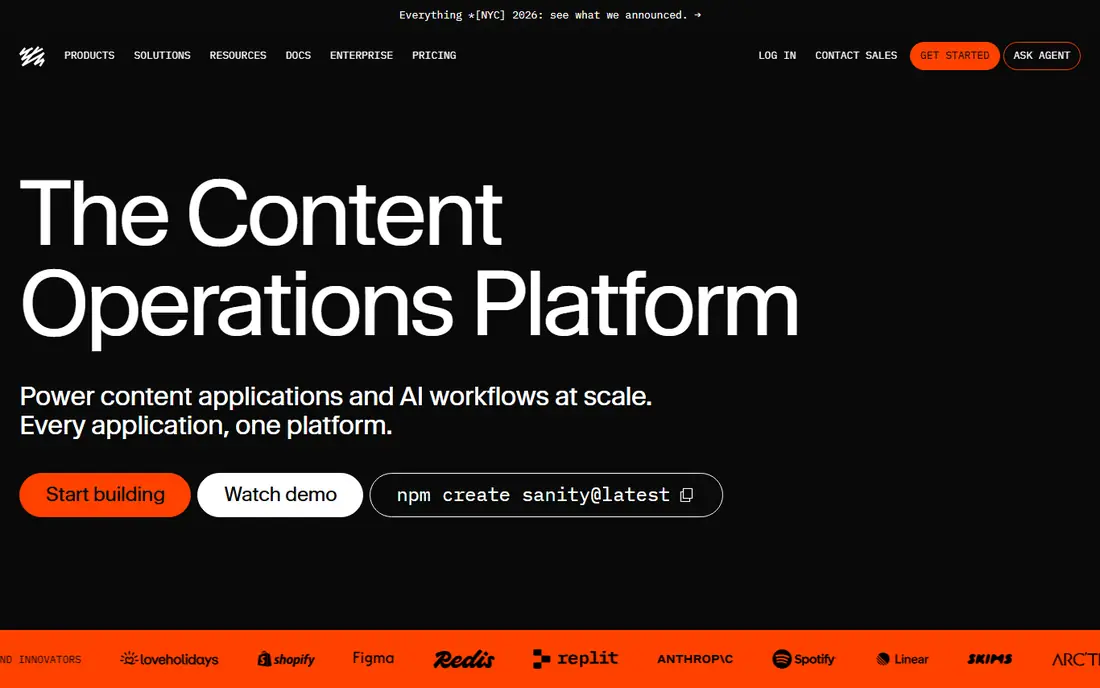
Sanity treats content as structured data and lets developers build a custom editing studio around it. Real time collaboration, flexible schemas, and a query language give teams freedom that a fixed CMS template cannot match. Editors get a tailored workspace, and developers get clean APIs for any front end. That combination explains why many agencies pick Sanity for custom sites and apps.
The freedom has a cost in setup time. Sanity is not a plug and play page builder, and a team without developer resources will struggle to get the best from it. Seat pricing also adds up for large editorial teams. If you have developers and want a CMS shaped around your content model, Sanity is one of the strongest AEM alternatives.
- Real time collaboration
- Highly customizable studio
- Content as structured data
- Needs developer setup to shine
- Custom studio work takes time
- Pricing grows with seats
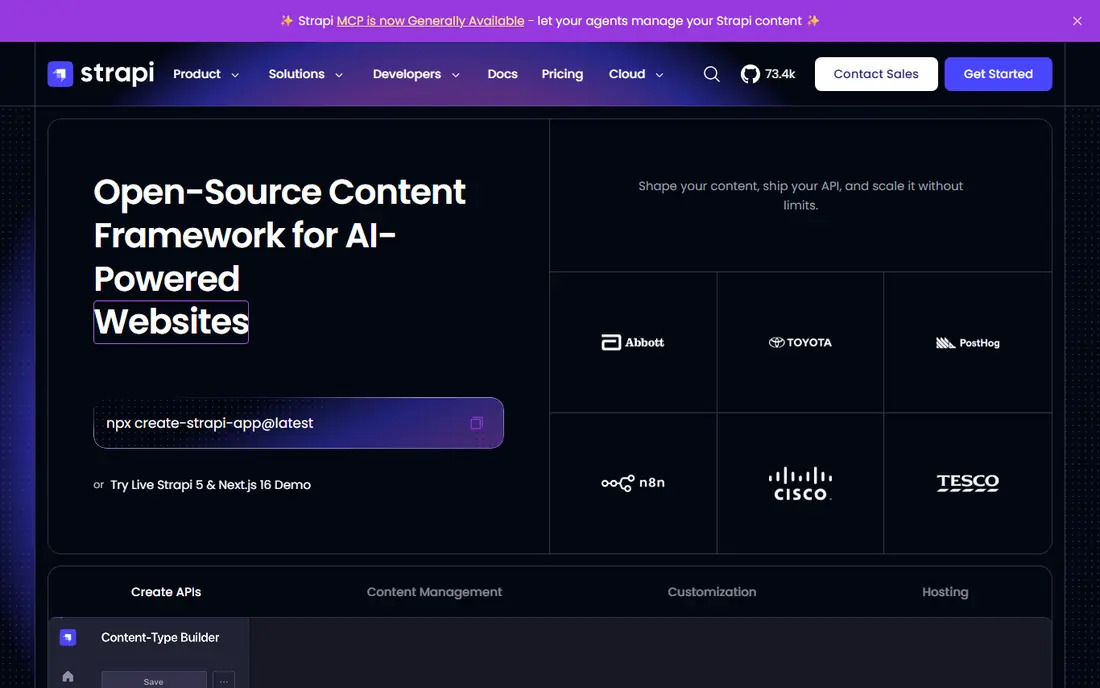
Strapi is the strongest open source headless alternative to AEM. You can self host it for free in license cost, control the code and database, and expose content through REST or GraphQL APIs. That control appeals to teams that want to own their infrastructure, avoid vendor lock in, and customize the admin panel and content types in code.
Self hosting is also the catch. You handle servers, updates, backups, and security, and the default admin interface is functional rather than polished for marketers. Strapi Cloud removes some of that burden for a monthly fee. For a developer led team that wants headless content on its own infrastructure, Strapi is hard to beat on control and cost.
- Open source and self hostable
- Full code control
- REST and GraphQL APIs
- Self hosting adds operations work
- Admin interface is basic
- Cloud pricing adds up
WordPress remains the most common AEM alternative for classic websites, and for good reason. The software itself is free, the ecosystem of themes and plugins is unmatched, and almost any web developer can work with it. A marketing site, blog, or small business site can be built and launched far faster and cheaper than on AEM, and content editing is familiar to most teams.
WordPress is not a headless platform by default, though it can be used that way with its REST API. Security, updates, and plugin management also need ongoing attention, and a badly maintained site can become a problem. If your main need is a classic website with pages, posts, and forms, WordPress gives the lowest cost and the widest support.
- Free open source software
- Huge theme and plugin ecosystem
- Easy to hire for
- Needs hosting, updates, and security care
- Plugin quality varies
- Not headless by default
Drupal suits organizations that need WordPress style freedom with stronger structure. Content types, taxonomies, roles, and permissions are built in at a depth that suits universities, government sites, and large publishers. Multilingual content, complex workflows, and strict access rules are areas where Drupal has long been strong, and the software itself is free.
The learning curve is real. Editors and developers need more training than on WordPress, and custom theming takes more effort. Small marketing sites will find Drupal heavier than needed. For a complex site where access control and content structure matter more than speed of setup, Drupal is a credible, low license cost alternative to AEM.
- Free open source software
- Strong access control and content modeling
- Good for complex, multilingual sites
- Steeper learning curve
- Developer help often needed
- Theming takes more work
Storyblok bridges the gap between headless flexibility and marketer friendly editing. Editors build pages from components in a visual editor, seeing the page as they work, while developers still get APIs for any front end. That combination helps marketing teams that liked AEM page editing but want a lighter, headless architecture.
Storyblok is less strong for content that is not page based, such as complex product data or app content, where Sanity or Contentful may fit better. Entry pricing is also higher than some rivals. If your team mainly builds marketing pages and wants visual editing without a monolith, Storyblok is a natural AEM alternative to test.
- Visual editor on a headless base
- Component based pages
- Good marketer experience
- Higher entry price than some headless rivals
- Weaker for non page content
- Pricing varies by seats
Webflow is a good AEM alternative for design led marketing websites. Designers can build pixel level layouts visually, publish to built in hosting, and manage CMS content for blogs, landing pages, and case studies. For a marketing team that wants a polished site without a developer for every change, Webflow is faster than AEM and far easier to learn.
It is not a full digital experience platform. Personalization, complex workflows, and enterprise asset management are thinner than AEM, and costs rise as traffic and CMS items grow. If your site is mainly marketing pages with strong design needs, Webflow is a strong pick. If you need deep enterprise features, look at Contentful, Sitecore, or a hybrid platform instead.
- Visual design control without code
- Built in hosting and CMS
- Fast for marketing sites
- Costs rise with traffic and CMS items
- Not a full enterprise DXP
- Code export limits on some plans
Sitecore is the closest like for like enterprise alternative to AEM. It offers content management, personalization, marketing automation, and commerce in a digital experience platform built for large brands. Teams that need AEM scale but want a different vendor, or that already use Microsoft technology, often shortlist Sitecore first.
Like AEM, Sitecore is expensive and heavy. Implementation usually needs a specialist partner, and ongoing costs are enterprise level. Small and mid sized teams should not buy Sitecore for a simple website. For a large organization that needs a full DXP and is willing to pay for it, Sitecore is the most direct AEM replacement on this list.
- Full enterprise DXP features
- Personalization and commerce options
- Strong for large brands
- Enterprise pricing and implementation
- Heavy platform
- Needs specialist partners
How we picked these
We compared official pricing pages, product documentation, and CMS categories for platforms that are active in 2026. We included headless, traditional, and hybrid options, and we required a working product with clear pricing or a free tier where possible. We excluded discontinued CMS products and tools that only handle one small part of a website.
What to check before you switch
Start with the category. A headless CMS needs a front end team, a traditional CMS needs hosting and maintenance, and a hybrid platform tries to give both. Migrating content, assets, and URLs from AEM takes planning, so audit your content model, templates, and integrations before you pick a vendor.
Next, test the editor experience with real marketers, not only developers. A CMS that developers love but editors avoid will fail in daily use. Check migration tools, asset handling, multilingual support, and total cost, including hosting, implementation, and ongoing support. A pilot with one site section will reveal more than a sales demo.
FAQ
What is the best AEM alternative for small businesses?
WordPress or Webflow suit most small businesses, depending on whether you want low cost flexibility or visual design control. Sanity and Strapi suit small teams with developer help.
Is Contentful a good AEM alternative?
Yes, for enterprise teams moving to headless. Contentful offers mature APIs, governance, and multi channel delivery, but it costs more than open source options and needs developer implementation.
Can WordPress replace AEM?
For classic websites, yes, at much lower cost. WordPress does not match AEM personalization and enterprise asset features out of the box, so large DXP needs may require a headless or hybrid platform instead.
What is a headless CMS?
A headless CMS stores content and delivers it by API, while a separate front end displays it. That separation lets the same content feed a website, app, and other channels, but it needs developer work to build the front end.
How much do AEM alternatives cost?
Costs range from free open source software, where you pay for hosting, to $300 per month for Contentful entry plans and quoted enterprise pricing for Sitecore. Always compare total cost, including implementation and hosting.
Should I choose headless or traditional CMS over AEM?
Choose headless if you publish to many channels and have developers. Choose traditional if you need a classic website fast and cheap. Choose hybrid, like Storyblok, if marketers want visual editing on a headless base.