Switching From StackAdapt? 5 Alternatives for 2026
5 tools for StackAdapt alternatives, compared on pricing, free plans and best-fit use. Price notes and drawbacks come with each one. Straight answers.
- Editor's choiceGoogle Display & Video 360
End-to-end campaign management in Google stack
Starts atPricing on requestVisit marketingplatform.google.comFull review - Great alternative
 Simpli.fi
Connecting digital intent with real-world movement
Starts atPricing on requestVisit simpli.fiFull review - Also consider
 The Trade Desk
Omnichannel brand and performance campaigns
Starts atPricing on requestVisit thetradedesk.comFull review
Direct answer
If you need end-to-end campaign management in Google stack, Google Display & Video 360 is the first tool to look at here. Simpli.fi fits connecting digital intent with real-world movement; The Trade Desk fits omnichannel brand and performance campaigns. All 5 tools are compared below on fit, free plan and limits. None of these vendors publish plan prices, so pricing is on request for every option.
TL;DR:
- This list starts with Google Display & Video 360, which is built for end-to-end campaign management in Google stack.
- Neither Google Display & Video 360 nor Amazon DSP, nor any of the other 3 tools, has a permanent free plan; trials and quotes are the norm.
- Amazon DSP suits retail and first-party audience targeting.
- Pricing across the list, from Google Display & Video 360 to Amazon DSP, is by quote only.
Last checked November 2026. Pricing on request: vendors did not publish plan prices when this guide was last checked (November 2026), so ask each vendor for a written quote.
Quick comparison
| Tool | Best for | Starts at | Free plan? | |
|---|---|---|---|---|
| Google Display & Video 360 | End-to-end campaign management in Google stack | Pricing on request | Not stated | Visit |
| Simpli.fi | Connecting digital intent with real-world movement | Pricing on request | Not stated | Visit |
| The Trade Desk | Omnichannel brand and performance campaigns | Pricing on request | Not stated | Visit |
 Basis Technologies | Unified programmatic, search and social automation | Pricing on request | Not stated | Visit |
 Amazon DSP | Retail and first-party audience targeting | Pricing on request | Not stated | Visit |
The 5 tools in detail
Choosing StackAdapt usually comes down to price, fit and limits. This LinkVetted guide sets 5 tools side by side on those three points, with the facts kept short and checkable.
Google Display & Video 360
Best for: End-to-end campaign management in Google stack
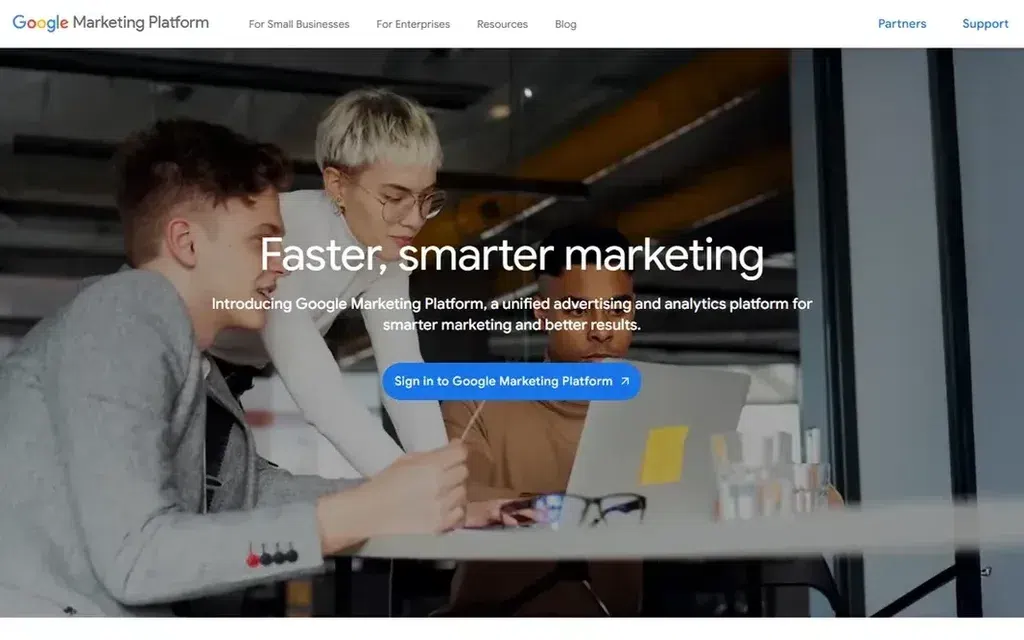
Where Google Display & Video 360 fits: end-to-end campaign management in Google stack. Advertisers outside the Google ecosystem may find the integration benefits less compelling.
More specifically, Google Display & Video 360 is an advertising product that handles media planning, creative development, measurement and optimization for end-to-end campaign management. Google Display & Video 360 does not show a starting price in this comparison, so check the vendor site for current pricing. As for free access: Not stated.
What to check first: Best value within Google stack.
- Measurement and optimization tools
- Integrated planning and creative
- Complicated for newcomers
Simpli.fi is designed for connecting digital intent with real-world movement. Simpli.fi is a programmatic advertising product that links digital intent with real-world movement, activating CTV, display, premium social, geo-fencing and omnichannel campaigns.
Honest limits: May lack deep search integration.
What users get: CTV.
If your focus is purely on display and video without location data, other DSPs may be more suitable. Also, teams seeking a StackAdapt alternative with solid location-based capabilities frequently evaluate Simpli.fi. Check the vendor site for Simpli.fi pricing; none is listed in this comparison. Free access: Not stated.
- Omnichannel campaign support
- Geo-fencing capabilities
- Focus on location-based tactics
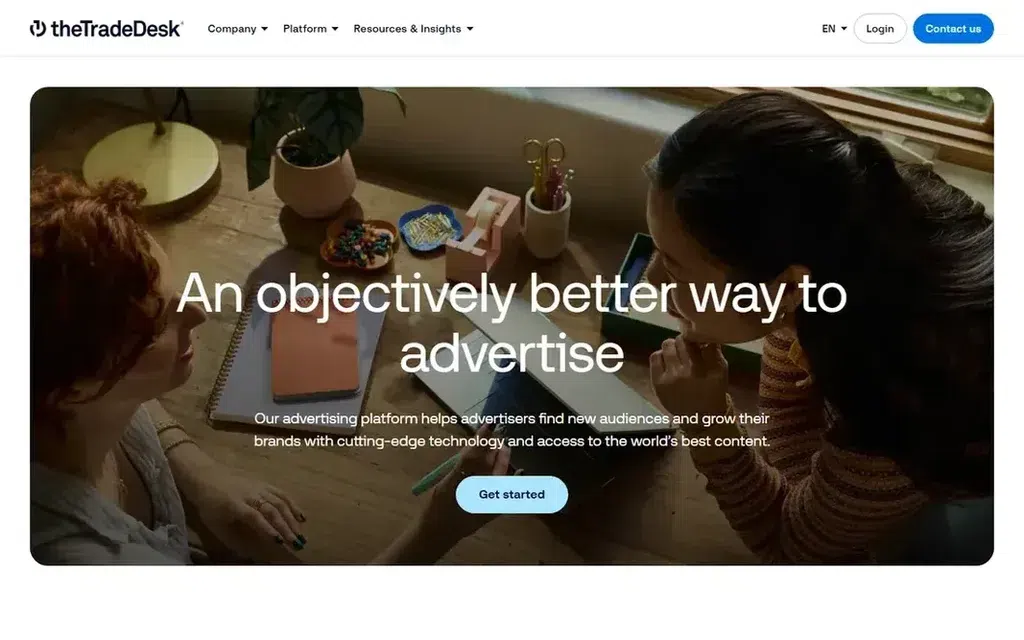
The Trade Desk works best for omnichannel brand and performance campaigns. The Trade Desk is an omnichannel advertising system built to help advertisers reach their goals across brand building and performance marketing.
Trade-offs to know: May need managed service.
For everyday use, consider other choices if your priority is retail media or an all-in-one media planning suite. As for the details, smaller teams might find its scope overwhelming without dedicated programmatic expertise. No starting price is listed for The Trade Desk here; confirm pricing on the vendor site. Free options: Not stated.
- Wide omnichannel reach
- Capable brand-building focus
- Less retail-specific data
Basis Technologies makes the most sense for unified programmatic, search and social automation. Basis Technologies provides an advertising automation system for omnichannel media, allowing users to plan, activate, optimize and reconcile media across programmatic, search and social. More specifically, Basis is a wide platform that may need significant onboarding and training to use effectively.
From a buyer's view, if you primarily need a standalone DSP for display and video, other choices may be more straightforward. Smaller advertisers with straightforward programmatic needs might find it more than necessary. Basis Technologies does not show a starting price in this comparison, so check the vendor site for current pricing. As for free access: Not stated.
Honest limits: May be overkill for small teams.
- Planning and reconciliation tools
- One system for several channels
- Needs onboarding time
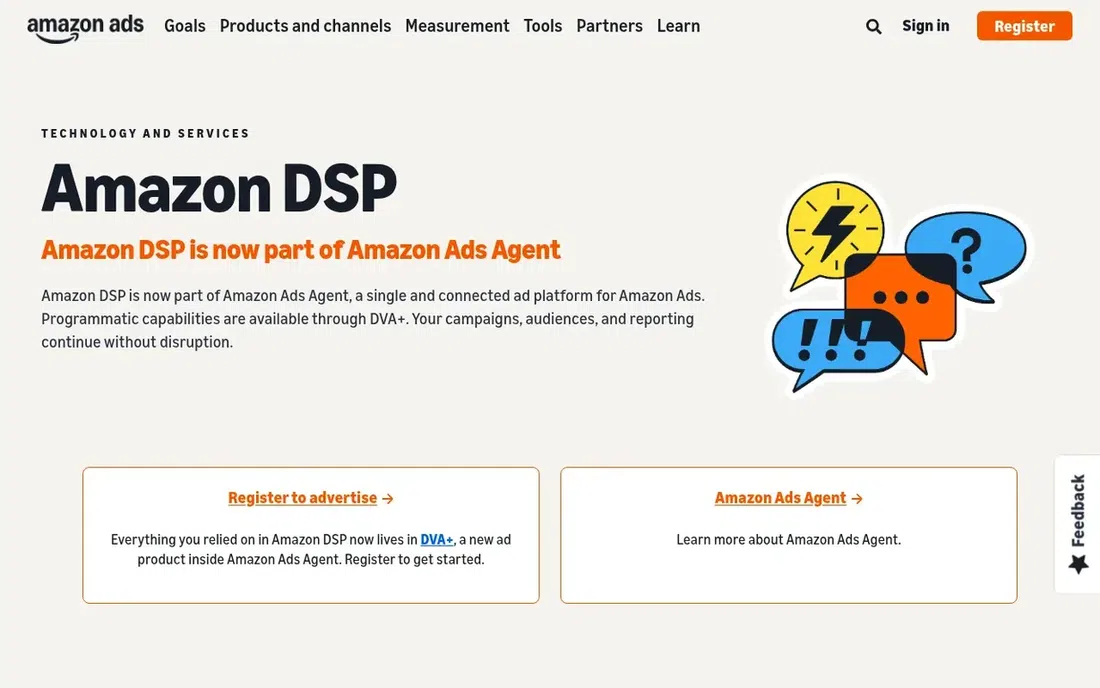
Think of Amazon DSP for retail and first-party audience targeting. Amazon DSP is closely tied to the Amazon ecosystem, which can be a limitation for advertisers without an Amazon presence. Its reporting and workflow may differ from what teams expect from a general-purpose DSP.
Drawbacks to consider: Less suited for non-retail brands.
In daily use, if you need wide omnichannel reach outside retail, other systems may be a better fit. Also, brands looking for a StackAdapt alternative with solid retail data commonly evaluate Amazon DSP. In daily use, Amazon DSP is a demand-side product that programmatically buys ads to reach new and existing audiences on Amazon and external apps and websites. It is a natural fit for advertisers selling on Amazon or those who want to use Amazon's shopping signals for targeting. Check the vendor site for Amazon DSP pricing; none is listed in this comparison. Free options: Not stated.
- Access to Amazon audiences
- Programmatic buying on Amazon
- Tied to Amazon ecosystem
How we compared the tools
The comparison looks at four things: starting price, free access, how well the feature set matches StackAdapt, and the main limit of each tool. Treat prices as a snapshot: vendors change plans often, so check the vendor site for the figure that applies today. Position on the page reflects fit for a typical buyer first, with price clarity and free access breaking ties. Treat it as a guide, not a ruling.
Before you commit
- Request quotes from Google Display & Video 360, Amazon DSP and the others; the list shows no fixed prices.
- Before choosing Google Display & Video 360, weigh its main limit: complicated for newcomers.
- A short pilot of Amazon DSP with your real workflow tells you more than a feature table.
- Check the support hours and onboarding help Simpli.fi offers; smaller vendors vary a lot here.
- Check how data leaves Google Display & Video 360: formats, limits and whether exports are available on every plan.
FAQ
Is Google Display & Video 360 the right pick for everyone comparing StackAdapt?
No single tool suits every team. Google Display & Video 360 comes first because it fits end-to-end campaign management in Google stack, while Simpli.fi suits connecting digital intent with real-world movement and The Trade Desk suits omnichannel brand and performance campaigns. Match the tool to your own size, budget and workflow before deciding.
What is a demand-side platform (DSP)?
It links to ad exchanges and helps automate bidding, targeting and measurement. As for the details, StackAdapt alternatives are all DSPs or systems that bundle DSP capabilities.
Do these tools publish their prices?
No. None of the tools, from Google Display & Video 360 to Amazon DSP, shows a fixed starting price here, so budget time for quotes.
Does any tool for StackAdapt here have a free plan?
A permanent free plan is not offered by Google Display & Video 360, Amazon DSP or the other tools here. Plan a short evaluation period instead.
Can I try these tools before paying?
Not by default. None of the tools, from Google Display & Video 360 to Amazon DSP, lists a free plan or a free trial here, so ask each vendor for a demo before committing.
Do these products need a minimum spend?
Minimum spend requirements vary by product and are not covered here. Some may have thresholds whereas others are more adaptable. You should confirm any minimums straight with each vendor during evaluation.
Sources
- https://marketingplatform.google.com/about/display-video-360
- https://simpli.fi
- https://www.thetradedesk.com
- https://basis.com
- https://advertising.amazon.com/solutions/products/amazon-dsp