Best Honeycomb Alternatives for 2026 (5 Compared)
5 products for Honeycomb alternatives, ranked by fit, with starting costs and free tiers. The catches are listed up front. A comparison table is included.
- Editor's choiceLightstep
Service observability within ServiceNow workflows
Starts atSee websiteVisit lightstep.comFull review - Great alternative
 Splunk Observability Cloud
Unifying security and observability at scale
Starts at$6 a month, per CPU core, billed annuallyVisit splunk.comFull review - Also consider
 New Relic
AI-powered root-cause isolation and MTTR reduction
Starts at$10 per user a monthVisit newrelic.comFull review
Direct answer
Lightstep is the first pick on this list for service observability within ServiceNow workflows. Listed starting prices: Splunk Observability Cloud from $6 a month, per CPU core, billed annually, New Relic from $10 per user a month and Datadog from $8 per committer a month. Splunk Observability Cloud is the stronger choice for unifying security and observability at scale, while New Relic suits AI-powered root-cause isolation and MTTR reduction. The other 2 tools in the list cover narrower or pricier cases.
TL;DR:
- Number one here is Lightstep, a fit for service observability within ServiceNow workflows.
- Splunk Observability Cloud is the lowest-priced starter here at $6 per month, per CPU core, billed annually.
- One limit worth knowing about New Relic: feature depth varies by use case.
- Free plans exist at 3 of 5 tools (Splunk Observability Cloud, New Relic, Grafana Cloud).
- Grafana Cloud is the one to check for open-standard full-stack observability without lock-in.
Last checked November 2026. Prices and plan details were read from the vendors' own pages in November 2026; vendors change plans often, so confirm the current price on the vendor site before you buy.
Quick comparison
| Tool | Best for | Starts at | Free plan? | |
|---|---|---|---|---|
| Lightstep | Service observability within ServiceNow workflows | See website | Not stated | Visit |
| Splunk Observability Cloud | Unifying security and observability at scale | $6 a month, per CPU core, billed annually | Yes | Visit |
| New Relic | AI-powered root-cause isolation and MTTR reduction | $10 per user a month | Yes | Visit |
 Datadog | Unified cloud monitoring across apps and services | $8 per committer a month | Free trial | Visit |
 Grafana Cloud | Open-standard full-stack observability without lock-in | $19 per month | Yes | Visit |
Our 5 picks for Honeycomb
Short on time? The summary and table above give the quick view of 5 tools for Honeycomb, and the profiles that follow give the detail behind each entry.
Lightstep
Best for: Service observability within ServiceNow workflows
For service observability within ServiceNow workflows, Lightstep is a natural candidate. Teams wanting a standalone tracing tool or wide cloud monitoring may look elsewhere.
Limits to weigh: May be less standalone.
Worth adding: teams standardized on ServiceNow frequently consider it to keep observability close to incident response. This comparison lists no price for Lightstep; ask the vendor. Trial and free access: Not stated.
- Supports alerting and incident management
- Breaks down team silos
- Tied to ServiceNow ecosystem
Splunk Observability Cloud makes the most sense for unifying security and observability at scale. It aims to unify security and observability at large scale so teams can stop threats and prevent downtime at machine speed.
Limits to weigh: Can need significant administration.
Beyond that, teams wanting a light tracing tool or a completely managed open-standard stack may prefer alternatives. Splunk Observability Cloud starts at: $6 per month, per CPU core, billed annually. Splunk Observability Cloud has a free plan.
- Made for large data volumes
- Supports AI-driven operations
- Wide system may need specialization
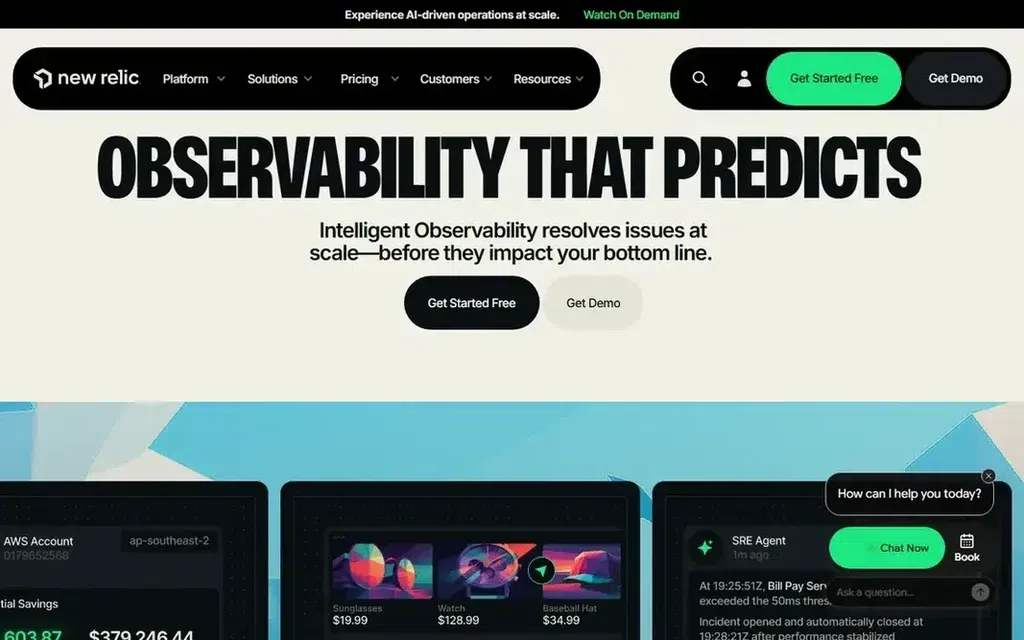
New Relic serves AI-powered root-cause isolation and MTTR reduction. Teams prioritizing open standards or self-managed backends may look at Grafana Cloud instead. Worth adding: New Relic is an AI-powered observability system that correlates telemetry across the entire stack.
Where it falls short: Feature depth varies by use case.
It is aimed at teams that need to isolate root causes rapidly and shorten mean time to resolution. From a buyer's view, the system includes plenty of signals, so tuning it to your environment takes planning. On cost, New Relic starts like this: $10 per user per month. Free access exists with New Relic.
- Focus on reducing MTTR
- Correlates telemetry across the stack
- May need onboarding effort
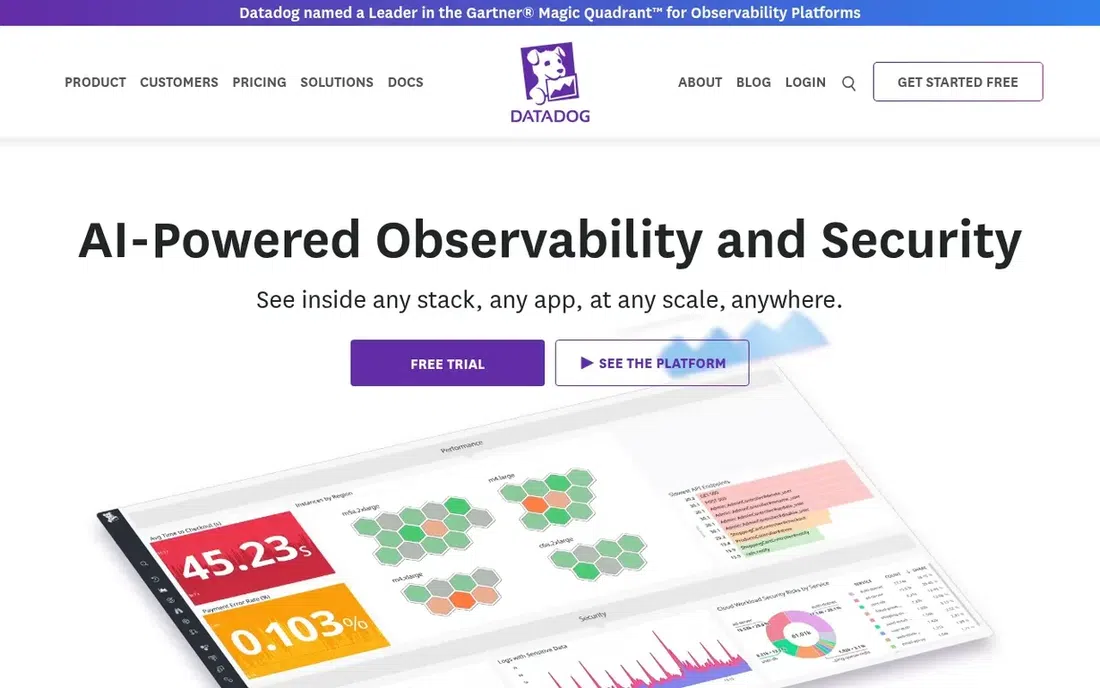
For unified cloud monitoring across apps and services, Datadog is a natural candidate. Teams seeking a narrowly focused tracing tool or a completely open-source stack may prefer a lighter choice.
Where it falls short: Needs careful configuration.
Consider Datadog when unified cloud monitoring is the priority. What you pay to start with Datadog: $8 per committer per month. Free plan details: Free trial.
- Cloud monitoring as a service
- Wide integration surface
- Can become complicated at scale
Pick Grafana Cloud if this describes you: open-standard full-stack observability without lock-in. Choose Grafana Cloud when open standards and lock-in avoidance are priorities.
As for the details, teams wanting a completely opinionated, single-vendor experience may prefer another choice. For everyday use, Grafana Cloud is an AI-powered product built on open standards that unifies metrics, logs, traces, profiles, and business data. Starting cost for Grafana Cloud: $19 per month. You can start on Grafana Cloud without paying.
Trade-offs to know: Configuration can be involved.
- Brings together metrics, logs, traces, profiles
- Helps avoid lock-in
- Needs familiarity with open-source tooling
How these tools were picked
A buyer's checklist
- Get a written quote from Lightstep; the list shows no starting price for them.
- Read the fine print on the free plans from Splunk Observability Cloud, New Relic and Grafana Cloud; seat, project and feature caps differ.
- Run a trial of Datadog with real work before paying for a year; your own workflow is the best test.
- Before choosing Lightstep, weigh its main limit: tied to ServiceNow ecosystem.
- Check the integration list for Datadog against the tools you run today, and note which ones need a higher plan.
- Verify that exporting from Lightstep is possible on your plan and covers all your records.
FAQ
How do Datadog and New Relic differ for cloud monitoring?
Datadog emphasizes cloud monitoring as a service with metrics from many apps and tools in one place. New Relic flags AI-powered correlation across the stack to isolate root causes and cut MTTR.
Which options for Honeycomb have a free plan?
On this list, Splunk Observability Cloud, New Relic and Grafana Cloud include a free plan. Caps on seats, usage or features are common, so test the free plan against your real workload. One other tool offers a trial instead.
How are the tools for Honeycomb ordered?
The order follows typical fit for Honeycomb, with Lightstep first and Grafana Cloud last, then price clarity and free access. It is editorial judgement, not a score, so another team could rank the tools differently.
Which alternative is a good match for open-standard observability?
Start with Lightstep if you need service observability within ServiceNow workflows. Splunk Observability Cloud is the better match for unifying security and observability at scale, and New Relic for AI-powered root-cause isolation and MTTR reduction. The best choice depends on budget, team size and workflow.
When does Lightstep make sense over other alternatives?
It suits teams already standardized on ServiceNow that want to break down silos across teams. Organizations outside that ecosystem may prefer a more standalone product.
Is Lightstep the right pick for everyone comparing Honeycomb?
No single tool suits every team. Lightstep comes first because it fits service observability within ServiceNow workflows, while Splunk Observability Cloud suits unifying security and observability at scale and New Relic suits AI-powered root-cause isolation and MTTR reduction. Match the tool to your own size, budget and workflow before deciding.
Sources
- https://lightstep.com
- https://www.splunk.com
- https://newrelic.com
- https://www.datadoghq.com
- https://grafana.com