Best History Apps in 2026: 9 Apps Compared
Looking for the best history apps? We compare 9 history apps for daily history, world history, art, documentaries and learning, with free options checked.
- Editor's choice
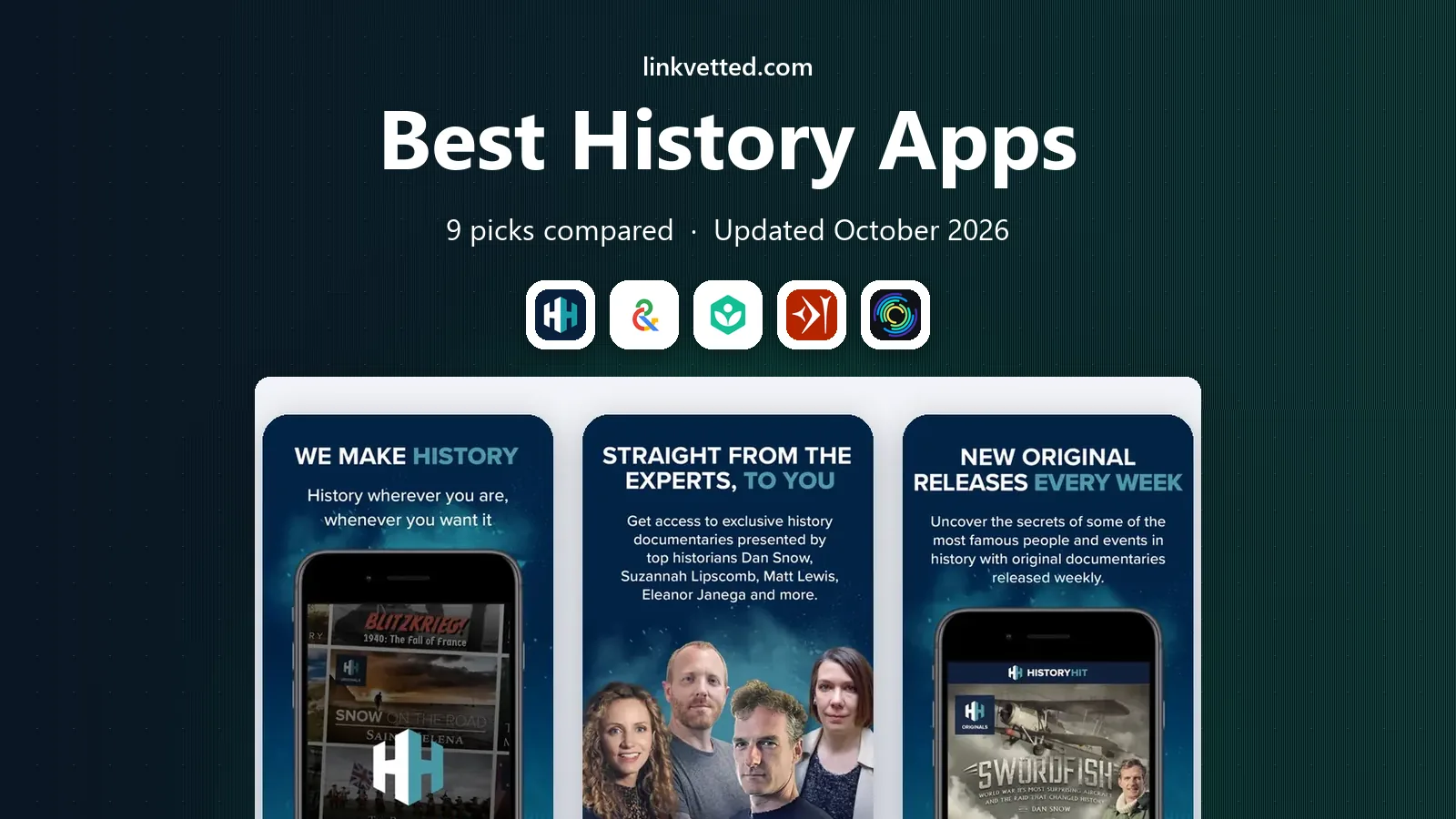
 History Hit
History documentaries and podcasts
Starts atSee websiteVisit historyhit.comFull review - Great alternative
 Google Arts and Culture
Museum collections and virtual tours
Starts atFreeVisit artsandculture.google.comFull review - Also consider
 Khan Academy
Free structured history courses
Starts atFreeVisit khanacademy.orgFull review
TL;DR:
- History Hit suits documentary lovers, while Khan Academy suits learners who want structured courses for free.
- Google Arts and Culture and DailyArt suit visual learners who want museum collections and art history on a phone.
- World History Encyclopedia and History Extra suit readers who want reliable articles they can check and cite.
- On This Day suits a daily habit, but check facts against fuller sources for school work.
Quick comparison
| Tool | Best for | Starts at | Free plan? | |
|---|---|---|---|---|
| History Hit | History documentaries and podcasts | See website | Free trial | Visit |
| Google Arts and Culture | Museum collections and virtual tours | Free | Yes | Visit |
| Khan Academy | Free structured history courses | Free | Yes | Visit |
 World History Encyclopedia | Reliable world history articles | Free | Yes | Visit |
 On This Day | Daily historical events | Free | Yes | Visit |
 DailyArt | Daily art history | Free | Yes | Visit |
 HISTORY | TV history shows and clips | Free | Yes | Visit |
 Smithsonian Magazine | History, science and culture reading | Free | Yes | Visit |
 History Extra | BBC History Magazine content | See website | Free trial | Visit |
The best history apps
History apps cover very different kinds of learning. Some give you a daily story, some offer full courses, some show museum collections, and some map events by place and time. The best pick depends on whether you want five minutes a day, a deep course, or a tool for school and family learning.

History Hit offers history documentaries, podcasts and original series presented by historians, which suits viewers who want longer, narrative history rather than short facts.
The honest catch is usually not a missing feature, but the cost of change. Budget time for setup, training and data cleanup, and check whether your team will actually use the new tool every week. A simpler tool that is used daily beats a fuller tool that is opened once a month.
In practice, this option rewards teams that plan the rollout. Give one person ownership of setup, define the core workflows in week one, and review usage after a month. That discipline matters more than any single feature, and it is where many otherwise good tools fail.
- Documentaries and podcasts by historians
- Original series
- Ad-free viewing
- Subscription needed for full access
- App library varies by region
- Less suited to quick facts
Google Arts and Culture
Best for: Museum collections and virtual tours
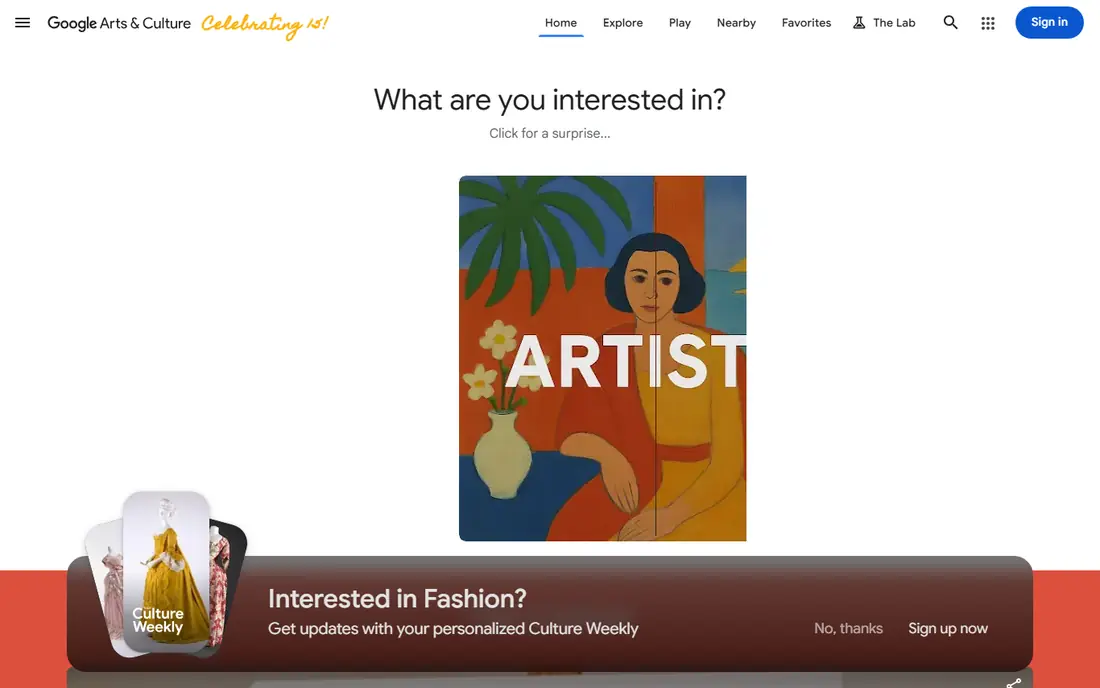
Google Arts and Culture brings museum collections, virtual tours and curated exhibits to a phone for free, which makes it a strong pick for visual learners and family exploration.
On value, compare total cost over a year, not just the starting price. Include seats, add-ons, implementation and the time your team spends maintaining the tool. Ask for a written quote for your exact team size and use case before you sign.
For buyers comparing on price alone, this option is worth a closer look at the free plan or trial. Test the features you will use daily, check the limits that apply at your volume, and confirm the upgrade path before you commit to a paid plan.
- Thousands of museum collections
- Virtual tours and exhibits
- Free access
- Not a structured course
- Depth varies by museum
- Some exhibits are short

Khan Academy offers free structured history courses with videos, readings and quizzes, which suits students and adult learners who want a clear path from basics to deeper topics.
For day-to-day use, the key question is whether the tool fits your existing workflow. Check the integration list, the export options and the support terms before a trial, and test it with a real project rather than a demo dataset. That test will show gaps in permissions, reporting and onboarding that a feature list hides.
This pick stands out for a specific kind of buyer, and that focus is its strength. It does one job well, with a clear workflow and a support path you can test during a trial. The trade-off is that buyers outside that core use case may find gaps, so match the tool to your main job first.
- Free world and US history courses
- Quizzes and practice
- Trusted for school use
- Less documentary content
- Some courses are US-focused
- No offline app for every course
World History Encyclopedia publishes articles, timelines, maps and definitions on world history, written with academic review, which makes it a reliable starting point for research.
The honest catch is usually not a missing feature, but the cost of change. Budget time for setup, training and data cleanup, and check whether your team will actually use the new tool every week. A simpler tool that is used daily beats a fuller tool that is opened once a month.
In practice, this option rewards teams that plan the rollout. Give one person ownership of setup, define the core workflows in week one, and review usage after a month. That discipline matters more than any single feature, and it is where many otherwise good tools fail.
- Peer-reviewed style articles
- Timelines and maps
- Good for school research
- No video courses
- Site design is simple
- Some topics are shorter than textbook chapters
On This Day gives a daily list of historical events, births and deaths, which suits a five-minute daily habit and a quick way to discover topics to explore further.
On value, compare total cost over a year, not just the starting price. Include seats, add-ons, implementation and the time your team spends maintaining the tool. Ask for a written quote for your exact team size and use case before you sign.
For buyers comparing on price alone, this option is worth a closer look at the free plan or trial. Test the features you will use daily, check the limits that apply at your volume, and confirm the upgrade path before you commit to a paid plan.
- Daily events, births and deaths
- Simple habit format
- Free access
- Entries are short
- Not a course
- Check fuller sources for school work
DailyArt sends one artwork a day with context about the artist and period, which suits visual learners who want art history in small daily pieces rather than a long course.
For day-to-day use, the key question is whether the tool fits your existing workflow. Check the integration list, the export options and the support terms before a trial, and test it with a real project rather than a demo dataset. That test will show gaps in permissions, reporting and onboarding that a feature list hides.
This pick stands out for a specific kind of buyer, and that focus is its strength. It does one job well, with a clear workflow and a support path you can test during a trial. The trade-off is that buyers outside that core use case may find gaps, so match the tool to your main job first.
- One artwork a day with context
- Museum links
- Gentle daily habit
- Art focus only, not general history
- Full archive needs a subscription
- Some features are paid
HISTORY, the channel app and site, offers history shows, clips and episode guides, which suits viewers who enjoy popular history programmes and want to watch on a phone.
The honest catch is usually not a missing feature, but the cost of change. Budget time for setup, training and data cleanup, and check whether your team will actually use the new tool every week. A simpler tool that is used daily beats a fuller tool that is opened once a month.
In practice, this option rewards teams that plan the rollout. Give one person ownership of setup, define the core workflows in week one, and review usage after a month. That discipline matters more than any single feature, and it is where many otherwise good tools fail.
- Popular history shows and clips
- Episode guides
- Free content with ads or login
- Full episodes may need a TV login
- Content is entertainment-led
- Depth varies by show
Smithsonian Magazine publishes history, science and culture articles linked to Smithsonian museums, which suits readers who want well-researched stories rather than short social posts.
On value, compare total cost over a year, not just the starting price. Include seats, add-ons, implementation and the time your team spends maintaining the tool. Ask for a written quote for your exact team size and use case before you sign.
For buyers comparing on price alone, this option is worth a closer look at the free plan or trial. Test the features you will use daily, check the limits that apply at your volume, and confirm the upgrade path before you commit to a paid plan.
- Well-researched history articles
- Museum links
- Free articles each month
- Full access may need a subscription
- Not a course app
- Article length varies
History Extra is the site and app for BBC History Magazine, with articles, podcasts and features by historians, which suits readers who want magazine-depth history on many periods.
For day-to-day use, the key question is whether the tool fits your existing workflow. Check the integration list, the export options and the support terms before a trial, and test it with a real project rather than a demo dataset. That test will show gaps in permissions, reporting and onboarding that a feature list hides.
This pick stands out for a specific kind of buyer, and that focus is its strength. It does one job well, with a clear workflow and a support path you can test during a trial. The trade-off is that buyers outside that core use case may find gaps, so match the tool to your main job first.
- Articles and podcasts from BBC History Magazine
- Expert writers
- Broad periods
- Full access needs a subscription
- UK focus in places
- App experience varies
How we picked these
We compared official app and site listings, content types, free access, and subscription terms for each app. We focused on accuracy, source quality, ease of use and whether content is made by historians, museums or educators, rather than only by content creators. Prices are as listed by each provider, and free access varies by title.
How to choose a history app you will actually use
Pick a format that fits your day. A daily app works if you have five minutes, while a documentary or course app works if you have longer sessions. Check who makes the content and whether sources are shown, especially for school or teaching use. For children, check age guidance and whether the app includes quizzes or reading levels that match their stage. Try the free content first, and only subscribe if you finish several full programmes or courses in the trial period. A good history app should spark questions and point you to books and museum collections, not just give quick facts.
FAQ
What is the best history app?
History Hit is a strong pick for documentary fans, while Khan Academy is the best free pick for structured learning. Google Arts and Culture is best for exploring museum collections from home.
What is the best free history app?
Khan Academy and Google Arts and Culture are free and offer high-quality history content. On This Day is also free for daily historical events, though it is lighter than a full course.
Are history apps good for students?
Yes, if you choose apps with sourced content and clear explanations. Khan Academy and World History Encyclopedia suit school work well, while documentary apps suit wider reading and context.
Which history app is best for kids?
Khan Academy suits younger learners with structured lessons, while Google Arts and Culture offers visual exploration that families can use together. Check age guidance in each app before giving it to a child.
Do history apps need a subscription?
Some do, some do not. History Hit and History Extra use subscriptions for full access, while Khan Academy, Google Arts and Culture and On This Day offer substantial free content.