Best SEO APIs for Backlink Data for 2026: Our 6 Vetted Picks
A practical comparison of the best SEO APIs for backlink data in 2026, covering link indexes, pricing access and workflow fit for agencies.
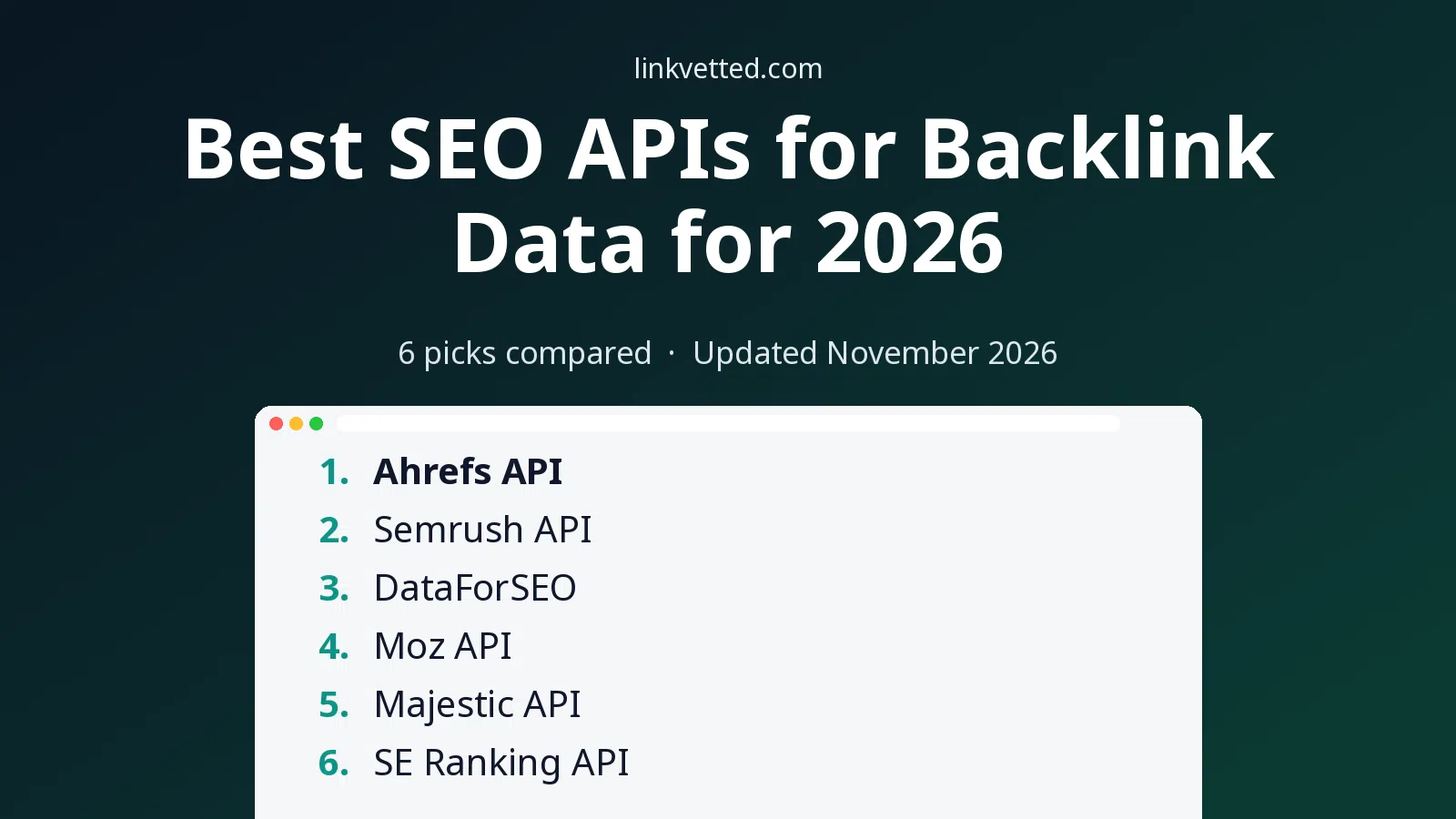
- Editor's choice
 Ahrefs API
Broad backlink index for agency reporting
Starts atSee websiteVisit ahrefs.comFull review - Great alternative
 Semrush API
Backlink data for existing Semrush users
Starts atSee websiteVisit semrush.comFull review - Also consider
 DataForSEO
Developers building custom SEO pipelines
Starts atSee websiteVisit dataforseo.comFull review
Direct answer
My top pick is the Ahrefs API, because its backlink index is broad and the documentation covers the endpoints I need for link and referring-domain lookups. For teams that want a large link index with flexible query options, the Semrush API is a strong second. If you need backlink data inside a larger data pipeline alongside other SEO metrics, DataForSEO is the practical third choice.
TL;DR:
- The best API for you depends on whether you need raw link rows, aggregated referring domains or both in one response.
- Check how each vendor bills requests, because backlink endpoints often consume more units than simple keyword lookups.
- Documentation quality matters as much as index size when you are wiring backlink data into reports or dashboards.
- Some tools sell API access only on higher plans, so confirm your subscription tier includes the endpoints you need.
- Always test a small sample of domains against a manual check before you commit a client report to any API.
Last checked November 2026. Plan prices are not quoted in this guide because they change often; see each vendor's own pricing page for current figures before you buy.
Quick comparison
| Tool | Best for | Starts at | Free plan? | |
|---|---|---|---|---|
| Ahrefs API | Broad backlink index for agency reporting | See website | Not stated | Visit |
| Semrush API | Backlink data for existing Semrush users | See website | Not stated | Visit |
| DataForSEO | Developers building custom SEO pipelines | See website | Free trial | Visit |
 Moz API | Entry-level backlink API access | See website | Free plan | Visit |
 Majestic API | Link history and trust-flow analysis | See website | Not stated | Visit |
 SE Ranking API | White-label backlink data for agencies | See website | Not stated | Visit |
The best SEO APIs for backlink data compared
I put this comparison together from vendor documentation and public sources, not from hands-on testing. I looked at what each API returns for backlinks, referring domains and link history, how access is sold, and where each one fits in a real agency workflow. Where a vendor does not publish a detail clearly, I say so rather than guess.
Ahrefs runs one of the most widely used backlink indexes, and its API exposes that data for programmatic use. It suits agencies that already rely on Ahrefs reports and want to pull the same link data into their own dashboards or client deliverables. If your team lives inside the Ahrefs interface, the API keeps your numbers consistent with what clients see.
For backlink work, the API lets you query links to a target, referring domains and related metrics. In practice I would pull referring domains for a batch of client sites on a schedule, store the results, and compare month to month. That gives a clean view of new and lost links without manual exports. The main limit is access: API use is generally tied to higher subscription tiers, and request allowances need to be planned before you build automation around it. Smaller teams may find the cost hard to justify if they only need occasional link checks.
- Large link index
- clear endpoint documentation
- strong referring-domain data
- API access tied to higher plans
- request limits need planning
Semrush offers an API that covers backlinks alongside its other SEO data sets. It makes the most sense for teams already paying for Semrush, because the API extends data you already trust into your own tools. The backlink endpoints return link and referring-domain information that maps to the metrics shown in the Semrush interface.
The workflow advantage is consistency. If your reports already cite Semrush figures, pulling the same data through the API avoids the mismatch that comes from mixing vendors. Billing is unit-based, and backlink queries can consume more units than simple lookups, so I would map out expected request volume before committing. Teams without a Semrush subscription should compare total cost against standalone link APIs first.
- Large backlink database
- many analytics endpoints
- familiar metrics
- Unit-based billing
- endpoint costs vary
DataForSEO sells SEO data through an API built for developers. Its backlinks endpoints return link and referring-domain data, and the service also covers rankings, SERPs and other SEO data sets, which helps when you want one vendor for several data types. It fits teams with engineering capacity who prefer to build their own tools rather than buy a finished platform.
In a backlink workflow, DataForSEO is useful when you need to enrich a database or run bulk checks across many domains. Because billing is pay-as-you-go, you can start small and scale. The trade-off is that there is no polished interface to fall back on; you need to handle storage, deduplication and reporting yourself. Agencies without a developer on hand may find the setup work outweighs the savings.
- Pay-as-you-go model
- broad endpoint coverage
- developer-focused docs
- Requires engineering effort
- costs scale with volume
Moz offers API access to its link data, including its established domain and page authority metrics. It is a reasonable starting point for freelancers and small agencies that want programmatic link data without a large commitment. The metrics are familiar to many clients, which helps when explaining reports.
For backlink research, the Moz API can return links and related metrics for a target. I would use it for spot checks and smaller client portfolios rather than large-scale link audits. The index is smaller than some competitors, so very new or niche sites may show thinner data. If your work depends on catching every link, compare coverage against a larger index before standardising on Moz.
- Accessible entry point
- established link metrics
- simple endpoints
- Smaller index than some rivals
- fewer link rows per query
Majestic has built its reputation on backlink data, and its API exposes link and historical data along with its Trust Flow and Citation Flow metrics. It suits analysts who care about link history and want to track how a domain's link profile changes over time.
The API is useful for pulling historical link data into custom reports, especially for competitive link analysis where you want to see patterns rather than a single snapshot. The interface and documentation feel older than some rivals, so expect a learning curve. Teams that want a modern dashboard out of the box may prefer a different vendor, but for raw link history Majestic remains relevant.
- Long link history
- trust and citation metrics
- bulk options
- Dated interface
- steeper learning curve
SE Ranking provides an API that covers backlinks along with rank tracking and competitor data. It is aimed at agencies that want to feed data into client-facing tools, and its white-label options fit that use case. If you resell SEO reporting, that matters.
For backlink work, the API can supply link and referring-domain data for client sites, which you can fold into dashboards. The ecosystem is smaller than the largest vendors, so fewer third-party tools connect to it directly. I would check that the specific backlink endpoints you need are included in your plan before building around it.
- Agency-oriented features
- backlink and competitor data
- white-label options
- Smaller ecosystem
- fewer third-party integrations
How I chose
I built this list from vendor documentation and public sources. I read each vendor's API docs to see which backlink endpoints exist, what they return, and how access is sold. I also looked at public descriptions of each link index and how the vendors position their data. I did not run hands-on tests, so treat this as a starting map rather than a benchmark.
My selection weighed fit over size. A large index is useful, but an API that is hard to access or expensive to query at volume is a poor fit for a small agency. I favoured vendors with clear documentation, backlink-specific endpoints and a plausible workflow for reporting or automation. I left out tools where I could not confirm current API access from public sources. Before you buy, validate a sample of results against a manual check.
What to check before you buy
- Confirm the API includes backlink and referring-domain endpoints on the plan you can afford, not just on enterprise tiers.
- Check how requests are billed, since backlink queries often cost more units than keyword lookups.
- Look for rate limits and whether they suit your reporting schedule or bulk jobs.
- Verify the response includes the fields you need, such as anchor text, link status and first-seen dates.
- Ask whether historical link data is available if you track link loss over time.
- Test a handful of domains against a manual check to see how complete the index is for your niche.
FAQ
Which API is best for bulk backlink checks?
DataForSEO is the most natural fit for bulk work because it is built around pay-as-you-go API access and developer workflows. Ahrefs and Semrush also support programmatic backlink queries, but their access terms and request limits matter more at volume. Test a small batch first to estimate cost and coverage.
Can I get backlink data from a free API?
Moz offers a free plan that includes API access, which makes it the most accessible entry point among the tools here. Free tiers usually come with limits on requests or data returned, so they suit spot checks rather than full audits. Check the current terms on the vendor site before relying on it.
Do these APIs return the same backlink counts?
No. Each vendor crawls and indexes the web differently, so link counts and referring-domain totals vary between them. That is why mixing vendors in one report can confuse clients. Pick one source for a given metric and stay consistent, or explain clearly when you switch.
How do I choose between Ahrefs and Semrush for backlink API work?
Start with the tool your team already uses. If your reports and workflows are built on Ahrefs, its API keeps numbers consistent. If you rely on Semrush for other SEO data, its API avoids duplication. Compare access terms and request costs for your expected volume before deciding.
Is API access included in standard plans?
Often not. Several vendors tie API access to higher subscription tiers or sell it separately, and the details change. Check the current plan documentation for each vendor and confirm the backlink endpoints you need are included. If access is unclear, ask the vendor directly before you commit.
Sources
- https://ahrefs.com
- https://www.semrush.com
- https://dataforseo.com
- https://moz.com
- https://majestic.com
- https://seranking.com