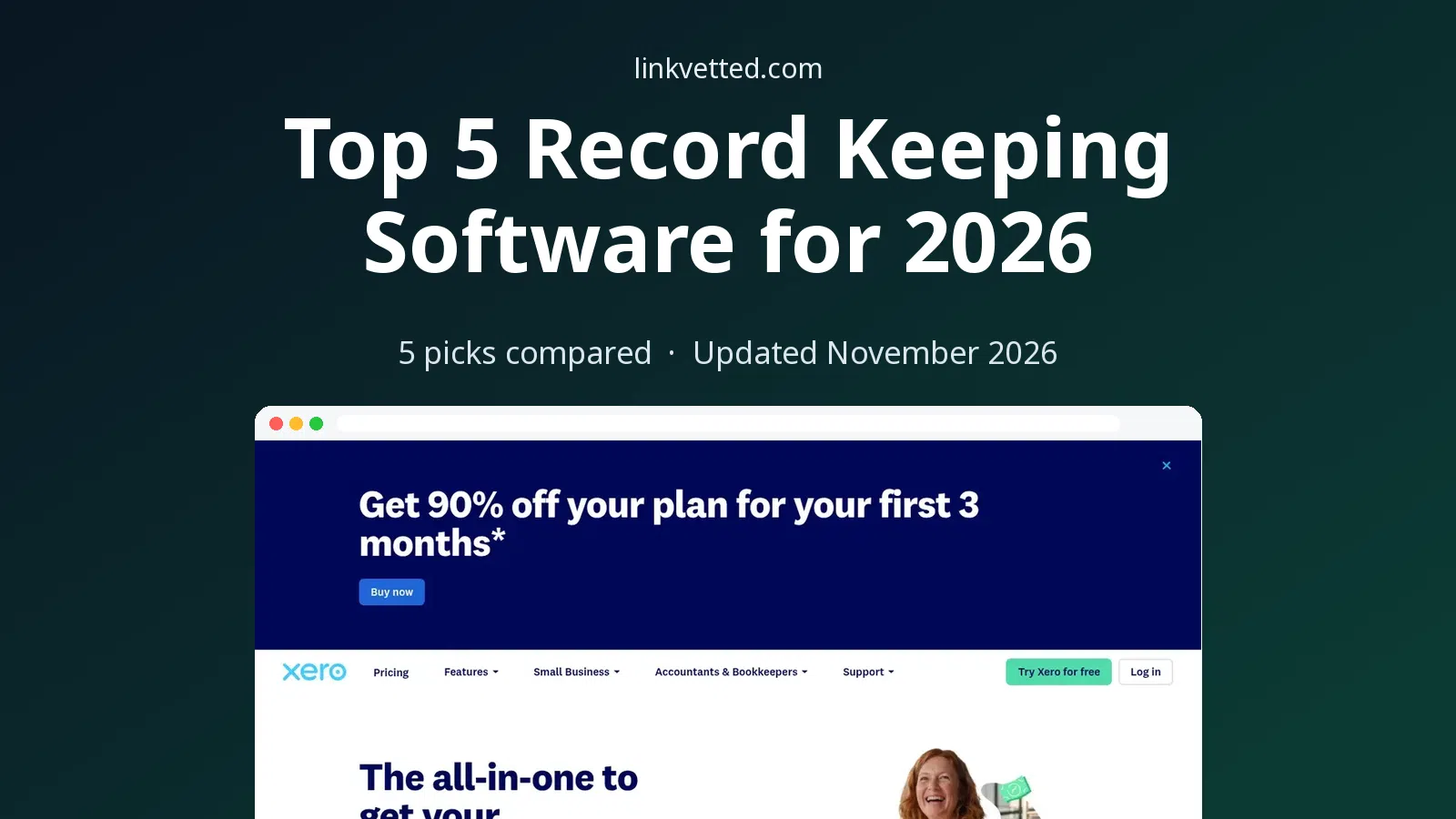
Top 5 Record Keeping Software for 2026 (Prices and Free Plans)
Best record keeping software: 5 contenders ranked by fit, with entry costs and free tiers. Fit, price and catches for every tool. Pricing and limits included.
- Editor's choice
 Xero
Bank-connected collaborative bookkeeping
Starts at$7 per monthVisit xero.comFull review - Great alternative
 Wave
Straightforward invoicing and money management
Starts at$19 a monthVisit waveapps.comFull review - Also consider
 Zoho Books
Small firms wanting modular accounting
Starts atSee websiteVisit zoho.comFull review
Direct answer
Xero comes first here, mainly for bank-connected collaborative bookkeeping. Listed starting prices: Xero from $7 per month, Wave from $19 a month and QuickBooks Online from $11.40 per month. Look at Wave for straightforward invoicing and money management, and at Zoho Books for small firms wanting modular accounting. Details, prices and limits for the rest of the 5 tools are below.
TL;DR:
- The list opens with Xero, aimed at bank-connected collaborative bookkeeping.
- For expanding companies needing integrated ERP, NetSuite is worth a look.
- Wave is the only tool of the 5 with a free plan.
- Xero has the lowest monthly starting price in this list: $7 per month.
- Check the limits for Zoho Books before you commit: feature set may need configuration.
Last checked November 2026. Prices and plan details were read from the vendors' own pages in November 2026; vendors change plans often, so confirm the current price on the vendor site before you buy.
Quick comparison
| Tool | Best for | Starts at | Free plan? | |
|---|---|---|---|---|
| Xero | Bank-connected collaborative bookkeeping | $7 per month | Free trial | Visit |
| Wave | Straightforward invoicing and money management | $19 a month | Yes | Visit |
| Zoho Books | Small firms wanting modular accounting | See website | Not stated | Visit |
 QuickBooks Online | Wide small business record keeping | $11.40 per month | Free trial | Visit |
 NetSuite | Expanding firms needing integrated ERP | See website | Not stated | Visit |
Record Keeping Software, one by one
This LinkVetted guide covers 5 options for record keeping software. Each profile lists a starting price, free plan details, strengths and drawbacks, so you can drop poor fits quickly.
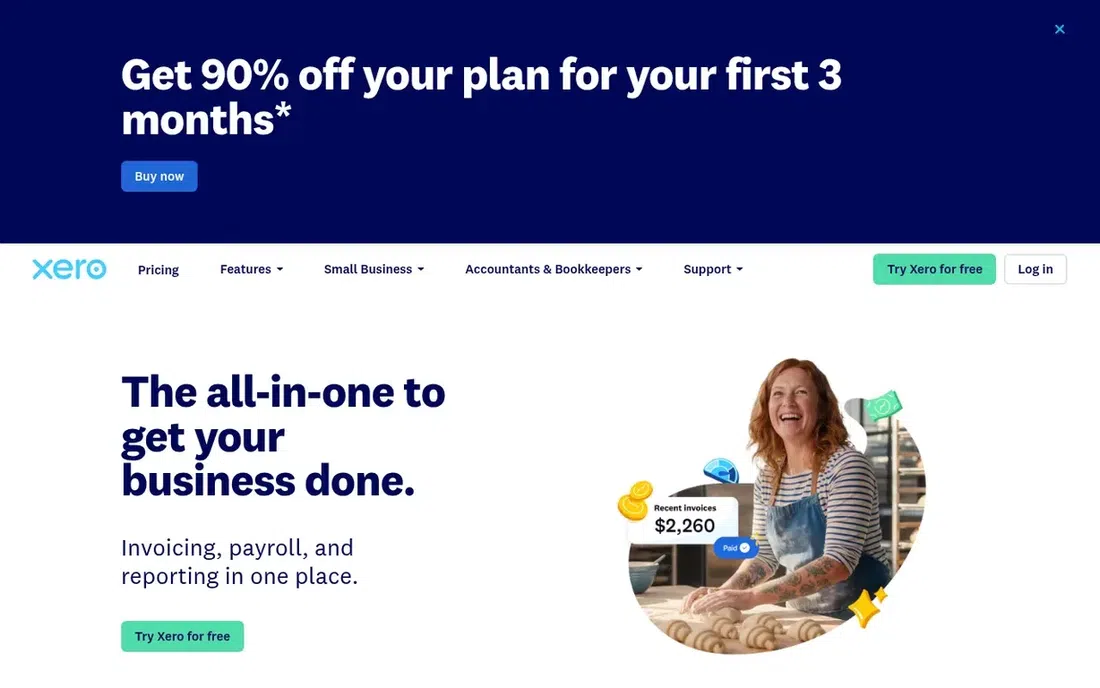
Xero is aimed squarely at bank-connected collaborative bookkeeping. The connected model relies on steady bank feeds and app integrations, so setup and maintenance matter.
Where it shines: Links with business apps.
Trade-offs to know: Advanced needs may need extras. Companies needing deep inventory or manufacturing records may find Xero lighter than dedicated ERP tools and should compare those requirements before committing. Xero is small business accounting software that links records to your bank, accountant, bookkeeper, and other business apps. Price to start with Xero: $7 per month. Free access: Free trial.
- Links to bank and accountant
- Designed for small companies
- Continuing connectivity setup may be needed
Wave is a good fit for straightforward invoicing and money management. Wave's simplicity can become a limit as a business grows into complicated inventory, multi-currency, or advanced reporting.
The main drawbacks: May lack depth for complicated accounting.
Firms expecting rapid growth or needing specialized accounting controls should compare fuller systems before standardizing on a more straightforward tool. Price to start with Wave: $19 per month. Wave includes a free tier.
- Invoices and online payments together
- Straightforward money management suite
- Advanced needs may need other tools
Zoho Books serves small companies wanting modular accounting. Zoho Books is cloud-based accounting software that eases invoicing, expenses, tax management, bank reconciliation, and financial reporting for small firms.
Where it falls short: Feature set may need configuration.
As for the details, configuration and module choices can add complexity for very small teams. Pricing for Zoho Books is not stated here, so ask the vendor for current figures. As for free access: Not stated.
- Financial reporting included
- Tax management and bank reconciliation
- Best value may rely on Zoho ecosystem use
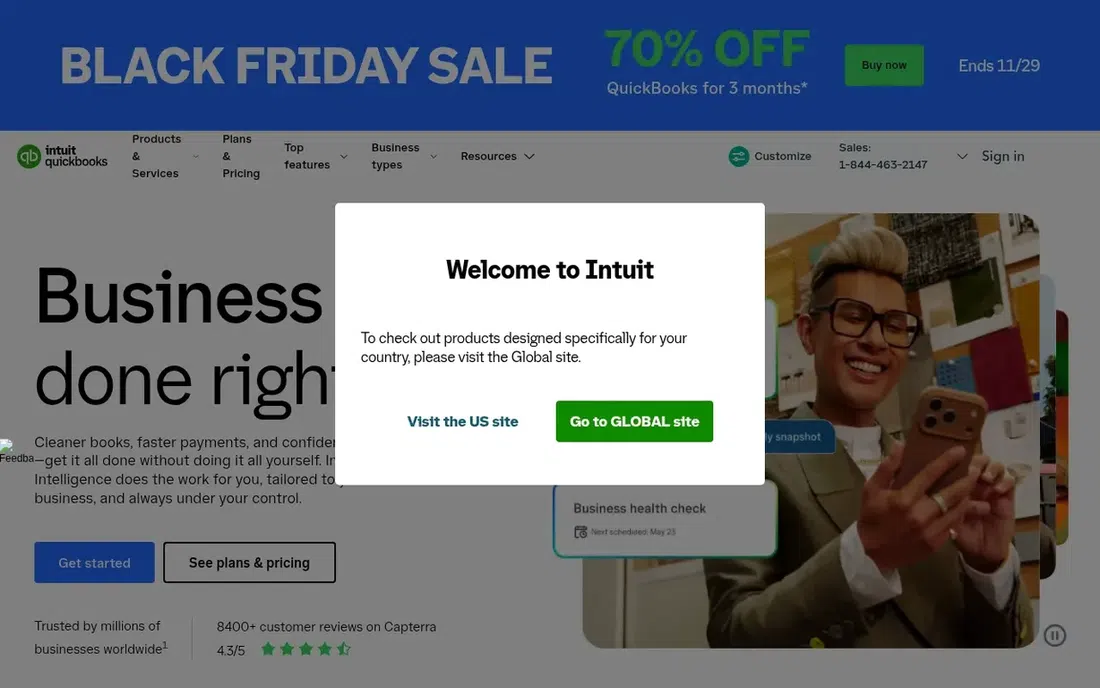
QuickBooks Online serves broad small business record keeping. QuickBooks Online is a cloud accounting product from Intuit that helps small firms organize and handle records, including income, expenses, and reports.
It emphasizes smart tools and fast setup, making it a fit for owners who want a familiar, broadly adopted system to centralize financial record keeping without heavy configuration. QuickBooks Online pricing: $11.40 per month. Trial and free access: Free trial.
Points against: Feature depth may overwhelm very small teams.
- Smart tools for organizing business records
- Widely used by small companies
- Needs internet access for cloud use
In short, NetSuite is for expanding businesses needing integrated ERP. NetSuite is an AI-powered cloud ERP that merges financials, CRM, accounting, inventory management, and more.
Points against: May be excessive for very small teams.
For everyday use, businesses that only need entry-level bookkeeping should compare lighter accounting software, whereas those with cross-department records should plan implementation carefully. Check the vendor site for NetSuite pricing; none is listed in this comparison. As for free access: Not stated.
- Built-in AI for data action
- Cloud ERP approach
- Implementation can be complicated
How we built this list
LinkVetted looked at what each vendor publishes: pricing, plan limits, feature coverage for record keeping software and stated drawbacks. No hands-on testing is claimed. Seat minimums, billing terms and add-ons can move the real cost, so the starting prices here are a guide and not a quote. The order reflects how well each tool fits the most common buying scenario for record keeping software, then price clarity, then free plan access. It is a starting point, not a verdict.
Pre-purchase checklist
- Confirm the entry price on the vendor page. For Zoho Books and NetSuite that means a quote rather than a fixed price.
- Test the free plan from Wave against your real workload before relying on it.
- Run a trial of Xero and QuickBooks Online with real work before paying for a year; your own workflow is the best test.
- Before choosing Xero, weigh its main limit: continuing connectivity setup may be needed.
- Ask NetSuite about contract length, onboarding fees and user minimums before you sign.
- Find out whether the entry plan of QuickBooks Online covers your must-haves or only a trimmed-down version.
FAQ
How do I compare tools before committing?
List your must-have records and reports, then check each vendor's documented features and limits. For everyday use, confirm integrations, implementation needs, and support choices.
What should small firms look for in record keeping software?
Focus on the records you deal with daily, like income, expenses, invoices, and bank reconciliation. Implementation effort matters too, especially if you expect to grow.
Can record keeping software connect to my bank and accountant?
Numerous cloud accounting tools, including Xero and QuickBooks Online, emphasize bank connections and advisor collaboration. As for the details, confirm specific bank support and accountant access on the vendor site.
How are the tools for record keeping software ordered?
Xero sits first and NetSuite last because the order follows typical fit for record keeping software, then price clarity and free access. It is a judgement call, so read each profile for fit and limits.
Which options for record keeping software have a free plan?
Wave is the only tool in this list with a free plan. Free plans usually cap users, projects or features, so check the limits on the vendor page. Several others offer a trial instead. All 5 picks in this record keeping software comparison list a starting price, free plan details and the main limits on their cards above.
Is Xero the right pick for everyone comparing record keeping software?
No single tool suits every team. Xero comes first because it fits bank-connected collaborative bookkeeping, while Wave suits simple invoicing and money management and Zoho Books suits small businesses wanting modular accounting. Match the tool to your own size, budget and workflow before deciding.
Sources
- https://www.xero.com
- https://www.waveapps.com
- https://www.zoho.com/books
- https://quickbooks.intuit.com
- https://www.netsuite.com