Best Phone System for Churches (2026): 6 Picks Checked on Vendor Pages
Best phone system for churches: 6 contenders ranked by fit, with entry costs and free tiers. Short, factual notes on every option. Full profiles inside.
- Editor's choice
 Dialpad
Churches centred on conversation insights
Starts at$15 per user a monthVisit dialpad.comFull review - Great alternative
 Nextiva
Churches unifying phone and customer experience
Starts at$15 per user a monthVisit nextiva.comFull review - Also considerRingCentral MVP
Churches wanting AI-assisted call handling
Starts at$52 a monthVisit ringcentral.comFull review
Direct answer
If you need churches centred on conversation insights, Dialpad is the first tool to look at here. Listed starting prices: Dialpad from $15 per user a month, Nextiva from $15 per user a month and RingCentral MVP from $52 a month. For a different need, Nextiva covers churches unifying phone and customer experience and RingCentral MVP covers churches wanting AI-assisted call handling. The remaining 3 options are covered below with prices and limits.
TL;DR:
- Number one here is Dialpad, a fit for churches centred on conversation insights.
- Dialpad is the lowest-priced starter here at $15 per user per month.
- Neither Dialpad nor Google Voice, nor any of the other 4 tools, has a permanent free plan; trials and quotes are the norm.
- Google Voice suits churches already using Google Workspace.
Last checked November 2026. Prices and plan details were read from the vendors' own pages in November 2026; vendors change plans often, so confirm the current price on the vendor site before you buy.
Quick comparison
| Tool | Best for | Starts at | Free plan? | |
|---|---|---|---|---|
| Dialpad | Churches centred on conversation insights | $15 per user a month | Free trial | Visit |
| Nextiva | Churches unifying phone and customer experience | $15 per user a month | No | Visit |
| RingCentral MVP | Churches wanting AI-assisted call handling | $52 a month | Free trial | Visit |
| Vonage Business Communications | Churches needing adaptable voice and messaging | See website | Not stated | Visit |
 Microsoft Teams Phone | Churches standardized on Microsoft Teams | See website | Not stated | Visit |
 Google Voice | Churches already using Google Workspace | See website | Not stated | Visit |
The best phone system for churches
Choosing phone system for churches usually comes down to price, fit and limits. This LinkVetted guide sets 6 tools side by side on those three points, with the facts kept short and checkable.
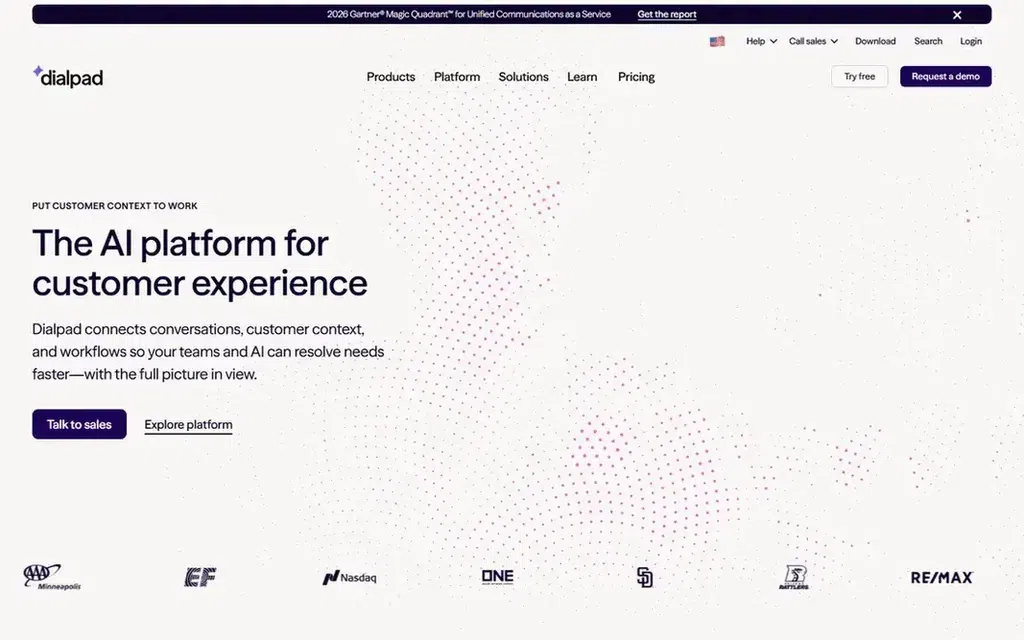
Dialpad targets churches concentrated on conversation insights. Dialpad brings AI agents, contact center, sales and business communications together, positioning conversations as a source of intelligence that drives resolution. In daily use, Dialpad's marketing leans toward sales and support teams, so the language may not map neatly onto ministry work.
Points against: Broader feature set than entry-level calling.
For churches, the appeal is a modern calling product that can help staff track and respond to member and visitor questions. In practice, some features may go unused in a church setting. Dialpad cost at the entry level: $15 per user per month. Trial and free access: Free trial.
- AI agents alongside business communications
- Turns conversations into usable intelligence
- AI-heavy framing may not suit all churches
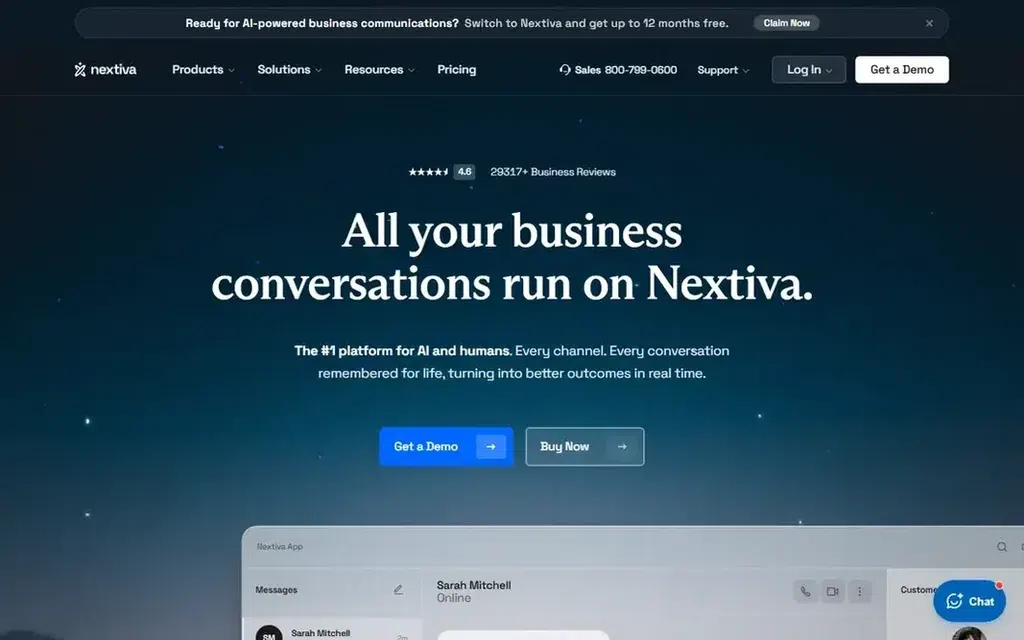
Nextiva was built for churches unifying phone and customer experience. Expect to invest time in setup and in training volunteers. As for the details, a church can use it to centralize calls, messages and follow-ups from visitors and members in one place.
Drawbacks to consider: Positioned toward customer experience teams.
Best features of Nextiva: Unified CX approach for all channels.
Nextiva describes itself as an AI customer experience management product that brings business phone, contact center, AI receptionist and unified CX together. More specifically, Nextiva is framed around customer journeys, which can feel like more structure than a small church office needs. If your congregation chiefly needs a single number that forwards to mobile phones, a more straightforward virtual system may be a better match. Nextiva pricing: $15 per user per month. Nextiva has no permanent free option.
- AI receptionist included in the product
- Business phone and contact center in one
- May be heavy for very small congregations
RingCentral MVP
Best for: Churches wanting AI-assisted call handling
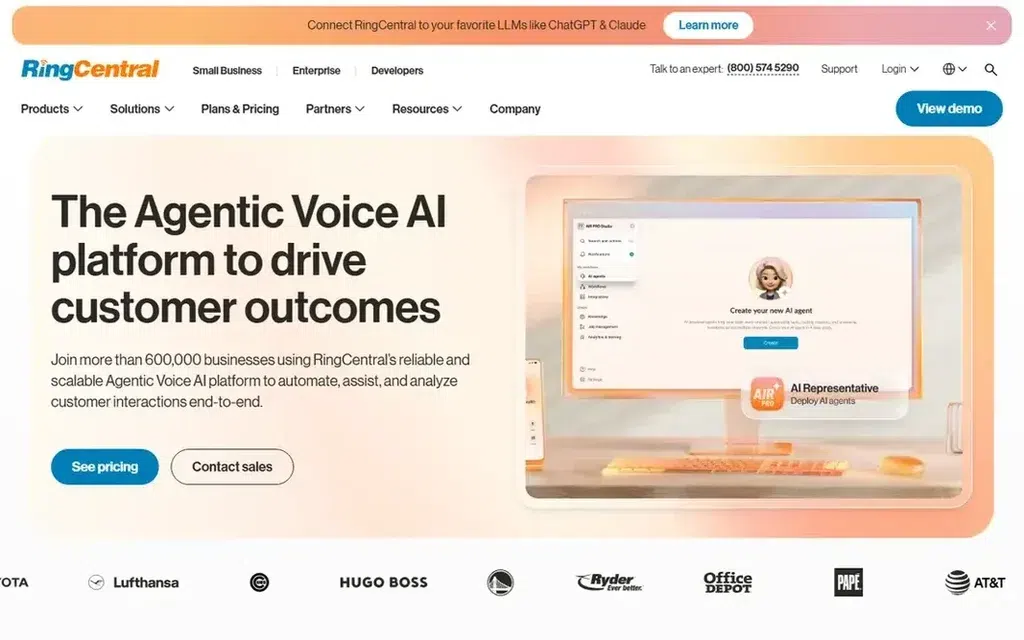
RingCentral MVP is a good fit for churches wanting AI-assisted call handling. The product is wide, and smaller churches may find the AI and contact-center features more than they need.
Configuration takes some planning, notably around call routing for volunteers. RingCentral MVP cost at the entry level: $52 per month. Free access: Free trial.
The main drawbacks: Feature set may exceed small church needs.
- AI receptionist and virtual assistant features
- Merges voice calling with messaging tools
- Setup needs some configuration
Vonage Business Communications
Best for: Churches needing adaptable voice and messaging
Choose Vonage Business Communications for churches needing adaptable voice and messaging. Vonage Business Communications supplies flexible and scalable voice, messaging, video and data capabilities across unified communications, contact centers and communications APIs.
Where it shines: Scalable across unified communications.
Also, contact center and API choices are likely unnecessary for most congregations. As for the details, if your priority is a straightforward, quick-to-set-up phone line for volunteers, a lighter virtual system is worth comparing. No starting price is listed for Vonage Business Communications here; confirm pricing on the vendor site. Free plan details: Not stated.
Where it is weaker: API and contact center focus may be additional.
- Video and data capabilities
- Contact center choices available
- Wide portfolio can complicate selection
Microsoft Teams Phone is built with churches standardized on Microsoft Teams in mind. Microsoft Teams Phone is a cloud-based phone system that lets teams make Teams calls or dial external numbers to stay connected with staff and customers.
It suits congregations whose staff and ministry leaders are comfortable in Teams and want calling tied to their existing collaboration tools. This comparison lists no price for Microsoft Teams Phone; ask the vendor. Trial and free access: Not stated.
Points against: Needs Teams adoption across staff.
- Suits existing Microsoft environments
- Cloud phone system inside Teams
- Calling setup depends on Microsoft configuration
Google Voice was built for churches already using Google Workspace. Google Voice offers adaptable online phone numbers and systems that help organizations of any size stay connected and save time.
Also, if your office chiefly needs one number and entry-level voicemail, it can be enough. Google Voice does not show a starting price in this comparison, so check the vendor site for current pricing. Trial and free access: Not stated.
What to check first: Best value inside the Google ecosystem.
- Adaptable online phone numbers
- Straightforward way to stay connected
- Restricted advanced call handling
How we chose
Selection started from tools commonly considered for phone system for churches, then narrowed to 6 that have clear pricing information or a clear quote process. Figures are shown as the vendors publish them. Billing terms, seat minimums and add-ons can change the real cost. The ranking is editorial: typical fit first, then clear pricing, then free access. If your needs are unusual, read the profiles rather than relying on position.
What to confirm before you sign up
- Get a written quote from Vonage Business Communications, Microsoft Teams Phone and Google Voice; the list shows no starting price for them.
- Take the trial from Dialpad and RingCentral MVP and push a live task through it before you pay.
- Before choosing Dialpad, weigh its main limit: AI-heavy framing may not suit all churches.
- Work out what Google Voice costs with your real seat count, add-ons and usage, not just the entry price.
- Look at which plan of Microsoft Teams Phone unlocks the features you need; entry tiers are often cut down.
FAQ
Is Dialpad the right pick for everyone comparing phone system for churches?
No single tool suits every team. Dialpad comes first because it fits churches focused on conversation insights, while Nextiva suits churches unifying phone and customer experience and RingCentral MVP suits churches wanting AI-assisted call handling. Match the tool to your own size, budget and workflow before deciding.
Can I try these tools before paying?
Often, yes. Dialpad and RingCentral MVP offer a free trial. Use your own data and a real task during the test, and check what the free tier or trial limits before you rely on it. Each of the 6 options in this phone system for Churches guide has its own card above with the price, free plan and limits.
What is the cheapest option for phone system for churches in this list?
On published monthly entry prices, Dialpad is the lowest here at $15 per user per month. Entry price is only part of the cost, because seats, add-ons and billing terms can change the total. All 6 picks in this phone system for Churches comparison list a starting price, free plan details and the main limits on their cards above.
Do these tools publish their prices?
Not all of them. Vonage Business Communications, Microsoft Teams Phone and Google Voice publish no starting price, so expect a quote request for those. The rest, Dialpad included, show a starting price, though seats and billing terms still change the final cost.
What should a church look for in a phone system?
Focus on simplicity for volunteers, dependable call routing, clear voicemail handling and the capacity to add staff or extensions as ministries grow. Consider whether you need just a central line or broader messaging and meeting tools.
Sources
- https://www.dialpad.com
- https://www.nextiva.com
- https://www.ringcentral.com
- https://www.vonage.com
- https://www.microsoft.com/en-us/microsoft-teams/microsoft-teams-phone
- https://voice.google.com