Best Olap Platforms for Handling Time-Series Data in 2026: Prices, Free Plans and 5 Picks
Compare 5 picks for the best olap platforms for handling time-series data, with prices, free plans and who each fits. Real limits included. Read the profiles.
- Editor's choice
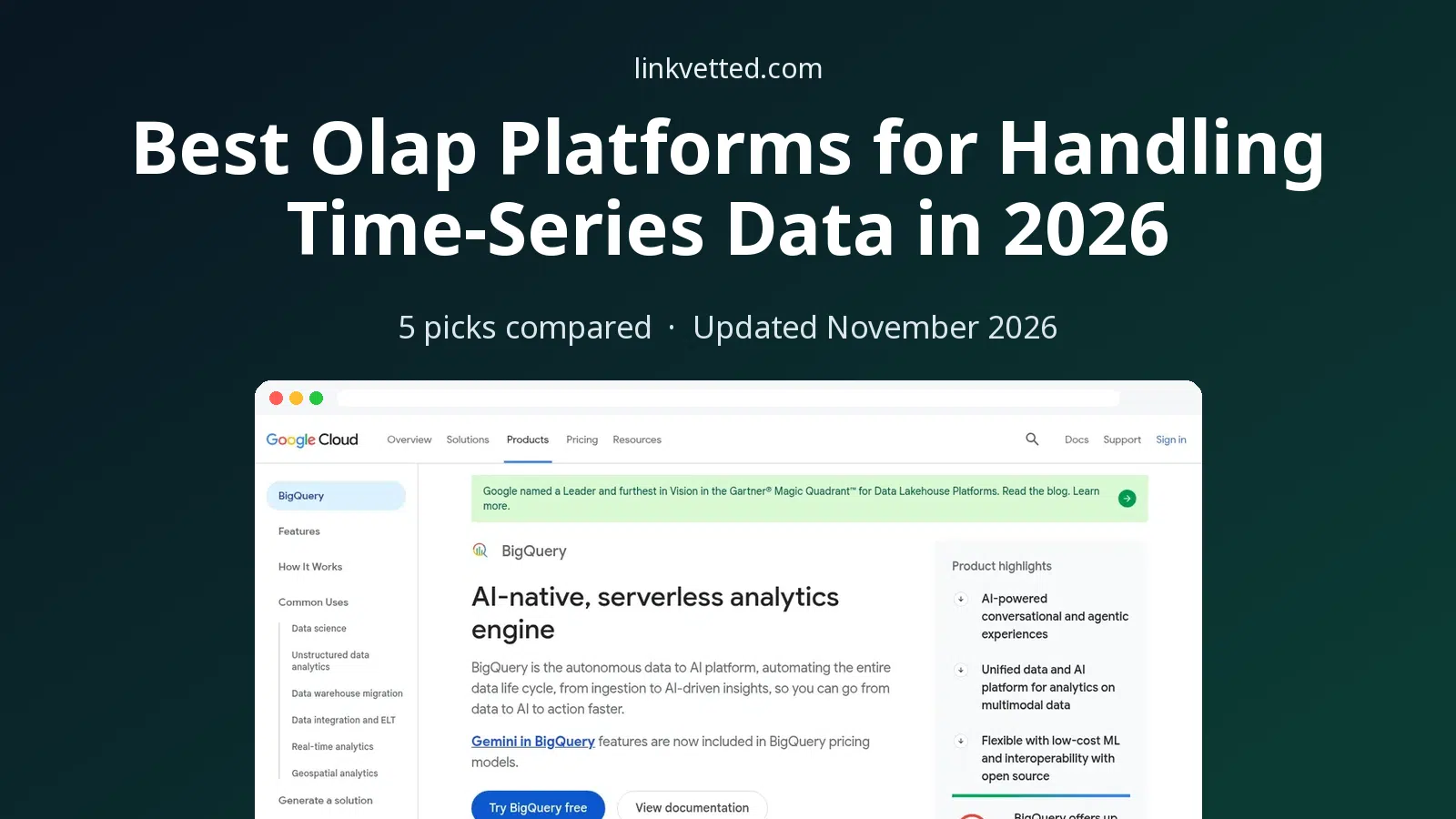
 Google BigQuery
Managed analytics with automatic data life cycle
Starts atSee websiteVisit cloud.google.comFull review - Great alternativeTimescaleDB
Time-series inside PostgreSQL
Starts at$30 a monthVisit timescale.comFull review - Also considerClickHouse
High-volume live time-series analytics
Starts at$0.056 per unit per hourVisit clickhouse.comFull review
Direct answer
For managed analytics with automatic data life cycle, Google BigQuery is where this list starts. Listed starting prices: TimescaleDB from $30 a month, ClickHouse from $0.056 per unit per hour and InfluxDB from $18,000 per year. Alternatives: TimescaleDB for time-series inside PostgreSQL, and ClickHouse for high-volume real-time time-series analytics. The full list of 5 tools follows, with prices and free plan facts.
TL;DR:
- Google BigQuery is the opening pick, best for managed analytics with automatic data life cycle.
- Just one of the 5 tools, InfluxDB, has a free plan.
- What to know about InfluxDB first: narrower than a full warehouse.
- Starting prices begin at $30 per month with TimescaleDB.
- Databricks SQL suits SQL analytics on a unified data product.
Last checked November 2026. Prices and plan details were read from the vendors' own pages in November 2026; vendors change plans often, so confirm the current price on the vendor site before you buy.
Quick comparison
| Tool | Best for | Starts at | Free plan? | |
|---|---|---|---|---|
| Google BigQuery | Managed analytics with automatic data life cycle | See website | Not stated | Visit |
| TimescaleDB | Time-series inside PostgreSQL | $30 a month | Free trial | Visit |
| ClickHouse | High-volume live time-series analytics | $0.056 per unit per hour | Free trial | Visit |
| InfluxDB | Dedicated metrics and event collection | $18,000 per year | Yes | Visit |
 Databricks SQL | SQL analytics on a unified data system | See website | Not stated | Visit |
Tool-by-tool breakdown
LinkVetted put together this guide to olap platforms for handling time-series data for readers who want a clear shortlist without reading every vendor page. It compares 5 tools on starting price, free plans, who each one suits and where each one falls short.
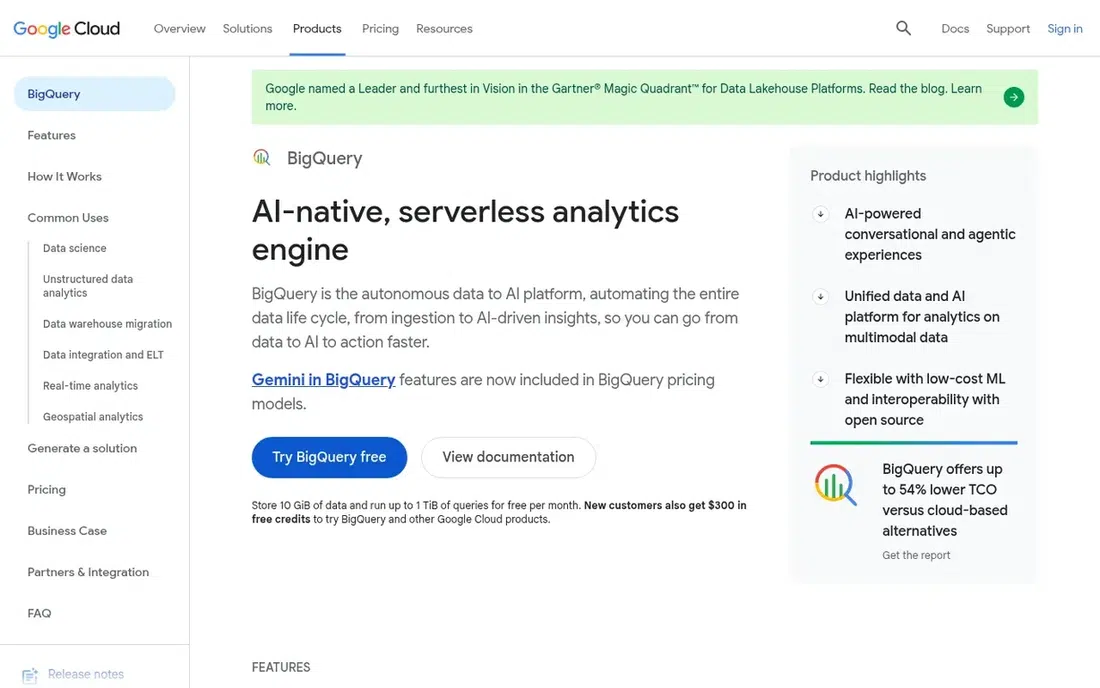
Where Google BigQuery fits: managed analytics with automatic data life cycle. For time-series data, it does well when events land in a cloud data warehouse alongside other business data and you want one place for reporting and modeling without running servers yourself.
Where it falls short: Costs can be hard to predict.
Since much of the engine is managed for you, fine-grained tuning and predictable spend take more planning than with self-managed choices. Google BigQuery shows no starting price here, so confirm the cost on the vendor site. Free plan details: Not stated.
- Autonomous data and AI product
- Serverless-style management
- Less control over engine internals
TimescaleDB
Best for: Time-series inside PostgreSQL
Think of TimescaleDB for time-series inside PostgreSQL. TimescaleDB is presented as time-series PostgreSQL at petabyte scale, built by the creators of TimescaleDB for enterprises processing very large volumes of metrics.
Where it falls short: Not a general BI suite.
TimescaleDB starts at: $30 per month. On free options: Free trial.
- Familiar SQL and Postgres tooling
- PostgreSQL system for time-series
- Needs Postgres expertise
ClickHouse
Best for: High-volume live time-series analytics
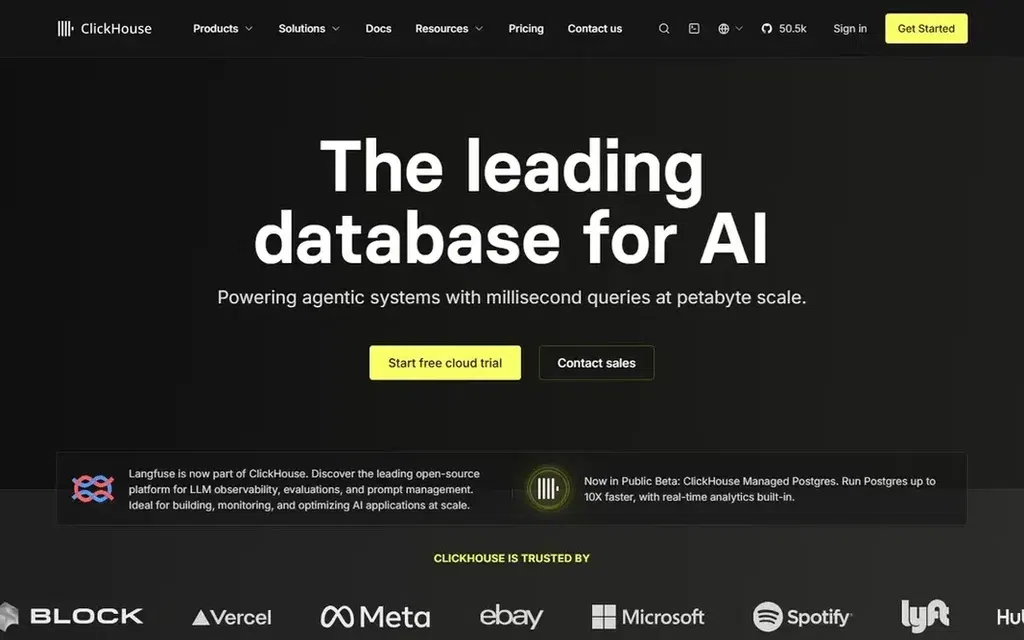
For high-volume real-time time-series analytics, ClickHouse is a natural candidate. For time-series data, that combination matters since metrics, logs and event streams commonly arrive together and need quick aggregation over long windows.
It suits teams with steady engineering capacity that want a purpose-built analytical engine instead of a general warehouse. On cost, ClickHouse starts like this: $0.056 per unit per hour. Free plan details: Free trial.
Where it falls short: Operational care for large clusters.
- Open and composable system
- Made for data-intensive workloads
- Needs tuning knowledge
InfluxDB
Best for: Dedicated metrics and event collection
Choose InfluxDB for dedicated metrics and event collection. Choose InfluxDB when collection and monitoring are the core job. InfluxDB is a time-series database widely used for metrics, events and monitoring data.
Where it falls short: Less suited to wide relational joins.
It is designed around the shape of time-stamped measurements, which makes it a natural fit for collecting infrastructure metrics, sensor readings and application telemetry where writes are frequent and queries focus on recent windows. It is narrower than a general OLAP warehouse, so complicated joins with business data or wide analytical modeling are better handled elsewhere. Price to start with InfluxDB: $18,000 per year. You can start on InfluxDB without paying.
- Purpose-built for time-series
- Focused query and retention model
- Narrower than a full warehouse
Databricks SQL works best for SQL analytics on a unified data system. Databricks gives you a unified product for data, analytics and AI, with a data-centric approach that eases ETL, data warehousing, governance and AI work.
Best features of Databricks SQL: analytics and AI product.
Databricks SQL provides analysts a SQL interface over that product, which fits time-series data that must be combined with large-scale pipelines and machine learning workflows. This comparison lists no price for Databricks SQL; ask the vendor. Trial and free access: Not stated. Points against: Setup needs data engineering effort.
- Eases ETL and warehousing
- Governance built into the product
- System breadth adds complexity
What went into this list
LinkVetted used vendor pricing pages and product documentation as the base, then compared plans, free access and documented limits for 5 tools. Where a vendor does not publish a price, the entry says quote. Where a price depends on seats or billing term, the entry says so. The order reflects how well each tool fits the most common buying scenario for olap platforms for handling time-series data, then price clarity, then free plan access. It is a starting point, not a verdict.
Questions to settle before buying
- Get a written quote from Google BigQuery and Databricks SQL; the list shows no starting price for them.
- Test the free plan from InfluxDB against your real workload before relying on it.
- Use real work to test the free trial from TimescaleDB and ClickHouse, rather than a demo project.
- Before choosing Google BigQuery, weigh its main limit: costs can be hard to predict.
- Get the contract term, renewal terms and any onboarding fees from InfluxDB in writing.
- Confirm that Google BigQuery connects to the apps your team already uses, on the plan you would actually buy.
FAQ
What is the cheapest option for olap platforms for handling time-series data in this list?
On published monthly entry prices, TimescaleDB is the lowest here at $30 per month. Entry price is only part of the cost, because seats, add-ons and billing terms can change the total. Each of the 5 options in this Olap platforms for handling Time-Series data guide has its own card above with the price, free plan and limits.
How are the tools for olap platforms for handling time-series data ordered?
Google BigQuery sits first and Databricks SQL last because the order follows typical fit for olap platforms for handling time-series data, then price clarity and free access. It is a judgement call, so read each profile for fit and limits.
What makes a platform well suited to time-series data?
Products designed around these patterns typically need less tuning than general warehouses. Check how each choice takes care of retention and recent-window queries.
Do these tools publish their prices?
Not all of them. Google BigQuery and Databricks SQL publish no starting price, so expect a quote request for those. The rest, TimescaleDB included, show a starting price, though seats and billing terms still change the final cost.
Is Google BigQuery the right pick for everyone comparing olap platforms for handling time-series data?
No single tool suits every team. Google BigQuery comes first because it fits managed analytics with automated data life cycle, while TimescaleDB suits time-series inside PostgreSQL and ClickHouse suits high-volume real-time time-series analytics. Match the tool to your own size, budget and workflow before deciding.
Sources
- https://cloud.google.com/bigquery
- https://www.timescale.com
- https://clickhouse.com
- https://www.influxdata.com
- https://www.databricks.com