Best Loyalty Software for Retail Stores (2026): 5 Picks Checked on Vendor Pages
Weighing the best loyalty software for retail stores? We lined up 5 products by cost, free access and fit. Limits and pricing notes included. No hype.
- Editor's choice
 Annex Cloud
Enterprise loyalty experience programs
Starts atSee websiteVisit annexcloud.comFull review - Great alternative
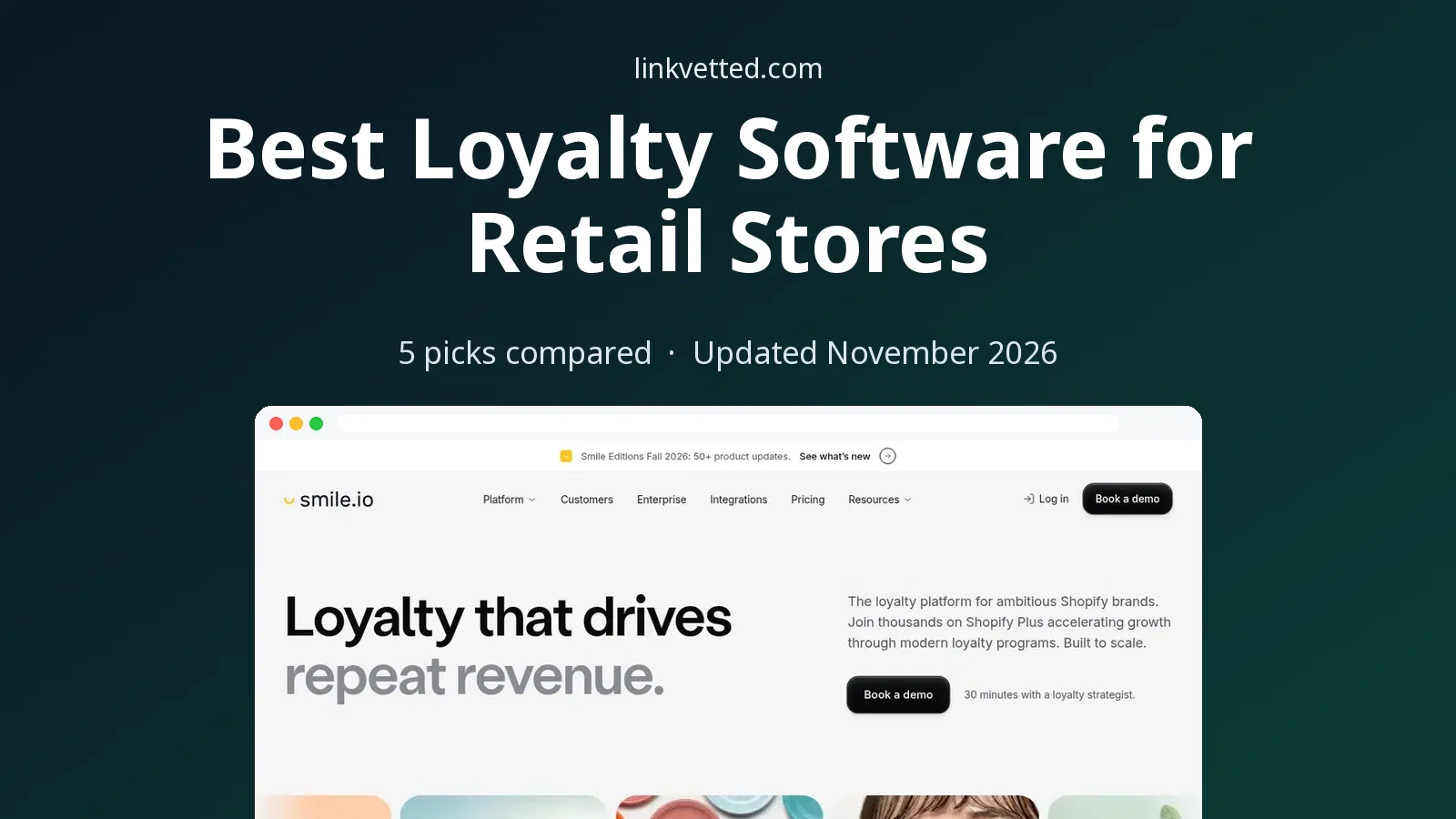
 Smile.io
Shopify keeps wanting straightforward loyalty
Starts at$15 a monthVisit smile.ioFull review - Also consider
 LoyaltyLion
Data-driven ecommerce retention
Starts at$199 a monthVisit loyaltylion.comFull review
Direct answer
Annex Cloud leads the list, best for enterprise loyalty experience programs. Listed starting prices: Smile.io from $15 a month, LoyaltyLion from $199 a month and Yotpo Loyalty & Referrals from $15 per month. Alternatives: Smile.io for Shopify keeps wanting straightforward loyalty, and LoyaltyLion for data-driven ecommerce retention. The remaining 2 options are covered below with prices and limits.
TL;DR:
- Number one here is Annex Cloud, a fit for enterprise loyalty experience programs.
- Yotpo Loyalty & Referrals comes with a trade-off: ecommerce-focused instead of in-store first.
- Smile.io has the lowest monthly starting price in this list: $15 per month.
- Smile.io, LoyaltyLion, Yotpo Loyalty & Referrals: these are the 3 tools out of 5 that offer a free plan.
Last checked November 2026. Prices and plan details were read from the vendors' own pages in November 2026; vendors change plans often, so confirm the current price on the vendor site before you buy.
Quick comparison
| Tool | Best for | Starts at | Free plan? | |
|---|---|---|---|---|
| Annex Cloud | Enterprise loyalty experience programs | See website | Not stated | Visit |
| Smile.io | Shopify keeps wanting straightforward loyalty | $15 a month | Yes | Visit |
| LoyaltyLion | Data-driven ecommerce retention | $199 a month | Yes | Visit |
| Yotpo Loyalty & Referrals | Ecommerce loyalty plus reviews | $15 per month | Yes | Visit |
| Open Loyalty | API-first gamified loyalty engines | See website | Not stated | Visit |
The best loyalty software for retail stores
This LinkVetted guide covers 5 loyalty software for retail stores. Each profile lists a starting price, free plan details, strengths and drawbacks, so you can drop poor fits quickly.
For enterprise loyalty experience programs, Annex Cloud is a natural candidate. Annex Cloud markets a Loyalty Experience Platform geared toward brands that want to drive results and deepen customer connections. Beyond that, since the product is positioned for enterprise programs, smaller keeps may find the scope and implementation effort disproportionate to their needs.
Retailers wanting a fast, light points program should compare more straightforward choices first. The framing is enterprise-oriented, suggesting support for structured, multi-touch loyalty programs instead of a single rewards widget. Annex Cloud does not show a starting price in this comparison, so check the vendor site for current pricing. Free access: Not stated.
Where it is weaker: Enterprise focus can mean longer setup.
- Enterprise loyalty experience product
- Aims to deepen customer connections
- May be heavy for small keeps
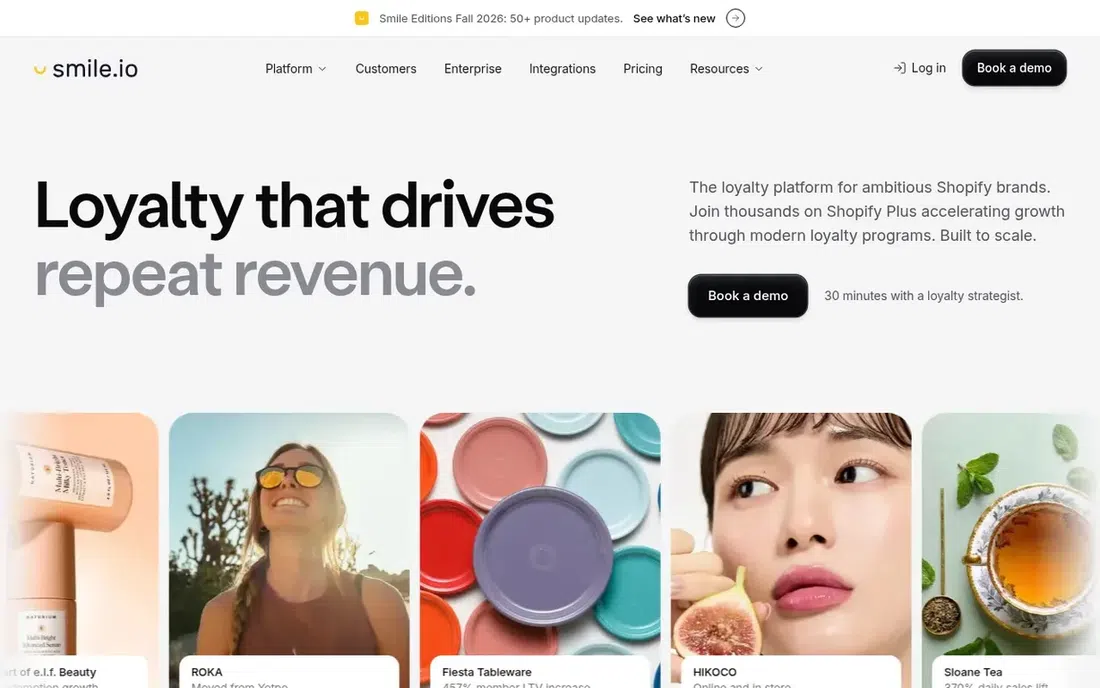
Smile.io is built with Shopify keeps wanting straightforward loyalty in mind. The product is plainly oriented toward Shopify, so retailers on other commerce systems should check integration support carefully before choosing it.
Beyond that, for retail keeps already running on Shopify, that means a program that appears where shoppers browse and buy without heavy custom work. For everyday use, keeps needing deep enterprise customization or complicated multi-brand program logic may prefer a more customizable engine. Price to start with Smile.io: $15 per month. Smile.io includes a free tier.
Best features of Smile.io: Built into checkout and customer accounts.
Watch-outs: Less suited to non-Shopify stacks.
- VIP levels and referrals
- Links with Shopify POS and Klaviyo
- Most solid fit is the Shopify ecosystem
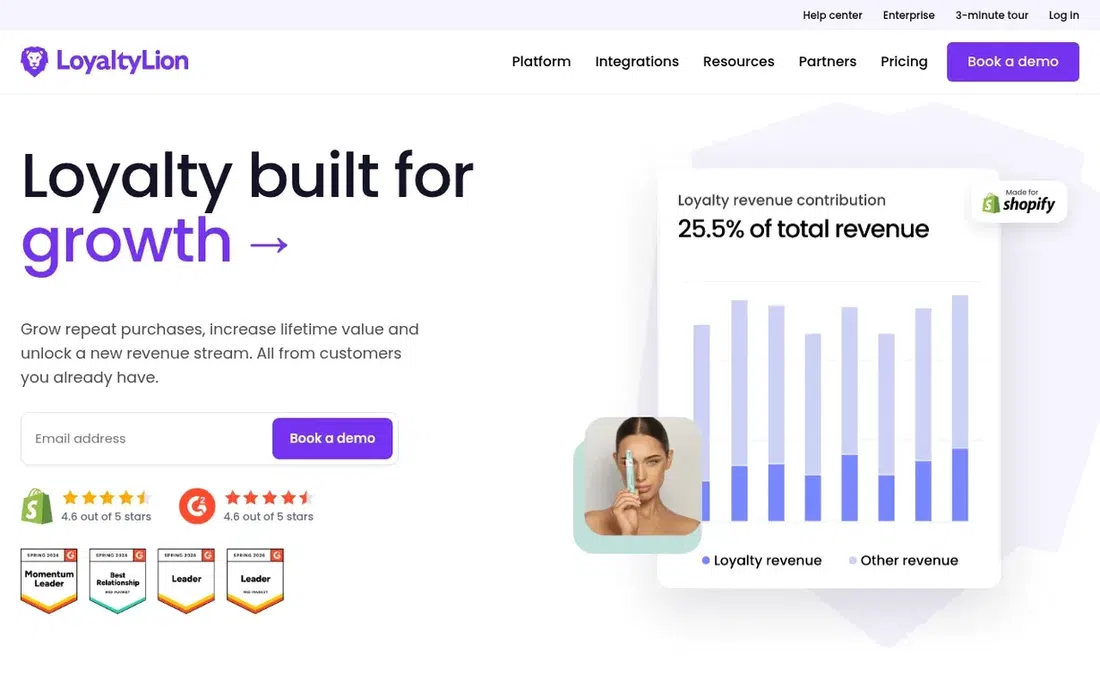
Think of LoyaltyLion for data-driven ecommerce retention. LoyaltyLion is an ecommerce customer loyalty and engagement system that frames loyalty programs as a driver of growth and retention.
In daily use, smaller keeps wanting a very straightforward points widget may find the data-driven approach more than they need. From a buyer's view, retailers whose loyalty logic revolves around physical store visits and POS receipts should verify how well the system includes those flows. On cost, LoyaltyLion starts like this: $199 per month. You can start on LoyaltyLion without paying.
Where it is weaker: Setup depth may suit bigger teams.
- Positions programs around retention
- Data-driven program design
- Ecommerce orientation over in-store
Yotpo Loyalty & Referrals
Best for: Ecommerce loyalty plus reviews
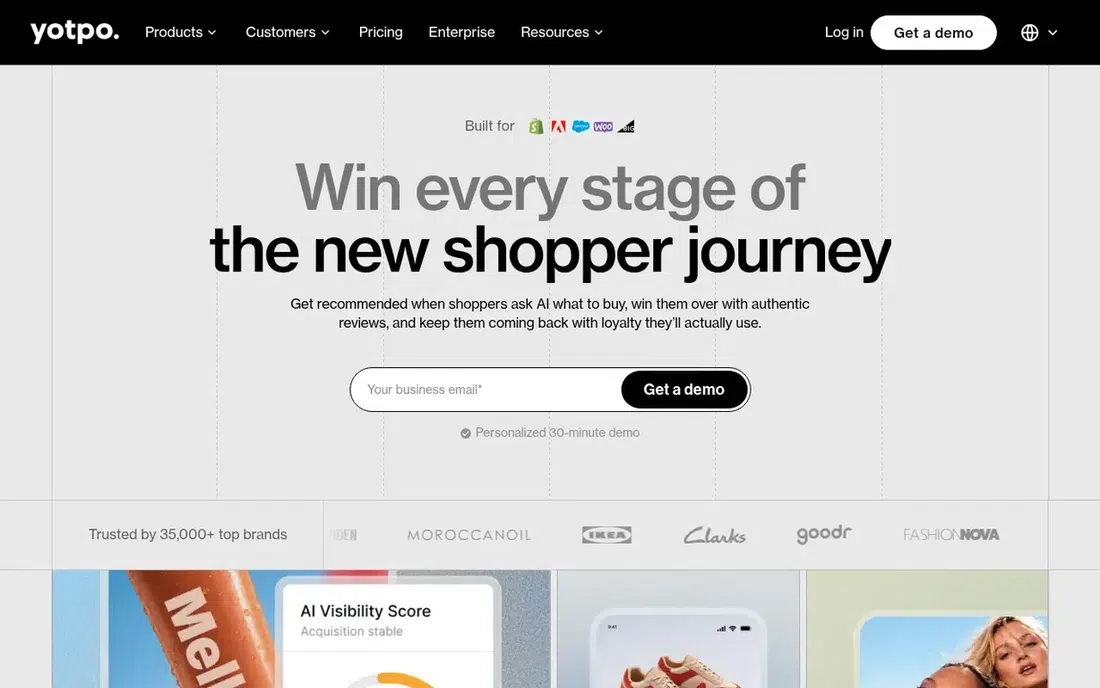
Yotpo Loyalty & Referrals is aimed squarely at ecommerce loyalty plus reviews. Yotpo presents itself as a product for loyalty, reviews and AI visibility in ecommerce. Its loyalty and referrals product lets retail brands build programs that reward repeat shoppers whereas collecting reviews that build trust.
Honest limits: Feature depth varies by module.
For everyday use, since the emphasis is ecommerce growth, keeps that depend chiefly on in-person transactions may find the loyalty tooling less central to their workflow. In practice, if your program is built around physical checkout and POS, compare with a product that treats store systems as a first-class channel before committing. On cost, Yotpo Loyalty & Referrals starts like this: $15 per month. Yotpo Loyalty & Referrals includes a free tier.
- Referral tools included
- Aims at turning shoppers into advocates
- Ecommerce-focused instead of in-store first
Open Loyalty
Best for: API-first gamified loyalty engines
Choose Open Loyalty for API-first gamified loyalty engines. The API-first framing means it is built to plug into existing retail systems instead of replace them.
The main drawbacks: Needs technical resources.
It suits retailers with development resources who want custom program logic across channels. This comparison lists no price for Open Loyalty; ask the vendor. As for free access: Not stated.
- API-first architecture
- Gamified program mechanics
- Not a plug-and-play widget
How the list was put together
LinkVetted looked at what each vendor publishes: pricing, plan limits, feature coverage for loyalty software for retail stores and stated drawbacks. No hands-on testing is claimed. Prices and plan limits come from vendor pages and can change, so confirm them on the vendor site before you buy. The sequence is a judgement call: typical use case first, then pricing transparency, then free access. Use the profiles to check fit.
What to confirm before you sign up
- Confirm the entry price on the vendor page. For Annex Cloud and Open Loyalty that means a quote rather than a fixed price.
- Look at free plan limits closely: Smile.io, LoyaltyLion and Yotpo Loyalty & Referrals have one, and the caps decide whether it is usable for real work.
- Before choosing Annex Cloud, weigh its main limit: enterprise focus can mean longer setup.
- Work out what Smile.io costs with your real seat count, add-ons and usage, not just the entry price.
- Look at the help docs and support options for Yotpo Loyalty & Referrals before you commit.
FAQ
Is Shopify-specific loyalty software limiting?
It can be if you later move to another commerce product, since tools built around Shopify work best inside that ecosystem. From a buyer's view, if your store runs on Shopify and you expect to stay there, a Shopify-focused product can ease setup substantially.
When does an API-first loyalty engine make sense?
An API-first engine fits retailers with development resources who require custom program logic across several systems. It supplies adaptability but assumes technical capacity for integration and maintenance, so smaller teams often prefer prebuilt loyalty apps.
What should a retail store look for in loyalty software?
Start with where your customers actually transact, then confirm the product supports those channels, whether online, in store or both. Check how points, levels and referrals are configured, and make sure integrations with your existing commerce and marketing tools are documented.
Which options for loyalty software for retail stores have a free plan?
Smile.io, LoyaltyLion and Yotpo Loyalty & Referrals offer a free plan in this list. Free plans usually cap users, projects or features, so check the limits on the vendor page.
How are the tools for loyalty software for retail stores ordered?
The order follows typical fit for loyalty software for retail stores, with Annex Cloud first and Open Loyalty last, then price clarity and free access. It is editorial judgement, not a score, so another team could rank the tools differently.
Do these tools publish their prices?
Not all of them. Annex Cloud and Open Loyalty publish no starting price, so expect a quote request for those. The rest, Smile.io included, show a starting price, though seats and billing terms still change the final cost.
Sources
- https://www.annexcloud.com
- https://smile.io
- https://loyaltylion.com
- https://www.yotpo.com
- https://www.openloyalty.io
Related guides
- Best Access Management Software for Retail Stores in 2026: Prices, Free Plans and 6 Picks
- Best Bug Tracking Software for Retail Stores in 2026: Prices, Free Plans and 5 Picks
- Best Client Portal Software for Retail Stores (2026): 5 Picks Checked on Vendor Pages
- Best Customer Loyalty Platform in 2026: 8 Platforms Compared