Best Enterprise SaaS Companies in 2026: 8 Companies Compared
We compared the best enterprise saas companies on core products, pricing transparency, and fit, to help large teams shortlist vendors with confidence.
- Editor's choice
 Salesforce
CRM at enterprise scale
Starts at$25 per user per monthVisit salesforce.comFull review - Great alternative
 ServiceNow
IT and employee workflows
Starts atSee websiteVisit servicenow.comFull review - Also consider
 Workday
HR and finance together
Starts atSee websiteVisit workday.comFull review
TL;DR:
- Salesforce and Microsoft Dynamics 365 are the most transparent on entry pricing, while SAP, Oracle NetSuite, Workday, and ServiceNow quote per deal.
- No single vendor covers CRM, HR, finance, and service workflows equally well, so most large companies buy a small set of best-fit platforms.
- HubSpot and Atlassian are the easiest to trial, since both offer a free plan, while the others rely on demos and trials.
- Implementation and integration costs often rival the first year of licenses, so budget for services alongside subscriptions.
Quick comparison
| Tool | Best for | Starts at | Free plan? | |
|---|---|---|---|---|
| Salesforce | CRM at enterprise scale | $25 per user per month | Free trial | Visit |
| ServiceNow | IT and employee workflows | See website | No | Visit |
| Workday | HR and finance together | See website | No | Visit |
 Microsoft Dynamics 365 | Microsoft-centered companies | $65 per user per month | Free trial | Visit |
 Oracle NetSuite | Growing midsize to enterprise ERP | See website | No | Visit |
 SAP | Complex manufacturing and supply chains | See website | No | Visit |
 Adobe Experience Cloud | Large marketing and content teams | See website | Free trial | Visit |
 HubSpot | Marketing-led growth teams | Free | Yes | Visit |
The best enterprise SaaS companies
We compared eight enterprise SaaS companies on product depth, pricing transparency, and the type of company each one serves best.
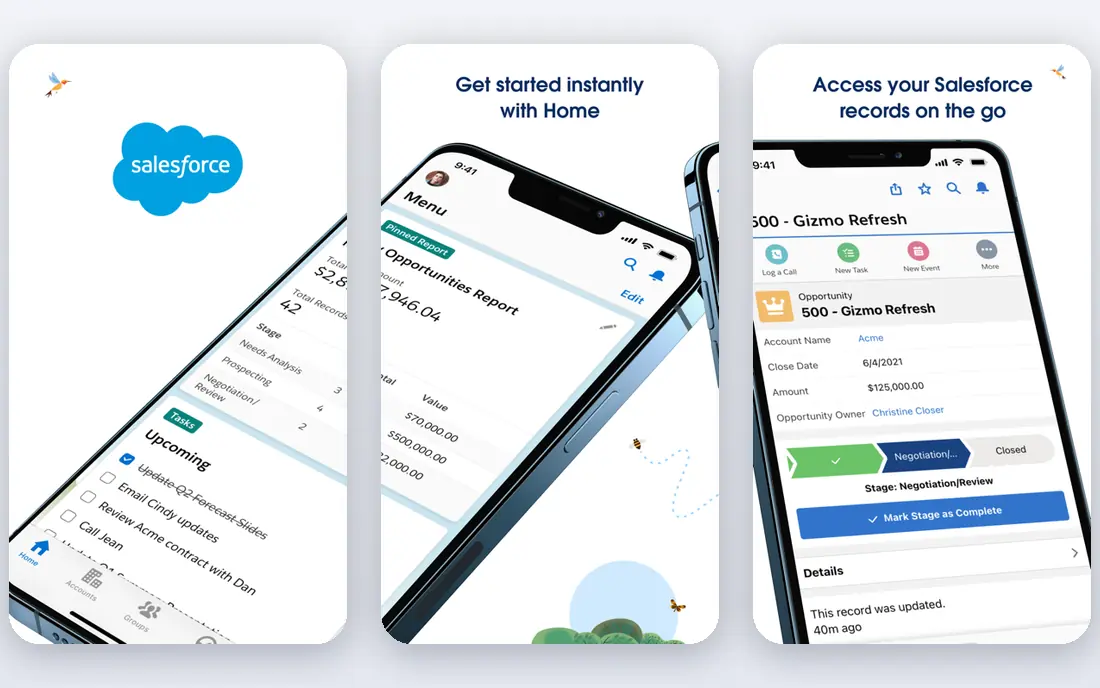
Salesforce is the default shortlist entry for enterprise CRM, because its platform covers sales, service, marketing, and commerce in one system with a very large partner and app ecosystem. A company can start with a small sales team and grow to thousands of users without switching CRM, which matters for firms planning multi-year growth. Published starter pricing also makes an initial budget conversation easier than with quote-only rivals.
The honest catch is total cost: higher editions, add-on clouds, and implementation services can push the real price well above the starter rate. Customization is powerful but can also create technical debt if it is not governed. Salesforce fits best when CRM is a core system and the company is willing to invest in administration and governance.
- Deepest CRM ecosystem for sales, service, and marketing
- Large app marketplace
- Published starter pricing
- Costs rise quickly with add-ons and editions
- Implementation often needs a partner
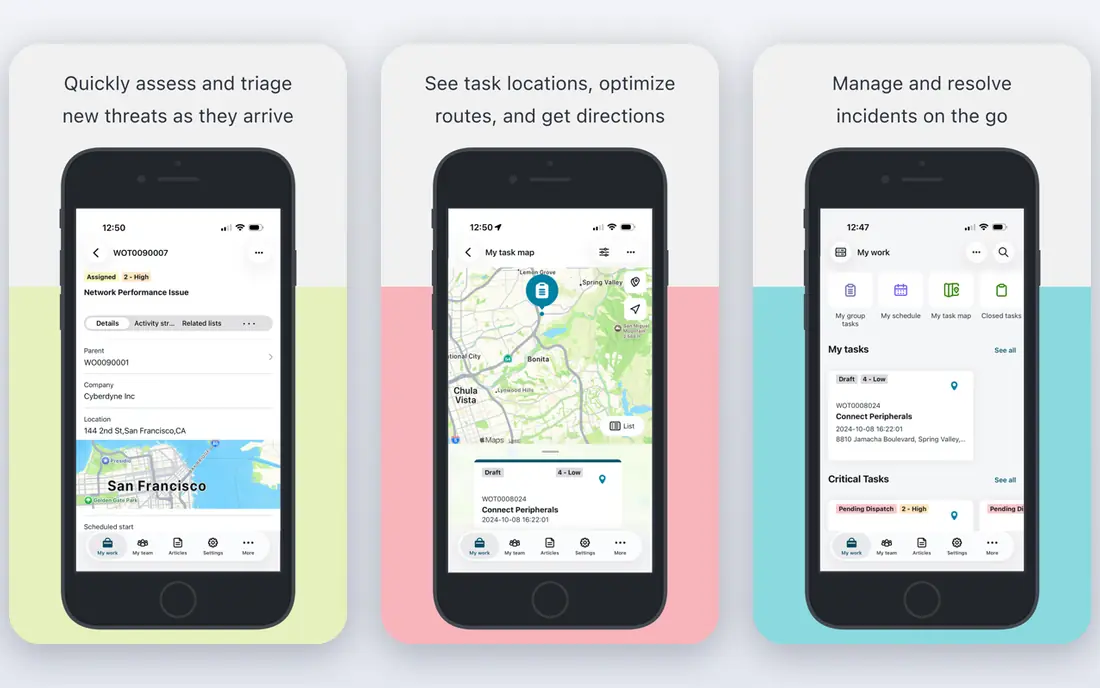
ServiceNow suits large companies that need to run service work as governed workflows, from IT tickets to employee requests and customer cases. Its platform links approvals, tasks, and records in one flow, which helps regulated firms show who approved what and when. The breadth across IT, HR, and customer service also lets one platform replace several disconnected tools.
The downside is complexity and cost opacity, since pricing is quoted per deal and the platform rewards skilled administration. Smaller firms may find it heavier than a point tool for help desk work alone. For an enterprise that wants workflow discipline across departments, ServiceNow is a strong core platform.
- Strong workflow automation across IT, HR, and customer service
- Governed approvals and audit trails
- Large enterprise install base
- Pricing is quote-based
- Platform needs skilled administrators
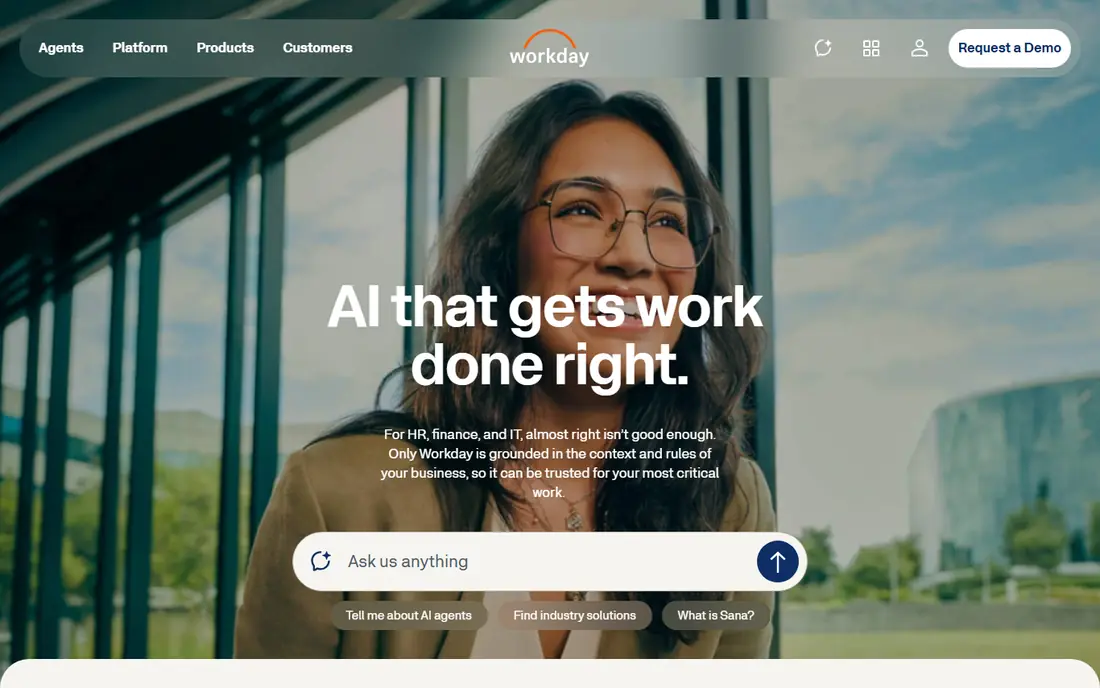
Workday fits companies with several hundred or more employees that want HR and finance on one data model, so headcount, pay, and budget numbers stay consistent. Its planning and reporting tools help finance and HR leaders answer questions about hiring, attrition, and cost without reconciling separate systems. Large employers also value its audit trails and controls for sensitive people and money data.
The trade-off is effort: Workday projects take months, need executive sponsorship, and usually involve an implementation partner. Pricing is quoted per deal, so early budgeting is approximate. If HR and finance unity is the goal and the company can commit to a proper rollout, Workday is a leading choice.
- Unified HR and finance data model
- Strong workforce planning and reporting
- Trusted by large employers
- Pricing is quote-based
- Implementation timelines are long
Microsoft Dynamics 365 is the natural pick for companies already running on Microsoft 365, Teams, and Azure, since identity, documents, and collaboration fit together with less integration work. Its sales, service, finance, and supply chain modules let a company buy the pieces it needs rather than a single monolith. Published pricing for sales products also helps with early budgeting.
The catch is that the module catalog is broad, and choosing the right mix takes care, especially between sales, customer service, and finance modules. Companies outside the Microsoft stack get less of the integration benefit. For a Microsoft-centered enterprise, though, Dynamics 365 offers a coherent path from CRM to ERP.
- Tight fit with Microsoft 365, Teams, and Azure
- Published sales pricing
- Broad CRM and ERP modules
- Module choice can be confusing
- Best value requires Microsoft commitment
Oracle NetSuite suits companies that have outgrown basic accounting software and need finance, inventory, order management, and reporting in one cloud ERP. Its unified data model reduces the spreadsheet work that creeps in when finance and operations run on separate tools. The partner network also helps with industry-specific setups for distribution, manufacturing, and services firms.
The honest weakness is that NetSuite pricing and implementation scope are quote-based, so total cost is hard to pin down before a scoping conversation. Customization and integrations also need governance to avoid a tangled system over time. For a growing company ready for a real ERP, NetSuite is a proven step up.
- Unified ERP for finance, inventory, and operations
- Strong for companies outgrowing basic accounting
- Large partner network
- Pricing is quote-based
- Implementation needs planning and partner help
SAP remains the standard for very large companies with complex manufacturing, multi-country operations, and deep supply chain needs. Its ERP covers finance, procurement, production, and logistics in a depth that few rivals match, and its global localization helps companies operating across many tax and reporting regimes. For a multinational manufacturer, that depth is often the deciding factor.
The downside is scale of effort: SAP projects are major programs that need executive backing, process redesign, and experienced partners. Pricing is quoted per deal, and total cost includes substantial services. SAP fits best when operational complexity genuinely demands it, not when a simpler ERP would do.
- Deepest ERP for complex supply chains and manufacturing
- Global compliance and localization
- Huge enterprise install base
- Pricing is quote-based
- Projects are large and demand strong change management
Adobe Experience Cloud fits large marketing organizations that produce a high volume of content and need analytics, personalization, and campaign management tied to that content. Its link to Adobe creative tools is a real advantage for teams that already design in Photoshop, Illustrator, or Premiere. For enterprises with complex customer journeys across web, email, and mobile, the suite covers more ground than a single-point marketing tool.
The catch is that the suite is broad and priced per deal, so a smaller team may pay for capability it never uses. Implementation and data setup also take skilled staff. Adobe is best when marketing scale and content volume justify an enterprise suite rather than a simpler tool.
- Strong content, analytics, and personalization tools
- Deep creative tool integration
- Suited to large digital teams
- Pricing is quote-based
- Product breadth can overwhelm smaller marketing teams
HubSpot is the easiest enterprise SaaS company on this list to start with, because its free CRM tier lets a team try real work before paying. Its marketing, sales, and service hubs share one contact record, which helps growth teams keep campaigns, deals, and support in sync. The interface is also notably easier to learn than most enterprise platforms, which speeds adoption.
The honest limit is depth: HubSpot is not an ERP or an HR system, so large companies will still need Workday, NetSuite, or SAP for finance and people operations. Enterprise pricing also rises with contacts, seats, and hubs. HubSpot fits best as the revenue and customer platform, paired with a separate system of record for finance and HR.
- Free CRM tier for small teams
- Marketing, sales, and service hubs in one system
- Easy to trial and learn
- Enterprise costs rise with contacts and hubs
- Less deep than SAP or Workday for ERP and HR
How we picked these
We compared official product pages, published pricing where available, and public customer and review data, and we favored companies with a proven enterprise install base and a current cloud product in October 2026. We checked that each company still sells its flagship SaaS product and reported published starter prices only where the vendor publishes them. Where pricing is quoted per deal, we wrote See website rather than repeating an estimate.
What to check before you buy enterprise SaaS
Enterprise deals last years, so the buying process deserves more care than a free trial alone.
Define the system of record first
Decide which system will own customer data, people data, and financial data before you buy, since that choice shapes every integration after it. A CRM should own customer records, an HR system should own people records, and an ERP should own financial records. Overlap between systems creates duplicate data and reconciliation work later.
Budget for implementation, not just licenses
Ask each vendor for a realistic services estimate, including data migration, integrations, training, and change management. Midsize and large projects often spend as much on services as on the first year of licenses, and that cost is easy to miss in a license-only comparison. Get the services estimate in writing during evaluation, not after signing.
Run a pilot with real data
A demo with sample data hides integration and data quality problems, so pilot with a slice of your real customers, employees, or transactions. Measure how long common tasks take, how often users need workarounds, and what breaks when data is messy. A short pilot with real data tells you more than a long demo with clean data.
FAQ
What counts as an enterprise SaaS company?
An enterprise SaaS company sells cloud software on subscription to large organizations, usually with controls for security, permissions, reporting, and integrations. The software runs on the vendor's infrastructure and updates on the vendor's schedule, rather than on servers the customer maintains. Enterprise versions add governance, support, and scale features that small-team plans lack.
Is Salesforce or Microsoft Dynamics 365 better for CRM?
Salesforce usually wins on CRM depth, marketplace apps, and ecosystem size, while Dynamics 365 wins on fit for companies already committed to Microsoft 365 and Azure. The better pick depends on your existing stack, your team's skills, and which integrations matter most. Pilot both with your real sales process before deciding.
Do enterprise SaaS products offer free plans?
Some do, notably HubSpot with a free CRM tier, while most enterprise platforms offer a free trial or a demo instead. Atlassian also offers free tiers for small teams, though it is not on this list's core eight. Always confirm what the free tier includes, since enterprise features are usually excluded.
How long does enterprise SaaS implementation take?
Timelines range from weeks for a focused CRM rollout to many months for a full ERP or HR system, depending on data migration and process change. Workday and SAP projects are typically the longest, while HubSpot and Salesforce sales rollouts can be faster. Ask vendors for a phased plan with clear milestones rather than a single go-live date.
Can one vendor replace all our systems?
Rarely, since CRM, HR, finance, and service workflows have different data models and compliance needs. Most large companies use a small set of platforms, such as Salesforce for CRM, Workday for HR and finance, and ServiceNow for workflows. The goal is a coherent set with clean integrations, not a single vendor for everything.
What hidden costs should we watch for?
Watch for implementation services, integration tools, data migration, training, premium support, and add-on modules that sit outside the base license. Seat and contact growth can also raise costs over time, especially on platforms priced per user or per contact. Ask for a three-year total cost estimate that includes services and expected growth.
Sources
- https://www.salesforce.com/editions-pricing/sales-cloud/
- https://www.servicenow.com
- https://www.workday.com
- https://www.microsoft.com/en-us/dynamics-365/pricing
- https://www.netsuite.com/portal/products/netsuite-pricing.shtml
- https://www.sap.com
- https://www.adobe.com/marketing/experience-cloud.html
- https://www.hubspot.com/pricing