Best Engagement Ring Companies in 2026: 9 Companies Compared
Compare the best engagement ring companies in 2026, with diamond selection, certification, return terms, showrooms, and options for every budget today.
- Editor's choice
 Blue Nile
Largest selection and price match
Starts atSee websiteVisit bluenile.comFull review - Great alternative
 Rare Carat
Comparing certified diamonds
Starts atSee websiteVisit rarecarat.comFull review - Also consider
 Brilliant Earth
Showrooms and ethical sourcing focus
Starts atSee websiteVisit brilliantearth.comFull review
TL;DR:
- Blue Nile is our pick for most buyers, with a very large natural and lab-grown inventory, 360-degree imagery, and a price-match promise.
- Rare Carat is strong for comparison shopping, since it aggregates certified diamonds and adds gemologist support.
- Brilliant Earth suits buyers who want showrooms plus a focus on ethical sourcing claims they can check in detail.
- James Allen wound down as a standalone site in 2026, with its styles continuing as a collection inside Blue Nile, so we do not list it separately.
Quick comparison
| Tool | Best for | Starts at | Free plan? | |
|---|---|---|---|---|
| Blue Nile | Largest selection and price match | See website | No | Visit |
| Rare Carat | Comparing certified diamonds | See website | No | Visit |
| Brilliant Earth | Showrooms and ethical sourcing focus | See website | No | Visit |
 Tiffany and Co. | Iconic house designs | See website | No | Visit |
 Cartier | Luxury heritage designs | See website | No | Visit |
 Ritani | Transparent pricing and local preview | See website | No | Visit |
 Clean Origin | Lab-grown value | See website | No | Visit |
 VRAI | Lab-grown diamonds it grows itself | See website | No | Visit |
 Whiteflash | Cut quality for natural diamonds | See website | No | Visit |
The best engagement ring companies
An engagement ring is a large purchase with many variables: diamond type, certification, setting, metal, return terms, and warranty. The companies below cover online value, showroom service, and luxury houses, so you can match the buying experience to your budget and comfort level.
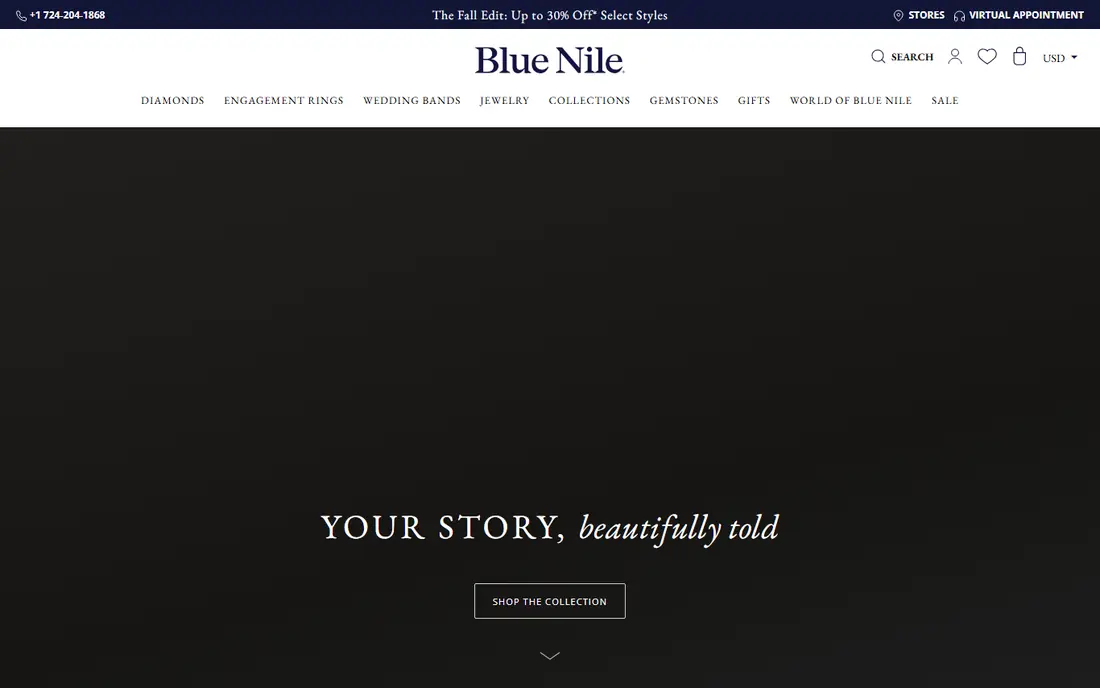
Blue Nile has sold engagement rings online since 1999, and its scale shows in inventory. Public comparisons list roughly 230,000 natural and 130,000 lab-grown diamonds, with GIA reports for natural stones and IGI reports for lab-grown stones. That range helps if you have a strict budget, shape, or color and clarity target.
In 2026, Blue Nile also became the home for James Allen styles, after Signet wound down JamesAllen.com as a standalone site and kept the brand as a collection inside Blue Nile. If you liked James Allen designs, check Blue Nile first. The catch is choice overload, so use filters and a consultation to narrow to a shortlist.
- Very large natural and lab-grown inventory
- 360-degree imagery and price match
- Showrooms and virtual consultations
- Service quality varies by channel
- Premium for some house settings
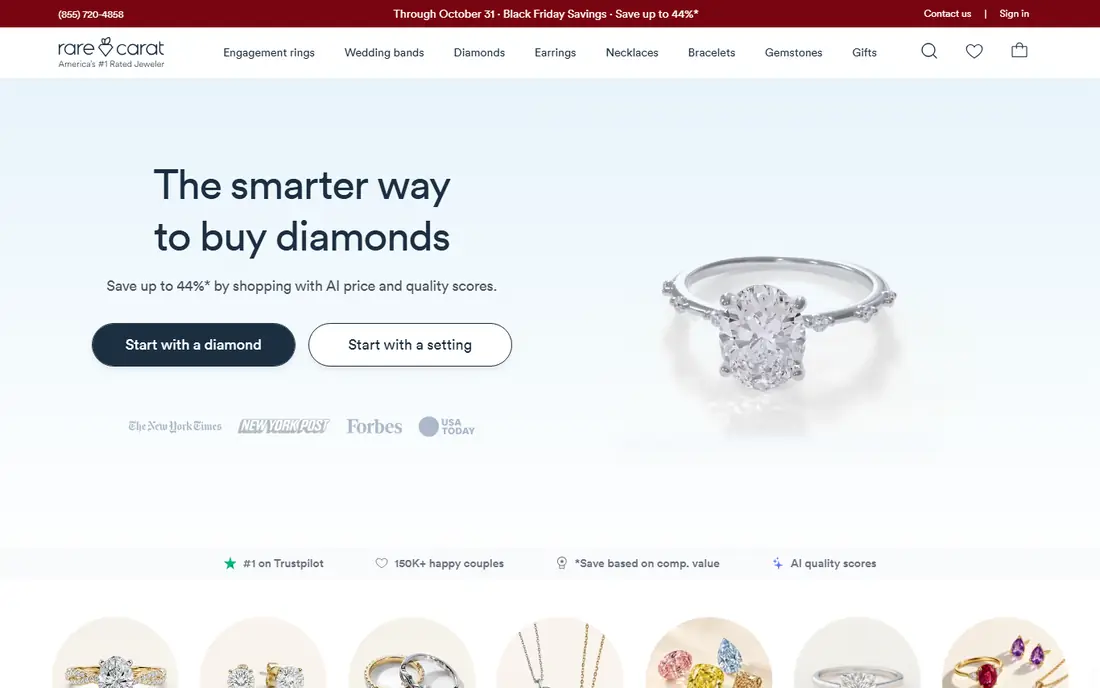
Rare Carat works like a comparison engine for certified diamonds. It pulls inventory from multiple sellers, shows prices side by side, and offers gemologist help to check a stone before you buy. For price-focused buyers, that transparency is valuable, since the same specs can vary by hundreds of dollars across sellers.
The trade is that return and warranty terms depend on the final seller and setting, so read those terms for your exact ring. Use Rare Carat to find the stone and compare prices, then confirm certification, return window, and resizing terms before you pay.
- Aggregates a large certified inventory
- Gemologist support
- Clear price comparison across sellers
- Final seller terms can vary
- Settings range depends on partner inventory
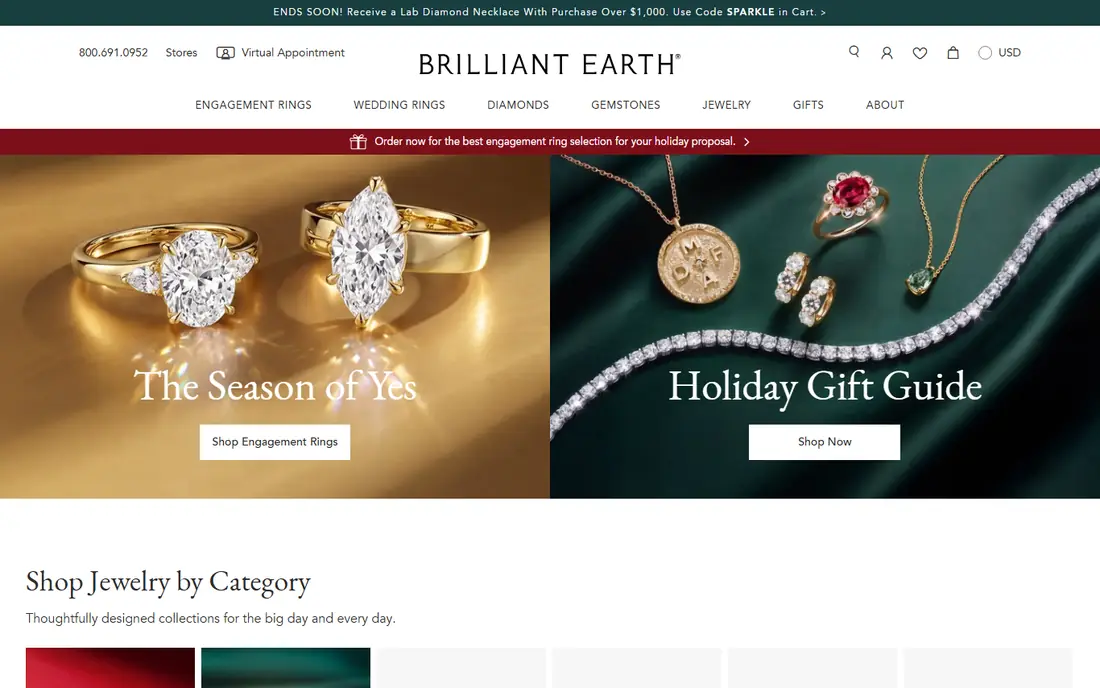
Brilliant Earth suits buyers who want to see a ring in person before committing. It runs many showrooms across the United States, offers both natural and lab-grown diamonds, and puts sourcing and sustainability claims front and center. That combination helps if ethical sourcing is a priority and you want to check claims in a consultation.
Prices tend to sit above value-first online rivals, and return terms exclude some custom, engraved, and resized items. Visit a showroom if you can, compare the same specs elsewhere, and confirm the return window for your exact ring before you order.
- Natural and lab-grown options
- Many showrooms for in-person viewing
- Focus on sourcing transparency
- Prices often run above value-first rivals
- Custom and resized items have return limits
Tiffany and Co. is the choice when the design and the box matter as much as the stone. The Tiffany Setting, introduced in 1886, remains a classic solitaire, and the house offers a curated range of designs rather than a vast loose diamond search. In-store service, including complimentary resizing handled in store, adds to the experience.
You pay a brand premium, and Tiffany does not discount in the way online rivals do. Its diamonds carry Tiffany's own certificate for stones 0.18 carat and up, rather than a GIA report. If you want the house design and service, that premium is the point. If you want maximum stone size for a budget, an online value retailer will go further.
- Iconic designs such as the Tiffany Setting
- In-store service and complimentary resizing
- Strong brand and resale recognition
- Premium brand pricing with no sales
- Natural diamonds only in its main engagement range
Cartier offers engagement rings as part of a wider luxury jewelry house, with designs such as the Solitaire 1895 and the Etincelle collections. The appeal is craftsmanship, heritage, and a design that is recognized on its own, not just for the center stone. In-store service and presentation are central to the purchase.
Prices reflect luxury positioning, and you will not get the same loose diamond comparison tools as online retailers. Cartier suits buyers who have a set budget for a house design and value the brand, service, and long-term care that come with it. Value-first buyers should compare stone specs elsewhere first.
- Heritage luxury designs and craftsmanship
- Strong in-store experience
- Recognized house styles
- High luxury pricing
- Limited loose diamond comparison
Ritani combines online pricing with a local preview option. You can search diamonds and settings online with clear prices, then preview a ring through a partner jeweler in some areas. That bridge helps buyers who like online prices but want to see a ring in person before they commit.
Inventory is smaller than Blue Nile or Rare Carat, so a very specific spec may not appear. Check partner availability in your area early, and confirm return and warranty terms for your exact ring. For transparent pricing with a human check, Ritani is a useful middle path.
- Clear online pricing for diamonds and settings
- Option to preview through a local jeweler
- GIA and IGI certification
- Smaller inventory than the largest rivals
- Local preview depends on partner availability
Clean Origin focuses only on lab-grown diamonds, which keeps prices lower for a given size and spec. Its 100-day return window is longer than the 30-day standard at many rivals, and it offers a lifetime warranty on many items. That combination lowers risk for buyers who are new to lab-grown stones.
The limit is choice. If you want a natural diamond, you need another retailer. Setting styles are also narrower than the largest catalogs. For a lab-grown ring at a clear price with a generous return window, Clean Origin is a strong value pick.
- Lab-grown specialist with strong value
- Long 100-day return window
- Lifetime warranty on many items
- Lab-grown only, so no natural diamond option
- Setting range is narrower than large rivals
VRAI stands out because it grows its own diamonds, rather than only sourcing them. That vertical control supports its claims about origin and process, and its settings lean modern and minimal. If you want a lab-grown ring from a single maker with a clear story, VRAI fits well.
Prices are mid-range for lab-grown, above the cheapest value sellers. The range is also focused, so buyers who want a very wide setting catalog may prefer a larger retailer. Compare VRAI specs and prices against Clean Origin and Blue Nile lab-grown options before you decide.
- Grows its own lab-grown diamonds
- Clean, modern settings
- Direct control over supply
- Lab-grown only
- Prices sit above the cheapest lab-grown rivals
Whiteflash is the pick for buyers who prioritize cut above all else. Its A CUT ABOVE line focuses on super-ideal cut diamonds, with detailed images and light performance information that help you judge brilliance beyond the basic 4Cs. That detail appeals to buyers who have studied cut quality.
You pay for that precision, and inventory is smaller than the largest online catalogs. If cut is your top priority and you want data to back it, Whiteflash is worth the premium. If size for budget matters more, compare its prices against value rivals for the same color and clarity.
- Strong focus on super-ideal cut diamonds
- Detailed imagery and light performance data
- GIA and AGS certification
- Premium pricing for top cut tiers
- Smaller inventory than mass rivals
How we picked these
We compared official retailer pages, certification and return terms, showroom availability, and public 2026 comparisons for engagement ring retailers. We favored companies with clear certification, published return terms, and a real inventory or house design range. We excluded James Allen as a standalone listing because it wound down in 2026, and we note where its styles now live.
How to buy an engagement ring without regret
Start with budget and the 4Cs in order of priority for your partner: cut, color, clarity, and carat. Cut affects sparkle most, so many buyers prioritize an excellent cut, then pick a color and clarity that look clean to the eye. A slightly smaller stone with a better cut often looks better than a larger stone with a poor cut.
Next, check certification. For natural diamonds, a GIA report is the most widely trusted standard. For lab-grown diamonds, IGI and GCAL reports are common. Read the report number, match it to the stone, and confirm the grading matches the listing before you pay.
Finally, confirm the practical terms. Check the return window, whether resizing or engraving voids returns, warranty coverage for prongs and stones, and resizing cost. A ring is worn daily, so warranty and resizing terms matter as much as the first price. Keep all paperwork and the certificate together after purchase.
Natural versus lab-grown diamonds
Natural diamonds are mined stones with a long market history and higher prices for the same size. Lab-grown diamonds are chemically the same as natural diamonds, but they cost far less and have weaker resale value. Neither choice is right for everyone. Pick natural if tradition and resale matter most, and pick lab-grown if size and value matter most, with eyes open on resale.
Setting and metal choices
Platinum is durable and hypoallergenic but costs more and needs care to keep its finish. White gold looks similar at a lower price but needs rhodium plating over time. Yellow and rose gold suit vintage and warm-toned designs. Choose a setting that protects the stone for daily wear, especially for active lifestyles.
FAQ
What is the best engagement ring company?
Blue Nile is our pick for most buyers, due to inventory, imagery, and price match. Rare Carat leads for comparison shopping, and Brilliant Earth leads for showrooms plus sourcing focus. The best engagement ring company depends on budget, diamond type, and how much in-person help you want.
What happened to James Allen in 2026?
Signet announced in March 2026 that it would wind down JamesAllen.com as a standalone site. The James Allen brand continues as a collection inside Blue Nile, with its 360-degree viewing technology shared across Signet platforms. Buyers looking for James Allen styles should start at Blue Nile.
Are lab-grown diamonds real diamonds?
Yes. Lab-grown diamonds have the same chemical and physical properties as mined diamonds. They cost less for the same size, but resale value is lower. Certification from IGI or GCAL is common for lab-grown stones, and you should still check the report.
How much should I spend on an engagement ring?
Spend what fits your budget without debt pressure, not a fixed multiple of salary. A clear budget helps you prioritize cut, size, and setting. Many buyers set a range, then compare the same specs across two or three retailers before they decide.
What certification should I look for?
For natural diamonds, look for a GIA report. For lab-grown diamonds, look for IGI or GCAL reports. Match the report number to the stone, check the grading, and keep the report with the ring paperwork. Avoid buying a high-value stone with no independent report.
Can I return an engagement ring?
Most online retailers offer a 30-day return window, with Clean Origin offering 100 days. Engraved, resized, and custom items are often excluded, so check terms for your exact ring. Keep the ring unworn and keep all packaging until the return window passes.