Choosing EHR Software for Optometrists in 2026: 6 Options Compared
Comparing the best EHR software for optometrists? 6 contenders, each with entry cost, free tier and best-fit buyer. Verdicts stay brief and factual. Facts only.
- Editor's choiceCrystal Practice Management
Teams comparing choices in this category
Starts atSee websiteVisit crystalpm.comFull review - Great alternative
 Kareo
Private practices needing connected EHR and billing
Starts atSee websiteVisit kareo.comFull review - Also considerRevolutionEHR
Cloud-based optometry EHR and practice management
Starts at$319Visit revolutionehr.comFull review
Direct answer
Crystal Practice Management is the first pick on this list for teams comparing choices in this category. Listed starting prices: RevolutionEHR from $319, DrChrono from $30 per provider a month and Eyefinity EHR from $340 a month. Look at Kareo for private practices needing connected EHR and billing, and at RevolutionEHR for cloud-based optometry EHR and practice management. All 6 tools are compared below on price, free plan and limits.
TL;DR:
- Top of the list is Crystal Practice Management, which targets teams comparing choices in this category.
- Eyefinity EHR suits Optometry practices integrated with VSP workflows.
- The cheapest monthly starting price in the list is $30 per provider per month, offered by DrChrono.
- None of the 6 tools, from Crystal Practice Management to Eyefinity EHR, has a free plan, so budget for a subscription or use a trial.
- One limit worth knowing about Kareo: general system, not optometry-specific.
Last checked November 2026. Prices and plan details were read from the vendors' own pages in November 2026; vendors change plans often, so confirm the current price on the vendor site before you buy.
Quick comparison
| Tool | Best for | Starts at | Free plan? | |
|---|---|---|---|---|
| Crystal Practice Management | Teams comparing choices in this category | See website | Not stated | Visit |
| Kareo | Private practices needing connected EHR and billing | See website | Not stated | Visit |
| RevolutionEHR | Cloud-based optometry EHR and practice management | $319 | No | Visit |
 DrChrono | Cloud EHR with scheduling, documentation and billing | $30 per provider a month | Not stated | Visit |
| Compulink Eyecare Advantage | Specialty eye care practices needing EHR and management | See website | Not stated | Visit |
| Eyefinity EHR | Optometry practices integrated with VSP workflows | $340 a month | No | Visit |
EHR Software for Optometrists compared in detail
LinkVetted compared 6 EHR software for optometrists. The goal is a practical shortlist: published prices, free plan facts, best-fit use cases and honest limits for every entry.
Crystal Practice Management
Best for: Teams comparing choices in this category
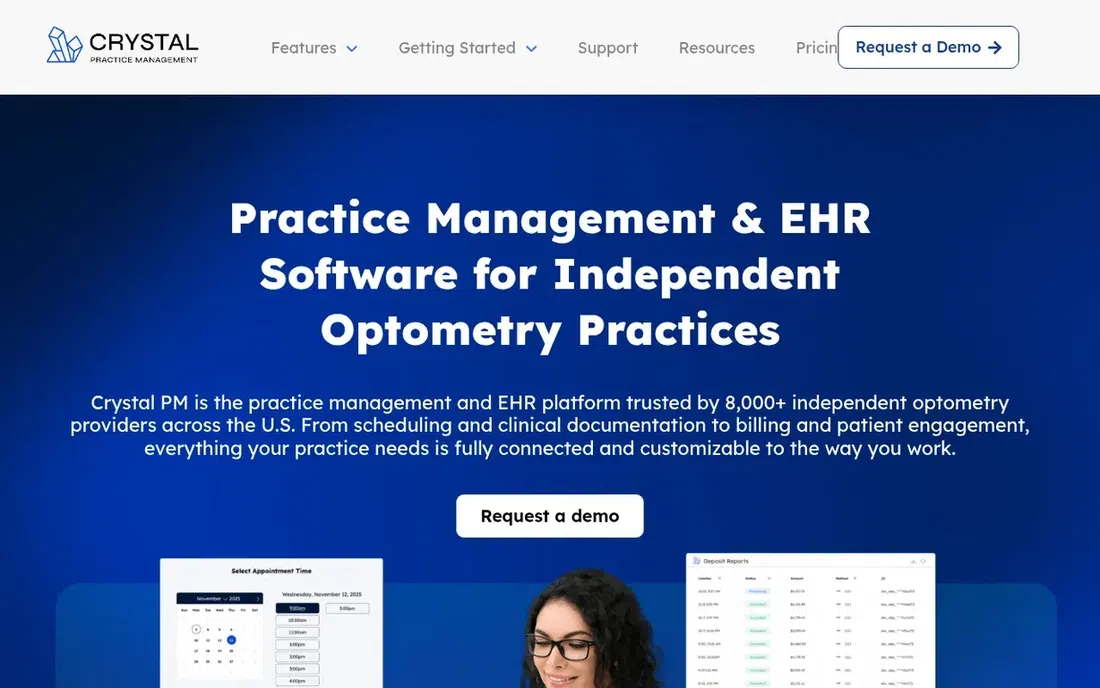
Crystal Practice Management was built for teams comparing choices in this category. Review the vendor's documented feature list against your workflows before committing.
Watch-outs: Restricted appeal outside optometry.
Check the vendor site for Crystal Practice Management pricing; none is listed in this comparison. Free plan details: Not stated.
- Merges practice management and EHR
- Handles scheduling and clinical documentation
- May lack some advanced features of bigger suites
Kareo is aimed squarely at private practices needing connected EHR and billing. The vendor describes a system that links EHR, billing, scheduling and reputation tools.
As for the details, verify that the billing and scheduling features align with your payer mix and office size. Kareo is not designed specifically for optometry, so vision-specific documentation and optical dispensing may need workarounds. No starting price is listed for Kareo here; confirm pricing on the vendor site. Free options: Not stated.
Downsides: General product, not optometry-specific.
Upsides: Reputation tools included.
- Billing and scheduling
- Links EHR
- Optometry workflows may need customization
RevolutionEHR
Best for: Cloud-based optometry EHR and practice management

RevolutionEHR makes the most sense for cloud-based optometry EHR and practice management. Smaller offices should also weigh whether they need the full breadth of billing and marketing tools.
What to check first: Feature depth may exceed small practice needs.
RevolutionEHR is an optometry-specific EHR and practice management product delivered through the cloud. The starting price for RevolutionEHR: $319. No free plan comes with RevolutionEHR.
- Coding and scheduling
- Made for optometry
- Concentrated on optometry, so not for other specialties
DrChrono works best for cloud EHR with scheduling, documentation and billing. Ask the vendor how eye care documentation and billing are handled before committing. Worth adding: practices that want an eye care-native system should compare Eyefinity EHR or Compulink Eyecare Advantage.
It is a general medical system that can serve optometry practices wanting a modern cloud EHR with integrated revenue cycle tools. Practices that value a single system for clinical and financial workflows may find it worth a demo. The starting price for DrChrono: $30 per provider per month. Free access: Not stated.
Honest limits: Not optometry-specific.
Where DrChrono stands out: documentation and billing.
- AI-assisted features highlighted by vendor
- Merges scheduling
- May need setup for eye care templates
Compulink Eyecare Advantage
Best for: Specialty eye care practices needing EHR and management
Compulink Eyecare Advantage is designed for specialty eye care practices needing EHR and management. Compulink Eyecare Advantage is EHR and practice management software for specialty practices, including eye care.
More specifically, the vendor states it helps boost efficiency, optimize revenue and support better patient outcomes. Worth adding: general primary care practices will likely find a specialty system mismatched. Pricing for Compulink Eyecare Advantage is not stated here, so ask the vendor for current figures. Free options: Not stated.
Where it is weaker: Feature set can be deep for small offices.
- Aims at efficiency and revenue optimization
- Specialty practice focus
- Specialty orientation may not fit primary care
Eyefinity EHR
Best for: Optometry practices integrated with VSP workflows

For Optometry practices integrated with VSP workflows, Eyefinity EHR is a natural candidate. Practices without VSP ties may not use the integration that distinguishes the product.
Trade-offs to know: Most solid value for VSP-connected practices.
Worth adding: confirm integration details and workflow fit straight with the vendor before deciding. Eyefinity EHR pricing: $340 per month. No free plan comes with Eyefinity EHR.
- Optometric software focus
- VSP authorization integration
- Less suited to non-optometry specialties
How the list was put together
Questions to settle before buying
- Get a written quote from Crystal Practice Management, Kareo and Compulink Eyecare Advantage; the list shows no starting price for them.
- Read the limits listed for Crystal Practice Management first: restricted appeal outside optometry.
- Let daily users try Kareo on real work; their feedback beats any feature checklist.
- Look at the help docs and support options for Eyefinity EHR before you commit.
- Add up seats, add-ons and usage charges for Compulink Eyecare Advantage before comparing it with cheaper entries.
FAQ
How are the tools for EHR software for optometrists ordered?
The order follows typical fit for EHR software for optometrists, with Crystal Practice Management first and Eyefinity EHR last, then price clarity and free access. It is editorial judgement, not a score, so another team could rank the tools differently.
What should an optometry practice look for in an EHR?
Prioritize optometry-specific documentation, optical dispensing records and vision plan integration. Also check scheduling, billing and patient communication features. In practice, confirm that the vendor supports your practice size and workflow before committing.
Can I try these tools before paying?
Not by default. None of the tools, from Crystal Practice Management to Eyefinity EHR, lists a free plan or a free trial here, so ask each vendor for a demo before committing.
What is the cheapest option for EHR software for optometrists in this list?
On published monthly entry prices, DrChrono is the lowest here at $30 per provider per month. Entry price is only part of the cost, because seats, add-ons and billing terms can change the total. For the full picture, the cards above cover all 6 entries of this EHR software for Optometrists list, including price, free plan and limits.
Can these EHRs manage billing and scheduling together?
Numerous of the systems listed combine EHR with practice management, including billing and scheduling. Match the feature set to your revenue cycle and front-office needs.
How do cloud-based and on-premise optometry EHRs differ?
Cloud systems like RevolutionEHR allow access from anywhere and cut local server maintenance. On-premise systems may offer more local control but require hardware and IT support. As for the details, consider your connectivity, security and support preferences.
Sources
- https://www.crystalpm.com
- https://www.kareo.com
- https://www.revolutionehr.com
- https://www.drchrono.com
- https://www.compulinkadvantage.com
- https://www.eyefinity.com