Best Ecommerce Personalization Platforms in 2026: 8 Platforms Compared
The best ecommerce personalization platform for product recommendations, site search and merchandising, compared for growing stores in 2026. - full guide

- Editor's choice
 Dynamic Yield
Enterprise personalisation
Starts atSee websiteVisit dynamicyield.comFull review - Great alternative
 Bloomreach
Search-led ecommerce brands
Starts atSee websiteVisit bloomreach.comFull review - Also consider
 Nosto
Mid-market ecommerce stores
Starts atSee websiteVisit nosto.comFull review
TL;DR:
- Dynamic Yield and Bloomreach suit large stores that need deep testing and search personalisation.
- Nosto and Klevu are strong mid-market picks for recommendations and merchandising.
- Constructor and Algolia-style search tools matter most when shoppers rely on site search.
- Quote-based pricing is the norm here, so budget on traffic and catalogue size, not seat count alone.
- Prices and free plans change often, so confirm the current plan, limits and fees on the vendor site before you buy.
Quick comparison
| Tool | Best for | Starts at | Free plan? | |
|---|---|---|---|---|
| Dynamic Yield | Enterprise personalisation | See website | Free trial | Visit |
| Bloomreach | Search-led ecommerce brands | See website | Free trial | Visit |
| Nosto | Mid-market ecommerce stores | See website | Free trial | Visit |
 Klevu | Search and merchandising teams | See website | Free trial | Visit |
 Constructor | Large catalogue search | See website | Free trial | Visit |
 Insider | Omnichannel personalisation | See website | Free trial | Visit |
 Monetate | Testing-led personalisation | See website | Free trial | Visit |
 Adobe Target | Adobe ecosystem brands | See website | Free trial | Visit |
The best ecommerce personalization platforms
Personalisation is about showing each shopper the products and content most likely to help them buy. We compared platforms on recommendations, search, merchandising and testing, and on how much work each one takes to run.
Dynamic Yield is the enterprise pick for teams that want testing, recommendations and audience targeting in one system.
It lets merchandisers and marketers test experiences, build segments and personalise across web, app and email. That power needs setup and ongoing management, so it fits teams with dedicated ecommerce staff.
Before you pay, run a real trial with your own records and confirm the limits on your plan, since headline features often sit on higher tiers. For Dynamic Yield, the question to answer in that trial is whether its strengths, including deep testing and recommendations; strong segmentation; broad channel support, outweigh its drawback, namely quote-based pricing; implementation takes time, for the team and budget you actually have.
- Deep testing and recommendations
- Strong segmentation
- Broad channel support
- Quote-based pricing
- Implementation takes time
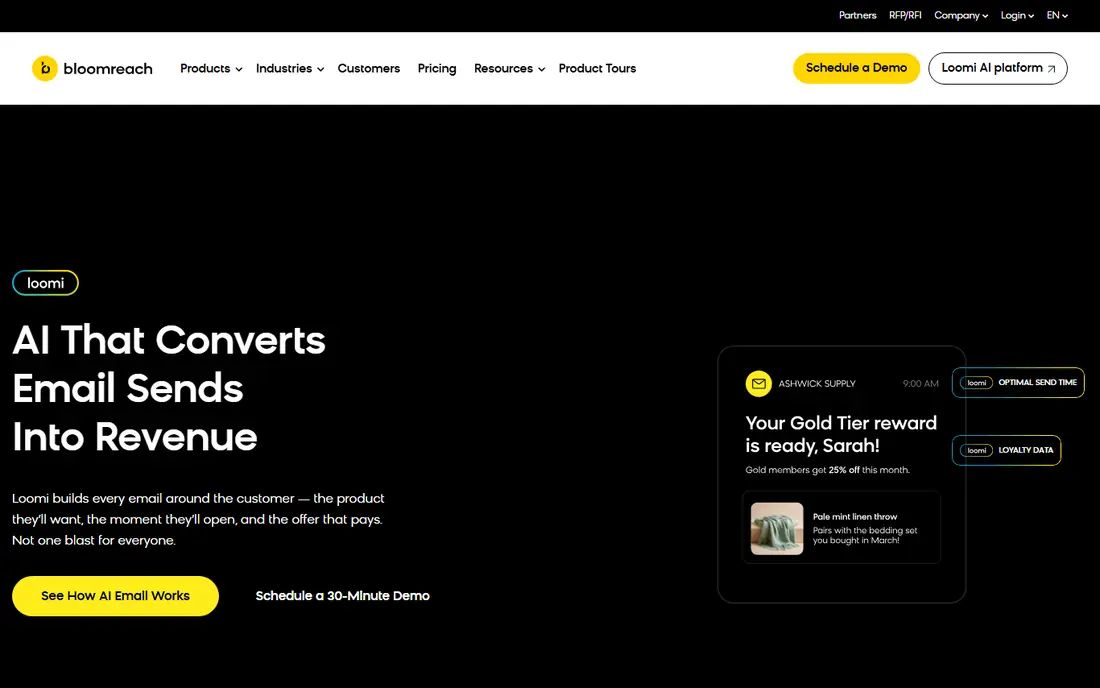
Bloomreach stands out when product discovery is the bottleneck, since its search understands shopper intent well.
Its AI search, category merchandising and recommendations work from one relevance engine, which helps large catalogues. Smaller teams may find the full suite more than they need, so start with search and discovery first.
Before you choose it, test it on the exact job you do most often, and check how it handles errors, exports and support, since those details decide daily value. For Bloomreach, the question to answer in that trial is whether its strengths, including ai search and discovery; merchandising controls; strong relevance tuning, outweigh its drawback, namely quote-based pricing; full suite can be complex, for the team and budget you actually have.
- AI search and discovery
- Merchandising controls
- Strong relevance tuning
- Quote-based pricing
- Full suite can be complex
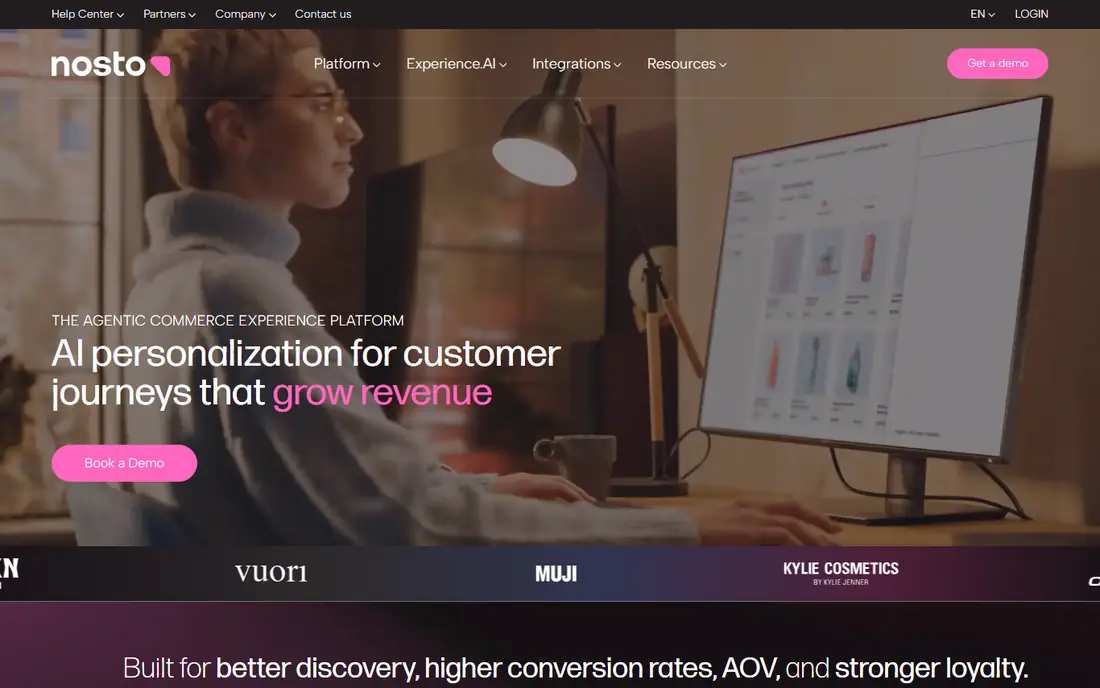
Nosto is a strong mid-market choice for stores that want recommendations and merchandising without enterprise overhead.
It covers product recommendations, category personalisation and on-site campaigns, with good support for Shopify and other platforms. Pricing is quoted on traffic and catalogue, so get a quote at your real volumes.
Before you commit, trial it with your own data and check support response times, because a smooth demo can hide slow help when a live job fails. For Nosto, the question to answer in that trial is whether its strengths, including recommendations and merchandising; shopify-friendly; visual campaign tools, outweigh its drawback, namely pricing is quote based; advanced features need higher tiers, for the team and budget you actually have.
- Recommendations and merchandising
- Shopify-friendly
- Visual campaign tools
- Pricing is quote based
- Advanced features need higher tiers
Klevu is the pick if site search and category merchandising drive most of your revenue.
Its semantic search handles natural language queries and synonyms, and merchandising rules let teams promote or bury products by segment. It is less of an all-channel suite than Dynamic Yield, so check email and app needs separately.
Before you pay, run a real trial with your own records and confirm the limits on your plan, since headline features often sit on higher tiers. For Klevu, the question to answer in that trial is whether its strengths, including semantic search; merchandising rules; multilingual support, outweigh its drawback, namely focus is search-led; broader personalisation needs add-ons, for the team and budget you actually have.
- Semantic search
- Merchandising rules
- Multilingual support
- Focus is search-led
- Broader personalisation needs add-ons
Constructor suits retailers with large catalogues where search relevance directly affects conversion.
It gives merchandisers control over ranking, synonyms and product placement, backed by analytics on what shoppers actually find. Smaller catalogues may not need this depth, but large ones benefit quickly.
Before you choose it, test it on the exact job you do most often, and check how it handles errors, exports and support, since those details decide daily value. For Constructor, the question to answer in that trial is whether its strengths, including search relevance tuning; recommendations; strong analytics, outweigh its drawback, namely quote-based pricing; best for larger catalogues, for the team and budget you actually have.
- Search relevance tuning
- Recommendations
- Strong analytics
- Quote-based pricing
- Best for larger catalogues
Insider fits brands that want personalisation across web, app, email and messaging from one profile.
Its customer data and journey tools let teams build segments once and use them across channels. The breadth means onboarding matters, so budget time for data setup and journey design.
Before you commit, trial it with your own data and check support response times, because a smooth demo can hide slow help when a live job fails. For Insider, the question to answer in that trial is whether its strengths, including cross-channel journeys; customer data platform; predictive segments, outweigh its drawback, namely quote-based pricing; broad suite needs onboarding, for the team and budget you actually have.
- Cross-channel journeys
- Customer data platform
- Predictive segments
- Quote-based pricing
- Broad suite needs onboarding
Monetate is a good choice for teams that put testing at the centre of personalisation.
It combines testing, targeting and merchandising, so teams can prove which experiences lift revenue. The enterprise feel means smaller teams should trial it with a clear test plan.
Before you pay, run a real trial with your own records and confirm the limits on your plan, since headline features often sit on higher tiers. For Monetate, the question to answer in that trial is whether its strengths, including a/b testing; personalisation rules; merchandising tools, outweigh its drawback, namely quote-based pricing; interface feels enterprise-heavy, for the team and budget you actually have.
- A/B testing
- Personalisation rules
- Merchandising tools
- Quote-based pricing
- Interface feels enterprise-heavy
Adobe Target is the natural pick for brands already running Adobe Experience Cloud.
It offers automated personalisation, multivariate testing and audience targeting that plugs into Adobe analytics and data tools. Outside the Adobe ecosystem, the setup and licensing effort is harder to justify.
Before you choose it, test it on the exact job you do most often, and check how it handles errors, exports and support, since those details decide daily value. For Adobe Target, the question to answer in that trial is whether its strengths, including automated personalisation; deep testing; adobe integrations, outweigh its drawback, namely quote-based pricing; needs adobe skills to run well, for the team and budget you actually have.
- Automated personalisation
- Deep testing
- Adobe integrations
- Quote-based pricing
- Needs Adobe skills to run well
How we picked these
We compared official feature pages, pricing pages, app store listings and public reviews for each product, and checked that each one is still offered and working in October 2026. We favoured tools that clearly fit the topic, publish usable pricing or trial information, and have a track record with the audience they claim to serve.
We did not claim hands-on testing we did not do. Instead, we weighed what each vendor documents against what reviewers and users report, and we noted the honest trade-offs, such as quote-based pricing, limited free plans or narrower integrations, so you can shortlist with fewer surprises.
We also checked for signs that a product had changed recently, such as rebrands, closed marketplaces or removed apps, and we left out tools that no longer fit the topic in October 2026. Where a price could not be verified on the vendor site, we wrote See website rather than repeating an old or third-party figure, so the prices you see here are the ones we could stand behind.
How to choose an ecommerce personalisation platform
Start with the page where shoppers drop off. Search, category pages and product recommendations each need a different strength, and no tool leads on all three by the same margin.
Fix search first if shoppers search
If a large share of revenue comes through site search, prioritise search relevance, merchandising rules and synonyms. A recommendation engine will not fix poor search results.
Check your platform fit
Some tools are built for Shopify, others for headless or enterprise commerce. Confirm the integration, data feed and page types you need are supported before a trial.
Plan for testing
Personalisation without A/B testing is guesswork. Make sure the tool lets you test recommendations and layouts, and that reporting ties results to revenue, not just clicks.
Set a trial checklist
Write down three tasks your team does every week, then run each one in the trial before you pay. Note how long each task takes, where you get stuck, and what support says when you ask for help. A tool that passes those three tasks is far more likely to survive contact with real work than one that only looked good in a demo.
FAQ
What is the best ecommerce personalization software for Shopify stores?
Nosto, Klevu and Dynamic Yield all support Shopify stores, with Nosto and Klevu often quicker to set up for mid-size catalogues. Larger Shopify Plus stores may prefer Dynamic Yield or Bloomreach for deeper testing.
Do personalization platforms work without a large catalogue?
Yes, but results improve with more products and traffic, since recommendations learn from shopper behaviour. Small stores should start with best-sellers, recently viewed and category rules rather than fully individual models.
How much does ecommerce personalization software cost?
Most enterprise tools are quote based and priced on traffic, catalogue size and modules. Mid-market tools may publish starter pricing, but expect costs to rise with tracked users and events.
What is the difference between recommendations and personalization?
Recommendations suggest products, usually on product and home pages. Personalisation is broader: it can change search order, category sorting, content and offers for each shopper or segment.
Does personalization slow down a store?
It can if scripts load badly, so check how the vendor delivers recommendations and whether it supports server-side or cached delivery. Test page speed during a trial, especially on mobile product pages.