Best Ecom Fulfillment Companies in 2026: 8 Providers Compared
Compare the best ecom fulfillment companies for online stores on pricing, warehouse locations, speed and integrations before you hand over shipping in 2026.
- Editor's choice
 ShipBob
Growing DTC brands
Starts atSee websiteVisit shipbob.comFull review - Great alternative
 ShipMonk
Subscription and omnichannel brands
Starts atSee websiteVisit shipmonk.comFull review - Also consider
 Flexport
Multi-channel fast delivery
Starts atSee websiteVisit flexport.comFull review
TL;DR:
- ShipBob and ShipMonk suit fast-growing direct-to-consumer brands, while Red Stag is built for heavy and bulky goods.
- Most providers price by custom quote, so compare storage, pick and pack, and shipping line by line before signing.
- Flexport, formerly Deliverr, is the strongest choice for sellers who want fast delivery across many sales channels.
- Small brands should favor providers with no long minimums, such as eFulfillment Service and Fulfillrite.
- Warehouse location matters more than headline speed claims, since stock placed near customers cuts transit time and cost.
Quick comparison
| Tool | Best for | Starts at | Free plan? | |
|---|---|---|---|---|
| ShipBob | Growing DTC brands | See website | No | Visit |
| ShipMonk | Subscription and omnichannel brands | See website | No | Visit |
| Flexport | Multi-channel fast delivery | See website | No | Visit |
 Red Stag Fulfillment | Heavy and bulky products | See website | No | Visit |
 ShipHero | Brands needing warehouse software | See website | No | Visit |
 Flowspace | Flexible network coverage | See website | No | Visit |
 eFulfillment Service | Small brands with no minimums | See website | No | Visit |
 Fulfillrite | Crowdfunding and small launches | See website | No | Visit |
The best ecom fulfillment companies
A good fulfillment partner packs and ships orders correctly, keeps stock visible, and answers problems fast. The eight providers below cover different sizes, product types and budgets.
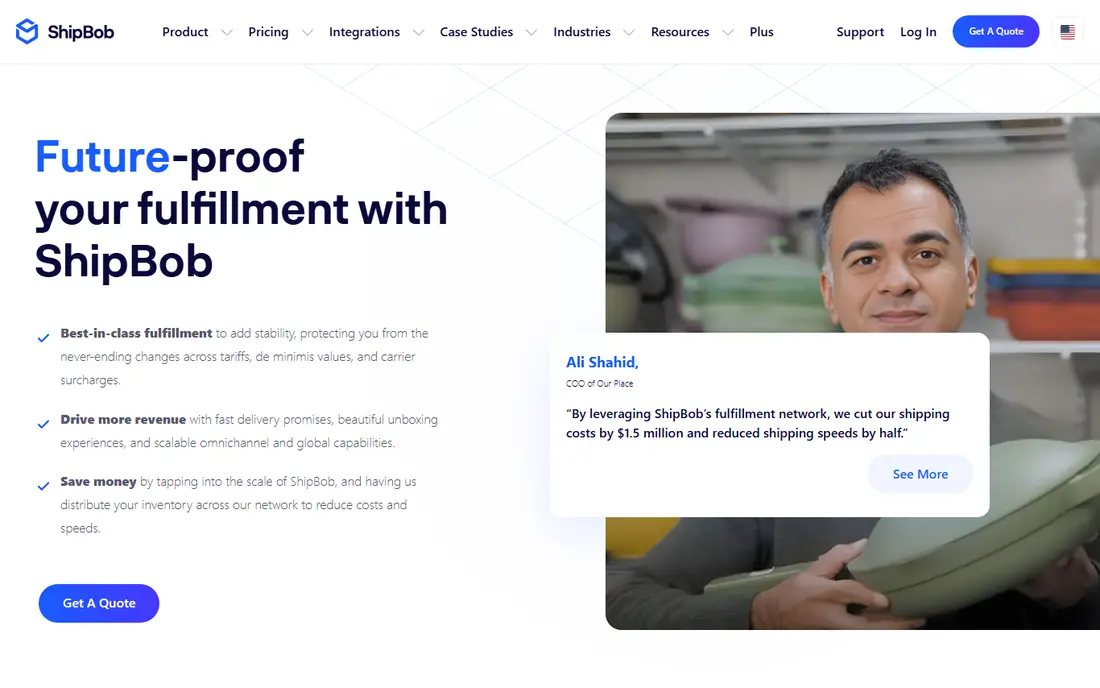
ShipBob is our pick for most growing online brands because its network and software work together well. It operates dozens of fulfillment locations, integrates with Shopify, Amazon, Walmart and TikTok Shop, and gives every customer a dashboard for inventory and order tracking at no extra software charge. Published storage rates start at 5 dollars per bin, 10 dollars per shelf and 40 dollars per pallet per month in the US, which helps you sanity-check a quote.
The catch is pricing opacity. Your per-order fulfillment fee, implementation fee and minimum spend are quoted privately, so two similar brands can pay different rates. Get the full fee table in writing, including extra pick charges and returns fees, before you commit. For brands shipping hundreds of orders a month or more, ShipBob's scale is worth that extra diligence.
- Large warehouse network
- Strong store integrations
- Free dashboard software
- Core fulfillment fees come by custom quote
- Minimum monthly spend applies
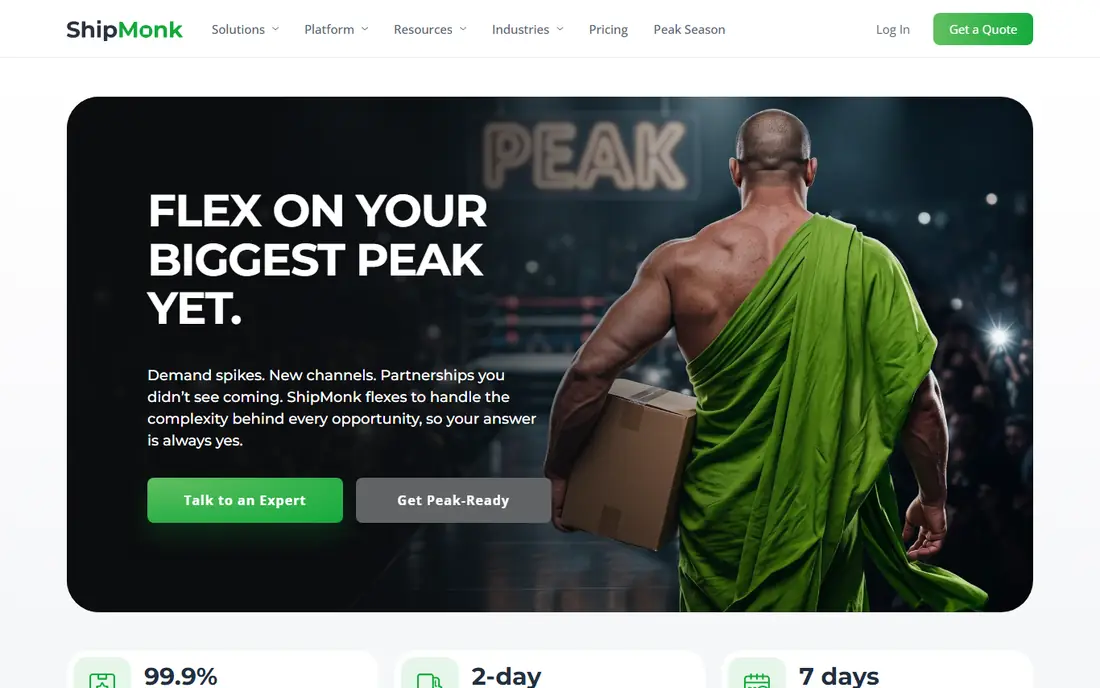
ShipMonk has built its name on subscription and crowdfunding fulfillment, where kitting, custom inserts and recurring shipments matter. Its platform handles order routing across channels, and its warehouses in the US, Canada, the UK and Europe support brands selling abroad. If your business lives on monthly boxes or bundles, ShipMonk's tooling for those workflows is a genuine advantage over generalist providers.
The trade-off is commitment and complexity. Some plans carry a one-year term that renews unless you give notice, and fees are broken into several line items that take effort to compare. Ask for a sample invoice for a typical month before signing. For subscription brands, that effort usually pays off in smoother recurring shipments.
- Strong subscription box handling
- Many integrations
- US and international locations
- One-year term on some plans
- Fee structure can feel complex
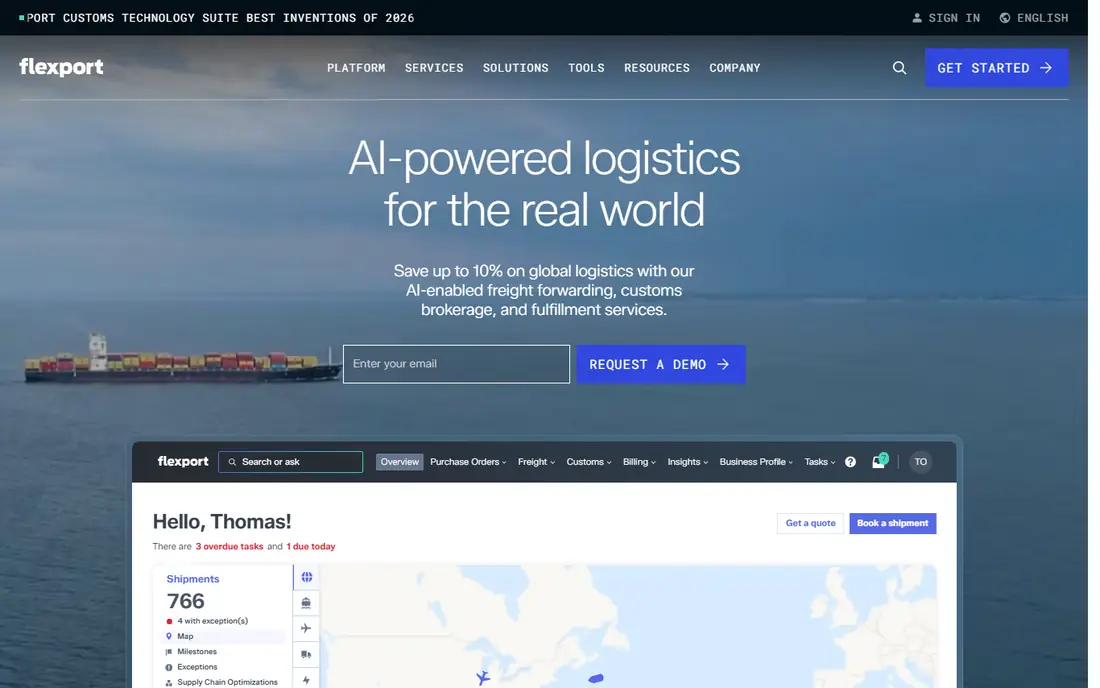
Flexport acquired Shopify Logistics, including Deliverr, in 2023, and now offers fulfillment alongside its freight business. That combination suits brands that import goods and then need them shipped quickly to customers across channels. Its network is designed for fast delivery promises on marketplaces and direct stores alike, and sellers can manage ocean freight and last-mile delivery with one provider.
Smaller sellers may find Flexport less approachable than boutique providers, and all pricing comes by quote. If you ship at real volume and want one partner from port to doorstep, Flexport deserves a quote. If you ship a few dozen orders a month, start with a smaller provider first.
- Fast delivery network
- Freight and fulfillment under one roof
- Strong marketplace links
- Better suited to larger sellers
- Pricing is quote-based
Red Stag Fulfillment is the specialist pick for brands whose products break the usual mold. Heavy fitness gear, furniture, large supplements and high-value items get dedicated handling, and the company promotes accuracy guarantees that matter when a mispick costs real money. Its warehouses focus on the US market, with solid coverage for domestic shipping.
Light, small items are not its strength, and its pricing reflects the extra handling that bulky goods need. If your products are heavy, fragile or expensive, Red Stag is often cheaper in practice than a generalist that charges oversize surcharges. If you sell phone cases, look elsewhere.
- Built for heavy, large and high-value goods
- Strong accuracy guarantees
- US warehouses
- Not ideal for tiny light items
- Higher cost for small orders
ShipHero stands out because its warehouse management software is a product in its own right. Brands can use ShipHero to run their own warehouse, or hand fulfillment to ShipHero's network while keeping the same software view. That flexibility suits growing brands that may bring some operations in-house later, since they will not need to relearn a whole system.
The downside is that the software has depth, and new teams need time to learn it well. Fulfillment pricing is quoted rather than published, so budget comparisons take a sales call. If software control matters as much as shipping itself, ShipHero is a strong contender.
- Strong warehouse management software
- Good for brands running their own warehouse too
- Fulfillment pricing is quoted
- Software learning curve for new teams
Flowspace runs a network model, matching brands with warehouse space and fulfillment services across the country rather than owning every site itself. That gives smaller and mid-size brands access to locations near their customers without committing to one giant provider. Its software provides inventory visibility across the network, which helps when stock sits in more than one place.
Because sites in a network can differ, ask which specific warehouse would handle your goods and what its track record looks like. Pricing is quoted, so compare it against at least two other providers. For brands that need geographic reach without enterprise volume, Flowspace is a flexible middle path.
- Network of warehouses across the US
- Good visibility tools
- Flexible terms
- Network model means service can vary by location
- Quote-based pricing
eFulfillment Service is the friendly entry point for small brands. It states no order minimums, no setup fees and no long-term contracts, which removes the barriers that keep many startups packing boxes at home. Orders ship from its warehouse in Traverse City, Michigan, and the service covers standard pick, pack and ship work plus returns handling.
One warehouse is also its limit. Brands with customers spread across the country will see longer transit times to the coasts than they would with a multi-warehouse provider. If you ship modest volume and want low commitment, eFulfillment Service is an easy first step, and you can move to a larger network later.
- No order minimums
- No setup fees
- No long-term contracts
- Single Michigan warehouse
- Fewer locations for fast national delivery
Fulfillrite has long served crowdfunding campaigns and small product launches, where a sudden surge of backer orders needs careful handling. It offers kitting, assembly and custom packaging, and its team is used to the quirks of campaign fulfillment, such as backer surveys and staggered shipments. For a first product launch, that experience reduces costly mistakes.
Its network is smaller than the big providers, and international coverage is limited. If your launch is US-focused and modest in size, Fulfillrite is a practical, approachable partner. Larger brands with global ambitions will likely outgrow it.
- Experienced with Kickstarter launches
- Small-brand friendly
- Kitting and assembly
- Smaller network
- Limited international reach
How we picked these
We compared official pricing pages, warehouse networks, integrations, contract terms and public reviews for established US fulfillment providers. We favored providers with verifiable locations, clear terms and a track record with online sellers, and we excluded firms whose pricing or locations could not be confirmed. This ranking reflects public information available in October 2026, not hands-on shipping with each provider.
What to compare in a fulfillment quote
Never compare a single headline rate. Ask for receiving fees, storage by unit type, pick and pack per order, packaging, shipping, returns and account fees, all in writing. A provider that looks cheap on pick fees can be expensive on storage, and the reverse is also true. Request a sample invoice based on your actual order mix, including your average items per order.
Location, speed and returns
Place stock near your customers. Two warehouses, one east and one west, often beat one central warehouse on both speed and shipping cost for national brands. Check how returns are handled, who pays return shipping, and how quickly returned stock becomes sellable again. A smooth returns process protects repeat purchases, which matter more than a one-time shipping saving.
FAQ
How much does ecom fulfillment cost?
Most providers price by custom quote, covering receiving, storage, pick and pack, packaging and shipping. Published storage at ShipBob starts at 5 dollars per bin per month, but your total depends on order volume, item size and shipping zones. Get written quotes from at least three providers using the same order profile.
Do fulfillment companies require minimum order volumes?
Some do, and some do not. ShipBob states a minimum monthly spend, while eFulfillment Service states no order minimums. Always ask about minimums, setup fees and contract length before signing, since those terms affect small brands most.
Can a fulfillment company handle Amazon and Shopify at once?
Yes, most providers here integrate with both, plus Walmart, eBay and TikTok Shop. Confirm that your exact sales channels are supported and whether marketplace fees differ from direct-store fees. Test the integration with a small batch before moving all stock.
How fast can customers receive orders?
Delivery speed depends on warehouse location and shipping service, not just the provider's marketing claims. Stock placed near customers with ground shipping often arrives in two to three days, while cross-country shipments take longer. Ask for real transit time data for your top customer regions.
Should a small brand use a fulfillment company?
If packing orders eats hours you need for product and marketing, yes, especially with a no-minimum provider. If you ship only a handful of orders a week, in-house packing may still be cheaper. Revisit the decision when weekly volume or packing errors start to grow.