8 Data Science Platforms, Compared by Cost and Features
Compare 8 best data science platforms, with prices, free plans and who each fits. We put Domino first for enterprise MLOps. Hidden costs and gaps are flagged.
- Editor's choice
 Domino
Enterprise MLOps
Starts atSee websiteVisit domino.aiFull review - Great alternative
 H2O.ai
Open-source AutoML
Starts atSee websiteVisit h2o.aiFull review - Also consider
 Databricks
Lakehouse data and ML at scale
Starts atSee websiteVisit databricks.comFull review
TL;DR:
- Domino is the opening pick, best for enterprise MLOps.
- Before buying Databricks, weigh this: costs scale with usage.
- H2O.ai, RapidMiner, KNIME, Dataiku: these are the 4 tools out of 8 that offer a free plan.
- For enterprise AutoML, DataRobot is worth a look.
- Expect to ask for a quote from Domino, H2O.ai, Databricks and others; the other tools show a starting price.
Direct answer
Domino leads the list, best for enterprise MLOps. If your case is different, H2O.ai suits open-source AutoML and Databricks suits lakehouse data and ML at scale. The other 5 tools in the list cover narrower or pricier cases.
Quick comparison
| Tool | Best for | Starts at | Free plan? | |
|---|---|---|---|---|
| Domino | Enterprise MLOps | See website | No | Visit |
| H2O.ai | Open-source AutoML | See website | Yes | Visit |
| Databricks | Lakehouse data and ML at scale | See website | Free trial | Visit |
 Alteryx | Analyst-led analytics | See website | Free trial | Visit |
 RapidMiner | Visual ML (Altair) | See website | Yes | Visit |
 KNIME | Free visual data science | Free | Yes | Visit |
 Dataiku | Collaborative data science | See website | Yes | Visit |
 DataRobot | Enterprise AutoML | See website | Free trial | Visit |
8 data science platforms in detail
Choosing data science platforms usually comes down to price, fit and limits. This LinkVetted guide sets 8 tools side by side on those three points, with the facts kept short and checkable.
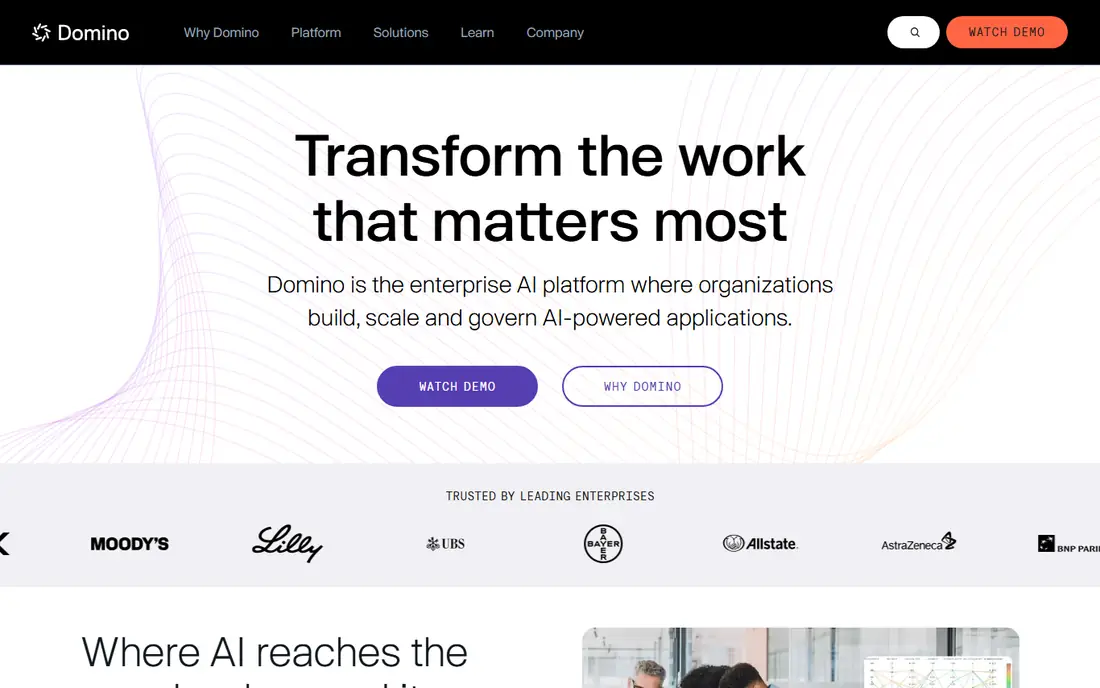
Think of Domino for enterprise MLOps. Every experiment is reproducible, every model version tracked and every deployment auditable, which satisfies the compliance requirements that block ML in banking, insurance and pharma. This is enterprise software for organizations with established data science practices; beginners should start elsewhere.
Limits to weigh: Enterprise only.
For regulated ML at scale, it is the governance standard. For everyday use, the governance depth is the differentiator. Domino does not show a starting price in this comparison, so check the vendor site for current pricing. Domino has no free tier.
- Reproducible research
- Serious MLOps for regulated industries
- Needs data science maturity
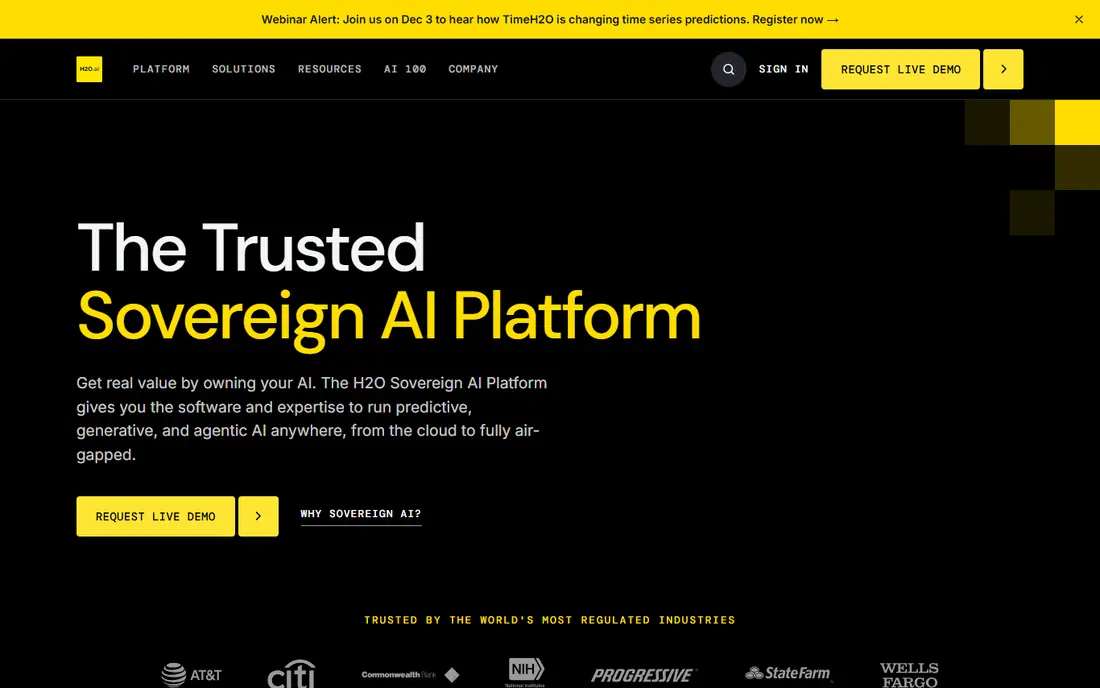
Pick H2O.ai if this describes you: open-source AutoML. The trade-off is the enterprise jump. The community and documentation are solid.
Where it is weaker: Enterprise platform costs.
What users get: Quick algorithms.
From a buyer's view, data scientists get state-of-the-art automatic modeling without licenses, and the algorithms are genuinely quick. The open-source quality is exceptional. H2O.ai provides the leading open-source AutoML: H2O-3 automatically trains and tunes machine learning models, ranking them on leaderboards, free for anyone to use. In practice, the commercial H2O AI Cloud layers on enterprise MLOps and support. This comparison lists no price for H2O.ai; ask the vendor. H2O.ai has a free plan.
- Very good open-source AutoML
- Free to start
- Needs technical users
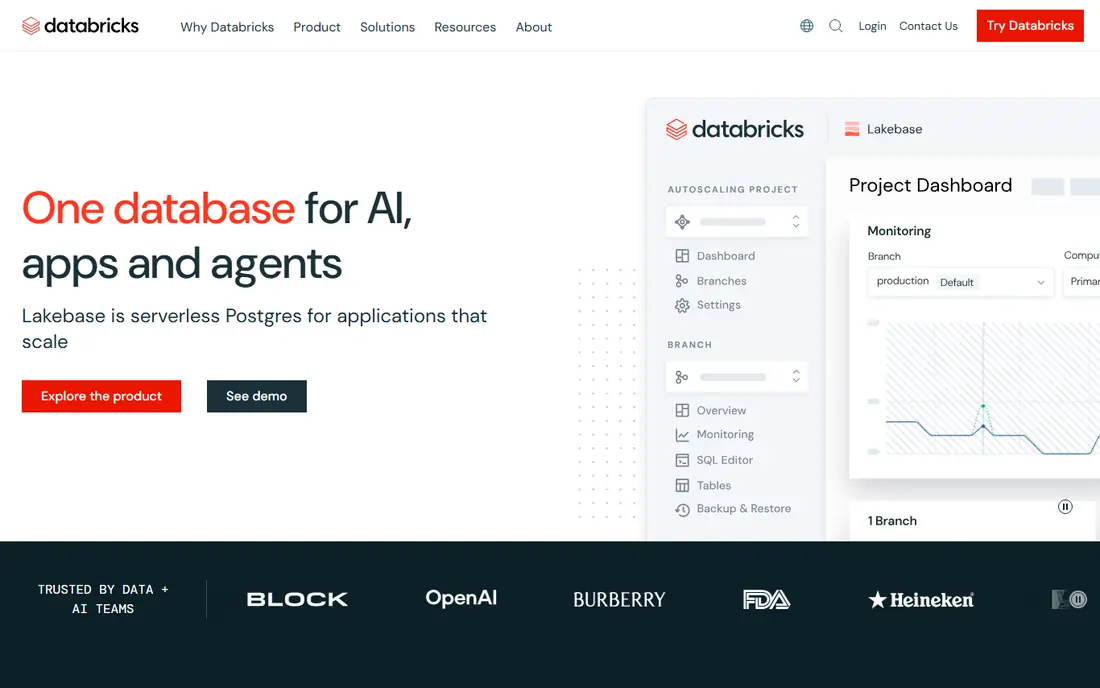
In short, Databricks is for lakehouse data and ML at scale. The scale story is unmatched. Worth adding: Spark-based processing manages data sizes that break other tools, notebooks support Python, SQL, R and Scala collaboratively and MLflow handles the model lifecycle.
Reasons to shortlist it: Solid MLflow MLOps.
As for the details, the honest costs are usage and skill. On top of that, organizations processing serious data volumes standardize on it. Consumption pricing rewards efficient workloads and punishes wasteful ones; FinOps discipline matters. Pricing for Databricks is not stated here, so ask the vendor for current figures. Free access: Free trial.
Honest limits: Needs data engineering skills.
- The lakehouse standard
- Scales to massive data
- Costs scale with usage
Alteryx was built for analyst-led analytics. Teams that would wait weeks for data engineering help build their own pipelines in days.
Downsides: Desktop heritage.
What Alteryx does well: Huge tool palette.
The honest catch is price and architecture. Alteryx shows no starting price here, so confirm the cost on the vendor site. Free options: Free trial.
- Capable community
- Analysts build real data workflows
- Premium pricing
Choose RapidMiner for visual ML (Altair). For the Altair customer or the analyst-led ML team, it is a solid choice.
What to check first: Smaller community than leaders.
It fits analysts and domain experts entering machine learning. This comparison lists no price for RapidMiner; ask the vendor. RapidMiner includes a free tier.
- Altair backing
- A decent match for non-coders
- Enterprise pricing
KNIME makes the most sense for free visual data science. The interface is functional instead of modern, and server deployment, scheduling and collaboration need the commercial KNIME Server.
The free value is remarkable. What you pay to start with KNIME: Free. KNIME includes a free tier.
Limits to weigh: Interface dated.
- Capable community
- Visual workflows
- Enterprise features cost
Dataiku works best for collaborative data science. MLOps features deploy and monitor models, and the governance tools satisfy regulated industries.
No starting price is listed for Dataiku here; confirm pricing on the vendor site. You can start on Dataiku without paying.
Trade-offs to know: Can feel heavy for pure coders.
- Coders and no-coders collaborate
- Capable governance
- Enterprise pricing
In short, DataRobot is for enterprise AutoML. It brings ML to organizations without large data science teams. More specifically, the honest costs are price and control.
From a buyer's view, model selection, feature engineering and tuning happen automatically with transparent documentation of what was built. Business analysts build credible models; data scientists accelerate their work. No starting price is listed for DataRobot here; confirm pricing on the vendor site. On free options: Free trial.
Watch-outs: Enterprise pricing.
- The AutoML leader
- Capable MLOps
- Less control than code
How we chose
Each tool was reviewed on what its vendor publishes: price, plan limits, core features and stated drawbacks. We did not run hands-on tests. Seat minimums, billing terms and add-ons can move the real cost, so the starting prices here are a guide and not a quote. Tools are placed by general fit for data science platforms, with price clarity and free access as tie-breakers. A different team can reasonably rank them differently.
Questions to settle before buying
- Confirm the entry price on the vendor page. For Domino, H2O.ai, Databricks and others that means a quote rather than a fixed price.
- Read the fine print on the free plans from H2O.ai, RapidMiner, KNIME and Dataiku; seat, project and feature caps differ.
- Run a trial of Databricks, Alteryx and DataRobot with real work before paying for a year; your own workflow is the best test.
- Read the limits listed for Domino first: enterprise only.
- Run a one or two week pilot of DataRobot with the people who will use it every day.
- Before rolling out H2O.ai, verify the integrations your workflow depends on.
FAQ
Is Domino the right pick for everyone comparing data science platforms?
No single tool suits every team. Domino comes first because it fits enterprise MLOps, while H2O.ai suits open-source AutoML and Databricks suits lakehouse data and ML at scale. Match the tool to your own size, budget and workflow before deciding.
Do I need a data science product or just Python?
Individual data scientists frequently need just Python and libraries. Products add collaboration, governance, deployment and scale for teams and production. Buy the system when the team or the production requirements demand it.
Do these tools publish their prices?
Not all of them. Domino, H2O.ai, Databricks and others publish no starting price, so expect a quote request for those. The rest, KNIME included, show a starting price, though seats and billing terms still change the final cost.
How are the tools for data science platforms ordered?
Domino sits first and DataRobot last because the order follows typical fit for data science platforms, then price clarity and free access. It is a judgement call, so read each profile for fit and limits.
Can I try these options before paying?
Often, yes. H2O.ai, RapidMiner, KNIME and Dataiku have a free plan and Databricks, Alteryx and DataRobot offer a free trial. Use your own data and a real task during the test, and check what the free tier or trial limits before you rely on it.