Best Data Orchestration Tools in 2026: 10 Platforms Compared
Find the best data orchestration tools in 2026. We compare 10 data orchestration platforms on features, pricing, and ease of use for data teams. See details.
- Editor's choice
 Apache Airflow
Open source data teams
Starts atFreeVisit airflow.apache.orgFull review - Great alternative
 Dagster
Modern Python data teams
Starts atFreeVisit dagster.ioFull review - Also consider
 Prefect
Teams wanting simple Python orchestration
Starts atFreeVisit prefect.ioFull review
TL;DR:
- Apache Airflow remains the most widely used open source choice, while Dagster and Prefect offer a more modern developer experience.
- Managed options such as Astronomer and Cloud Composer save operations time, but they add a subscription cost on top of cloud spend.
- The best orchestration software for your team depends on who writes pipelines: engineers, analysts, or both.
- Scheduling alone is not enough: look for retries, alerts, data aware scheduling, and clear lineage when jobs fail.
- Start with one real pipeline, test failure handling, and only then migrate your critical jobs.
Quick comparison
| Tool | Best for | Starts at | Free plan? | |
|---|---|---|---|---|
| Apache Airflow | Open source data teams | Free | Yes | Visit |
| Dagster | Modern Python data teams | Free | Yes | Visit |
| Prefect | Teams wanting simple Python orchestration | Free | Yes | Visit |
 Astronomer | Teams wanting managed Airflow | See website | Free trial | Visit |
 Mage AI | Small teams wanting a visual plus code tool | Free | Yes | Visit |
 Kestra | Teams wanting declarative YAML pipelines | Free | Yes | Visit |
 Azure Data Factory | Azure based data teams | See website | Free trial | Visit |
 AWS Step Functions | AWS teams orchestrating services | See website | Free trial | Visit |
 Google Cloud Composer | Google Cloud teams wanting managed Airflow | See website | Free trial | Visit |
 Databricks Workflows | Databricks users | See website | Free trial | Visit |
The best data orchestration tools
We compared official documentation, pricing pages, and public reviews for the best orchestration tools, focusing on products that data teams actually run in production in 2026. The best data orchestration platforms in this guide range from open source schedulers you host yourself to managed services that handle operations for you, so you can trade control against running costs honestly.
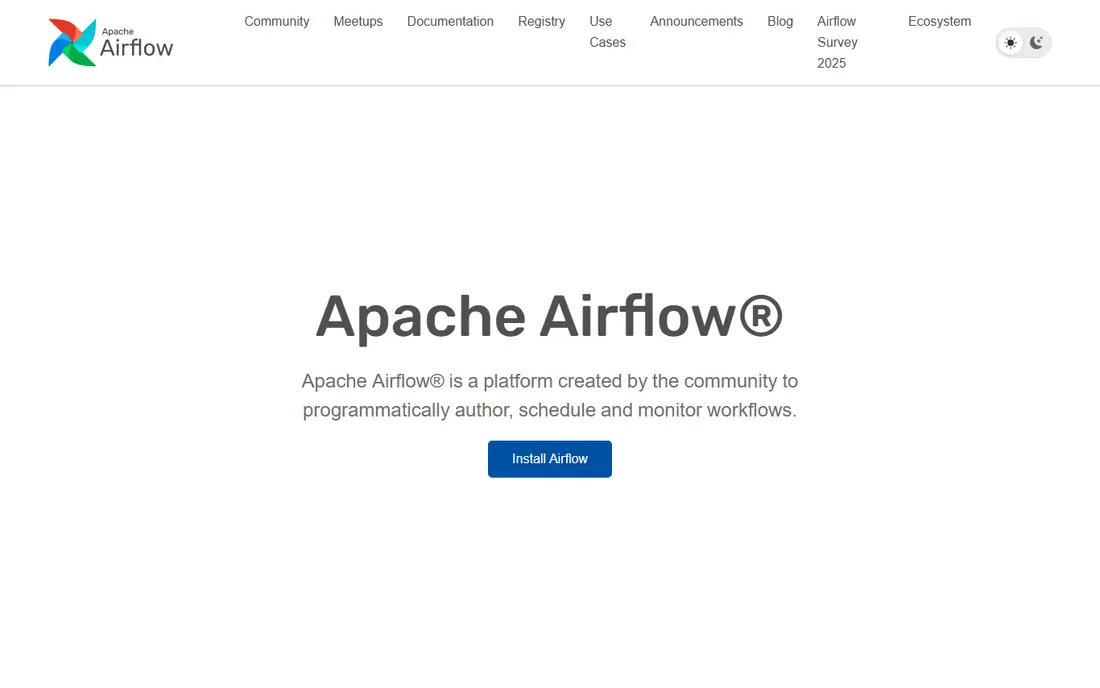
Apache Airflow is a strong option for open source data teams with engineering capacity. Its main strength is a mature scheduler with a huge library of connectors. That matters because it saves time on the work you do every day, rather than adding another tool you have to manage. We compared its official feature pages, pricing, and public reviews, and it holds up as a real option for the buyers described here, not just a well known name.
We also noted DAG based pipelines that are easy to version in code. The main catch is running it well at scale takes real operations effort. Try the free tier or trial first and check that the limits match your volume before you pay.
- Mature and widely adopted
- Huge provider library
- Flexible scheduling
- Operations burden
- Needs care at scale
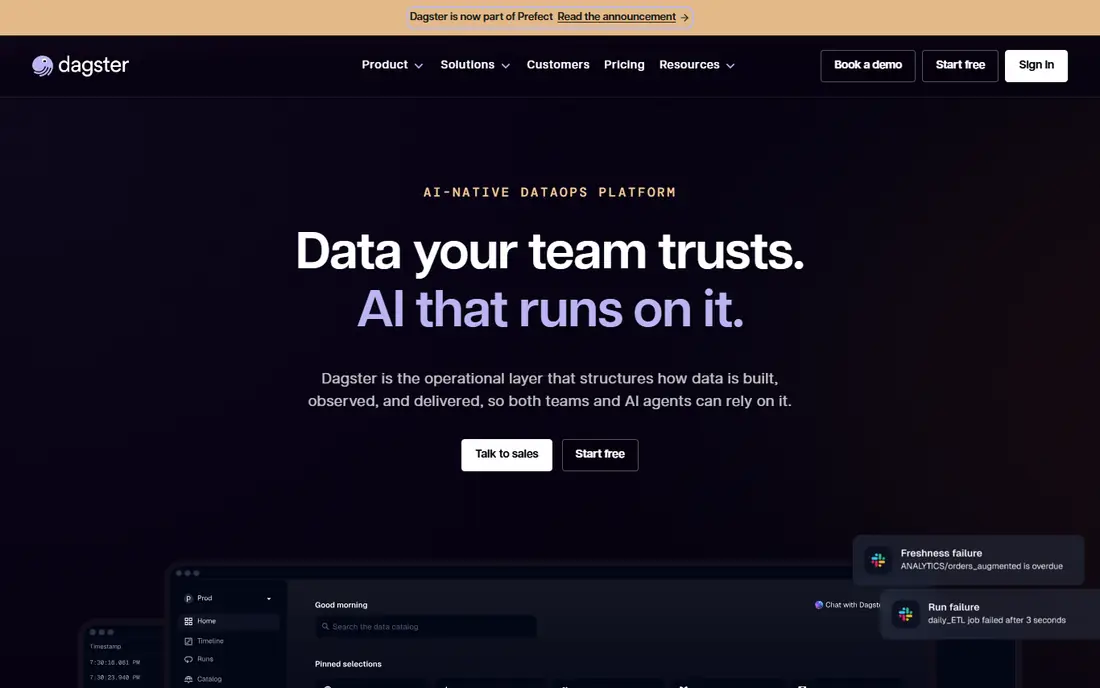
For modern Python data teams, Dagster deserves a close look. Its main strength is a data asset model that makes dependencies clear. That matters because it saves time on the work you do every day, rather than adding another tool you have to manage. We compared its official feature pages, pricing, and public reviews, and it holds up as a real option for the buyers described here, not just a well known name.
On the plus side, local development and testing that feels close to normal software work. The trade-off is some connectors are less mature than Airflow equivalents. That balance suits many teams, but it is worth testing with your real workload first.
- Data asset focus
- Good testing and observability
- Strong local development
- Smaller connector library than Airflow in some areas

Prefect works well when you need teams wanting simple Python orchestration handled without a lot of setup. Its main strength is a clean Python API that is easy to learn. That matters because it saves time on the work you do every day, rather than adding another tool you have to manage. We compared its official feature pages, pricing, and public reviews, and it holds up as a real option for the buyers described here, not just a well known name.
Another point in its favour is a clear UI for runs, logs, and retries. Still, the fullest features sit in the managed cloud plan. A short trial with your own data will tell you more than any feature list can.
- Clean Python API
- Good UI
- Managed cloud option
- Some advanced features need the cloud plan
If your team fits teams wanting managed Airflow without operations work, Astronomer is worth shortlisting. Its main strength is managed Airflow with support and observability built in. That matters because it saves time on the work you do every day, rather than adding another tool you have to manage. We compared its official feature pages, pricing, and public reviews, and it holds up as a real option for the buyers described here, not just a well known name.
We found scaling help and deployment tools that reduce operations load useful in practice. The downside is you pay a subscription in addition to your cloud bill. If that limit is not a problem for you, it is a sensible choice.
- Managed Airflow with support
- Observability
- Scaling help
- Subscription cost on top of cloud costs
Mage AI stands out for small teams wanting a visual plus code tool thanks to a focused feature set. Its main strength is a visual builder combined with code, which suits mixed teams. That matters because it saves time on the work you do every day, rather than adding another tool you have to manage. We compared its official feature pages, pricing, and public reviews, and it holds up as a real option for the buyers described here, not just a well known name.
It also offers notebook style development that analysts find approachable. The catch to watch is the ecosystem is younger than Airflow, so some integrations are thinner. Compare that limit against your busiest week, not an average week.
- Visual pipeline builder
- Notebook style
- Open source
- Younger ecosystem than Airflow
Teams dealing with teams wanting declarative YAML pipelines often land on Kestra for good reason. Its main strength is declarative flows defined in YAML, which are easy to review. That matters because it saves time on the work you do every day, rather than adding another tool you have to manage. We compared its official feature pages, pricing, and public reviews, and it holds up as a real option for the buyers described here, not just a well known name.
Beyond the headline features, a clear UI and plugin system for common data tools. The drawback is the community is smaller than Airflow or Dagster. For many buyers that is acceptable, but check it before signing up.
- Declarative YAML flows
- Good UI
- Open source core
- Smaller community than the largest tools
Azure Data Factory is built with Azure based data teams in mind, and that focus shows in daily use. Its main strength is deep integration with Azure data services. That matters because it saves time on the work you do every day, rather than adding another tool you have to manage. We compared its official feature pages, pricing, and public reviews, and it holds up as a real option for the buyers described here, not just a well known name.
We also liked visual pipelines plus enterprise security controls. The honest weakness is it works best inside Azure and is less code first than rivals. Run a small pilot first to see whether it matters for your use case.
- Strong Azure integration
- Visual pipelines
- Enterprise controls
- Best inside Azure
- Less flexible for code first teams
When AWS teams orchestrating services is the priority, AWS Step Functions is a practical place to start. Its main strength is serverless workflows that link AWS services cleanly. That matters because it saves time on the work you do every day, rather than adding another tool you have to manage. We compared its official feature pages, pricing, and public reviews, and it holds up as a real option for the buyers described here, not just a well known name.
In addition, a visual workflow view that makes state easy to follow. The limitation is it is less suited alone to long, complex data pipelines. That may be fine at first, yet it can matter as you grow.
- Serverless orchestration
- Strong AWS links
- Visual workflows
- Less suited to long, complex data pipelines alone
Google Cloud Composer appeals to Google Cloud teams wanting managed Airflow who want clear pricing and a fast start. Its main strength is managed Airflow running on Google Cloud. That matters because it saves time on the work you do every day, rather than adding another tool you have to manage. We compared its official feature pages, pricing, and public reviews, and it holds up as a real option for the buyers described here, not just a well known name.
A further strength is strong links to BigQuery and other Google data services. The catch is pricing and setup can be complex for small teams. Weigh that against the time it saves your team each week.
- Managed Airflow on Google Cloud
- Good GCP links
- Google Cloud pricing and setup complexity
A good fit for Databricks users, Databricks Workflows keeps the core workflow simple. Its main strength is native job scheduling inside Databricks. That matters because it saves time on the work you do every day, rather than adding another tool you have to manage. We compared its official feature pages, pricing, and public reviews, and it holds up as a real option for the buyers described here, not just a well known name.
Finally, a simple way to run notebooks and Spark jobs on a schedule. The weakness is the value is strongest if you already run Databricks. If you can live with that, the overall package is easy to recommend.
- Native Databricks jobs
- Scheduling
- Good for Spark work
- Best value inside Databricks
How we picked these
We checked scheduling, retries, alerting, data aware triggers, and support for Python, SQL, and common data tools. We also looked at local development, testing, observability, and how painful it is to debug a failed run at 2 a.m. Tools that were only a task scheduler with no data features, or that could not be verified as current products, were left out.
How to Pick the Best Data Orchestration Software
Decide who writes the pipelines first. If engineers write most jobs in Python, Airflow, Dagster, or Prefect will feel natural. If analysts also build pipelines, a visual builder or asset based tool may reduce handover friction. The best orchestration software is the one your actual team will maintain, not the one with the longest feature list.
Test failure handling with a real job. Break a source, miss a file, and run out of memory on purpose in a test environment. Check whether retries are clear, alerts reach the right person, and logs show what failed without digging through five systems. Good failure handling saves more time than a slightly faster scheduler ever will.
Count the total cost, not just the licence. Open source tools look free, but they need servers, monitoring, and engineer time. Managed tools charge a subscription, but they can save that time. Add cloud compute, storage, and support to both sides before you compare, and be honest about how much operations help your team has.
Check lineage and data awareness. Modern pipelines should know when upstream data is ready, not just run on a clock. Data aware scheduling and clear lineage help you answer why a dashboard is late and which downstream tables are affected. If your stakeholders ask those questions often, weigh those features heavily.
FAQ
What are the best orchestration tools for beginners?
Prefect, Mage AI, and Kestra are friendly starting points because they offer clear Python or YAML workflows and a usable UI. They let a small team build a real pipeline without learning a large platform first. Move to Airflow or a managed service when scale, governance, or team size demands it.
What is the best data orchestration platform for large teams?
Large teams often choose Airflow, often managed through Astronomer or Cloud Composer, or Dagster for a modern asset based approach. Those options offer scale, observability, and controls that smaller tools may lack. The right choice still depends on your cloud, language, and existing data stack.
Is Apache Airflow still a good choice in 2026?
Yes, Airflow remains widely used and well supported, with a large provider library and a big community. It does require operations effort, especially at scale, so teams without that capacity often pick a managed version. If you already run Airflow well, there is no need to switch for novelty alone.
What is the difference between orchestration and scheduling?
Scheduling runs jobs at set times, while orchestration also handles dependencies, retries, alerts, and data readiness across many jobs. A simple cron job can schedule one task, but orchestration keeps a whole pipeline reliable when parts fail. That difference matters most when jobs depend on each other.
Do I need a managed orchestration service?
Not always. Self hosted open source tools work well if your team has operations skills and time. A managed service makes sense when you want support, upgrades, and scaling handled for you, and you can justify the subscription. Start self hosted for a pilot if you are unsure, then compare the real operations cost.
Sources
- https://airflow.apache.org/
- https://dagster.io/
- https://www.prefect.io/pricing
- https://www.astronomer.io/pricing/
- https://www.mage.ai/
- https://kestra.io/
- https://azure.microsoft.com/en-us/pricing/details/data-factory/
- https://aws.amazon.com/step-functions/pricing/
- https://cloud.google.com/composer/pricing
- https://www.databricks.com/product/workflows