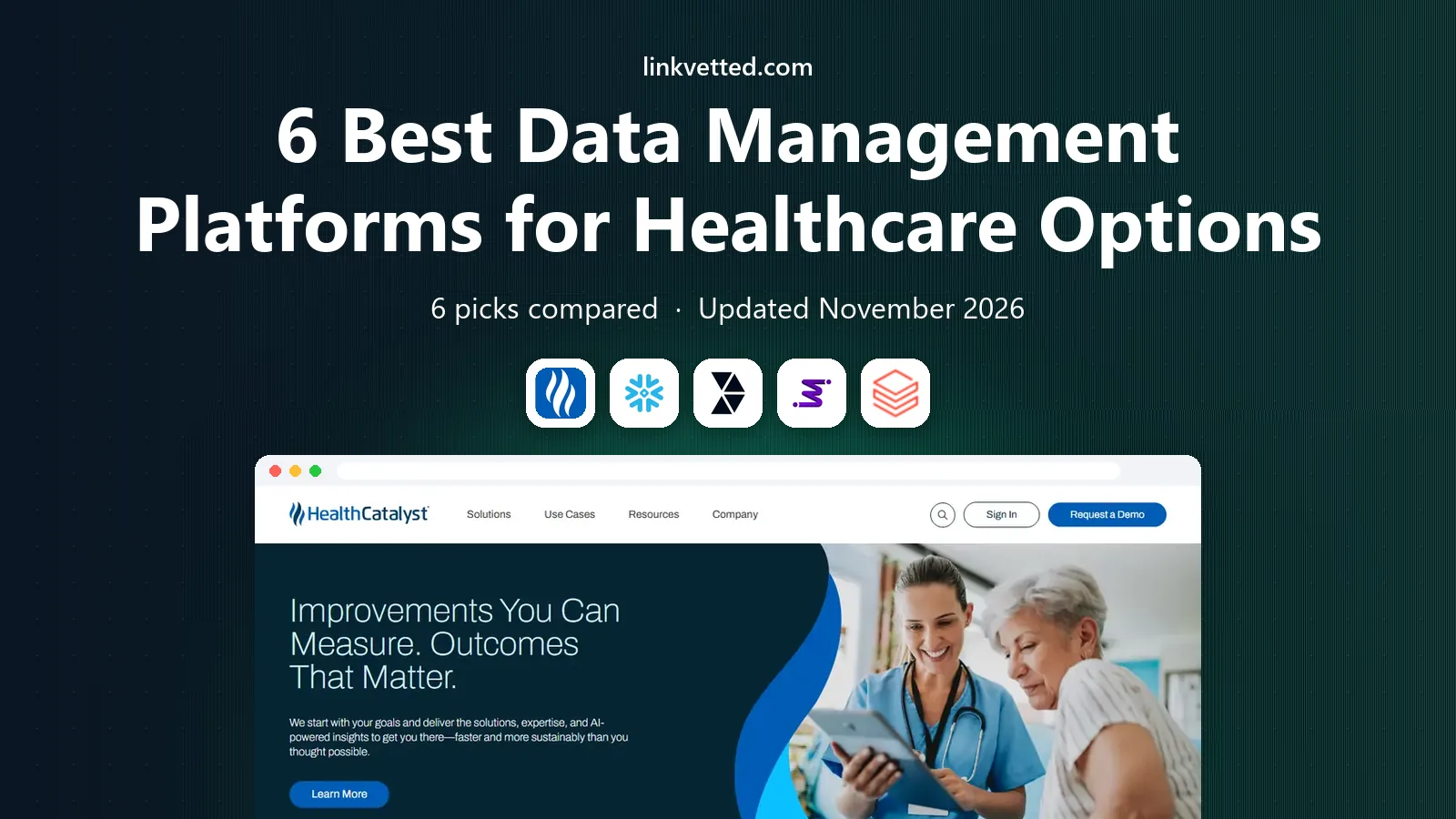
6 Best Data Management Platforms for Healthcare Options for 2026
Weighing the best data management platforms for healthcare? We lined up 6 products by cost, free access and fit. Honest caveats for every entry. No hype.
- Editor's choice
 Health Catalyst
Large health systems and academic medical centers running outcomes-improvement programs
Starts atQuote, enterprise subscriptions reported at 500,000 dollars or more a year (third-party reported)Visit healthcatalyst.comFull review - Great alternative
 Snowflake
Data teams building a governed healthcare data cloud
Starts atFrom 2 dollars per credit on demand, usage-based (third-party reported); Business Critical edition from 4 dollars per credit for HIPAA workloadsVisit snowflake.comFull review - Also consider
 Innovaccer
Health systems and payers unifying clinical
Starts atQuoteVisit innovaccer.comFull review
Direct answer
Health Catalyst leads the list, best for large health systems and academic medical centers running outcomes-improvement programs. Snowflake is better for data teams building a governed healthcare data cloud on a general-purpose product, and Innovaccer is better for Health systems and payers unifying clinical, claims, and operational data on one system.
TL;DR:
- Number one here is Health Catalyst, a fit for large health systems and academic medical centers running outcomes-improvement programs.
- For value-based care organizations, accountable care organizations, and health plans managing risk, Arcadia is worth a look.
- A fair warning about Snowflake: usage-based billing is hard to predict without careful workload management, and healthcare teams must build or buy the healthcare data model themselves.
- Just one of the 6 tools, Databricks, has a free plan.
Quick comparison
| Tool | Best for | Starts at | Free plan? | |
|---|---|---|---|---|
| Health Catalyst | Large health systems and academic medical centers running outcomes-improvement programs | Quote, enterprise subscriptions reported at 500,000 dollars or more a year (third-party reported) | No | Visit |
| Snowflake | Data teams building a governed healthcare data cloud | From 2 dollars per credit on demand, usage-based (third-party reported); Business Critical edition from 4 dollars per credit for HIPAA workloads | Free trial (30 days) | Visit |
| Innovaccer | Health systems and payers unifying clinical | Quote | No | Visit |
 IMO Health | Health tech vendors and data teams that require clinical terminology | Quote | No | Visit |
 Databricks | Healthcare and life sciences teams running analytics | From 0.15 dollars per Databricks Unit, usage-based (third-party reported); cloud infrastructure billed separately | Yes | Visit |
 Arcadia | Value-based care organizations, accountable care organizations, and health plans managing | Quote, annual contracts reported from 250,000 to 1.5 million dollars (third-party reported) | No | Visit |
Every option for data management platforms for healthcare explained
LinkVetted compared 6 tools for data management platforms for healthcare. The goal is a practical shortlist: published prices, free plan facts, best-fit use cases and honest limits for every entry.
Health Catalyst
Best for: Large health systems and academic medical centers running outcomes-improvement programs
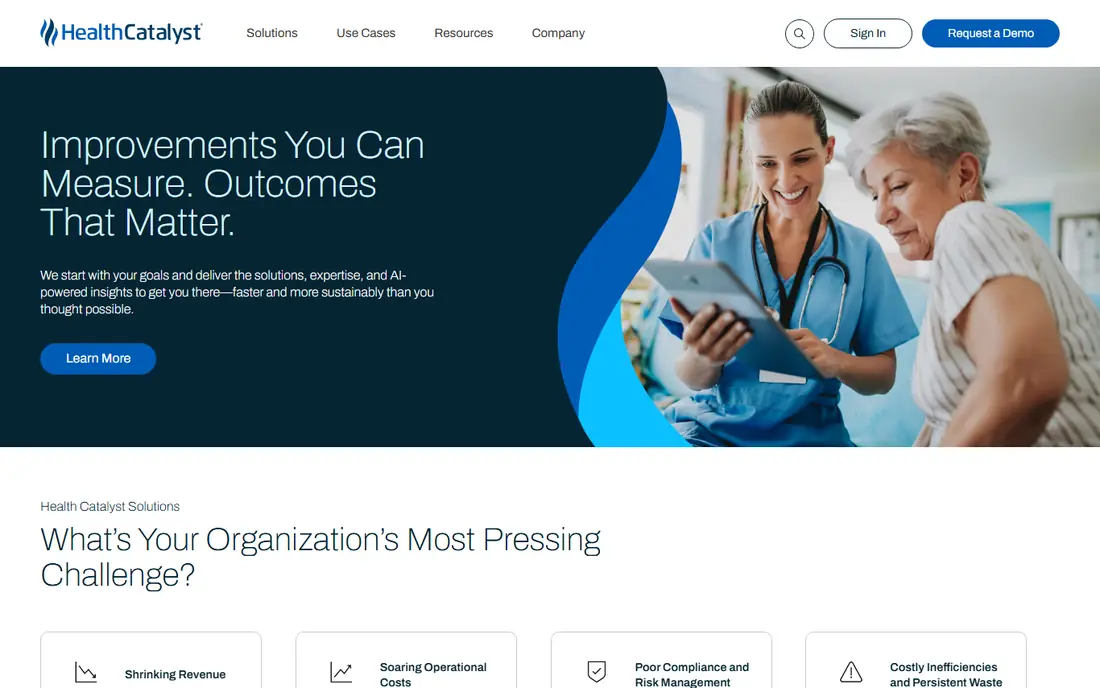
Where Health Catalyst fits: large health systems and academic medical centers running outcomes-improvement programs. Health Catalyst merges a data system with a services team, and that combination is why large health systems choose it.
Its Ignite system ingests clinical, claims, and operational data into governed, measurement-ready datasets, paired with analysts and improvement advisors who run quality and cost programs against it. What you pay to start with Health Catalyst: Quote, enterprise subscriptions reported at 500,000 dollars or more per year. Health Catalyst has no free tier.
Watch-outs: Enterprise pricing puts it out of reach for small providers.
- Governed healthcare data model with a built-in analytics library
- Proven across more than 50 integrated delivery networks
- Implementations are long services-led projects
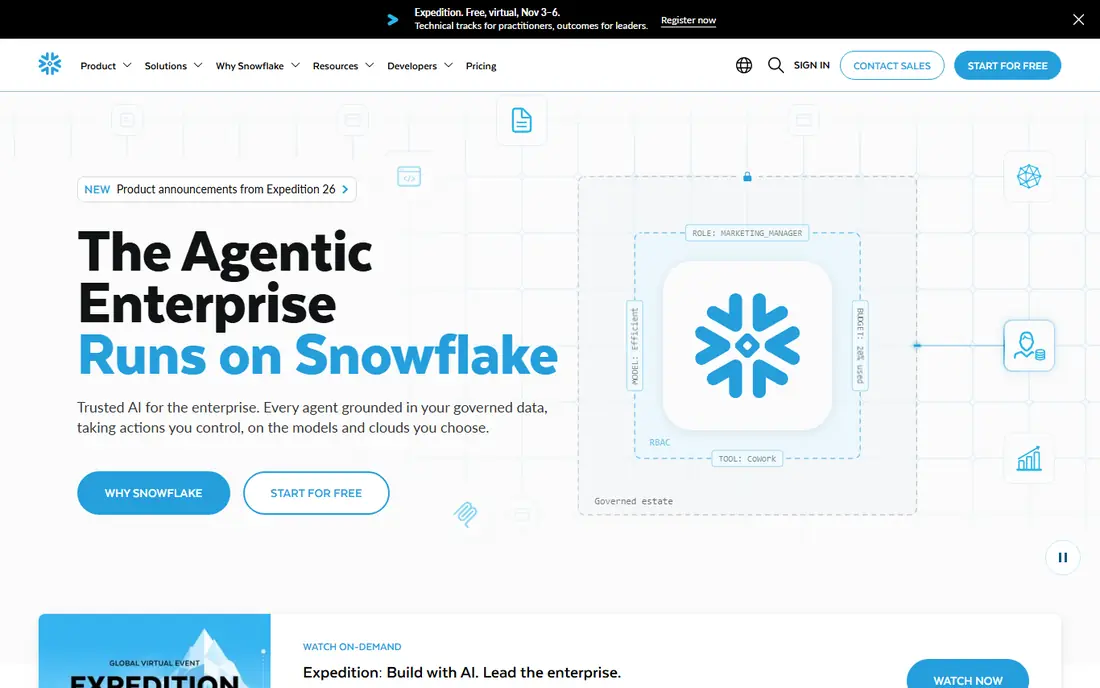
Snowflake targets data teams building a governed healthcare data cloud on a general-purpose product. The main limit is that Snowflake is not healthcare-native, so your team must design the patient data model or buy one from a partner.
Also, customers bundle NYC Health and Hospitals, Scripps Health, Providence Health, and Prisma Health. Starting cost for Snowflake: From 2 dollars per credit on demand, usage-based. Free access: Free trial (30 days).
The main drawbacks: healthcare teams must build or buy the healthcare data model themselves. Upsides: GDPR compliance.
- HIPAA, HITRUST, FedRAMP
- Capable data sharing and marketplace
- Usage-based billing is hard to predict without careful workload management
Where Innovaccer fits: Health systems and payers unifying clinical, claims, and operational data on one system. Innovaccer brings together clinical, claims, financial, and operational data into a single layer for analytics, care management, and population health. Its Gravity product sits underneath AI agents for prior authorization, coding, care coordination, and revenue cycle work.
Points against: Quote-only pricing hides the real cost until late in the sales process.
Innovaccer raised a 275 million dollar Series F round in January 2025, based on Wikipedia. From a buyer's view, the company reports 54 million patient records unified, and its customers bundle Kaiser Permanente, Ascension, and Trinity Health. Pricing for Innovaccer is quote based, so budget talks start with the vendor. Innovaccer has no free tier. Reasons to shortlist it: Large US health system customer base.
- Solid population health and value-based care tooling
- Operational sources
- The product fits large organizations with staff to run a data unification program
IMO Health
Best for: Health tech vendors and data teams that require clinical terminology
IMO Health works best for Health tech vendors and data teams that require clinical terminology, coding, and data normalization. The limit is scope: IMO Health normalizes and enriches clinical data.
But it does not store it or run analytics on it, so buyers must pair it with a warehouse or analytics product. Its knowledge graph maps clinician language to standard codes across ICD-10-CM, SNOMED CT, LOINC, and RxNorm, and it reports 25 percent more specific encounters and 92 percent fewer manual data quality tasks. There is no list price for IMO Health, so a quote is the way in. IMO Health has no free plan.
- Supports 100 percent of USCDI requirements through version 4
- Knowledge graph used by more than 90 percent of US physicians and 4,500 provider organizations
- Narrow scope: a terminology and clinical context layer instead of a full warehouse or analytics suite, so buyers still need a separate product for storage and reporting
In short, Databricks is for healthcare and life sciences teams running analytics, machine learning, and AI at scale. Databricks is a unified data and AI system built on the lakehouse architecture. Its healthcare offering applies that foundation to clinical, claims, genomic, and imaging data.
It combines data engineering, data science, and business analytics in one environment, with Delta Lake, MLflow, and Unity Catalog. Also, healthcare use cases bundle predictive risk models, genomics pipelines that process entire genomes in hours, and administrative automation over claims and EHR data. Premier Inc. Uses Databricks AI/BI Genie to create complicated SQL up to ten times quicker and plans to scale it to 20,000 users, based on Databricks. Entry price for Databricks: From 0.15 dollars per Databricks Unit, usage-based. A free plan is available with Databricks.
Drawbacks to consider: Steep ramp-up time for teams without Spark expertise.
- Solid genomics and unstructured data handling
- Unity Catalog governance
- Costs are hard to predict because Databricks and cloud infrastructure arrive as two separate bills
Arcadia
Best for: Value-based care organizations, accountable care organizations, and health plans managing
Arcadia is designed for value-based care organizations, accountable care organizations, and health plans managing risk. Arcadia brings together claims, clinical, and social-determinant data for organizations that carry financial risk for patient populations.
Watch-outs: normalizing external claims and EHR data usually takes 3 to 6 months.
Arcadia also sells a care management layer, so the same governed data feeds both analytics and frontline workflows. Starting cost for Arcadia: Quote, annual contracts reported from 250,000 to 1.5 million dollars. Arcadia has no permanent free option.
- More than 2,600 connected data sources
- Deep risk stratification and contract performance reporting
- Quote-only pricing hides the real cost until late in the sales process
How much to budget for data management platforms for healthcare
Snowflake and Databricks are the exceptions, publishing usage-based rates: Snowflake charges from 2 dollars per compute credit on demand, and Databricks charges from 0.15 dollars per Databricks Unit, with cloud infrastructure billed separately. Also, the subscription is only part of the bill, since implementation, data migration, training, and professional services frequently add a large share in year one.
Data Management Platforms for Healthcare explained
A healthcare data management system brings together clinical, claims, financial, and operational data into one governed layer built around healthcare standards like FHIR and HL7, so health systems, payers, and research teams can run analytics, reporting, and AI on trusted data. It differs from a generic data platform since it understands healthcare formats: EHR extracts, HL7 v2 messages, FHIR resources, X12 claims, and code sets for example ICD-10 and SNOMED CT. A general-purpose tool can store those files, but it will not know that a problem list entry, a claim line.
A lab result can all describe the same patient event. They also deal with the compliance layer healthcare demands: HIPAA controls, business associate agreements, and audit trails.
Selecting data management platforms for healthcare: the practical checks
Check FHIR and HL7 support, HIPAA compliance with a signed business associate agreement, data governance controls. The real implementation timeline before you sign. For everyday use, check terminology handling: the system should map local codes to ICD-10, SNOMED CT, and LOINC, and support current USCDI requirements without manual maintenance.
For everyday use, confirm who owns the data model, how you export your data if you leave, and what happens to historical data at contract end. Teams that handle billing data should also review our guide to the top 10 medical billing software. Teams that act on the data should review our guide to the best patient engagement system.
How the list was put together
LinkVetted looked at what each vendor publishes: pricing, plan limits, feature coverage for data management platforms for healthcare and stated drawbacks. No hands-on testing is claimed. Figures are shown as the vendors publish them. Billing terms, seat minimums and add-ons can change the real cost. The sequence is a judgement call: typical use case first, then pricing transparency, then free access. Use the profiles to check fit.
Questions to settle before buying
- Confirm the entry price on the vendor page. For Innovaccer and IMO Health that means a quote rather than a fixed price.
- Look at the free plan from Databricks closely: its caps decide whether it is usable for real work.
- Run a trial of Snowflake with real work before paying for a year; your own workflow is the best test.
- Read the limits listed for Health Catalyst first: enterprise pricing puts it out of reach for small providers, and implementations are long services-led projects.
- Test how quickly Snowflake answers a pre-sales question; it hints at how support will feel later.
- Check the integration list for Health Catalyst against the tools you run today, and note which ones need a higher plan.
FAQ
Which options for data management platforms for healthcare have a free plan?
Databricks is the only tool in this list with a free plan. Free plans usually cap users, projects or features, so check the limits on the vendor page. One other tool offers a trial instead.
Is Health Catalyst the right pick for everyone comparing data management platforms for healthcare?
No single tool suits every team. Health Catalyst comes first because it fits large health systems and academic medical centers running outcomes-improvement programs, while Snowflake suits data teams building a governed healthcare data cloud on a general-purpose platform and Innovaccer suits Health systems and payers unifying clinical, claims, and operational data on one platform. Match the tool to your own size, budget and workflow before deciding.
Can I try these tools before paying?
Often, yes. Databricks has a free plan and Snowflake offers a free trial. Use your own data and a real task during the test, and check what the free tier or trial limits before you rely on it.
How are the tools for data management platforms for healthcare ordered?
The order follows typical fit for data management platforms for healthcare, with Health Catalyst first and Arcadia last, then price clarity and free access. It is editorial judgement, not a score, so another team could rank the tools differently.
What is the difference between a healthcare data management system and a generic MDM tool?
A generic master data management tool matches customer or product records across business systems and typically lacks healthcare code sets like ICD-10, SNOMED CT, and LOINC. If your data is largely clinical and claims data, buy the healthcare product. If it is largely commercial master data, a generic tool suits better.