Choosing Customer Service Platforms for Retail in 2026: 6 Options Compared
6 products for the best customer service platforms for retail, ranked by fit, with starting costs and free tiers. Caveats come with every verdict. Easy to scan.
- Editor's choice
 Kustomer
Unified conversations in a service CRM
Starts atSee websiteVisit kustomer.comFull review - Great alternative
 Salesforce Service Cloud
Connected service across bigger teams
Starts atSee websiteVisit salesforce.comFull review - Also consider
 HubSpot Service Hub
Expanding teams building customer experience
Starts atSee websiteVisit hubspot.comFull review
Direct answer
This list puts Kustomer first for unified conversations in a service CRM. Listed starting prices: Zendesk from $19 agent/month premium yearly. Salesforce Service Cloud fits connected service across bigger teams; HubSpot Service Hub fits expanding teams building customer experience. The other 3 tools in the list cover narrower or pricier cases.
TL;DR:
- The list opens with Kustomer, aimed at unified conversations in a service CRM.
- What to know about HubSpot Service Hub first: best value within the HubSpot ecosystem.
- Neither Kustomer nor Zoho Desk, nor any of the other 4 tools, has a permanent free plan; trials and quotes are the norm.
- Zendesk has the lowest monthly starting price in this list: $19 agent/month premium yearly.
Last checked November 2026. Prices and plan details were read from the vendors' own pages in November 2026; vendors change plans often, so confirm the current price on the vendor site before you buy.
Quick comparison
| Tool | Best for | Starts at | Free plan? | |
|---|---|---|---|---|
| Kustomer | Unified conversations in a service CRM | See website | Not stated | Visit |
| Salesforce Service Cloud | Connected service across bigger teams | See website | Not stated | Visit |
| HubSpot Service Hub | Expanding teams building customer experience | See website | Not stated | Visit |
 Freshdesk | Omnichannel ticketing with automation | See website | Not stated | Visit |
 Zendesk | AI-led issue resolution at scale | $19 agent/month premium yearly | Free trial | Visit |
 Zoho Desk | Unified help desk with AI collaboration | See website | Not stated | Visit |
Customer Service Platforms for Retail compared in detail
LinkVetted put together this guide to customer service platforms for retail for readers who want a clear shortlist without reading every vendor page. It compares 6 tools on starting price, free plans, who each one suits and where each one falls short.
Pick Kustomer if this describes you: unified conversations in a service CRM. Retailers that want every conversation tied to a customer record can benefit from that CRM-centered design. On top of that, if you chiefly want an entry-level shared inbox, more straightforward tools may launch quicker.
Downsides: CRM-centric setup takes planning.
Also, choose Kustomer when unified customer context across conversations is the priority. Since the system centers on CRM structure, setup takes planning, and very small shops may find it more than needed. Kustomer does not show a starting price in this comparison, so check the vendor site for current pricing. On free options: Not stated.
- Unified conversation history
- Customer service CRM approach
- May be more than small shops need
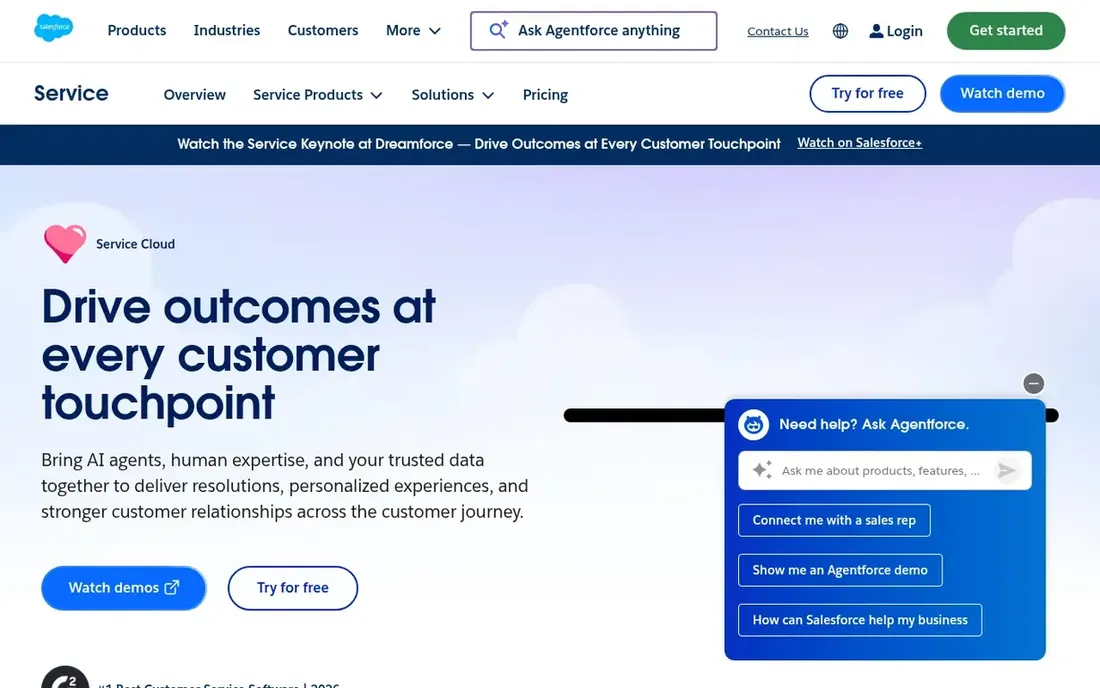
Salesforce Service Cloud is a good fit for connected service across bigger teams. Salesforce Service Cloud is positioned as customer service support software and options powered by AI, targeted at connected, efficient, and scalable service. Consider Service Cloud when service must scale alongside other business systems and you can invest in setup.
Trade-offs to know: Implementation can be involved.
What users get: scalable service design.
Worth adding: retailers with complicated operations, multiple teams, and existing Salesforce data benefit most from keeping service and customer records in one place. In practice, smaller retailers may not need the connected-service depth. No starting price is listed for Salesforce Service Cloud here; confirm pricing on the vendor site. Trial and free access: Not stated.
- Suits teams already in the Salesforce ecosystem
- AI-powered service support software
- Configuration demands planning
HubSpot Service Hub works best for expanding teams building customer experience. Retailers that already use HubSpot for marketing or sales can keep service connected to the same customer records.
Honest limits: Best value within the HubSpot ecosystem.
In daily use, teams outside the HubSpot ecosystem should weigh integration benefits carefully. From a buyer's view, the system is oriented toward expanding teams, so highly complicated service operations may need more specialized tooling. HubSpot Service Hub shows no starting price here, so confirm the cost on the vendor site. As for free access: Not stated.
- Links to the wider HubSpot suite
- Suits expanding teams
- Advanced service needs may outgrow it
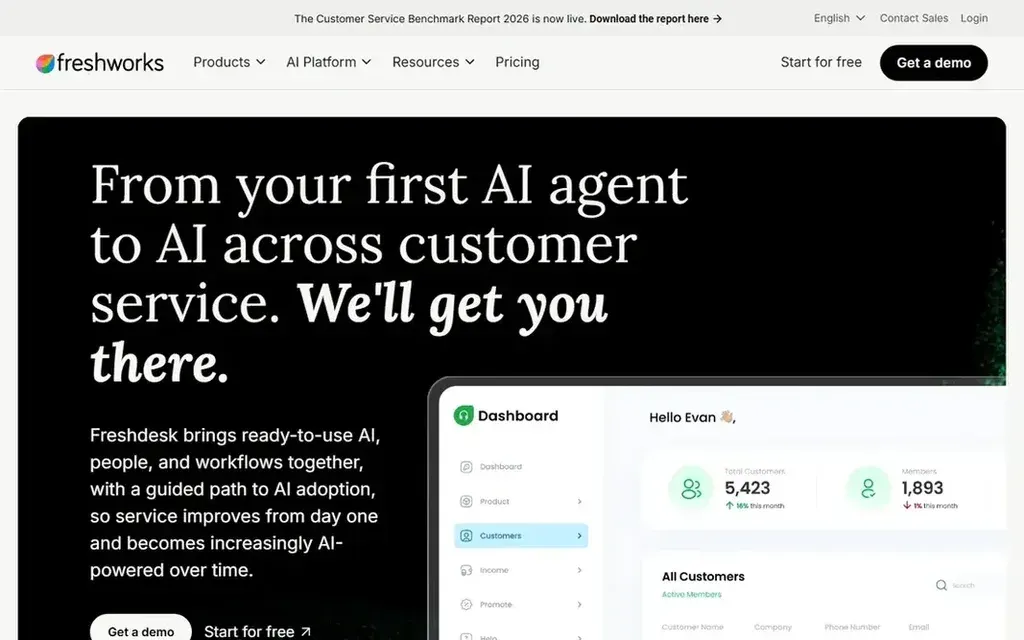
Freshdesk is aimed squarely at omnichannel ticketing with automation. Freshdesk is an AI-powered customer service option from Freshworks with omnichannel ticketing and automatic workflows. For everyday use, pick Freshdesk when omnichannel ticketing and practical automation are the core requirements.
Where it is weaker: Advanced needs may need extras.
Best features of Freshdesk: AI features geared toward agent productivity. Also, retail support teams that receive questions across email, chat, and other channels can route them into one ticketing system and automate routine steps. If you need a broader CRM-first approach, compare alternatives. In practice, teams with very specialized routing or deep customization needs may find the standard workflows limiting, and automation design still needs attention. This comparison lists no price for Freshdesk; ask the vendor. Trial and free access: Not stated.
- Automatic workflows
- Omnichannel ticketing
- Workflow design needs care
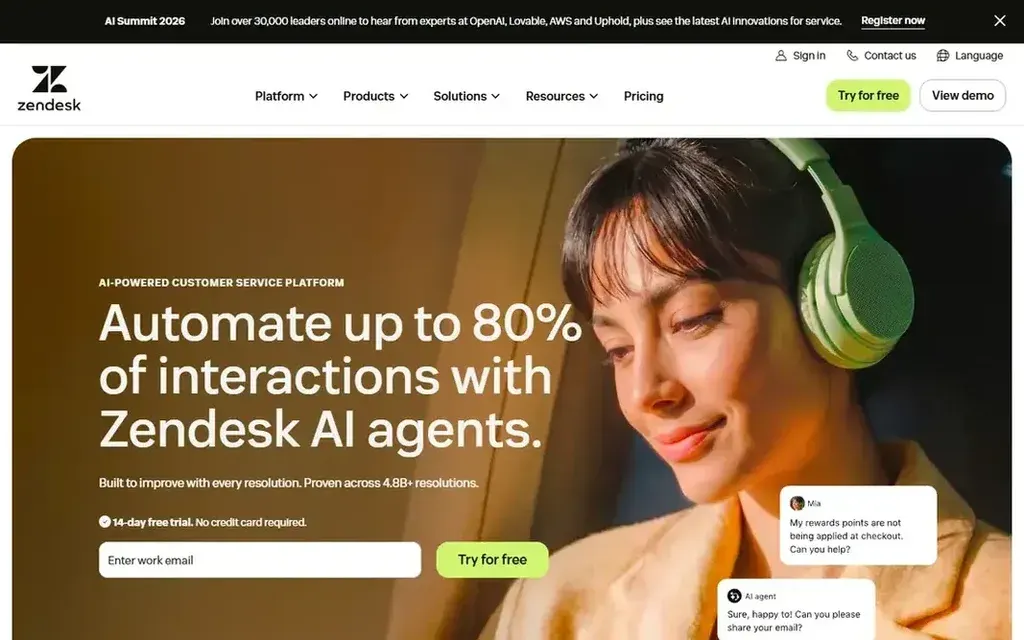
Where Zendesk fits: AI-led issue resolution at scale. If your priority is a light ecommerce-focused helpdesk, evaluate narrower choices first. The product's breadth means configuration and ongoing administration are real considerations, and smaller shops may find more straightforward tools quicker to launch.
For retail teams handling repetitive order and returns questions, that emphasis on full resolution instead of straightforward deflection can cut agent load. On top of that, Zendesk presents itself as an AI-powered customer service product that moves beyond deflection, with AI agents that resolve issues end-to-end. Price to start with Zendesk: $19 agent/month premium yearly. Free options: Free trial.
Trade-offs to know: Setup and administration take effort.
- Wide system for support teams
- AI agents resolve issues end to end
- Advanced capabilities may suit bigger teams
In short, Zoho Desk is for unified help desk with AI collaboration. Retail teams already using Zoho tools can keep service alongside other business applications. As for the details, teams wanting deep ecommerce integrations may prefer a storefront-focused system.
Downsides: Configuration needed for retail workflows.
For everyday use, pick Zoho Desk when a unified help desk with AI collaboration matches your existing tooling. Worth adding: Zoho Desk is a unified help desk system designed for AI and human collaboration, with the stated goal of delivering support at scale. Check the vendor site for Zoho Desk pricing; none is listed in this comparison. Free options: Not stated.
- Unified help desk system
- AI and human collaboration focus
- Ecosystem fit matters
Selection criteria
For each of the 6 tools we noted price, free plan or trial, fit for customer service platforms for retail and the main limit, using vendor pages and documentation. Figures are shown as the vendors publish them. Billing terms, seat minimums and add-ons can change the real cost. The ranking is editorial: typical fit first, then clear pricing, then free access. If your needs are unusual, read the profiles rather than relying on position.
Questions to settle before buying
- Get a written quote from Kustomer, Salesforce Service Cloud, HubSpot Service Hub and others; the list shows no starting price for them.
- Run a trial of Zendesk with real work before paying for a year; your own workflow is the best test.
- Before choosing Kustomer, weigh its main limit: CRM-centric setup takes planning.
- Ask Freshdesk about contract length, onboarding fees and user minimums before you sign.
- Test how quickly Zendesk answers a pre-sales question; it hints at how support will feel later.
FAQ
Do these tools publish their prices?
Not all of them. Kustomer, Salesforce Service Cloud, HubSpot Service Hub and others publish no starting price, so expect a quote request for those. The rest, Zendesk included, show a starting price, though seats and billing terms still change the final cost.
Is Kustomer the right pick for everyone comparing customer service platforms for retail?
No single tool suits every team. Kustomer comes first because it fits unified conversations in a service CRM, while Salesforce Service Cloud suits connected service across larger teams and HubSpot Service Hub suits growing teams building customer experience. Match the tool to your own size, budget and workflow before deciding.
Does any tool for customer service platforms for retail here have a free plan?
No tool in this list, Kustomer and Zoho Desk included, has a permanent free plan. Zendesk offer a trial. Trials and quotes are the usual route, so plan a short evaluation period.
What should small retail teams check first?
Start with the channels you actually use, the setup effort you can absorb, and whether the product links to your order data. Confirm current features straight with vendors.
Can I try these tools before paying?
Often, yes. Zendesk offers a free trial. Use your own data and a real task during the test, and check what the free tier or trial limits before you rely on it. For the full picture, the cards above cover all 6 entries of this customer service platforms for retail list, including price, free plan and limits.
Which system is a good match for ecommerce retail support?
The first pick on this list is Kustomer, because it suits unified conversations in a service CRM. Salesforce Service Cloud is better for connected service across bigger teams, and HubSpot Service Hub for expanding teams building customer experience. Check price and limits against your own needs before choosing.
Sources
- https://www.kustomer.com
- https://www.salesforce.com/service
- https://www.hubspot.com/products/service
- https://www.freshworks.com/freshdesk
- https://www.zendesk.com
- https://www.zoho.com/desk