Best Customer Service Chatbot Tools in 2026: 9 Tools Compared
Compare the best customer service chatbot tools for 2026, from Intercom Fin and Zendesk AI to Tidio, Ada, HubSpot, Freshchat, and more top picks. today
- Editor's choice
 Intercom Fin
AI agent on a native helpdesk
Starts at$29 per seat per monthVisit intercom.comFull review - Great alternative
 Zendesk AI
Enterprise omnichannel support
Starts at$19 per agent per monthVisit zendesk.comFull review - Also consider
 Freshchat
Affordable omnichannel chatbot
Starts atSee websiteVisit freshworks.comFull review
TL;DR:
- The best customer service chatbot tools now resolve whole conversations, not just answer FAQs, but they still need a clean help center to work well.
- Intercom Fin and Zendesk AI lead for teams that already use those helpdesks, while Tidio and HubSpot suit smaller teams on tighter budgets.
- Pricing has shifted toward per-resolution charges, so model your monthly conversation volume before comparing headline seat prices.
- A chatbot that cannot hand off cleanly to a human, with full context, will frustrate customers more than no chatbot at all.
- Start with your top five support topics, measure resolution and satisfaction, and only then expand the bot to more complex work.
Quick comparison
| Tool | Best for | Starts at | Free plan? | |
|---|---|---|---|---|
| Intercom Fin | AI agent on a native helpdesk | $29 per seat per month | Free trial | Visit |
| Zendesk AI | Enterprise omnichannel support | $19 per agent per month | Free trial | Visit |
| Freshchat | Affordable omnichannel chatbot | See website | Yes | Visit |
 Tidio | Small business live chat plus AI | See website | Yes | Visit |
 HubSpot Chatbot | CRM-native chatbot for HubSpot teams | Free | Yes | Visit |
 Ada | Enterprise AI agent automation | See website | No | Visit |
 Drift | B2B conversational marketing and support | See website | No | Visit |
 Salesforce Agentforce | Salesforce-native AI agents | See website | No | Visit |
 Gorgias | E-commerce support automation | $10 per month | Free trial | Visit |
The best customer service chatbot tools
These nine tools cover the main ways support teams automate chat, from helpdesk-native AI agents to standalone enterprise bots.
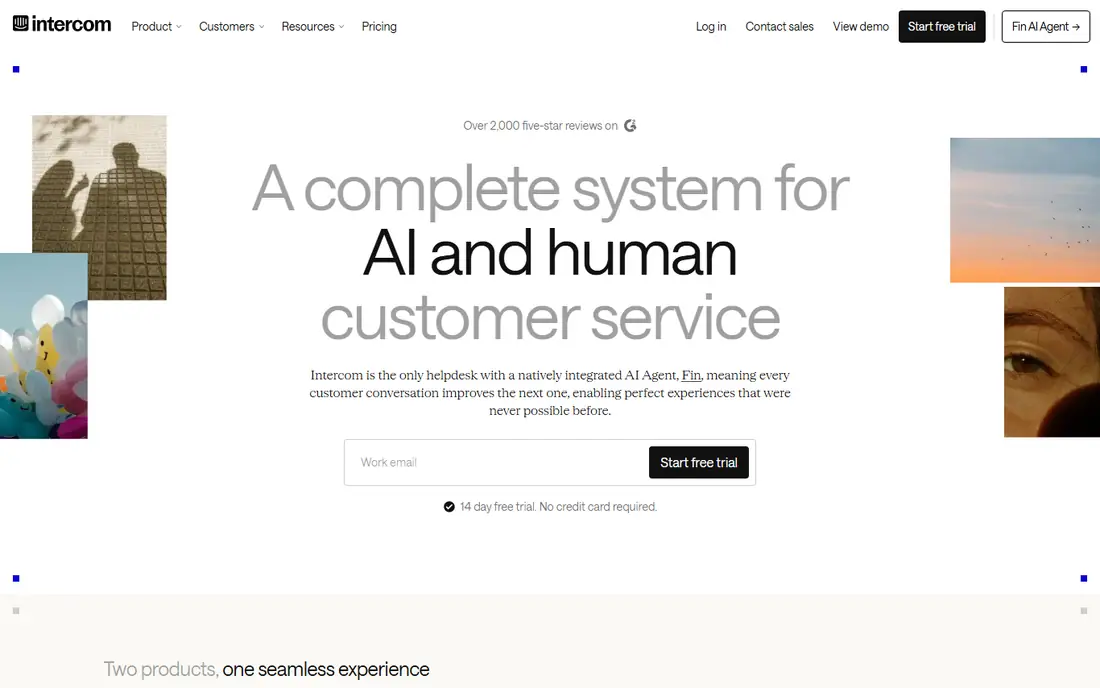
Intercom Fin is our pick for SaaS and digital-first support teams that want an AI agent that resolves chats, not just deflects them. Fin reads your help center, past conversations, and connected content, then answers in natural language and completes common tasks. Seat pricing starts at 29 dollars per seat per month, plus 0.99 dollars per resolution, and Fin can also run standalone on another helpdesk.
The per-resolution model is the catch. A team with huge chat volume can see costs climb fast, and resolution counts need careful interpretation, since an abandoned chat can count differently from a truly solved one. Track customer satisfaction and reopen rates beside resolution rate. For teams that already use Intercom, Fin is the most natural AI upgrade available.
- Strong end-to-end resolution
- Learns from help center and past conversations
- Works standalone or inside Intercom
- Per-resolution charges add up at volume
- Reporting needs careful reading
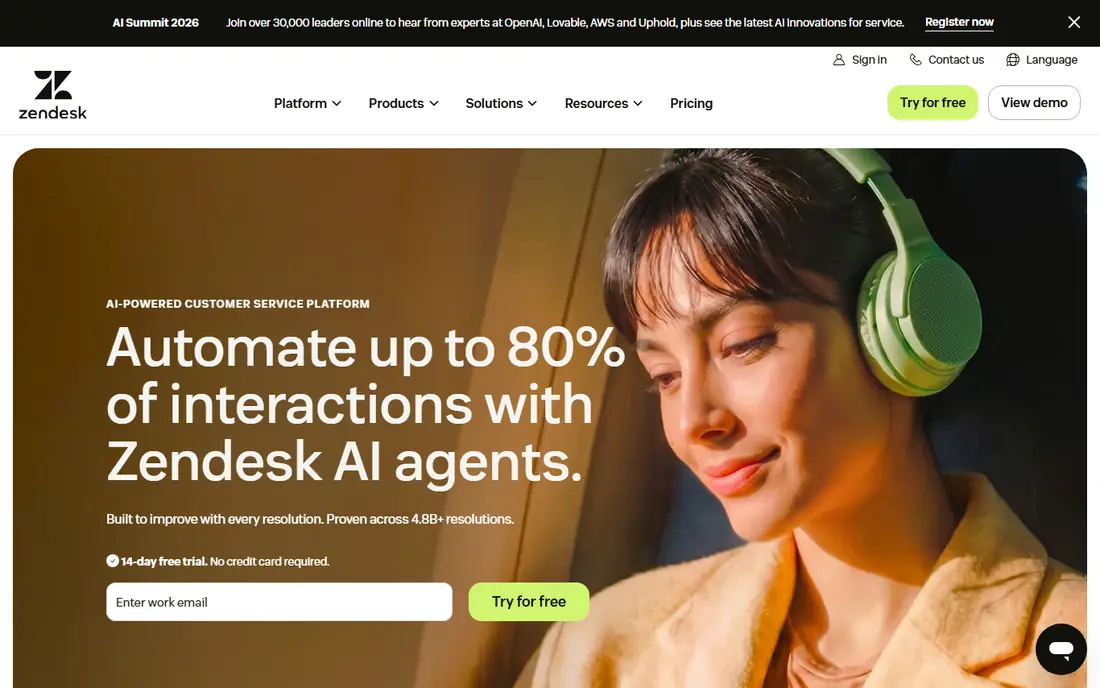
Zendesk AI brings AI agents, copilot drafting, and intelligent triage to one of the most widely used helpdesks. Plans start at 19 dollars per agent per month, with AI agents charged per automated resolution, commonly cited from 1.00 to 2.00 dollars depending on plan and region. That depth suits large teams with complex workflows across chat, email, voice, and social channels, where routing rules by intent, language, and priority matter.
The honest weakness is setup. Zendesk rewards teams that invest in a clean knowledge base, clear intents, and routing rules, and its AI will confidently amplify a messy help center if that work is skipped. Implementation often takes weeks, not hours. Large teams that do the groundwork get one of the most capable support platforms on this list.
- Deep omnichannel coverage
- Granular routing and triage
- Strong admin controls
- Implementation takes time
- AI quality depends on help center quality
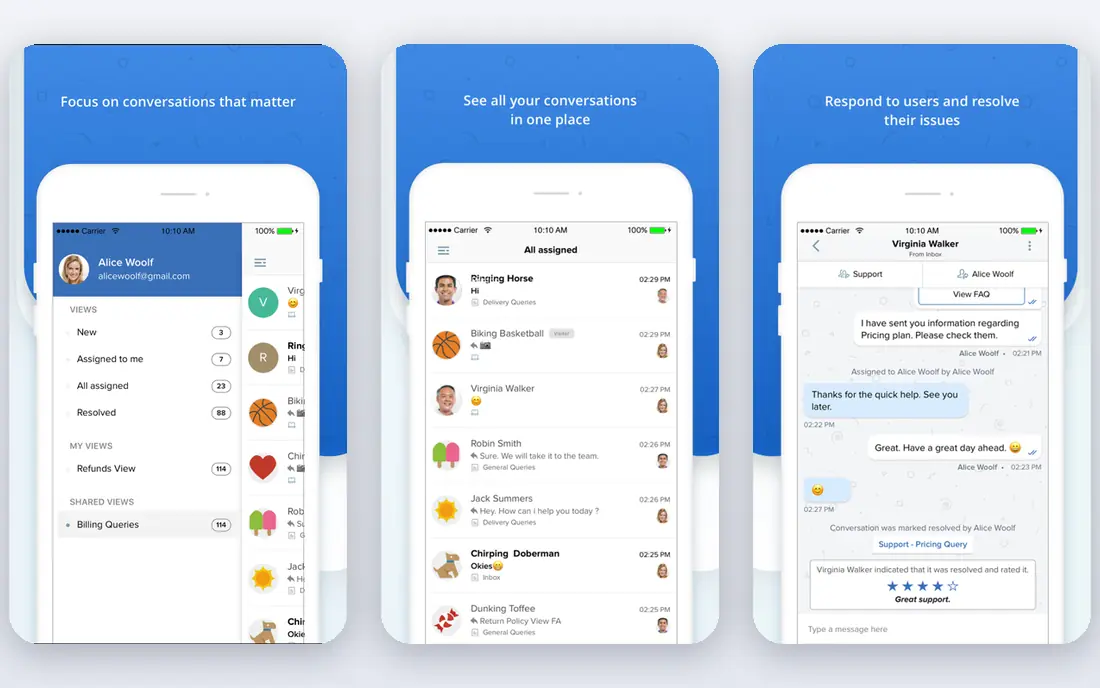
Freshchat, from Freshworks, suits mid-size teams that want an omnichannel inbox with a chatbot, without enterprise pricing. The free plan covers small teams, and paid plans add Freddy AI for intent detection, bot flows, and agent assistance across web chat, WhatsApp, Instagram, and email. The no-code bot builder makes it practical for support managers to build flows without developers.
Advanced AI automation and analytics sit on higher tiers, so check which plan includes the bot features you need before budgeting. The integration ecosystem is also smaller than Zendesk or Intercom. For value-focused teams that want a capable chatbot plus live chat in one inbox, Freshchat is hard to beat on price.
- Free plan for small teams
- Freddy AI bot builder
- Messaging across web, WhatsApp, and social
- Advanced AI features sit on higher plans
- Smaller ecosystem than Zendesk or Intercom
Tidio combines live chat with Lyro, its AI agent, in a tool built for small businesses and e-commerce stores. The free plan lets a small team add chat to a website quickly, and paid plans add Lyro conversations that answer from your help content, plus a visual flow builder for common paths like order tracking and returns. That combination suits stores that need both automation and a human fallback.
Lyro conversation allowances vary by plan, so growing stores should check the tier that matches their monthly chat volume. Tidio is not built for large enterprise support operations with complex routing and compliance needs. For small teams that want a chatbot running this week, it is one of the easiest starts on this list.
- Free plan to start
- Lyro AI agent plus live chat in one tool
- Visual flow builder
- AI conversation limits vary by plan
- Less suited to large enterprise workflows
HubSpot's chatbot builder is the obvious choice for teams already running on HubSpot CRM. The builder itself is free, letting teams create rule-based flows for lead qualification, meeting booking, and common support questions, with contact data from the CRM powering personalization. Handoff to the HubSpot shared inbox keeps context intact when a human takes over.
Full AI-powered support features, including Breeze AI agents, sit on paid Service Hub plans, so the free builder alone is not a full AI agent. Teams outside HubSpot get little value from it. For HubSpot teams that want support chat tied directly to customer records, it is the most joined-up option here.
- Free chatbot builder
- CRM data powers personalization
- Easy handoff to HubSpot inbox
- Advanced AI features need paid Service Hub plans
- Best only inside HubSpot
Ada builds standalone AI agents for large support teams, covering web chat, messaging, email, and voice. Its reasoning engine aims to resolve complex, multi-step issues, not just single FAQs, and it supports many languages, which suits global brands. Regulated industries use Ada partly because its controls around brand safety and compliance are built for enterprise review.
Pricing is quoted, and implementation is a project, not a weekend setup, with knowledge design and testing phases. Smaller teams will find it too heavy and too expensive. Large teams with high conversation volume and a need for hands-off automation should evaluate Ada early.
- High automation rates for large teams
- Voice, messaging, and email in one agent
- Strong multilingual support
- Quoted enterprise pricing
- Needs a serious implementation effort
Drift, now part of Salesloft, is best known for conversational marketing, but its chatbots also handle customer service routing for B2B teams. The platform qualifies visitors, routes them by account or intent, books meetings, and hands off to the right team, with CRM integrations that keep sales and support data aligned. That routing strength suits B2B companies where the right human matters more than a generic answer.
Pricing is quoted and typically enterprise-level, and support automation is not Drift's primary focus compared with sales conversations. B2B teams that already use Drift for marketing will get the most value by extending it to support routing. Pure support teams should look at Intercom or Zendesk first.
- Strong B2B routing and meeting booking
- GPT-powered chat
- CRM integrations
- Quoted pricing
- Support use is secondary to sales and marketing
Salesforce Agentforce lets Salesforce customers build AI agents that work from CRM data and complete actions inside Salesforce, such as checking an order, updating a case, or scheduling a follow-up. That action capability goes beyond answering questions, and it is the reason Salesforce shops consider it despite complex pricing, commonly cited around 2 dollars per conversation.
Agentforce only makes sense inside Salesforce, and usage-based pricing needs careful volume modeling. Teams must also design guardrails for what agents can and cannot do in the CRM. For Salesforce-native support operations, it is the most powerful option on this list. For everyone else, it is not relevant.
- Deep Salesforce data access
- Agents can complete CRM actions
- Strong enterprise controls
- Pricing is usage-based and complex
- Best only inside Salesforce
Gorgias is built for e-commerce support, with a unified inbox for email, chat, social, and SMS, and AI that can handle store-specific tasks like order edits, tracking, and returns. Plans start at 10 dollars per month for a small ticket allowance, which makes it accessible for new stores, and the Shopify integration means the bot can act on real order data rather than just answering from articles.
Pricing scales with ticket volume, so fast-growing stores should model costs at their expected volume, not just the starting price. Non-e-commerce teams will find its strengths less relevant. For Shopify and WooCommerce stores that want support automation tied to orders, Gorgias is a top pick.
- Deep Shopify integration
- AI can edit orders and handle common store questions
- Unified inbox
- Pricing scales with ticket volume
- Less suited to non-e-commerce support
How we picked these
We compared official pricing pages, vendor documentation, and current feature descriptions for customer service chatbot tools, keeping only tools that automate support conversations in 2026. We required real chatbot or AI agent capability, a human handoff path, and current availability, and we mixed helpdesk-native agents with standalone and e-commerce options. We favored tools with clear pricing or clear free entry points, and we listed pricing as quoted where vendors charge per resolution or per conversation rather than publishing a simple plan price.
How to choose a customer service chatbot tool
Start from your existing helpdesk, your volume, and your top support topics.
Follow your helpdesk first
Intercom teams should start with Fin, Zendesk teams with Zendesk AI, HubSpot teams with HubSpot, and Salesforce teams with Agentforce. A native agent uses your existing tickets, macros, and knowledge base, which shortens setup and improves answers. Switching helpdesks just to get a chatbot rarely pays off.
Model per-resolution costs honestly
Seat prices tell only part of the story when vendors charge per resolution or per conversation. Estimate monthly bot conversations, multiply by the per-resolution rate, and add seat costs. A tool that looks cheap per seat can become expensive at volume, and a tool that looks expensive can save money if it resolves more conversations without human help.
Design the handoff before launch
Write the handoff rules first: when the bot passes to a human, what context travels with the chat, and what the customer sees during the wait. Test the five most common topics end to end, including failure cases where the bot does not know the answer. A bot that traps customers in a loop will damage trust faster than it saves time.
FAQ
What is the best chatbot solution for customer service?
Intercom Fin is the best choice for SaaS teams on Intercom, Zendesk AI is best for large omnichannel teams, and Tidio is best for small businesses on a budget. Gorgias leads for e-commerce stores, while Ada leads for large enterprises that need high automation. The best solution follows your existing helpdesk and conversation volume.
How much does a customer service chatbot cost?
Costs range from free for HubSpot's chatbot builder and Tidio's free plan, to 10 dollars per month for Gorgias starter, 19 dollars per agent per month for Zendesk, and 29 dollars per seat per month for Intercom, plus per-resolution charges on AI agents. Enterprise tools like Ada, Drift, and Agentforce use quoted or usage-based pricing.
Can a chatbot replace human support agents?
No, a chatbot should resolve routine conversations and route complex ones to humans, not replace the support team. The best setups automate order tracking, password resets, and FAQs, while humans handle complaints, edge cases, and high-value customers. Measure satisfaction and reopen rates to confirm the bot helps rather than frustrates.
What should a customer service chatbot be trained on?
Train it on your help center articles, past resolved conversations, product documentation, and policy pages, and keep that content current. A bot trained on outdated articles will give confident wrong answers. Review failed conversations weekly at first, fix the underlying content, and only then expand the bot to new topics.
Do customer service chatbots work on WhatsApp and social channels?
Yes, most tools on this list support web chat plus WhatsApp, Facebook Messenger, Instagram, or email, though channel coverage varies by plan. Freshchat, Tidio, Zendesk, and Gorgias all cover multiple messaging channels. Check that your plan includes the channels your customers actually use, since some vendors charge extra for them.