Best Customer Experience Platforms in 2026: 9 Tools Compared
Compare the best customer experience platforms for support, feedback, and service, with pricing, free plans, and clear fits for teams of all sizes today.
- Editor's choice
 Zendesk
Large omnichannel support teams
Starts at$55 per agent per monthVisit zendesk.comFull review - Great alternative
 Salesforce Service Cloud
Enterprises on Salesforce
Starts at$25 per user per monthVisit salesforce.comFull review - Also consider
 HubSpot Service Hub
HubSpot CRM users
Starts at$20 per seat per monthVisit hubspot.comFull review
TL;DR:
- Zendesk and Salesforce Service Cloud suit large support operations, while Freshdesk and Zoho Desk suit smaller teams on a budget.
- HubSpot Service Hub is the natural pick if your CRM and marketing already live in HubSpot.
- Qualtrics and Medallia focus on feedback and journey insight, not just ticket handling, and they are priced for larger firms.
- Intercom and Genesys Cloud suit chat-first and contact-centre teams, but AI charges can add up fast.
Quick comparison
| Tool | Best for | Starts at | Free plan? | |
|---|---|---|---|---|
| Zendesk | Large omnichannel support teams | $55 per agent per month | Free trial | Visit |
| Salesforce Service Cloud | Enterprises on Salesforce | $25 per user per month | Free trial | Visit |
| HubSpot Service Hub | HubSpot CRM users | $20 per seat per month | Yes | Visit |
 Freshdesk | Value-focused support teams | $19 per agent per month | Free trial | Visit |
 Intercom | Chat-first SaaS support | $29 per seat per month | Free trial | Visit |
 Zoho Desk | Budget teams and Zoho users | $7 per user per month | Yes | Visit |
 Qualtrics CustomerXM | Enterprise feedback programs | See website | Free trial | Visit |
 Medallia | Enterprise journey analytics | See website | No | Visit |
 Genesys Cloud CX | Contact centres at scale | $75 per user per month | Free trial | Visit |
The best customer experience platforms
We compared official feature pages, pricing pages, app store listings, and public reviews to build this list. Note that this list has nine tools, because customer experience covers both support tickets and feedback programs, and one list of eight would have forced out a major type. A good platform here does more than answer tickets: it collects feedback, shows where customers struggle, and helps teams act on it.
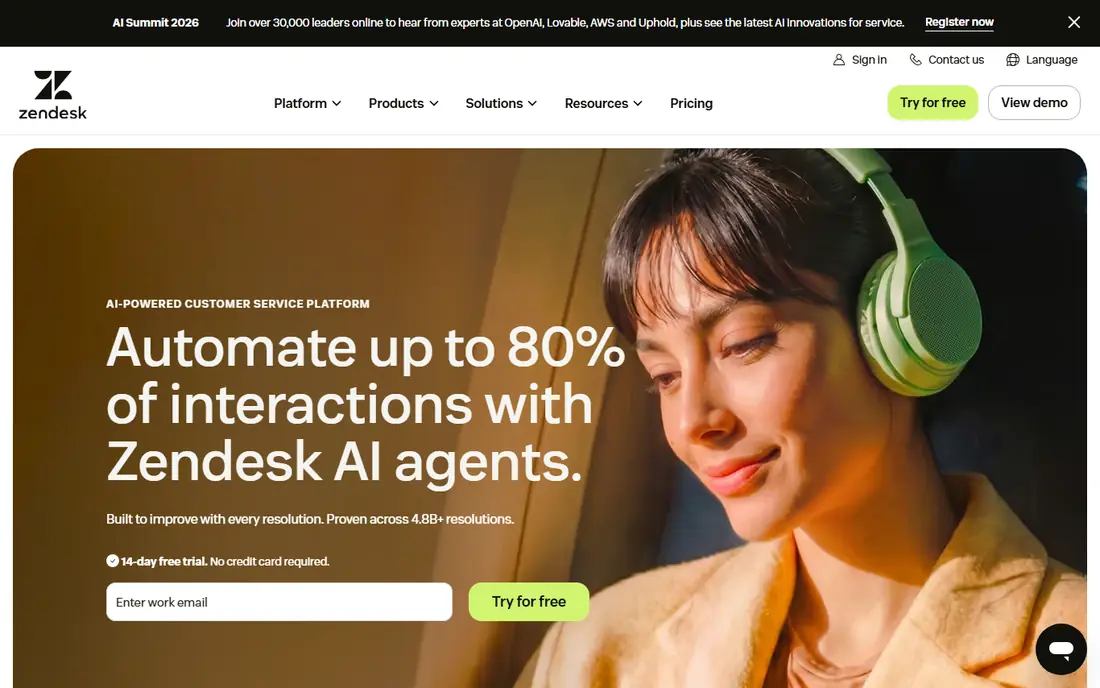
Zendesk remains the reference point for support teams that handle email, chat, phone, and social in one queue. Routing rules, macros, triggers, and reporting are deep, and the marketplace connects to most CRMs and commerce tools. For a team with dozens of agents and complex service levels, that depth matters more than a low entry price.
The cost adds up. AI add-ons are priced separately, and a small team may pay for power it never uses. Zendesk also needs someone to own setup and reporting, or it can feel heavy. If you already run Zendesk or need its scale, it is still a strong pick. Smaller teams should compare Freshdesk and Zoho Desk first.
- Deep routing and reporting
- Huge integration marketplace
- Strong omnichannel tools
- AI features cost extra
- Setup needs admin time
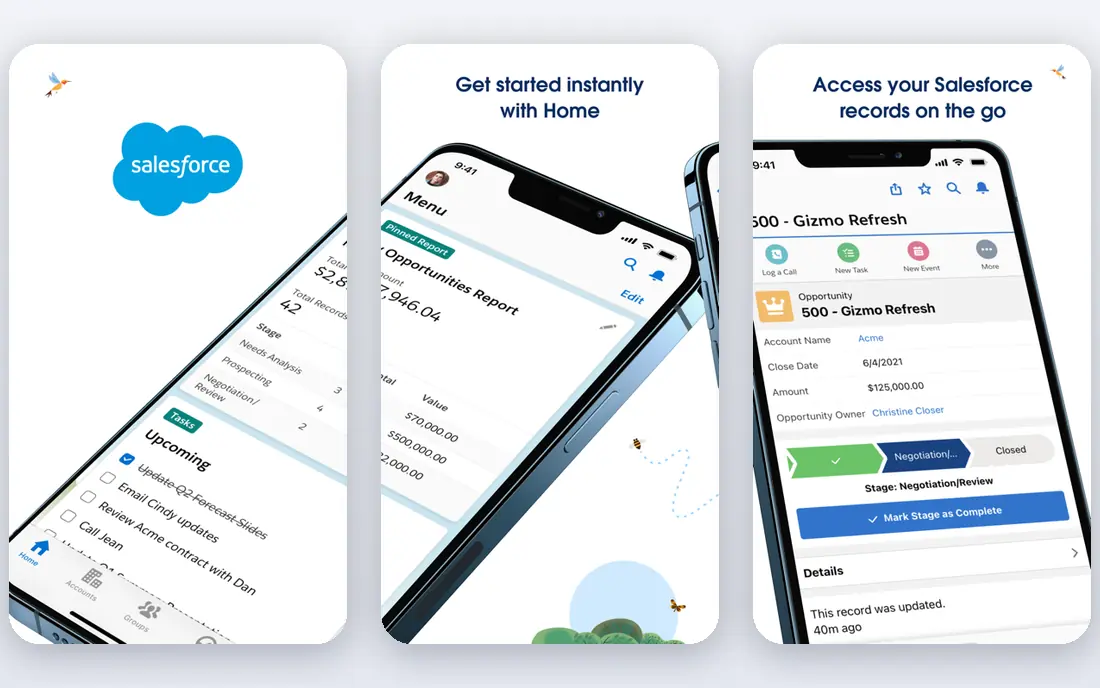
Service Cloud turns support cases into part of the Salesforce record, so sales, service, and success teams see the same customer history. That shared view helps large firms with long sales cycles, regulated work, or complex entitlements. Automation, knowledge, and AI tools are strong, and the platform can be shaped to almost any process.
The trade-off is complexity and cost. Implementation often needs a Salesforce admin or partner, and useful features sit on higher editions. Firms not already on Salesforce will find simpler tools faster to launch. For Salesforce shops, though, Service Cloud is the natural centre for customer experience work.
- Deep CRM integration
- Case management at scale
- Strong compliance options
- Complex setup
- Higher total cost once add-ons are included
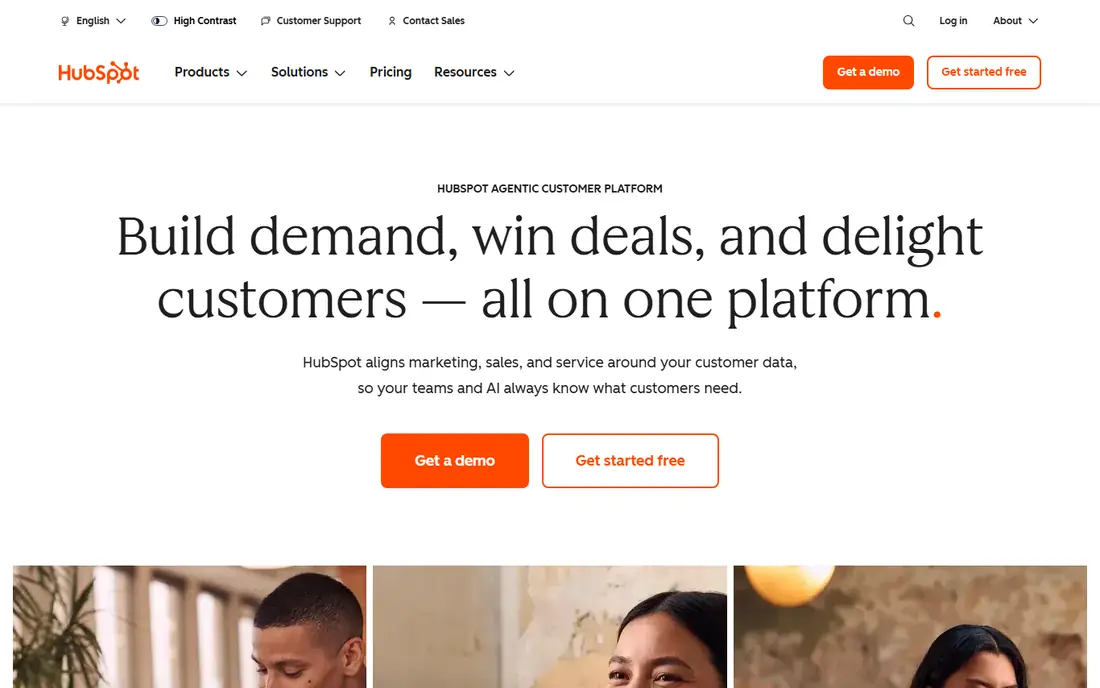
Service Hub ties tickets, feedback surveys, and knowledge base articles to the HubSpot CRM, so an agent can see deals, purchases, and past chats without switching tools. The free tier covers basic ticketing for two users, which is enough for a very small team to start. Setup is gentler than Salesforce or Zendesk, and marketing and sales data sit in the same system.
Higher plans get pricey, and Professional adds a one-time onboarding fee in many quotes. AI features use credits, so costs can vary with usage. If your company already runs HubSpot, Service Hub is the easiest path to a joined-up customer view. If you do not use HubSpot, the value is lower.
- Free tier for small teams
- CRM data in every ticket
- Simple setup
- Higher tiers add onboarding fees
- Advanced reporting needs paid plans
Freshdesk gives small and mid-size teams a full help desk at a lower per-agent price than Zendesk. Ticketing, knowledge base, automation, and service level rules cover the daily work, and the interface is easier to learn. Teams moving from shared inboxes often find Freshdesk the right step up without a big jump in cost or complexity.
AI help costs extra, and the cheapest plan lacks some reporting and automation depth. Freshdesk also works best as a support tool, not as a full feedback and journey platform like Qualtrics. For a team that mainly needs to answer customers well and on time, it is excellent value.
- Lower per-agent price
- Solid automation
- SLA tools on paid plans
- AI Copilot costs extra
- Some advanced features need higher tiers
Intercom is built for software companies that support users inside the product. The Messenger, help centre, and AI agent work together, so common questions can be answered without a human agent, and harder cases pass to a person with full context. Product messages and onboarding tours sit in the same tool, which helps product-led firms guide new users.
The pricing model needs care. Seats cost a monthly fee, and AI resolutions are charged per outcome, so a busy month can cost more than the base plan suggests. Intercom is less suited to phone-heavy contact centres or firms that mainly need surveys. For chat-first SaaS teams, it is one of the best fits available.
- Strong in-app messaging
- AI agent for common questions
- Product tours and onboarding
- AI outcomes are charged per resolution
- Price can rise with usage
Zoho Desk offers a free plan for up to three users and a very low paid entry price, which makes it the budget pick in this list. Ticketing, knowledge base, automation, and customer happiness ratings cover the basics, and firms using Zoho CRM or Zoho Books get shared customer data. For a small team that needs a real help desk without a large bill, it is hard to beat.
The interface is functional rather than beautiful, and some AI and reporting features need higher plans. Large teams with complex routing may prefer Zendesk or Service Cloud. If cost is the main constraint and your stack is already Zoho, start here and upgrade only when volume demands it.
- Lowest entry price here
- Free plan for small teams
- Good Zoho links
- Interface feels less polished
- Advanced AI sits on higher tiers
Qualtrics CustomerXM is a feedback platform first and a ticket tool second. It collects surveys across web, email, app, and contact centre, then analyses open text for themes and sentiment. That helps large firms find why satisfaction drops, not just that it dropped. Research teams value its survey logic, sampling, and reporting depth.
Pricing is quoted, and a full program needs owners who understand survey design and analysis. Small firms will find it heavy and costly for simple ticket work. For enterprises running ongoing customer experience programs with many touchpoints, Qualtrics is one of the strongest choices.
- Deep survey and research tools
- Text and sentiment analysis
- Strong enterprise controls
- Quote-based pricing
- Implementation takes time and expertise
Medallia captures feedback from surveys, calls, social, and operational systems, then ties it to customer journeys. That lets large brands see where a journey breaks, such as after delivery or during onboarding, and act on the pattern rather than single complaints. Text analytics and AI summaries help teams handle large volumes of comments.
Like Qualtrics, Medallia is priced for enterprises and needs implementation help. It is not a help desk for a ten-person team, and its value shows only when feedback volume is high. For large firms that need journey insight at scale, it belongs on the shortlist alongside Qualtrics.
- Strong journey and text analytics
- Wide signal capture
- Enterprise scale
- Custom pricing
- Complex setup and services
Genesys Cloud CX is a full contact centre platform, covering voice, chat, email, messaging, and social, with workforce management and quality tools. AI routing can match customers to the best agent, and analytics show queue and agent performance in real time. For firms with large phone and chat volumes, that breadth is the point.
The entry price is high, and running a contact centre well needs skilled admins. Small support teams will find Freshdesk or HubSpot simpler and cheaper. If your customer experience is mainly a contact centre, Genesys Cloud CX is a leading enterprise option.
- Full contact centre channels
- Workforce management
- AI routing and analytics
- High entry price
- Needs contact centre expertise to run well
How we picked these
We compared official feature pages, pricing pages, app store listings, and public reviews, and we confirmed each platform is still offered in October 2026. We included both support platforms and feedback platforms, because the search terms cover both kinds of customer experience work. We left out single-channel survey tools with no service features, and tools whose pricing or availability could not be checked.
Choosing the right customer experience platform
Start with the job you need done most. If the job is answering tickets, shortlist Zendesk, Freshdesk, Zoho Desk, or HubSpot. If the job is understanding feedback across journeys, shortlist Qualtrics or Medallia. If the job is running a contact centre, shortlist Genesys Cloud CX. Mixing those jobs in one tool is possible, but it often means paying for features you do not use.
Watch the AI bill
Many platforms now charge AI separately, per resolution, per credit, or as an add-on. Ask for a usage estimate based on your monthly ticket or conversation volume before you sign. A low seat price can turn into a high bill if AI handles most contacts. Trial the AI on real tickets, and check whether human review is easy when the AI gets it wrong.
Examples of good service still matter
A platform does not create good service on its own. The best customer service examples share clear ownership, fast first replies, and follow-up when a problem is fixed. Use surveys for a short, specific purpose, such as after a support case or delivery, and close the loop by telling customers what changed. That habit matters more than any dashboard.
FAQ
What is the best customer experience platform for a small business?
Freshdesk or Zoho Desk are the best starting points for most small teams, because they cover ticketing well at a lower price. HubSpot Service Hub is best if you already use HubSpot CRM. Start with a free or trial plan and upgrade only when ticket volume grows.
What is the best customer experience software for enterprises?
Zendesk and Salesforce Service Cloud lead for large support operations, while Qualtrics and Medallia lead for feedback and journey programs. Genesys Cloud CX leads for large contact centres. Most enterprises use more than one tool, with support and feedback linked together.
What is a good example of best-in-class customer service?
Best-in-class service usually means a fast, honest first reply, a named owner for the case, and a fix that does not make the customer repeat the story. Good teams also follow up after the fix and use feedback to change a process, not just to score agents. Tools help track this, but the habit comes from the team.
How much does a customer experience platform cost?
Prices range from free or $7 per user per month for Zoho Desk to $75 per user per month for Genesys Cloud CX, with enterprise feedback tools quoted by contract. AI charges, onboarding fees, and add-ons can raise the total, so ask for a full quote based on your volume.
Is HubSpot Service Hub good for customer experience?
Yes, especially for firms already on HubSpot. It links tickets and feedback to CRM records, offers a free tier, and is easier to set up than enterprise suites. It is less suited to firms that need deep contact centre tools or large-scale journey analytics.
Do I need both a help desk and a feedback platform?
Not always. Small teams can run surveys inside a help desk or CRM and learn enough from ticket trends. Larger firms benefit from a dedicated feedback platform when survey volume, journey analysis, and text analytics grow beyond what a help desk can handle well.