Best CRM Software for Sales Teams in 2026: 9 Tools Compared
Best CRM software for sales teams in 2026, compared on pipeline, automation, price and free plans, including HubSpot, Salesforce and Pipedrive tools today.
- Editor's choice
 HubSpot CRM
All-around sales teams
Starts atFreeVisit hubspot.comFull review - Great alternative
 Pipedrive
Visual pipeline management
Starts at$14 per user per monthVisit pipedrive.comFull review - Also consider
 Zoho CRM
Value and customization
Starts at$14 per user per monthVisit zoho.comFull review
TL;DR:
- HubSpot CRM is the safest all-around pick for sales teams, thanks to a generous free plan and a clear upgrade path from free to enterprise.
- Pipedrive is best for sales teams that live in their pipeline, with a visual deal board that is easy to learn and use daily.
- Zoho CRM offers strong value, with automation and customization at a lower entry price than many rivals.
- Salesforce suits larger sales teams that need deep customization and a large integration ecosystem, but it needs admin time to run well.
- Freshsales, monday Sales CRM and Close cover budget, workflow and outbound calling needs, so match the tool to how your team actually sells.
Quick comparison
| Tool | Best for | Starts at | Free plan? | |
|---|---|---|---|---|
| HubSpot CRM | All-around sales teams | Free | Yes | Visit |
| Pipedrive | Visual pipeline management | $14 per user per month | Free trial | Visit |
| Zoho CRM | Value and customization | $14 per user per month | Yes | Visit |
 Salesforce | Scaling and customization | $25 per user per month | Yes | Visit |
 Freshsales | Budget AI CRM with phone and email | $9 per user per month | Yes | Visit |
 monday Sales CRM | Customizable sales workflows | $12 per seat per month | Free trial | Visit |
 Close | Outbound sales with built-in calling | See website | Free trial | Visit |
 Capsule CRM | Simple contact and deal tracking | Free | Yes | Visit |
 Attio | Flexible modern CRM for growing teams | See website | Yes | Visit |
The best CRM software for sales teams
A sales CRM should help a team follow up on time, see the pipeline clearly and spend less time on data entry. The best CRM tool for sales teams is not always the most powerful one, because adoption matters more than feature count. We compared official pricing, free plans, pipeline tools, automation and integrations to build a list that fits freelancers, small teams and larger sales organizations.
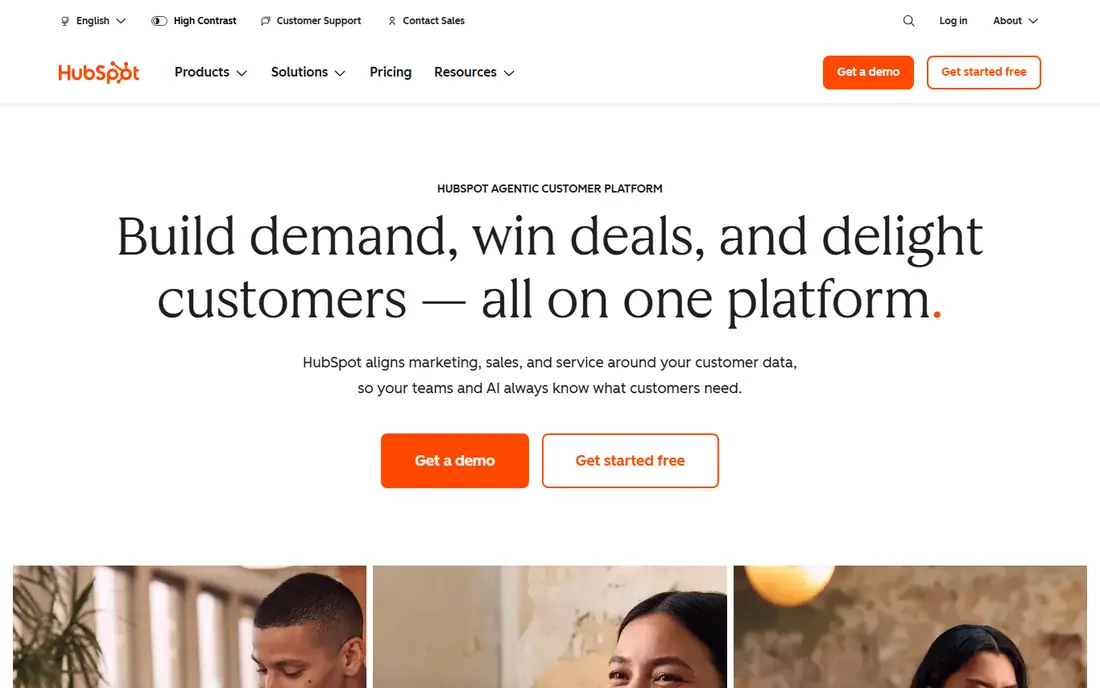
HubSpot CRM is the safest starting point for most sales teams, because the free plan already covers contacts, deals, tasks, live chat and email tracking without a time limit. That lets a small team start properly, learn what it needs and upgrade only when automation, forecasting or larger contact limits become necessary. The paid Starter tier is listed from $20 per seat per month in recent comparisons, and the platform integrates closely with HubSpot marketing and service tools, which helps teams that want one system for the full customer journey.
The tradeoff is cost at scale. HubSpot Professional and Enterprise tiers are much pricier, and some features that look core in demos sit behind those tiers. Teams should also watch contact and automation limits on lower plans. Still, for a team that wants a low-risk start, a familiar interface and a clear path to grow, HubSpot CRM remains the best overall pick in this list.
- Generous free plan with contacts, deals and email tracking
- Scales from free to enterprise
- Strong marketing and service integration
- Paid Sales Hub tiers rise in price quickly
- Advanced automation sits on higher plans
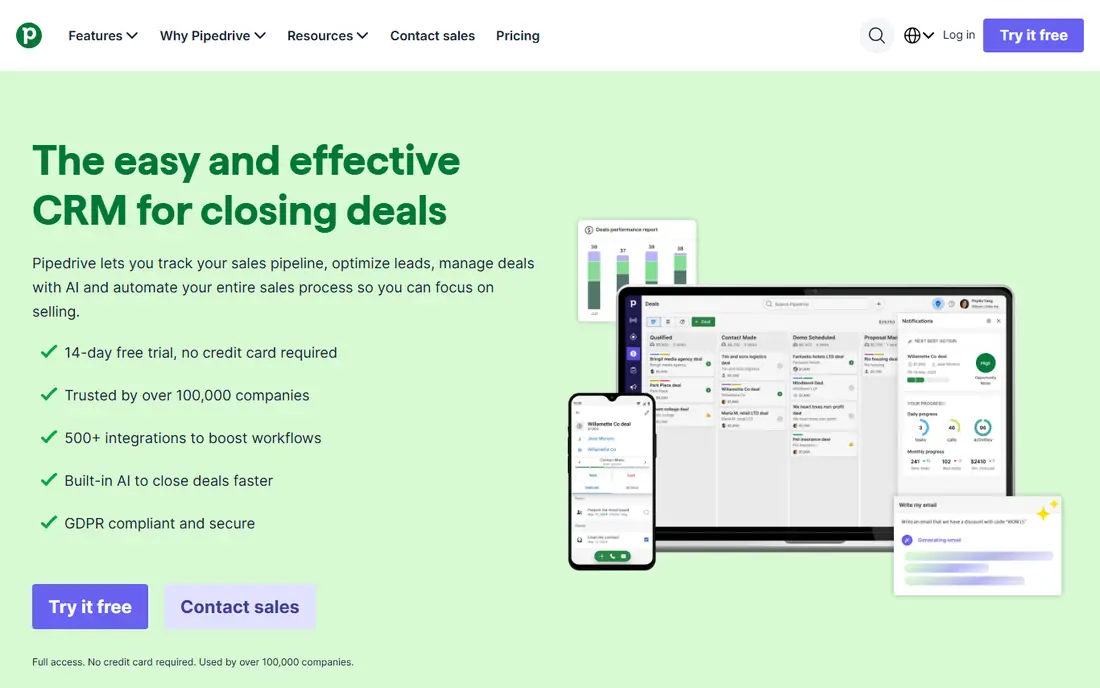
Pipedrive is built for salespeople who think in deal stages. Its pipeline board makes it obvious which deals are moving, which are stuck and what activity is due next, and that clarity helps managers coach without digging through reports. Starting from $14 per seat per month on the Lite plan in recent comparisons, it is affordable for small teams, and higher tiers add automation, email sync and forecasting. The interface is simple enough that new reps can learn it in a day, which improves adoption.
Pipedrive does not offer a free plan, only a trial, so teams must budget from the start. It is also less of a full marketing platform than HubSpot, so teams that need deep marketing automation may pair it with another tool. For a sales-led team that wants a pipeline-first CRM without enterprise complexity, Pipedrive is the clearest choice here.
- Clear visual pipeline board
- Easy deal and activity tracking
- Good automation on paid plans
- No free plan, only a trial
- Some marketing features require add-ons or higher tiers
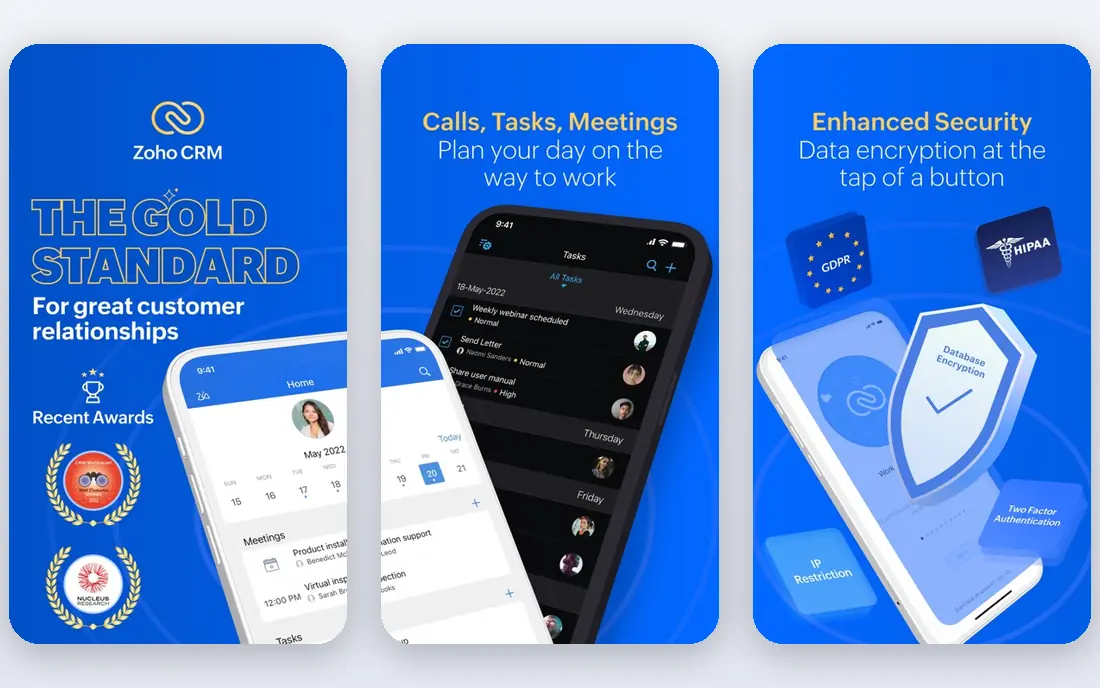
Zoho CRM gives small and mid-size sales teams a lot for the price. From $14 per user per month in recent comparisons, it offers workflow automation, customization, forecasting and a large integration catalog, plus a free plan for up to 3 users to start. That combination suits teams that want to tailor pipelines, fields and automations without paying Salesforce prices. Zoho also offers a broader business suite, so teams that already use Zoho products get extra value from shared data.
The interface can feel dense for new users, and learning the customization options takes time. Some AI features sit on higher tiers, so check the plan that includes the tools you need. For a value-focused team that wants a CRM it can shape to its own sales process, Zoho CRM is one of the strongest options available.
- Strong value with automation and AI features
- Free plan for up to 3 users
- Deep customization and many integrations
- Interface can feel busy at first
- AI features are gated to higher tiers in some cases
Salesforce, now sold in part as Agentforce Sales, remains the standard for large sales teams that need customization at scale. Its Starter Suite from $25 per user per month gives small teams a way in, while larger plans add advanced automation, forecasting, AI features and a vast AppExchange ecosystem. For organizations with complex sales processes, multiple teams, territories and approval workflows, few rivals match its depth. Reporting and dashboards are also strong once the system is set up well.
That depth comes with cost and complexity. Salesforce needs admin time, training and often implementation help, and higher tiers jump in price. Small teams can find it more than they need, and a poorly set up Salesforce instance can hurt adoption. For a growing or enterprise sales team with admin support and complex needs, Salesforce is the most scalable CRM here, but smaller teams should start with HubSpot, Pipedrive or Zoho first.
- Largest ecosystem and integration options
- Deep customization and reporting
- Starter Suite from $25 per user per month
- Needs admin time and training
- Costs rise sharply on higher tiers
- Entry plan limits automation and API access in some cases
Freshsales, from Freshworks, is a strong budget pick for sales teams that want calling, email and CRM in one place. From $9 per user per month on the Growth plan in recent comparisons, it offers a lower entry price than HubSpot or Pipedrive paid tiers, with built-in phone, email tracking and AI assistance on paid plans. Setup is fast, which helps small teams that need to start selling rather than configuring software for weeks.
The free plan is basic, and some users report that integrations and advanced features are thinner than in HubSpot or Salesforce. Forecasting depth also improves on higher tiers. For a small sales team on a tight budget that wants phone and email built in, Freshsales offers excellent value and a gentle learning curve.
- Low entry price with built-in phone and email
- AI features on paid plans
- Fast setup for small teams
- Free plan is limited
- Advanced forecasting and automation sit on higher tiers
monday Sales CRM suits teams that like to shape their own workflows. Its board-based design lets sales managers build pipelines, lead lists, activity trackers and dashboards that match their process, rather than forcing one fixed pipeline view. Starting from $12 per seat per month with a 3-seat minimum in recent comparisons, it is affordable for small teams, and automation helps with follow-ups, status changes and notifications.
The board model is not for everyone. Teams that want a traditional CRM with deep sales forecasting may prefer Pipedrive or Salesforce, and contact limits on Basic plans need checking. Per-seat pricing also grows with team size. For a team that already uses monday for other work, or wants highly visual, customizable sales workflows, monday Sales CRM is a flexible and practical choice.
- Flexible boards and workflows teams already understand
- Good pipeline and activity views
- Strong automation options
- Requires a 3-seat minimum on entry plans
- Contact limits apply on Basic
- Per-seat cost adds up for large teams
Close is built for inside sales teams that live on the phone. Its native dialer, email and SMS tools sit inside the CRM, so reps can call, log, follow up and move deals without switching apps. That integration saves time for outbound teams making many calls a day, and managers get real-time reporting on activity and pipeline. It is a favorite among startups and sales teams that prioritize speed and call volume over complex enterprise customization.
The tradeoff is price and focus. Close costs more than budget tools in many comparisons, and teams that rarely call may not use its main strength. It also has a smaller ecosystem than Salesforce or HubSpot. For an outbound sales team that wants calling built into the CRM, Close is the most focused and effective option here.
- Native calling, email and SMS in one CRM
- Built for high-volume outbound teams
- Real-time reporting for managers
- Higher starting price than budget CRMs in some comparisons
- Less suited to teams that do not call heavily
Capsule CRM is the simplicity pick. Its free plan covers small teams with basic contacts and deals, and paid tiers from around $18 per user per month add more capacity and features. The interface is clean, tasks and pipelines are easy to follow, and setup takes minutes rather than days. That makes it ideal for freelancers, consultants and very small sales teams that need a reliable place to track leads and follow-ups without enterprise complexity.
Capsule does not match HubSpot, Zoho or Salesforce for automation, forecasting or integrations, so growing teams may outgrow it. If your team needs a simple, affordable CRM that everyone will actually use, Capsule is a strong starting point, and you can migrate later when needs grow.
- Free plan for small teams
- Simple contact, deal and task tracking
- Easy to learn and quick to set up
- Less automation and forecasting depth than larger CRMs
- Integrations are more limited
Attio is a modern CRM that appeals to startups and growing teams that want flexibility. Its data model lets teams track people, companies and deals in ways that fit their own process, rather than forcing a rigid structure. Email and calendar sync help build a timeline of relationships automatically, which reduces manual data entry. A free plan lets small teams start, with paid plans adding collaboration and automation.
Attio is newer than HubSpot or Salesforce, so its ecosystem and enterprise forecasting depth are smaller. Pricing should be confirmed on its site, because plans and limits change. For a modern, flexible team that wants a CRM it can shape as it grows, Attio is a fresh and promising option alongside the more established tools here.
- Modern, flexible data model
- Free plan to start
- Good email and calendar sync for relationship tracking
- Pricing varies by plan and needs checking
- Forecasting and enterprise features are less deep than Salesforce
How we picked these
We compared official pricing pages, free plan limits, pipeline tools, automation and public sales team reviews updated in 2026. We favored CRMs that sales teams actually use daily, with clear deal views, follow-up tools and integrations for email, calendar and phone. We included free, budget and enterprise options, and we used See website where pricing is quote-based or varies by plan, rather than inventing a figure.
We also weighed total cost, because per-user pricing multiplies with team size. A $14 seat costs $140 per month for 10 users before add-ons, and higher tiers can change the math quickly. That is why we highlight free plans, entry prices and where advanced features sit, so teams can budget for the tier they will actually need.
How to choose a CRM for your sales team
Start with how your team sells. Pipeline-led teams should test Pipedrive, outbound teams should test Close, and teams that need marketing plus sales in one system should test HubSpot. Next, run a trial with real deals, not demo data. Add 20 real leads, move them through stages, log calls and emails, and build one forecast report. If reps avoid the tool during the trial, they will avoid it after purchase too.
Then check integrations and total cost. Confirm email, calendar, phone, accounting and marketing tools connect cleanly, and calculate per-user cost for your full team, including higher tiers you may need in six months. Finally, assign an owner for setup, training and data quality, because a CRM fails when no one owns it. Choose the tool your team will open every morning, not the one with the longest feature list.
FAQ
Which CRM software is best for sales teams?
HubSpot CRM is best for most sales teams overall, Pipedrive is best for pipeline-focused teams, and Salesforce is best for large teams that need deep customization. Zoho CRM is best for value, Freshsales is best for budget teams with calling needs, and Close is best for outbound teams. The best CRM depends on team size, sales style and budget.
What is the best free CRM tool for sales teams?
HubSpot CRM has the most generous free plan for sales teams, with contacts, deals, tasks and email tracking. Zoho CRM is free for up to 3 users, Freshsales offers a free plan with basic features, and Capsule CRM offers a free plan for small teams. Start free, then upgrade only when automation or contact limits become a problem.
How much does CRM software cost for a sales team?
Expect free plans from HubSpot, Zoho and Capsule, budget paid plans from $9 to $14 per user per month, and mid-range plans from $20 to $25 per user per month for Starter tiers. Enterprise CRM pricing rises sharply, and per-user costs multiply with team size, so calculate total cost for your full team before choosing.
Is Pipedrive or HubSpot better for sales teams?
Pipedrive is better for sales teams that want a simple, visual pipeline and fast adoption, while HubSpot is better for teams that want marketing, sales and service in one platform with a generous free plan. Choose Pipedrive for pipeline clarity, and HubSpot for all-around growth and free starting value.
What CRM is best for small sales teams?
HubSpot free, Pipedrive, Zoho CRM and Freshsales are all strong for small sales teams, depending on budget and workflow. Small teams should favor simple setup, clear pipelines and tools reps will use daily, rather than enterprise features they will not need in the first year.
Do sales teams need Salesforce?
Not always. Salesforce is best for large or complex sales teams with admin support, deep customization needs and many integrations. Small and mid-size teams often do better with HubSpot, Pipedrive, Zoho or Freshsales, which are faster to set up and easier to adopt, and can migrate to Salesforce later if growth demands it.