Best Commercial Banking Companies Fees and Rates in 2026: 9 Banks Compared
Compare the best commercial banking companies fees and rates for business checking, lending and treasury services, with monthly fees, waivers and limits.
- Editor's choice
 Chase
Nationwide branches and business tools
Starts at$15 per monthVisit chase.comFull review - Great alternative
 Bank of America
Business tools and relationship rewards
Starts at$16 per monthVisit bankofamerica.comFull review - Also consider
 Wells Fargo
Growing businesses and SBA lending
Starts at$10 per monthVisit wellsfargo.comFull review
TL;DR:
- Chase, Bank of America, Wells Fargo, U.S. Bank and PNC offer the broadest branch based commercial banking for US businesses.
- Entry business checking fees commonly run from 10 to 16 dollars per month at the large banks, with waivers for balances or activity.
- Commercial lending rates and treasury fees are almost always negotiated, so published checking fees are only part of the total cost.
- Cash heavy businesses should weigh branch access and cash deposit limits more heavily than a small monthly fee difference.
Quick comparison
| Tool | Best for | Starts at | Free plan? | |
|---|---|---|---|---|
| Chase | Nationwide branches and business tools | $15 per month | No | Visit |
| Bank of America | Business tools and relationship rewards | $16 per month | No | Visit |
| Wells Fargo | Growing businesses and SBA lending | $10 per month | No | Visit |
 U.S. Bank | Overall business banking range | See website | No | Visit |
 PNC Bank | Business checking and treasury | $12 per month | No | Visit |
 Capital One | Mobile led business banking | $15 per month | No | Visit |
 Truist | Integrated business banking | See website | No | Visit |
 TD Bank | East Coast branches and service | $10 per month | No | Visit |
 Citizens Bank | Low fee business checking | $0 per month | No | Visit |
The best commercial banking companies fees and rates
This list focuses on established commercial banks with business checking, lending and treasury services. Fees below are entry business checking figures where published, and lending rates are negotiated per business.

Chase is a strong default for businesses that want branches almost anywhere, plus digital banking that handles payroll, invoicing and card payments in one place. Its Business Complete Banking account carries a 15 dollar monthly service fee in recent comparisons, waivable with a qualifying balance or linked account, and it includes unlimited electronic transactions with a cap on paper transactions. For businesses that deposit cash regularly, the branch network alone can justify the fee.
The honest weakness is ancillary fees. Outgoing wires, overdrafts and extra paper transactions can push the real monthly cost well above the headline fee. Businesses should ask for the full fee schedule, check cash deposit limits and compare wire costs with their actual monthly volume before choosing Chase on branch access alone.
- Very large branch and ATM network
- Business Complete Banking with digital tools
- Integrated card processing options
- Monthly fee and wire fees can add up
- Paper transaction limits apply on some accounts
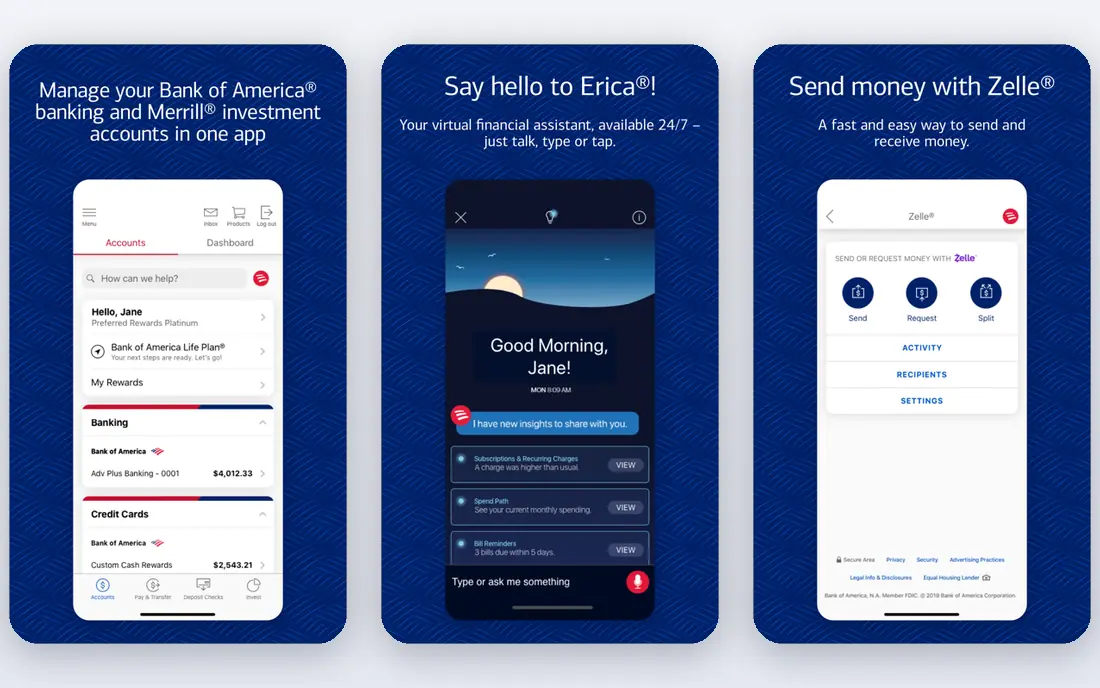
Bank of America suits businesses that want a large bank with built in business tools and a relationship program. Its Business Advantage Fundamentals Banking account carries a 16 dollar monthly fee after an initial period in recent comparisons, waivable with a 5,000 dollar combined average balance, qualifying debit purchases or Preferred Rewards membership. The bank also offers cash flow tools, invoicing and card programs that help smaller firms manage money without separate software.
The fee waiver conditions are stricter than at Wells Fargo or TD Bank, so businesses with low balances and little card spend may pay the full fee every month. Bank of America also limits free transactions on its entry account, so high transaction businesses should compare the next tier up rather than judging the bank on its cheapest account alone.
- Broad branch network
- Business Advantage tools and cash flow insights
- Preferred Rewards for Business benefits
- Higher entry fee than some rivals
- Fee waivers need balance or card activity
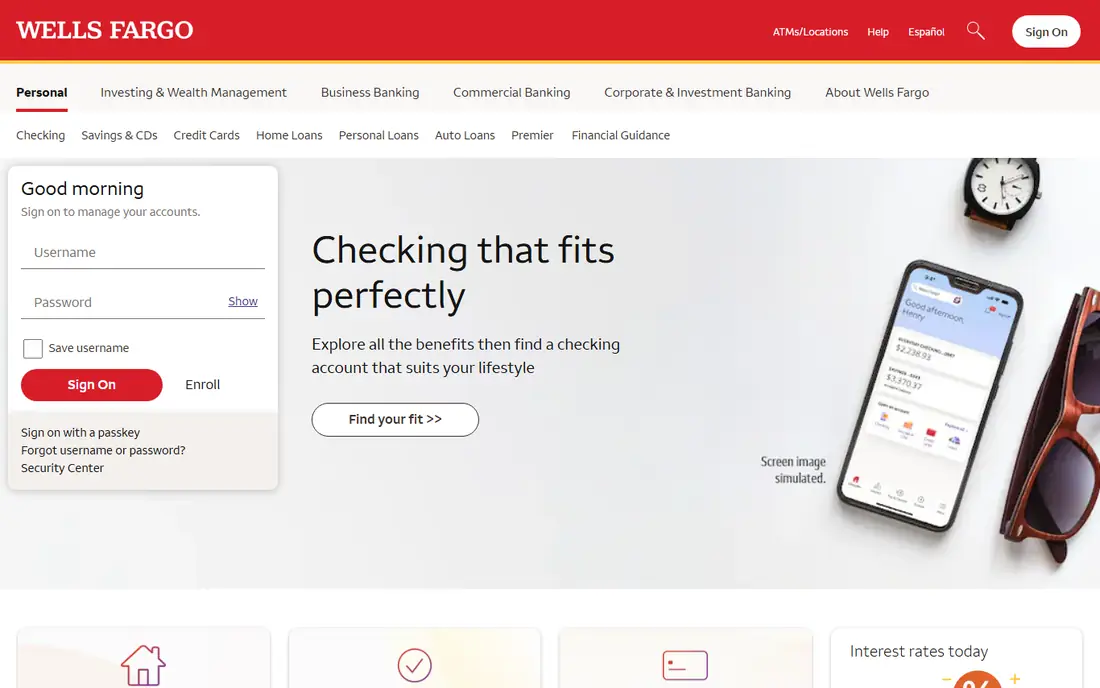
Wells Fargo is a practical choice for growing businesses, with an entry Simple Business Checking fee of 10 dollars per month in recent comparisons, waivable with a 500 dollar minimum balance in some listings. Its branch network supports cash deposits and in person service, and its SBA lending programs help small businesses that need term loans or lines of credit alongside checking. That combination of low entry fee and lending depth is useful for firms moving from startup to established operation.
Wells Fargo account names and terms have changed over time, so buyers should confirm the exact current account, fee waiver and transaction allowance in writing. A low monthly fee helps little if the business regularly exceeds free transaction or cash deposit limits, so compare those limits with actual monthly activity before opening the account.
- Low entry monthly fee
- Extensive branch network
- Strong SBA lending support
- Fee waivers and transaction limits need checking
- Service experience varies by branch
U.S. Bank offers a wide range of business checking tiers, from basic accounts for small firms to premium accounts for larger companies with treasury needs. Recent comparisons list monthly fees from zero to 30 dollars depending on the tier, with a 100 dollar minimum opening deposit on some accounts. That tiered range lets a business start small and move up without changing banks as transaction volume grows.
The range itself is the complication. Comparing U.S. Bank with a single fee figure is misleading, since the right tier depends on transactions, cash deposits and treasury use. Businesses should ask a banker to map their actual monthly activity to a tier, confirm the fee waiver rules and check overdraft and wire fees, which can be high on some accounts.
- Broad business account tiers
- Strong customer service reputation
- Treasury and payment options
- Higher tiers carry higher fees
- Fee schedules vary by account and state
PNC Bank suits businesses in its service region that want solid business checking plus treasury and payment services as they grow. Its entry business checking fee is listed at 12 dollars per month in recent comparisons, with several waiver routes including linked merchant services. PNC also offers treasury management, lending and business credit cards, which helps firms that want more than a basic checking account from one bank.
PNC branch coverage is not nationwide in the same way as Chase or Bank of America, so businesses with staff or customers across many states should check branch and ATM access first. Digital banking covers much of daily banking, but cash deposit needs still depend on physical locations, so map those needs before choosing PNC.
- Business checking from 12 dollars per month in comparisons
- Treasury management options
- Merchant services links
- Branch footprint is regional, not nationwide
- Fee waivers vary by account
Capital One appeals to businesses that bank mainly on a phone or computer and want a clean digital experience. Recent comparisons list business checking fees of 15 or 35 dollars per month depending on account type, with waivers for qualifying balances or activity on some accounts. Its mobile tools, business credit cards and online account management suit firms with little need for frequent branch visits.
Cash handling is the limit. Capital One has fewer branches than Chase, Bank of America or Wells Fargo, so cash heavy businesses may find deposits and in person service less convenient. Businesses should confirm cash deposit options and fees, and test the mobile app with their actual payroll and payment workflows before switching.
- Strong mobile and digital banking
- Business accounts from 15 dollars per month in comparisons
- No fee options on some accounts with qualifying activity
- Branch network is smaller than the largest banks
- Fee waivers need qualifying activity
Truist, formed from the merger of BB and T and SunTrust, offers integrated business banking, lending and treasury services for small and mid sized companies. Its Dynamic Business account is cited in comparisons for 500 free combined transactions per month, which suits businesses with higher check and deposit volumes. Truist also offers business credit cards, lending and wealth services for owners who want several needs handled by one bank.
Pricing varies by tier and market, so buyers should get a written fee schedule for the exact account offered. Truist branch strength is greatest in the Southeast and Mid Atlantic, so businesses elsewhere should check digital and ATM access. As with other large banks, the total cost depends on transactions, cash deposits, wires and lending, not on the monthly fee alone.
- Formed from BB and T and SunTrust merger
- Integrated business banking and lending
- Dynamic Business account with generous transaction allowance
- Pricing is quote and tier dependent
- Branch footprint is strongest in the Southeast and Mid Atlantic
TD Bank is a strong regional choice for businesses on the East Coast, with business checking listed from 10 dollars per month in recent comparisons and a reputation for convenient hours and service. Its branch network suits businesses that deposit cash, need in person help or serve customers in its footprint. TD also offers business lending, credit cards and treasury services for growing firms.
The geographic limit is real. Outside the East Coast, TD branch access falls away, so national businesses should not choose it for branch coverage alone. Digital banking helps, but cash and in person needs still matter, so confirm the current fee waiver rules and transaction allowances for the exact account before opening.
- Business checking from 10 dollars per month in comparisons
- Strong East Coast branch network
- Extended hours in many locations
- Geographic focus limits nationwide usefulness
- Higher tiers cost more
Citizens Bank stands out on this list for a business checking account listed at zero monthly fee with no waiver requirement in recent comparisons. Its Clearly Better Business Checking account suits small businesses that want to avoid a monthly maintenance fee without holding a large balance. Citizens also offers business lending, credit cards and treasury services for firms that grow beyond basic checking.
Regional coverage is the trade off. Citizens is strongest in the Northeast and Midwest, so businesses elsewhere should check branch and ATM access. Higher tier accounts carry fees, so firms with high transaction volumes should compare the right tier rather than assuming the zero fee account fits every business.
- Clearly Better Business Checking listed at zero monthly fee
- Business lending and treasury options
- Strong Northeast and Midwest presence
- Branch footprint is regional
- Higher tier accounts carry fees
How we picked these
We compared official bank business pages and recent business checking comparisons from October 2026, plus public fee schedules and treasury service descriptions. We favored established commercial banks with current US business banking in October 2026, a stated business checking product and lending or treasury services. Checking fees are published figures where available; commercial loan rates and many treasury fees are negotiated, so we do not invent a standard loan rate for these banks.
How to compare commercial banking fees and rates
Monthly checking fees are the most visible cost, but they are rarely the largest for an active business.
Map real monthly activity first
Count monthly transactions, cash deposits, wires, ACH payments and card volumes before comparing accounts. A zero fee account with a low free transaction limit can cost more than a 15 dollar account with generous allowances. Ask each bank to price the account on the business actual last three months of activity.
Ask about lending separately
Commercial loan rates depend on credit, collateral, term, loan size and the bank relationship, and they are quoted per business. Do not judge a bank lending offer on a checking fee page. Get a written term sheet that covers rate type, fees, covenants and prepayment terms, and compare at least two lenders.
Check treasury and payment fees
Treasury services such as positive pay, ACH origination, remote deposit and merchant processing carry their own fees. A bank with a low checking fee can still be expensive if treasury fees are high. Ask for a bundled quote that includes the treasury services the business actually uses.
Review the relationship, not just the account
Fee waivers, lending terms and service quality often improve with a broader relationship, including deposits, cards and treasury use. Ask what relationship benefits apply, what balance or activity triggers them and whether they survive if the business changes its account tier.
Please note: this article is general information only, not financial advice. Fees and rates change and vary by state, account and business, so confirm the current fee schedule and loan terms with the bank before opening an account or borrowing.
FAQ
What is the cheapest commercial bank for a small business?
On published entry checking fees, Citizens at zero dollars and Wells Fargo and TD Bank at 10 dollars per month are among the cheapest in recent comparisons. The cheapest overall bank still depends on transactions, cash deposits, wires and lending, so price the account on real activity rather than the headline fee alone.
Are commercial banking rates negotiable?
Yes, especially for loans, lines of credit and treasury services. Checking fees are more standardized, but loan rates, fees and covenants are usually negotiated per business based on credit, collateral and relationship. Larger deposits and broader relationships can improve terms.
What fees should a business watch besides the monthly fee?
Watch transaction overage fees, cash deposit fees above free limits, wire fees, overdraft fees, ACH fees and merchant processing costs. These can exceed the monthly fee for active businesses. Ask for a full fee schedule and a cost example based on actual activity.
Does a business need a branch bank, or is an online bank enough?
It depends on cash handling. Businesses that rarely handle cash can often use an online bank or a digital first account. Cash heavy businesses, such as retailers and restaurants, usually need branch access for deposits and change orders, which favors a bank with locations near the business.
How do I switch commercial banks without disrupting payments?
Open the new account first, move payroll and recurring payments in stages, keep the old account open until all outstanding checks and ACH items clear, and update customers and vendors in writing. Allow several weeks for the transition, and confirm that direct deposits and automatic payments have moved before closing the old account.