Best Cloud Security DAST Software in 2026: 8 Tools Compared
We compared the best cloud security dast software for scanning live web apps and APIs, so teams can catch runtime flaws before attackers find them first.

- Editor's choice
 Burp Suite
Hands-on testers and pros
Starts atSee websiteVisit portswigger.netFull review - Great alternative
 Invicti
Proof-based automated scanning
Starts atSee websiteVisit invicti.comFull review - Also consider
 Rapid7 InsightAppSec
Cloud apps with SOC integration
Starts atSee websiteVisit rapid7.comFull review
TL;DR:
- DAST tests running web apps and APIs from the outside, catching flaws that code review alone misses, like authentication and configuration issues.
- Cloud-ready DAST tools must handle modern JavaScript apps, REST and GraphQL APIs, and CI/CD pipelines, not just simple websites.
- The best tools prove findings with evidence and cut false positives, since noisy results get ignored by developers.
- Pair DAST with static testing and dependency scanning for fuller coverage, since no single method finds every flaw.
Quick comparison
| Tool | Best for | Starts at | Free plan? | |
|---|---|---|---|---|
| Burp Suite | Hands-on testers and pros | See website | Free trial | Visit |
| Invicti | Proof-based automated scanning | See website | Free trial | Visit |
| Rapid7 InsightAppSec | Cloud apps with SOC integration | See website | Free trial | Visit |
 Qualys WAS | Enterprise web app scanning at scale | See website | Free trial | Visit |
 Detectify | Attack surface plus DAST | See website | Free trial | Visit |
 StackHawk | API-first DAST for developers | See website | Free trial | Visit |
 Veracode DAST | Governed enterprise AppSec | See website | Free trial | Visit |
 OWASP ZAP | Free open-source baseline scanning | Free | Yes | Visit |
The best cloud security dast software
Dynamic application security testing, or DAST, probes a running application the way an attacker would, sending crafted requests and watching responses for vulnerabilities. For cloud apps and APIs, DAST belongs in the pipeline and in regular scheduled scans, catching runtime issues that only appear when the app is live. The tools below cover that job from practitioner to enterprise scale.
Burp Suite from PortSwigger is the standard toolkit for security testers. Its proxy lets testers intercept, inspect, and modify traffic between browser and app, while paid editions add automated scanning, CI integration, and collaboration. The extension library covers nearly every testing niche, from API fuzzing to authentication handling.
The catch is skill. Burp rewards experienced testers and can overwhelm beginners, and full automation for pipelines sits in higher editions. For a team with security talent, Burp is unmatched for depth. For a team that only wants scheduled scans with minimal hands-on work, Invicti or Detectify may fit better.
- Industry-standard manual testing toolkit
- Powerful automated scanner in paid editions
- Huge extension ecosystem
- Needs skilled testers to get full value
- Enterprise automation costs more
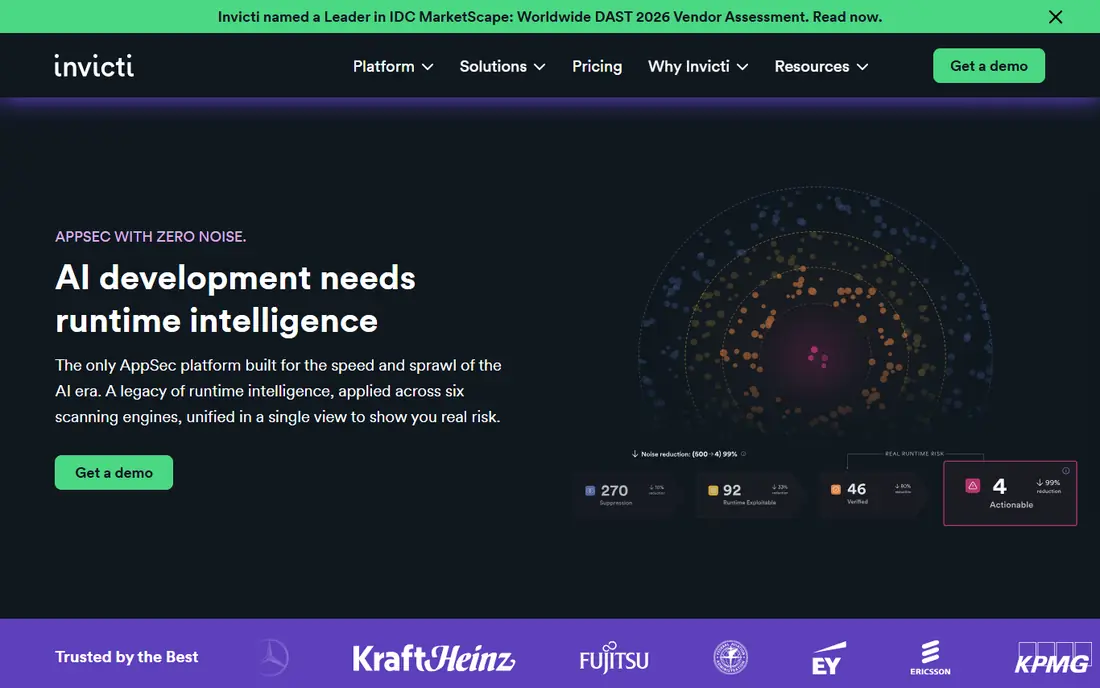
Invicti, formerly Netsparker and now paired with Acunetix, leads on automated accuracy. Its proof-based scanning safely confirms many vulnerabilities with evidence, so developers spend less time chasing false alarms. It handles modern JavaScript apps, single-page applications, and APIs well, which matters for cloud workloads.
Pricing is quote-based, and Invicti is an automated scanner, not a manual testing replacement. Teams that run regular scans across many apps will value the accuracy and speed. Teams with one small app may find a lighter tool enough, but Invicti sets the bar for fleet scanning.
- Proof-based scanning cuts false positives
- Fast scans for JavaScript-heavy apps
- Strong API and SPA support
- Quote-based pricing
- Some teams still want manual testing alongside it
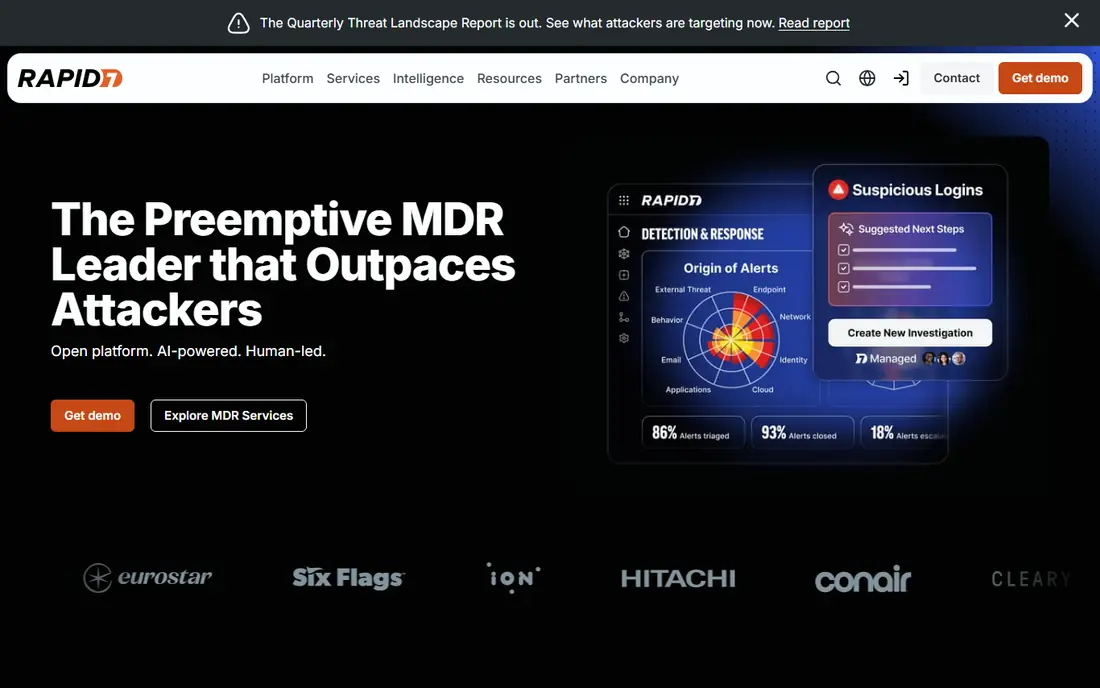
Rapid7 InsightAppSec is a cloud-focused DAST tool with strong support for REST and SOAP APIs, modern web apps, and CI/CD integration. Its value grows for teams already using Rapid7 for vulnerability management and detection, since findings join a shared security view. Attack replay features help developers understand and fix confirmed issues.
Standalone buyers gain less from the ecosystem effect, and pricing is quote-based. For a security team standardizing on Rapid7, InsightAppSec is a natural DAST choice. For a developer-led team, StackHawk may feel more native to the pipeline.
- Cloud-native DAST with API support
- Integrates with Rapid7 security operations tools
- Strong reporting
- Quote-based pricing
- Best value inside the Rapid7 ecosystem
Qualys Web Application Scanning, or WAS, suits enterprises scanning many cloud apps on a schedule. It discovers web apps, scans for vulnerabilities and misconfigurations, and reports alongside infrastructure findings in the Qualys platform. Compliance mapping helps teams prove coverage for audits.
The platform favors security teams over individual developers, and setup suits larger organizations. For an enterprise that already uses Qualys for infrastructure, adding WAS gives one view of risk. For a small dev team, a developer-first tool will feel faster.
- Scales across large app portfolios
- Integrates with Qualys vulnerability management
- Compliance reporting
- Enterprise pricing and setup
- Interface favors security teams over developers
Detectify pairs DAST with external attack surface monitoring, so teams see new subdomains and services as they appear, then scan them. Its crowdsourced payloads, built with input from security researchers, keep tests current against new vulnerability classes. Remediation guidance is clear enough for developers without security backgrounds.
Manual testers will still want Burp for depth, and pricing grows with the size of the monitored surface. For a team that worries about forgotten subdomains and cloud assets as much as known apps, Detectify covers both problems in one tool.
- Combines attack surface monitoring with DAST
- Crowdsourced payloads from researchers
- Clear remediation guidance
- Less deep for manual testing
- Pricing scales with attack surface size
StackHawk is the developer-first DAST pick. It runs in CI/CD pipelines, tests APIs and web apps on every deploy, and reports findings where developers already work. API-first design, including REST and GraphQL support, fits cloud teams whose apps are mostly APIs behind a front end.
Enterprise governance features are thinner than at Veracode or Qualys, and huge portfolios may need a broader scanner alongside it. For a product team that wants security testing on every pull request without slowing releases, StackHawk is the most pipeline-friendly option here.
- Built for CI/CD and developer workflows
- Strong API and GraphQL support
- Findings map to code and pipeline
- Less suited to large enterprise governance
- Smaller scanner breadth than Invicti for huge portfolios
Veracode Dynamic Analysis gives enterprises cloud-hosted DAST with unified reporting across static, dynamic, and dependency testing. Security leaders get one view of application risk, policy controls, and compliance evidence, without managing scan infrastructure. The platform suits organizations with formal AppSec programs.
Pricing is quote-based and policy setup takes effort, so small teams may prefer a simpler scanner. For an enterprise that needs governance, audit trails, and combined testing in one platform, Veracode is a leading choice.
- Cloud-hosted scanning with unified reporting
- Combines with SAST and SCA in one platform
- Strong compliance support
- Quote-based pricing
- Setup and policy tuning take time
OWASP ZAP, now supported through the Checkmarx ecosystem, is the free baseline scanner every team should know. It crawls and scans web apps and APIs, supports automation through CI/CD, and offers add-ons for many testing needs. For a team starting DAST, ZAP proves the concept at zero license cost.
Commercial tools beat ZAP on accuracy tuning, reporting polish, and support, and ZAP needs configuration to avoid noise. Use it as a baseline scanner in every pipeline, then add a commercial tool when your app portfolio or compliance needs grow. For students, small teams, and open-source projects, ZAP is essential.
- Free and open source
- Strong community and add-ons
- Good CI/CD automation for baseline scans
- Needs tuning to match commercial accuracy
- Support comes from the community
How we picked these
We compared official product pages, pricing information, and public reviews for DAST tools with real cloud and API scanning use in 2026. We favored tools that scan running apps and APIs, support modern JavaScript and CI/CD workflows, and provide evidence-backed findings. We left out pure static analysis tools and network vulnerability scanners without web app depth.
What to check before you buy
Start with your app inventory. List every public web app, API, and subdomain, including staging environments, and check that the tool can authenticate and scan each type. A scanner that cannot log in to your app will only test the public pages, missing the most sensitive areas.
Next, test false positives with a real app during the trial. Run a scan, count findings that developers confirm as real, and check how clearly each finding explains the fix. A tool with many false alarms will lose developer trust fast, no matter how cheap it is.
Finally, check pipeline fit. Can scans run automatically on deploy, break the build on critical findings, and report into your issue tracker? DAST only helps if it runs often, so automation matters more than a long feature list. Also confirm scan safety rules, since active scanning against production needs care to avoid disrupting live users.
DAST, SAST, and pen testing: how they fit together
Static testing reviews code before it runs, DAST tests the live app, and penetration testing adds human creativity to both. Use all three in proportion to risk: automated SAST and DAST on every release, plus periodic human testing for critical apps. No single method catches everything, and the combination is what mature teams rely on.
FAQ
What is the best cloud security dast software?
For automated accuracy, Invicti leads. For developer pipelines, StackHawk fits best. For enterprise scale, Qualys WAS and Veracode DAST lead, while Burp Suite remains the standard for hands-on testing and ZAP is the best free baseline.
What are the best dast tools for cloud security?
Invicti, Rapid7 InsightAppSec, Qualys WAS, Detectify, StackHawk, and Veracode DAST are the strongest cloud-ready options, each handling modern APIs and CI/CD pipelines. The best pick depends on team size, developer workflow, and governance needs.
What is DAST and how is it different from SAST?
DAST tests a running application from the outside, like an attacker, while SAST reviews source code before it runs. DAST catches runtime, authentication, and configuration flaws that code review misses, while SAST catches code-level issues earlier.
Can DAST scan APIs and single-page apps?
Yes, modern DAST tools support REST and GraphQL APIs and JavaScript-heavy single-page apps. Confirm authentication support and API definition imports, such as OpenAPI specs, for your stack during the trial.
How often should DAST scans run?
Run DAST on every major deploy for critical apps, plus scheduled scans at least monthly for the full portfolio. Continuous scanning suits cloud teams with frequent releases, while point-in-time scans suit smaller portfolios.