Choosing Cloud-Native SIEM Platforms in 2026: 5 Options Compared
Need the best Cloud-Native SIEM platforms? We compare 5 tools on cost, free access and who each suits. Short, factual notes on every option. Straight answers.
- Editor's choice
 Elastic Security
Open, adaptable SIEM and endpoint
Starts atPricing on requestVisit elastic.coFull review - Great alternative
 Splunk Enterprise Security
Unified TDIR in one product
Starts atPricing on requestVisit splunk.comFull review - Also consider
 Microsoft Sentinel
Microsoft-centric SOC teams
Starts atPricing on requestVisit azure.microsoft.comFull review
Direct answer
Elastic Security comes first here, mainly for open, adaptable SIEM and endpoint. For a different need, Splunk Enterprise Security covers unified TDIR in one system and Microsoft Sentinel covers Microsoft-centric SOC teams. Free plan facts and limits for all 5 tools follow. None of these vendors publish plan prices, so pricing is on request for every option.
TL;DR:
- Top of the list is Elastic Security, which targets open, adaptable SIEM and endpoint.
- Elastic Security, Palo Alto Networks Cortex XSIAM and the 3 others all need a premium plan or a trial, since no free plan is listed.
- For AI-driven SOC automation, Palo Alto Networks Cortex XSIAM is worth a look.
- No starting price is shown for any of the 5 tools, Elastic Security and Palo Alto Networks Cortex XSIAM included, so plan time for sales calls.
Last checked November 2026. Pricing on request: vendors did not publish plan prices when this guide was last checked (November 2026), so ask each vendor for a written quote.
Quick comparison
| Tool | Best for | Starts at | Free plan? | |
|---|---|---|---|---|
| Elastic Security | Open, adaptable SIEM and endpoint | Pricing on request | Not stated | Visit |
| Splunk Enterprise Security | Unified TDIR in one product | Pricing on request | Not stated | Visit |
| Microsoft Sentinel | Microsoft-centric SOC teams | Pricing on request | Not stated | Visit |
| Sumo Logic Cloud SIEM | Lean SOC teams wanting speed | Pricing on request | Not stated | Visit |
| Palo Alto Networks Cortex XSIAM | AI-driven SOC automation | Pricing on request | Not stated | Visit |
The full Cloud-Native SIEM platforms list
This LinkVetted guide covers 5 Cloud-Native SIEM platforms. Each profile lists a starting price, free plan details, strengths and drawbacks, so you can drop poor fits quickly.
Elastic Security makes the most sense for open, adaptable SIEM and endpoint. Elastic Security is described as an open agentic security operations system that comes with SIEM, endpoint security and native automation, with AI that displays its work.
Watch-outs: Self-management demands expertise.
Pick Elastic Security when adaptability, endpoint coverage and transparent AI behavior are priorities. Organizations seeking a completely managed experience may prefer a vendor-operated service. Elastic Security shows no starting price here, so confirm the cost on the vendor site. On free options: Not stated.
- AI features that display their reasoning
- Open system approach
- Configuration choices are broad
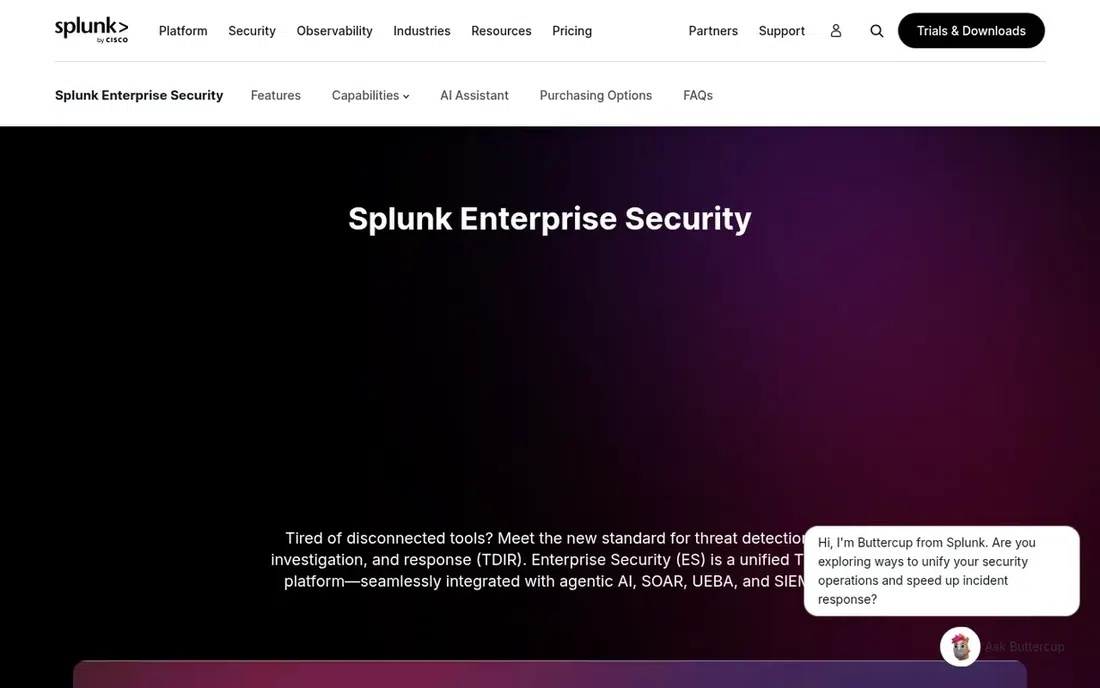
In short, Splunk Enterprise Security is for unified TDIR in one product. Organizations with established Splunk data pipelines commonly find it a natural extension of existing search and analytics work.
The main drawbacks: System breadth can mean complicated administration.
Pick something else if your priority is a narrow, light detection layer instead of a full TDIR suite. Pricing for Splunk Enterprise Security is not stated here, so ask the vendor for current figures. Trial and free access: Not stated.
- SOAR and UEBA
- Wide threat detection and investigation workflow
- Data volume planning is important
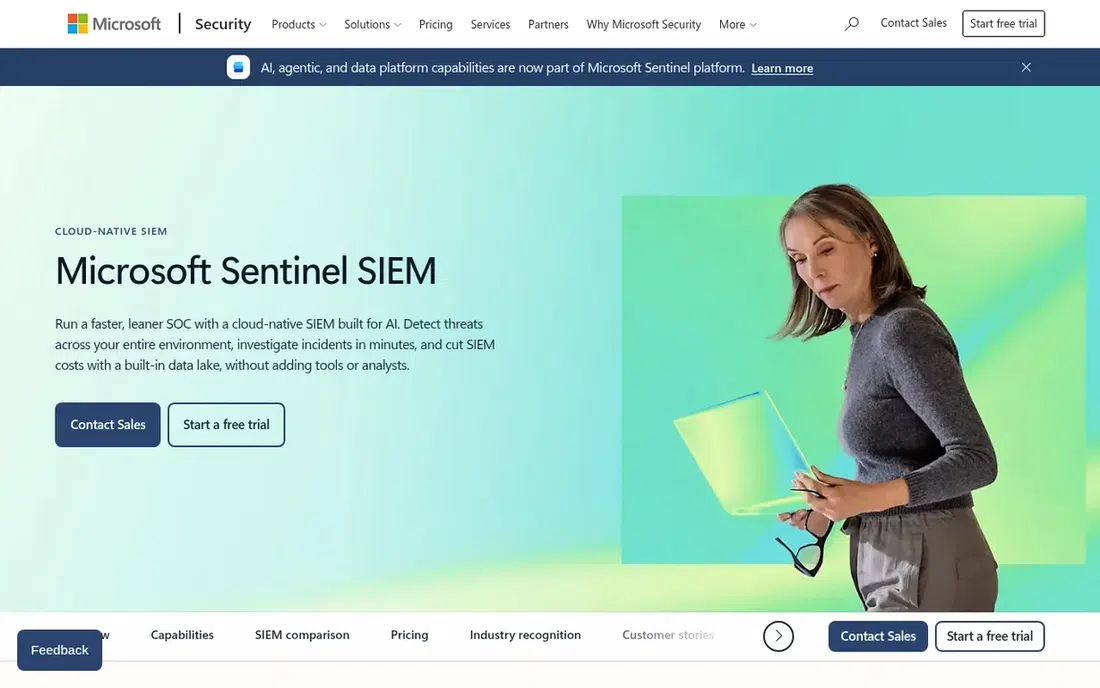
Microsoft Sentinel makes the most sense for Microsoft-centric SOC teams. Microsoft Sentinel is a cloud-native SIEM positioned for security operations centers that want quicker threat detection and automatic response.
Honest limits: Cost management needs active attention.
The primary limitation is ecosystem gravity: teams running largely non-Microsoft infrastructure may find integration and tuning work heavier. No starting price is listed for Microsoft Sentinel here; confirm pricing on the vendor site. Trial and free access: Not stated.
- Suits organizations already on Microsoft security
- Cloud-native SIEM made for SOC operations
- Deepest value inside the Microsoft ecosystem
Sumo Logic Cloud SIEM
Best for: Lean SOC teams wanting speed
Sumo Logic Cloud SIEM is built with lean SOC teams wanting speed in mind. Sumo Logic Cloud SIEM is aimed at modern SOC teams that want live threat detection, automatic investigation and a scalable cloud-native product with speed, context and action in mind.
From a buyer's view, as with most cloud SIEMs, detection content and log routing need tuning to avoid noise and excess data costs. Also, organizations with large legacy on-premises estates may need additional integration work. No starting price is listed for Sumo Logic Cloud SIEM here; confirm pricing on the vendor site. Free options: Not stated.
Drawbacks to consider: Best value with cloud log sources.
- Scalable cloud-native product
- Live threat detection
- Detection content needs tuning
Palo Alto Networks Cortex XSIAM
Best for: AI-driven SOC automation
For AI-driven SOC automation, Palo Alto Networks Cortex XSIAM is a natural candidate. Cortex XSIAM from Palo Alto Networks is a security analytics system that uses AI to centralize data, boost threat detection and accelerate incident response across the SOC.
The main drawbacks: Most solid fit within Palo Alto ecosystem.
In practice, teams with heterogeneous vendor stacks may need additional integration effort. Pricing for Palo Alto Networks Cortex XSIAM is not stated here, so ask the vendor for current figures. Free options: Not stated.
- Built to automate SOC workflows
- Accelerates incident response
- Product consolidation needs planning
What went into this list
Each tool was reviewed on what its vendor publishes: price, plan limits, core features and stated drawbacks. We did not run hands-on tests. Figures are shown as the vendors publish them. Billing terms, seat minimums and add-ons can change the real cost. Tools are placed by general fit for Cloud-Native SIEM platforms, with price clarity and free access as tie-breakers. A different team can reasonably rank them differently.
Things to verify first
- Ask each vendor, from Elastic Security to Palo Alto Networks Cortex XSIAM, for a written quote; none of them publishes a starting price.
- Read the limits listed for Elastic Security first: self-management demands expertise.
- Test how quickly Sumo Logic Cloud SIEM answers a pre-sales question; it hints at how support will feel later.
- Ask Splunk Enterprise Security whether prices are locked for the first term and what happens at renewal.
- Check how data leaves Palo Alto Networks Cortex XSIAM: formats, limits and whether exports are available on every plan.
FAQ
What should a smaller SOC prioritize?
Lean teams frequently benefit from quick onboarding, managed detection content and automatic investigation, which products like Sumo Logic Cloud SIEM highlight. Confirm support and onboarding help on the vendor site.
How do these platforms differ in automation?
Multiple systems, including Splunk Enterprise Security, Cortex XSIAM and Elastic Security, emphasize AI-assisted detection and automatic response. Match the automation model to how much change your SOC can absorb.
How are the tools for Cloud-Native SIEM platforms ordered?
The order follows typical fit for Cloud-Native SIEM platforms, with Elastic Security first and Palo Alto Networks Cortex XSIAM last, then price clarity and free access. It is editorial judgement, not a score, so another team could rank the tools differently.
Does any tool for Cloud-Native SIEM platforms here have a free plan?
A permanent free plan is not offered by Elastic Security, Palo Alto Networks Cortex XSIAM or the other tools here. Plan a short evaluation period instead.
Is Elastic Security the right pick for everyone comparing Cloud-Native SIEM platforms?
No single tool suits every team. Elastic Security comes first because it fits open, flexible SIEM and endpoint, while Splunk Enterprise Security suits unified TDIR in one platform and Microsoft Sentinel suits Microsoft-centric SOC teams. Match the tool to your own size, budget and workflow before deciding.
Can I try these options before paying?
Not by default. None of the tools, from Elastic Security to Palo Alto Networks Cortex XSIAM, lists a free plan or a free trial here, so ask each vendor for a demo before committing.
Sources
- https://www.elastic.co/security
- https://www.splunk.com/en_us/products/enterprise-security.html
- https://azure.microsoft.com/en-us/products/microsoft-sentinel
- https://www.sumologic.com/solutions/cloud-siem
- https://www.paloaltonetworks.com/cortex/cortex-xsiam