Best Bug Bounty Platforms in 2026: 9 Platforms Compared
Compare the best bug bounty platforms for companies and researchers, from HackerOne and Bugcrowd to niche Web3 and free options, with pricing and fit.
- Editor's choice
 HackerOne
Largest program choice
Starts atSee websiteVisit hackerone.comFull review - Great alternative
 Bugcrowd
Matched researchers and managed triage
Starts atSee websiteVisit bugcrowd.comFull review - Also consider
 Intigriti
European programs
Starts atSee websiteVisit intigriti.comFull review
TL;DR:
- HackerOne and Bugcrowd remain the largest general purpose platforms, with the widest program choice for researchers and the deepest triage support for companies.
- European platforms such as Intigriti and YesWeHack are strong picks for teams with EU customers, EU data rules, or a need for researchers based in Europe.
- Vetted platforms such as Synack and Cobalt trade open access for a smaller, screened researcher pool, which can mean fewer low quality reports.
- Open Bug Bounty is the standout free option, but it suits coordinated disclosure rather than a paid, managed bounty program.
- Budget for bounties and triage together, because the platform fee is only part of the total cost of running a program.
Quick comparison
| Tool | Best for | Starts at | Free plan? | |
|---|---|---|---|---|
| HackerOne | Largest program choice | See website | No | Visit |
| Bugcrowd | Matched researchers and managed triage | See website | No | Visit |
| Intigriti | European programs | See website | No | Visit |
 YesWeHack | European and global managed programs | See website | No | Visit |
 Synack | Vetted, high assurance testing | See website | No | Visit |
 Cobalt | Vetted pentest and bounty in one place | See website | No | Visit |
 Immunefi | Web3 and smart contract bounties | See website | No | Visit |
 Open Bug Bounty | Free coordinated disclosure | Free | Yes | Visit |
 HackenProof | Web3 and crypto focused programs | See website | No | Visit |
The best bug bounty platforms
We compared official platform pages, program models, triage options, and pricing structures to find options for both companies launching a program and researchers choosing where to hunt.
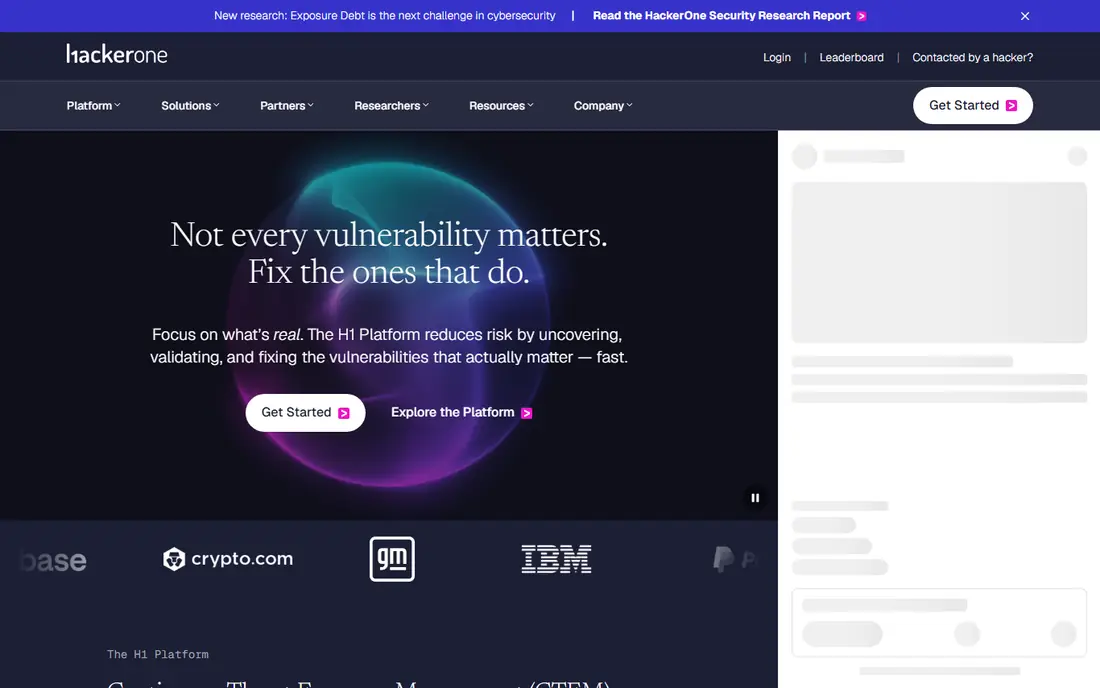
HackerOne is our pick for most companies that want a proven, general purpose bug bounty platform. Its community covers web apps, APIs, mobile apps, and cloud systems, so a company with a broad product surface can usually find researchers with relevant skills. The platform also supports vulnerability disclosure policies, private programs, and public launches, which lets a team start small and widen scope as its fix process matures.
The trade off is cost and volume. Pricing is not published as a simple monthly plan, and smaller teams should ask for a full quote that includes platform fees, bounty budget, and any managed triage. A popular program can also attract many reports, including duplicates and low severity issues, so internal staff still need time to review, reproduce, and fix findings.
- Huge researcher community
- Mature triage and workflow tools
- Public and private program options
- Pricing is quote based and can be high for small teams
- Large report volume needs internal follow up
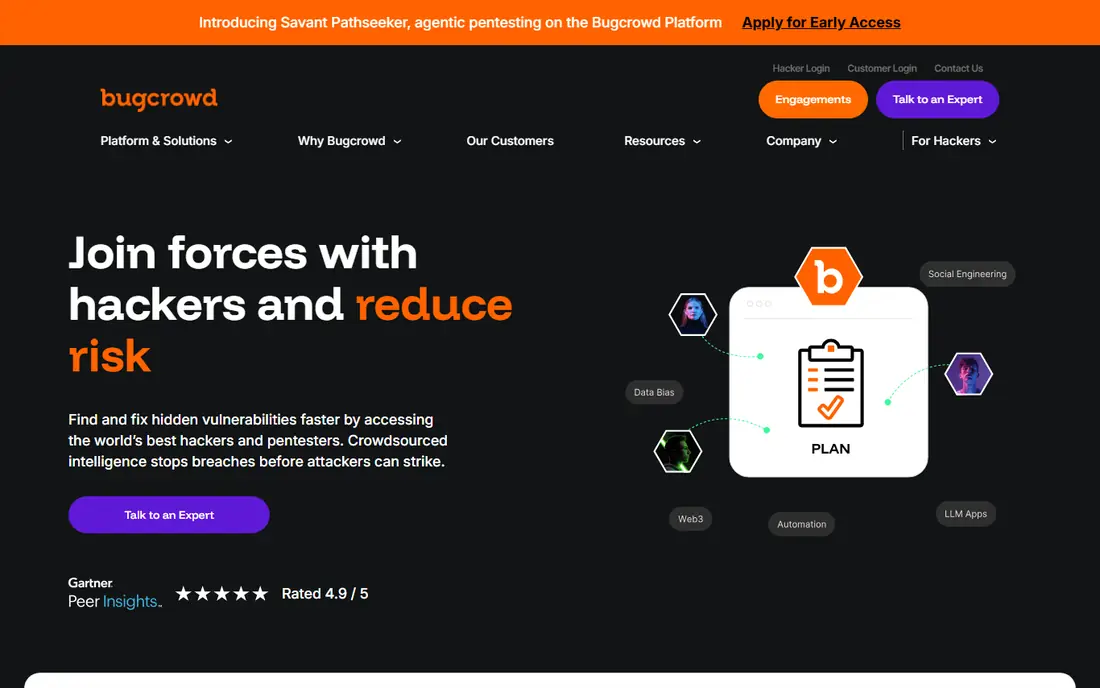
Bugcrowd suits companies that want help choosing the right researchers rather than opening the doors to everyone at once. Its matching approach groups researchers by skill, history, and trust, which can keep early programs focused and reduce noise. Managed triage is a real benefit here, because Bugcrowd staff can validate reports before they reach your engineers.
For researchers, Bugcrowd is a solid second home, especially for web and API work. Program payouts and scope vary by customer, so earnings depend on the programs you join rather than the platform alone. Companies should still budget for bounty payments on top of platform costs, and confirm what triage tier is included in their quote.
- Researcher matching by skill and trust level
- Managed triage options
- Strong API and web app coverage
- Quote based pricing
- Smaller public program list than HackerOne for some researchers
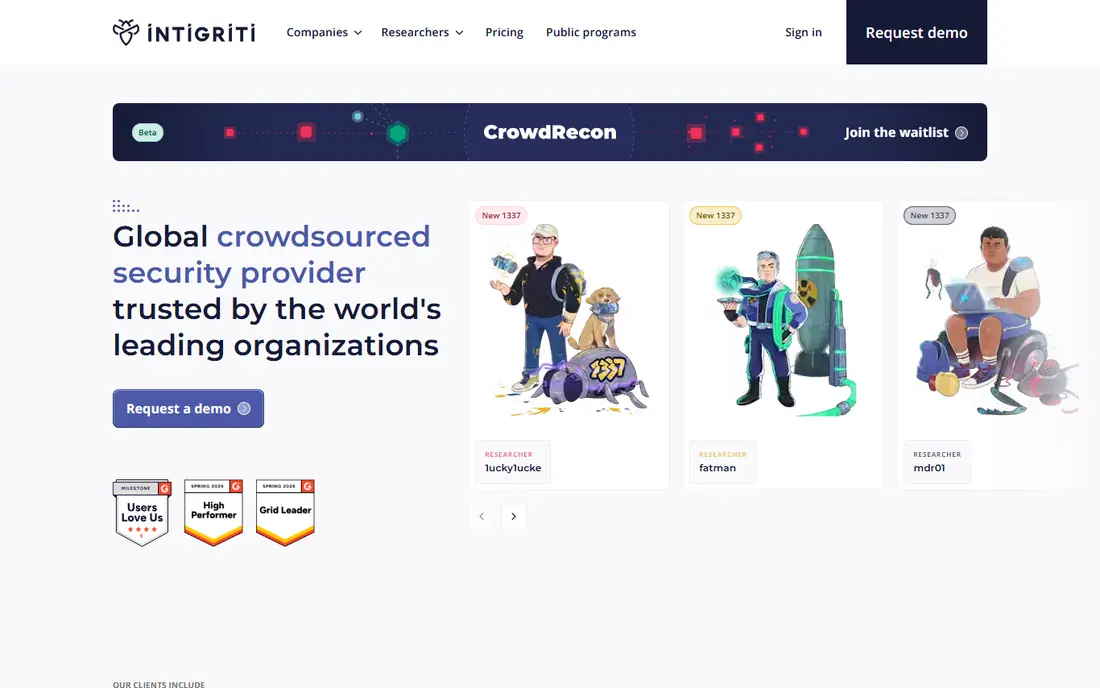
Intigriti is based in Europe and is a natural fit for companies serving European customers or operating under European data rules. Its platform publishes validation timeframes by severity, which helps teams plan how quickly reports should move from submission to decision. That clarity matters when security staff need to set expectations with product teams and with researchers.
Researchers who live in Europe, or who want less crowded programs, may find Intigriti appealing. Competition can be lower than on the biggest platforms, but program count is also lower, so hunters should check current live programs before committing time. Companies outside Europe can still use it, but should weigh whether its researcher mix matches their target systems.
- Strong European researcher community
- Clear validation times by severity
- GDPR aware setup for EU teams
- Fewer programs than the largest global platforms
- Less suited to US only teams with no EU presence
YesWeHack offers managed bug bounty and disclosure programs with a strong base in Europe and growing global coverage. For a company that wants a guided launch, its team can help with scope, reward tables, and researcher selection, which reduces the risk of a public launch before internal processes are ready. Private programs are a sensible first step for teams that are new to crowdsourced testing.
The main drawback is scale. It does not yet match the largest platforms for sheer program count, so researchers may find fewer live targets at any one time. Companies should ask about researcher availability in their specific technology stack, and about how triage is staffed during holidays and peak periods.
- Managed programs and triage
- European focus with global reach
- Private program options
- Smaller community than HackerOne and Bugcrowd
- Pricing is quote based
Synack is different from open bounty platforms because its researchers are vetted and invited, and testing runs on a continuous model rather than a purely open queue. That structure appeals to companies in finance, healthcare, and government adjacent sectors where trust, background checks, and controlled access matter as much as finding bugs. Reports also tend to arrive with more context, because researchers work within defined missions.
The catch is access and price. Researchers cannot simply sign up and start hunting, and companies should expect a subscription style quote rather than a low cost entry plan. For a small startup with a single web app, an open platform may offer better value. For a larger team that needs assurance and steady coverage, Synack is worth a conversation.
- Highly vetted researcher pool
- Continuous testing model
- Strong fit for regulated and government adjacent work
- Invite only for researchers
- Subscription pricing can be costly
- Less open than crowd platforms
Cobalt sits between a traditional pentest firm and an open bounty platform. Companies buy credits and schedule testing with vetted pentesters, then keep findings, retests, and reports in one platform. That model suits teams that want scheduled depth, such as a pre release pentest, plus ongoing testing without managing a separate vendor for each engagement.
It is not the best pick for a company that wants thousands of independent researchers probing a public program around the clock. Cobalt also requires a sales discussion to scope credits and timelines, so budgeting takes longer than picking a published plan. Teams that value consistent testers and clean reporting, however, often prefer this structure.
- Combines pentesting and bounty style testing
- Vetted pentesters
- Credit based model for flexible scheduling
- Not a fully open crowd
- Pricing needs a sales conversation
- Smaller researcher pool than open platforms
Immunefi is the leading choice for blockchain projects, DeFi protocols, and other Web3 teams. Its programs focus on smart contracts, bridges, wallets, and chain infrastructure, and critical bounties in this space can be far larger than typical web app payouts. For a project holding user funds on chain, that incentive structure is a genuine security feature, not a marketing point.
Outside Web3, Immunefi is not a good fit. Traditional web, mobile, and cloud programs belong on general platforms instead. Researchers also need real smart contract skills, including auditing and exploit reasoning, before these programs pay off. Companies should confirm payout currency, custody, and tax handling before launch, since crypto payouts add admin work.
- Largest focus on blockchain and smart contract programs
- Large bounty pools for critical Web3 flaws
- Crypto native payouts
- Narrow fit outside Web3
- Smart contract work needs specialist skills
- Bounty values swing with token prices
Open Bug Bounty is a nonprofit platform for coordinated vulnerability disclosure, and it is free for both researchers and website owners. A company that is not ready to pay bounties can still publish a safe harbor style disclosure route, receive reports, and coordinate fixes in public or private. That alone is a step up from having no reporting channel at all, which often leads to researchers posting flaws publicly without warning.
It is not a replacement for a paid program. There is no bounty budget, no managed triage team, and no promise of researcher volume. Small site owners and open source projects get the most value here, while larger companies should treat it as a first step toward a formal disclosure policy and, later, a paid program.
- Free to use
- Nonprofit coordinated disclosure model
- Good starting point for a disclosure policy
- No paid bounty management
- No guaranteed researcher pool
- Limited triage support
HackenProof focuses on Web3, crypto exchanges, wallets, and blockchain infrastructure, with managed bounty programs and related security services. A crypto team that already uses Hacken for audits may find it convenient to run its bounty program with the same vendor, since scope and past findings carry over more easily. Managed triage also helps teams that lack a large internal security staff.
The limits mirror Immunefi, though on a smaller scale. Traditional companies will find fewer relevant researchers here, and pricing requires a quote. Web3 teams should compare HackenProof and Immunefi on program reach, payout handling, and triage speed for their specific chain or product type before choosing.
- Crypto and Web3 program focus
- Managed triage
- Bug bounty and audit related services in one vendor
- Narrower audience than general platforms
- Quote based pricing
- Less fit for traditional enterprise apps
How we picked these
We compared official platform pages, program types, researcher models, triage options, and pricing transparency. We favored platforms that are active in 2026, publish clear program rules, and cover a distinct need, such as global scale, European focus, vetted testing, Web3, or free disclosure. We left out platforms with no clear live program list or no public company information, because a bounty platform is only useful if researchers and companies can actually use it.
What to check before you launch a program
Start with a vulnerability disclosure policy before you offer money. A clear policy tells researchers what is in scope, what is out of scope, how to report safely, and what safe harbor they can expect. Without it, even a generous bounty can attract reports you cannot use, or create legal friction when a researcher tests a system in a way you did not intend.
Set scope, rewards, and triage in writing
Publish asset lists, forbidden test types, and reward ranges by severity. Decide who triages reports, how fast you will respond, and how fixes and retests will be tracked. A private program with a small invited group is a safer first launch than a public program, because you can test your own response times before volume rises.
Match the platform to your stack
A Web3 protocol, a hospital system, and a consumer web app do not need the same researcher pool. Check recent programs in your technology area, ask vendors for researcher availability, and confirm support for your languages, frameworks, and cloud setup. Also confirm data handling, especially if reports may include customer data or logs.
Budget the full program, not just the fee
Add platform fees, bounty payouts, triage time, engineering fix time, and retest effort. Low reward tables attract low effort reports, while high tables without triage capacity create a backlog. Review reward data from similar programs, then set a budget you can sustain for at least a year.
FAQ
What is a bug bounty platform?
A bug bounty platform connects companies with independent security researchers who test systems for flaws in exchange for rewards. The platform hosts program rules, scope, submissions, triage, and payouts, so companies do not have to build that workflow themselves. Researchers choose programs that match their skills and earn bounties for valid, in scope findings.
How much does a bug bounty program cost?
Costs vary widely and usually combine a platform fee with a bounty budget. Open disclosure through a nonprofit can be free, while managed enterprise programs are quote based and can run well into five or six figures per year once bounties are included. Ask each vendor for a total cost estimate that separates platform fees, triage, and expected bounty spend.
Do researchers need experience to join?
No, but experience helps. Open platforms let new researchers join and learn on lower severity programs, while vetted platforms such as Synack require screening and a track record. New hunters should start with clear scope, read past disclosed reports, and focus on one vulnerability class at a time.
Are bug bounty platforms safe for companies?
They are safer than having no reporting channel, provided scope and rules are clear. A written policy, safe harbor language, rate limits, and forbidden test types reduce risk. Companies should still keep sensitive systems out of scope until their fix process is proven, and should never invite testing on production data without controls.
What is the difference between a bug bounty and a pentest?
A pentest is a time boxed engagement by a defined team, often with a fixed scope and report date. A bug bounty is ongoing and open to many researchers, which can surface flaws a single team would miss. Many companies use both, with pentests for scheduled assurance and bounties for continuous coverage.
Which bug bounty platform is best for a small startup?
HackerOne or Bugcrowd are the usual starting points because of program tooling and researcher reach, while Open Bug Bounty suits teams that only need a disclosure channel for now. Start private, keep scope narrow, set modest but fair rewards, and expand only after your team can triage and fix reports promptly.