Best Brand Intelligence Software in 2026: 8 Tools Compared
Compare the best brand intelligence software in 2026, with social listening, media monitoring, sentiment, and competitor tracking for brands, plus setup tips.
- Editor's choice
 Brandwatch
Enterprise consumer intelligence
Starts atSee websiteVisit brandwatch.comFull review - Great alternative
 Meltwater
PR and media monitoring
Starts atSee websiteVisit meltwater.comFull review - Also consider
 Brand24
Small and mid-sized brands
Starts at$199 per monthVisit brand24.comFull review
TL;DR:
- Brandwatch, Meltwater, and Talkwalker suit large brands that need broad media coverage and deep research, while Brand24 and Awario suit smaller teams on tighter budgets.
- Mention caps and source coverage matter more than dashboard polish, so check whether your key channels and languages are covered before you buy.
- AI summaries save time, but human review still matters for sarcasm, local slang, and crisis decisions.
- Start with a free trial and track your own brand plus two competitors for two weeks before committing to an annual plan.
Quick comparison
| Tool | Best for | Starts at | Free plan? | |
|---|---|---|---|---|
| Brandwatch | Enterprise consumer intelligence | See website | No | Visit |
| Meltwater | PR and media monitoring | See website | No | Visit |
| Brand24 | Small and mid-sized brands | $199 per month | Free trial | Visit |
 Mention | Real-time alerts | See website | Free trial | Visit |
 Talkwalker | Visual and social analysis | See website | Free trial | Visit |
 Sprout Social | Social teams | See website | Free trial | Visit |
 Awario | Budget monitoring | $29 per month | Free trial | Visit |
 YouScan | Visual mentions | See website | Free trial | Visit |
The best brand intelligence software
Brand intelligence software turns scattered mentions into decisions. It tracks what people say on social media, news sites, blogs, forums, and review platforms, then adds sentiment, reach, and trend analysis so teams can spot a crisis early, measure a campaign, and watch competitors. The eight tools below cover that range, from budget trackers to enterprise research platforms.
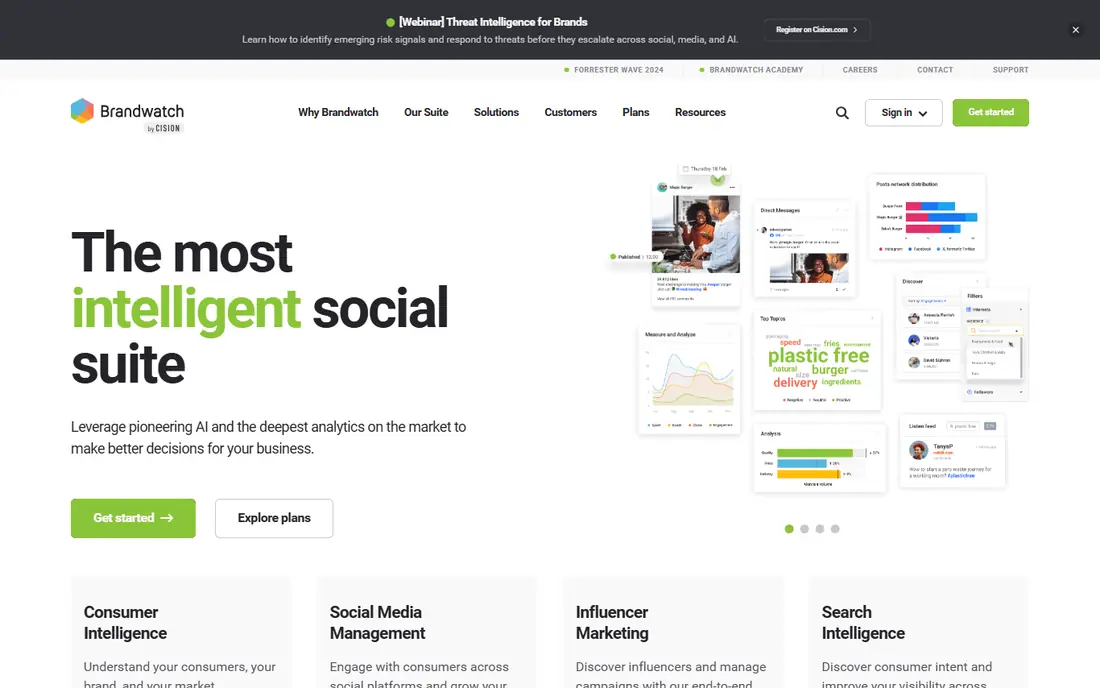
Brandwatch is the choice for large brands and agencies that need serious research depth. It pulls from a very large set of social, news, blog, forum, and review sources, and it offers historical data that lets analysts compare a current spike with past campaigns or crises. Its AI tools summarize themes, detect image and logo mentions, and surface unusual changes in volume or sentiment, which helps research teams move from raw mentions to a clear story.
The trade-off is cost and complexity. Pricing is quote-based and typically sits at enterprise levels, and new users often need training to build good queries and dashboards. Small teams will find the platform more than they need, and they may pay for depth they rarely use. For a global brand with multiple markets and a dedicated insights team, that depth is the point, and Brandwatch remains a benchmark in this category.
- Very broad source coverage
- Deep historical data
- Strong AI insights
- Quote-based pricing
- Setup and training take time
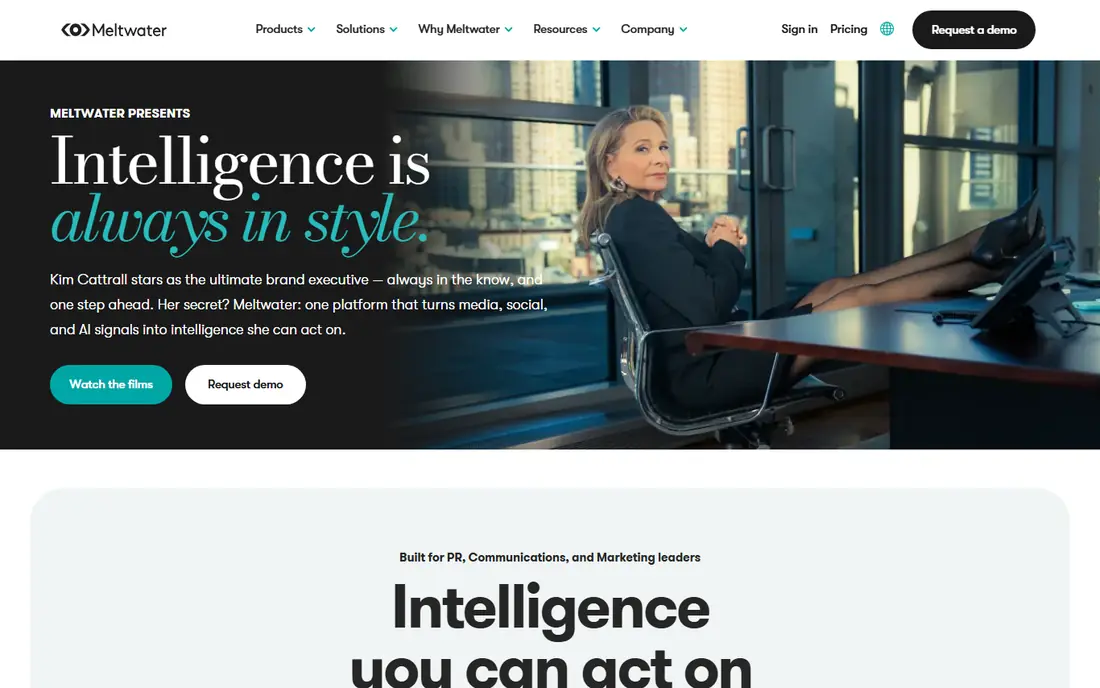
Meltwater blends social listening with traditional media monitoring, including news, broadcast, and print coverage that social-only tools miss. That mix suits PR teams that need to show executives both press coverage and social reaction in one report. The platform also includes a media database for outreach, sentiment analysis, and dashboards that track share of voice against competitors over time.
Pricing is quote-based, and annual contracts are standard, so budgeting requires a sales conversation and a clear estimate of mention volume. Implementation can take weeks for larger accounts, especially when custom dashboards and alerts are involved. If your brand lives mainly in press coverage and broadcast, Meltwater is a strong fit. If your conversation is mostly social, a cheaper social-first tool may give you similar value.
- Strong traditional media coverage
- Journalist database
- PR reporting
- Quote-based pricing
- Annual contracts are common
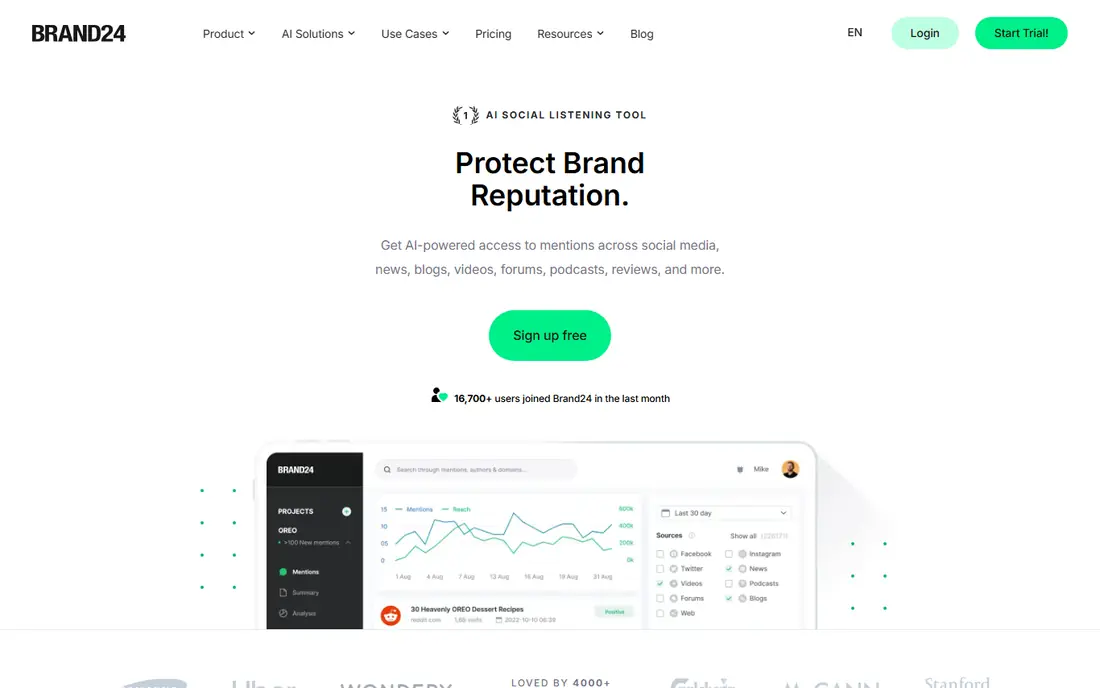
Brand24 hits a useful middle ground between budget trackers and enterprise suites. It monitors social media, news, blogs, forums, podcasts, and review sites, then adds AI summaries, sentiment scoring, and alerts when mention volume spikes unexpectedly. Setup takes minutes rather than weeks, and the interface is clear enough for a small marketing team to use without a dedicated analyst. Recent additions include tracking how AI chat tools mention brands, a useful early signal as search habits change.
The main limit is mention volume. Lower tiers cap the number of mentions you can collect, so a brand with heavy social traffic may need a higher plan sooner than expected. Reporting is good for regular marketing use, but it is less deep than Brandwatch for academic-style research. For most growing brands, Brand24 is our pick for value, provided you size the tier to your real mention count.
- Accessible pricing for its depth
- AI insights and anomaly alerts
- Fast setup
- Mention limits on lower tiers
- Enterprise reporting is lighter
Mention focuses on speed. Its alerts arrive quickly when your brand, product, or competitor is named online, which helps community managers respond before a complaint spreads. Boolean search lets teams build precise queries, filter by source and language, and separate press mentions from social chatter. The platform also tracks review sites, which matters for local and consumer brands where ratings shape buying decisions.
Pricing has moved upward in recent years, and the most useful reporting features sit in higher tiers. Sentiment analysis is serviceable but not as nuanced as the research tools at the top of this list. Teams that value fast alerts and simple monitoring over deep analysis will like Mention, while research-heavy teams may prefer Brandwatch or Talkwalker despite the higher learning curve.
- Fast alerts
- Boolean search
- Broad web and social coverage
- Higher tiers are costly
- Sentiment tools are basic in places
Talkwalker, now part of Hootsuite, is known for visual listening. It can spot logos and objects in images and video, even when the brand name is not written in the post, which matters for fashion, food, sports, and consumer goods brands whose products appear in photos. Coverage spans social, news, blogs, forums, and broadcast sources, and its AI tools summarize themes and sentiment across large mention sets.
As with other enterprise tools, pricing is quote-based, and onboarding takes more effort than a self-serve tracker. Smaller brands may find the platform too large for their needs, and the full value only shows when someone builds proper queries and reviews visual results regularly. For brands where images drive conversation, Talkwalker offers a capability that text-only tools cannot match.
- Image and video recognition
- Broad global coverage
- Strong dashboards
- Quote-based pricing
- Setup can be involved
Sprout Social appeals to teams that manage social publishing, engagement, and listening from one login. Its listening tools track keywords, hashtags, and competitors across major social networks, with sentiment and trend reports that feed directly into content planning. Approval workflows, assignment, and shared inboxes help larger social teams stay organized, and reports are polished enough to share with leadership without extra design work.
The catch is that full listening is not included in every base plan, and per-seat pricing means costs grow as the team grows. Sprout is less strong on traditional press and broadcast than Meltwater, so PR-heavy teams may need a second tool. For a social-first brand that already publishes through Sprout, adding listening keeps the workflow simple and avoids switching between platforms all day.
- Publishing plus listening in one place
- Clean reports
- Team workflows
- Listening is an add-on cost
- Per-seat pricing adds up
Awario is the budget pick for small brands that need real monitoring without an enterprise bill. It tracks social, news, blogs, forums, and the web, with Boolean search, sentiment scoring, and alerts for new mentions. It also includes lead-finding features that surface people asking for recommendations in your category, which small businesses can use for outreach. Setup is quick, and the entry price makes it easy to test brand monitoring for a month or two.
Coverage and polish lag behind the larger platforms, and some social sources are less complete. The interface is functional rather than beautiful, and reporting is basic compared with Brandwatch or Talkwalker. If your budget is tight and your mention volume is modest, Awario gives you most of the core value at a fraction of the cost, and you can upgrade later when volume justifies it.
- Low starting price
- Boolean search
- Leads and influencer discovery
- Coverage is narrower than enterprise tools
- Interface is plain
YouScan specializes in visual and text listening with a focus on sentiment depth. It detects logos and objects in images, analyzes sentiment in context, and builds trend reports that show how conversation changes over time. Teams in retail, hospitality, and consumer goods use it to see how products appear in real customer photos, not just in written reviews. The platform also supports audience analysis, which helps marketers understand who is talking, not just what they say.
Pricing is quote-based and sits above budget tools, so it fits mid-sized and larger brands better than solo operators. Setup and query design take some care to get clean results. If visual mentions matter to your brand, YouScan is a strong specialist choice, and its sentiment detail can justify the price for teams that act on weekly trend reports.
- Strong visual listening
- Detailed sentiment
- Trend analysis
- Quote-based pricing
- Less suited to very small budgets
How we picked these
We compared official product pages, pricing information, source coverage, and public documentation for established brand monitoring and intelligence platforms, and we favored tools with current social and web coverage, sentiment analysis, alerts, and reporting. We excluded one-off alert tools without analysis features and tools without a clear business product. Prices shown are vendor-published starting prices where available, and we used See website where pricing is quote-based.
How to choose brand intelligence software
Start with sources, not features. List the places your customers actually talk, including the social networks, forums, review sites, and news outlets that matter in your market, and confirm each tool covers them. Then check mention limits, because a low monthly cap can force an upgrade mid-campaign. Language coverage matters too, especially for brands with customers in more than one country.
Next, test query quality. Build a query for your brand, a common misspelling, and a competitor, then review a sample of results for false positives. A tool that returns noisy data will waste analyst time no matter how pretty its charts look. Finally, decide who will act on the data. If no one owns weekly reporting and crisis alerts, even the best platform will sit unused, so match the tool to the team you actually have.
Questions to ask in a trial
Ask how historical data works, whether alerts can go to email or messaging tools, and how sentiment is calculated for your industry. Check export options, because you may need raw mentions for deeper analysis. Ask about data retention and privacy practices, especially if you monitor mentions that include personal details.
Avoiding common buying mistakes
Do not buy on mention count alone, since a high cap with poor source coverage is less useful than a smaller cap with clean data. Avoid long contracts before a trial, and confirm what happens when you exceed your mention limit. If a vendor cannot show you results for your own brand during a demo, treat that as a warning sign.
FAQ
What is the best brand intelligence software for a small business?
Brand24 and Awario are strong small-business options, because both offer social and web monitoring, sentiment, and alerts at prices that fit a small marketing budget. Brand24 gives more depth and AI summaries, while Awario costs less at entry level.
What are the best brand intelligence tools for PR teams?
Meltwater and Brandwatch suit PR teams best, because both combine press, broadcast, and social coverage with reporting that executives can read. Meltwater leans toward media relations and outreach, while Brandwatch leans toward consumer research and trend analysis.
How much does brand intelligence software cost?
Entry prices range from about $29 per month for Awario to quote-based enterprise plans that can run into thousands per month for Brandwatch, Meltwater, and Talkwalker. Mention volume, seats, historical data, and add-ons all affect the final quote, so get pricing for your real usage.
Can brand intelligence tools track competitors?
Yes, most tools on this list let you track competitor names, products, and campaigns alongside your own brand, with share-of-voice reports that compare mention volume and sentiment. Set up competitor queries during your trial to check data quality before you commit.
Do these tools monitor AI search results?
Some tools, including Brand24, have added tracking for mentions in AI chat tools, and others are adding similar features. Coverage is still early and varies by vendor, so ask for a live example with your brand name if AI visibility matters to your strategy.
Is social listening the same as brand intelligence?
Social listening is one part of brand intelligence, focused on social conversation. Brand intelligence is broader, adding news, forums, reviews, and sometimes broadcast, plus analysis of trends, audiences, and competitors that helps teams make decisions beyond day-to-day social replies.