Best Brain Game Apps in 2026: 8 Apps Compared
Compare the best brain game apps for memory, focus, and speed in 2026, with free plans, pricing, daily workouts, and honest pros and cons before you subscribe.
- Editor's choice
 Lumosity
Broad daily brain workouts
Starts at$14.99 per monthVisit lumosity.comFull review - Great alternative
 Elevate
Reading, writing, and math skills
Starts at$9.99 per monthVisit elevateapp.comFull review - Also consider
 Peak
Fun, gamified daily training
Starts atSee websiteVisit peak.netFull review
TL;DR:
- Lumosity and Peak offer the widest mix of short daily games, while BrainHQ leans more toward research-backed exercises for processing speed.
- Elevate is the strongest pick if you want practical skills like reading, writing, and math rather than abstract puzzles alone.
- Most apps offer a free tier, but the free version usually limits you to a few games a day, so check the daily limit before you pay.
- CogniFit and NeuroNation stand out for structured assessments and adaptive training plans that adjust as your scores change.
- Brain games can build a useful daily habit, but they are not a substitute for sleep, exercise, or medical care for memory concerns.
Quick comparison
| Tool | Best for | Starts at | Free plan? | |
|---|---|---|---|---|
| Lumosity | Broad daily brain workouts | $14.99 per month | Yes | Visit |
| Elevate | Reading, writing, and math skills | $9.99 per month | Yes | Visit |
| Peak | Fun, gamified daily training | See website | Yes | Visit |
 BrainHQ | Processing speed and research-backed training | $14 per month | Free trial | Visit |
 CogniFit | Cognitive assessment and targeted training | See website | Yes | Visit |
 NeuroNation | Memory and concentration | See website | Yes | Visit |
 Memorado | Guided daily brain workouts | See website | Yes | Visit |
 Brainwell | Simple free daily workouts | Free | Yes | Visit |
The best brain game apps
These eight apps cover memory, attention, speed, language, and problem solving, with options for casual players and for people who want a structured plan.
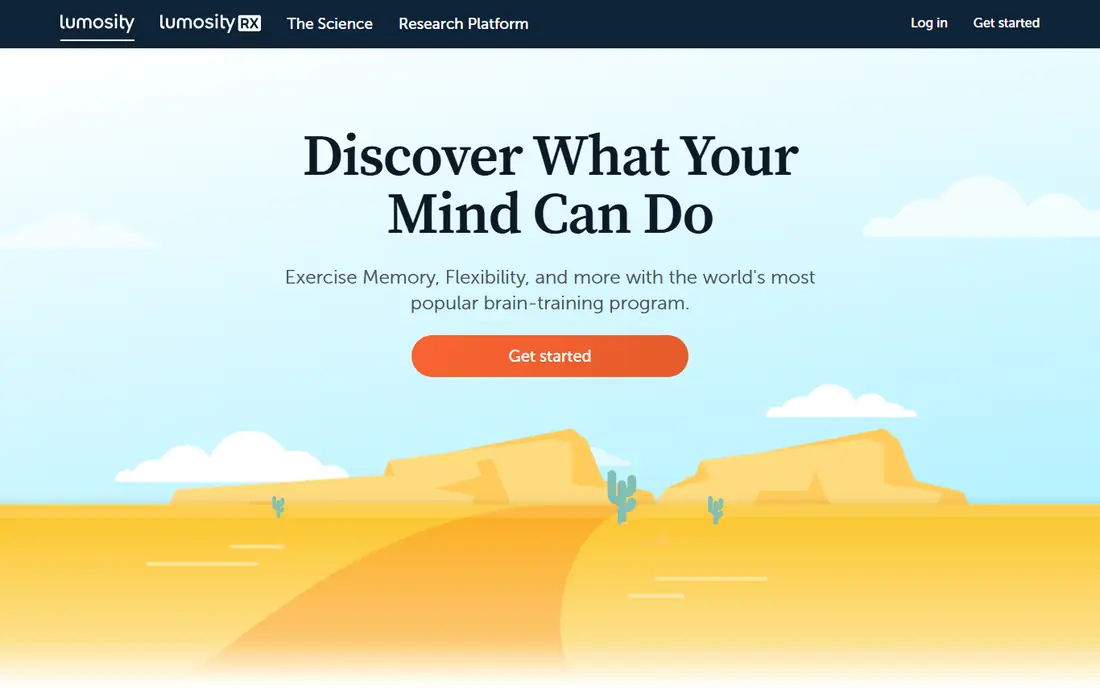
Lumosity is the best-known name in this group, and its size is the main draw. You get a wide set of short games for memory, attention, flexibility, speed, and problem solving, arranged into a daily workout so you do not have to choose each time. The performance index gives you a simple way to see trends across weeks, even if day to day scores move up and down.
The trade-off is that the free version is a taster rather than a full program. You can play a small number of games per day, and the full library stays behind the subscription. If you like variety and want one app to cover several skills, Lumosity is a solid first try. If you only want one type of game, a more focused app may fit better.
- Large library of games
- Daily workout plans
- Clear progress tracking over time
- Free tier limits daily games
- Subscription cost adds up on monthly billing
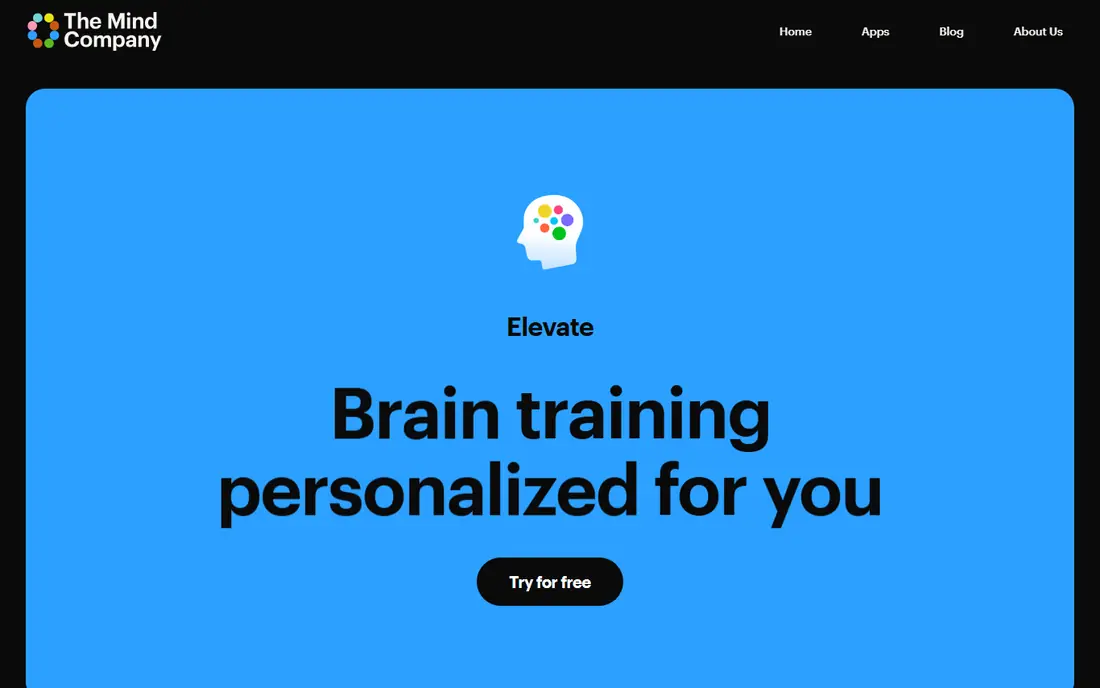
Elevate takes a different angle from most brain game apps, because its games target skills you use at work and in daily life. Expect exercises for reading comprehension, writing clarity, listening, speaking, and mental math, presented as short, polished mini games. The daily workout adapts to your performance, and the interface stays calm and easy to follow.
That practical focus is both the strength and the limit. Players who want classic memory matching or visual puzzles may find the catalog narrower than Lumosity or Peak. For readers, writers, students, and professionals who want sharper everyday thinking, Elevate is our pick for most people in this list. Start free for a week and see whether the daily workout feels useful before you pay.
- Games tied to real life skills
- Clean design
- Personalized daily workouts
- Fewer abstract puzzle games
- Full game choice needs a subscription

Peak wins on playfulness. Its games are bright, quick, and easy to pick up, and the daily Coach workout picks a set for you based on the skills you want to build. The brain map shows how you score across categories such as memory, focus, and mental agility, which makes progress feel concrete. Social challenges and streaks help if you need a nudge to return each day.
The downside is depth. A few games feel more like casual puzzles than serious training, and the free tier caps how much you can play. Peak suits people who have quit other brain apps because they felt dull. If you want the most research-heavy program, BrainHQ or CogniFit will suit you better.
- More than 40 games
- Playful design and challenges
- Detailed brain map of strengths
- Some games feel shallow
- Advanced features need a subscription
BrainHQ is built by Posit Science and has one of the strongest research records in this category. Its exercises focus heavily on processing speed, auditory processing, and visual attention, and difficulty adjusts in small steps as you improve. That makes it a good choice for older adults and for anyone who wants training that feels purposeful rather than game-like.
You will not get the same bright, arcade feel as Peak. Some exercises repeat a similar format, and the design is more functional than fun. The free access is limited, so most people will need a subscription for a full program. If you value evidence over entertainment, BrainHQ is the most serious option here.
- Exercises backed by published research
- Adaptive difficulty
- Strong focus on speed and attention
- Less playful than rivals
- Interface feels dated in places
CogniFit starts with assessment, not just games. After an initial test, it builds a training plan aimed at the skills where you scored lowest, such as memory, reasoning, or attention. That structure appeals to people who want a clear starting point and measurable change, and it is also used in some clinical and research settings.
The price is the main barrier. CogniFit costs more per month than Lumosity or Peak on comparable plans, and the look is more clinical than playful. If you want a guided plan with a proper baseline, the extra cost may be worth it. Casual players who just want a few minutes of puzzles a day will find cheaper options elsewhere.
- Detailed cognitive assessment
- Personalized training plans
- Wide range of games
- Monthly price is higher than many rivals
- Interface can feel clinical
NeuroNation, developed with input from researchers, centers on memory and concentration. You start with an assessment, then follow a plan of short exercises that adapt to your level. The sessions are short enough to fit into a commute or a coffee break, and progress charts make it easy to see which skills are improving.
The catalog is smaller than the biggest apps, so long term players may repeat games sooner. The free tier gives you a useful sample, but the full personalized plan needs payment. NeuroNation is a good middle ground between a casual game app and a clinical tool, and it suits people who want structure without a steep price.
- Personalized plans after assessment
- Focus on working memory
- Clean progress charts
- Smaller game library than Lumosity
- Some content needs a subscription
Memorado keeps things simple, which is a strength for beginners. Each day brings a short set of games for memory, logic, reaction, and concentration, without a long setup or a complex menu. The games are straightforward to learn, and the app does not demand a long session to feel complete.
Because it is smaller than Lumosity or Peak, it has fewer games and less detailed analytics. That will not matter if you want a light daily habit, but power users may outgrow it. Memorado is a sensible choice if you are new to brain games and want a low pressure start.
- Daily workouts across several skills
- Simple layout
- Good for beginners
- Less well known than leaders
- Fewer advanced tracking tools
Brainwell is the budget pick in this list, with a free model that covers daily brain workouts across several categories. You get a rotating set of games for memory, attention, and reasoning, without needing to commit to a subscription first. That makes it easy to test whether daily brain games fit your routine at all.
The trade-off is polish and personalization. Brainwell does not match the adaptive plans of CogniFit or the detailed tracking of Lumosity. If you try it and enjoy the habit, you may later move to a paid app for deeper training. If you want a free, simple start, Brainwell is hard to beat.
- Free access to daily workouts
- Broad mix of games
- No subscription needed to start
- Fewer personalization options
- Smaller feature set than paid rivals
How we picked these
We compared official feature pages, pricing pages, app store listings, privacy policies, and public reviews for leading brain training apps. We favored apps that are still maintained in October 2026, offer a real free tier or trial, and cover more than one cognitive skill. We also mixed well-known leaders with smaller options, so readers can choose between a broad library, a practical skills focus, and a research-led program.
We did not claim hands-on lab testing. Our rankings reflect the breadth of games, the quality of personalization, the fairness of the free tier, and the clarity of pricing, based on what vendors publish and what users report.
What to look for before you subscribe
Match the app to your goal
Start with the skill you actually want to improve. Choose Elevate for reading, writing, and math, BrainHQ for processing speed, and NeuroNation or CogniFit for memory and concentration. A broad app like Lumosity or Peak works better if you want variety and a daily habit rather than one targeted skill.
Check the free tier first
Free plans differ a lot. Some allow only three games a day, while others allow a full daily workout with limits on game choice. Play free for at least a week before paying, and check whether the yearly plan is much cheaper than monthly billing, since most apps discount annual plans heavily.
Keep expectations realistic
Brain games can improve performance on the games themselves and may help focus and working memory with regular practice. They are not proven to prevent dementia or to replace medical advice. Pair any app with sleep, physical activity, and real world learning, such as reading, puzzles on paper, or learning a language, for a broader benefit.
FAQ
What are the best apps for brain games?
Lumosity and Peak are the best all round picks for variety, Elevate is best for practical language and math skills, and BrainHQ is best if you want research-backed training. The right choice depends on whether you want fun, practical skills, or a structured assessment-led plan.
Are there best brain games apps that are free?
Yes. Brainwell offers free daily workouts, and Lumosity, Elevate, Peak, NeuroNation, and Memorado all offer free tiers. Free plans usually limit daily games or game choice, so they work well for trying an app but not for full access.
What is the best app for brain games for memory?
NeuroNation and CogniFit are strong for memory because they start with an assessment and build a plan around working memory and attention. Lumosity also covers memory well within a broader daily workout, if you prefer variety.
Do brain game apps really work?
Research is mixed. Studies show people improve at the trained tasks, and some show transfer to related skills like processing speed, but results vary by person and by app. Regular, short sessions tend to help more than occasional long ones, and no app should be treated as medical treatment.
How much do brain game apps cost?
Most paid plans fall between about $8 and $20 per month on monthly billing, with lower effective rates on yearly plans. Brainwell is free to start, and several others offer free tiers. Always check the app store or vendor pricing page, since prices vary by region and plan.
Which brain game app is best for older adults?
BrainHQ is a strong choice for older adults because of its focus on processing speed and its research background, with clear, adaptive exercises. Lumosity is also easy to use and offers a broad, gentle daily workout for beginners.