Best Biotech Companies in 2026: 8 Companies Compared
We compare the best biotech companies in 2026, from large drug makers to gene-editing firms, on focus, pipeline depth and what to watch closely in detail.
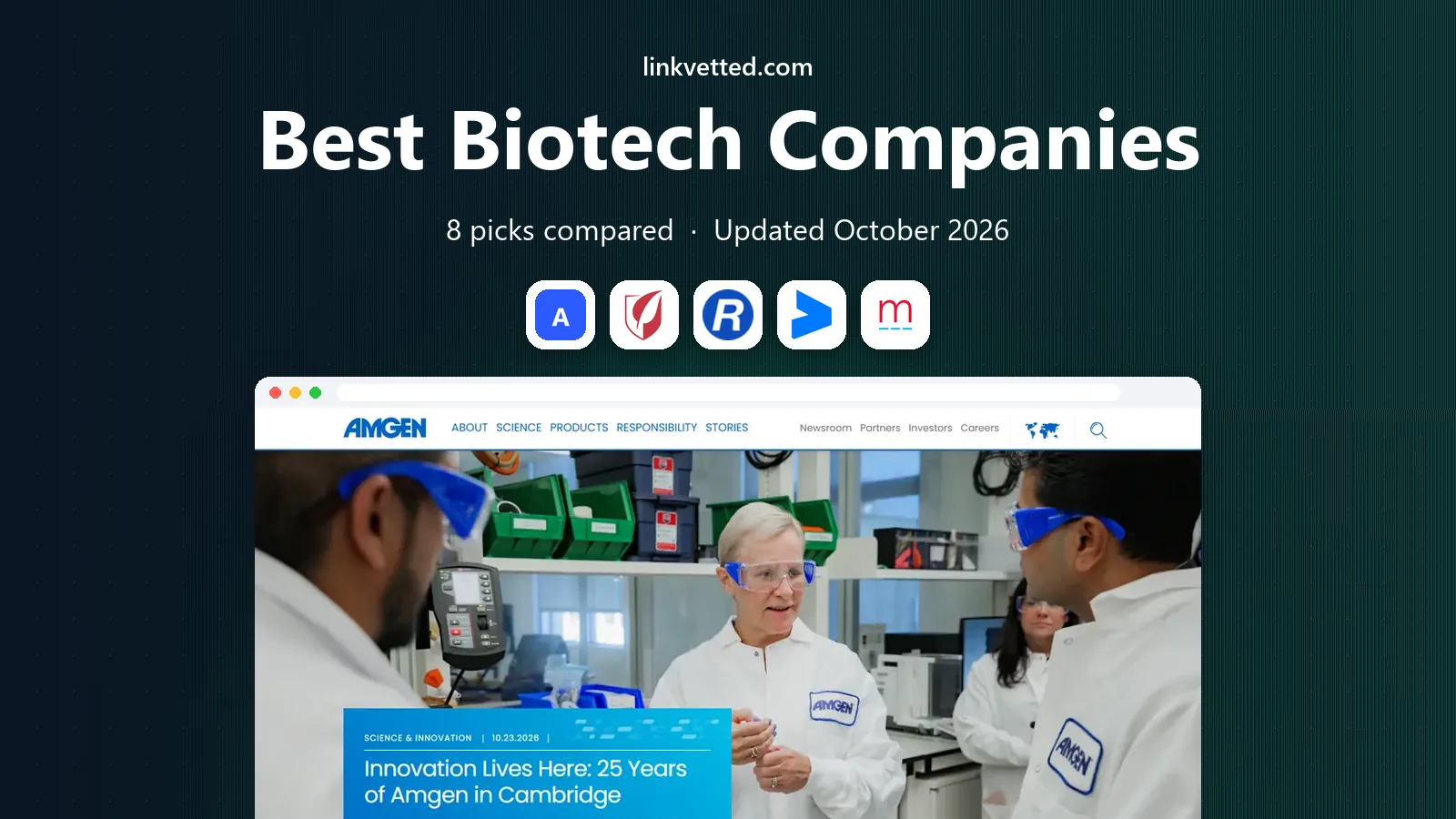
- Editor's choice
 Amgen
Large, diversified biotech
Starts atSee websiteVisit amgen.comFull review - Great alternative
 Gilead Sciences
HIV and liver disease leader
Starts atSee websiteVisit gilead.comFull review - Also consider
 Regeneron Pharmaceuticals
Eye disease and antibody medicines
Starts atSee websiteVisit regeneron.comFull review
TL;DR:
- Amgen, Gilead, Regeneron and Vertex lead on approved products and revenue, while smaller firms offer higher risk and higher possible upside.
- Gene editing, RNA medicines and cancer therapies dominate the most watched pipelines in this group.
- For readers following these firms as investments, this is general information only, not financial advice, and biotech shares can move sharply.
- Check trial results, regulatory decisions and earnings reports before acting on any single company story.
Quick comparison
| Tool | Best for | Starts at | Free plan? | |
|---|---|---|---|---|
| Amgen | Large, diversified biotech | See website | No | Visit |
| Gilead Sciences | HIV and liver disease leader | See website | No | Visit |
| Regeneron Pharmaceuticals | Eye disease and antibody medicines | See website | No | Visit |
 Vertex Pharmaceuticals | Cystic fibrosis leader | See website | No | Visit |
 Moderna | mRNA medicines | See website | No | Visit |
 BioNTech | mRNA and cancer vaccines | See website | No | Visit |
 CRISPR Therapeutics | Gene editing | See website | No | Visit |
 Alnylam Pharmaceuticals | RNA interference medicines | See website | No | Visit |
The best biotech companies
This list mixes large, profitable biotech firms with smaller firms whose value rests more on future trial results.
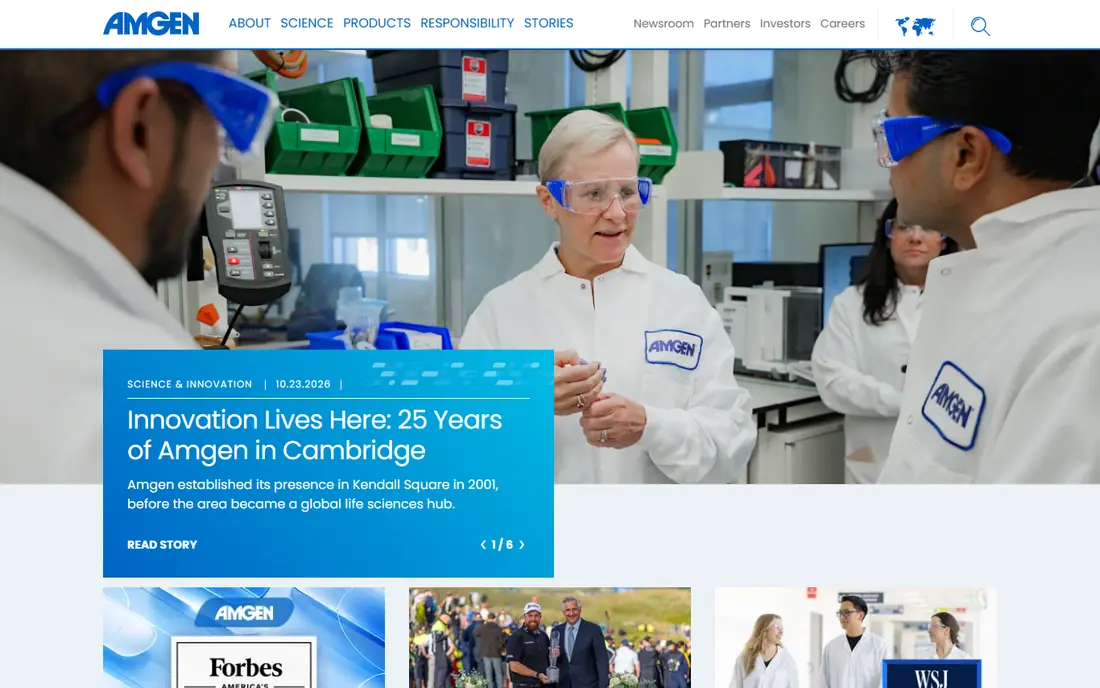
Amgen is the steady anchor of this list, with products across bone health, inflammation, cancer and cardiovascular care. Its strengths include broad approved portfolio; long history in biologics; pays a dividend For readers comparing options, that mix explains why Amgen fits large, diversified biotech so well, and why it appears on shortlists for this topic. We compared its official pages and public reviews, and we kept it on this list because its core offer is clear and current.
The catch is growth: a large base makes fast expansion harder, and biosimilars keep pressure on older brands. In practice, that means checking the fine print before you commit: price, included features and limits all shape the real value. If that catch matters little to you, Amgen is a strong pick. If it matters a lot, one of the other firms on this list may fit better, so use the comparison table above to weigh the trade-off.
- Broad approved portfolio
- Long history in biologics
- Pays a dividend
- Slower growth than smaller peers
- Faces biosimilar competition
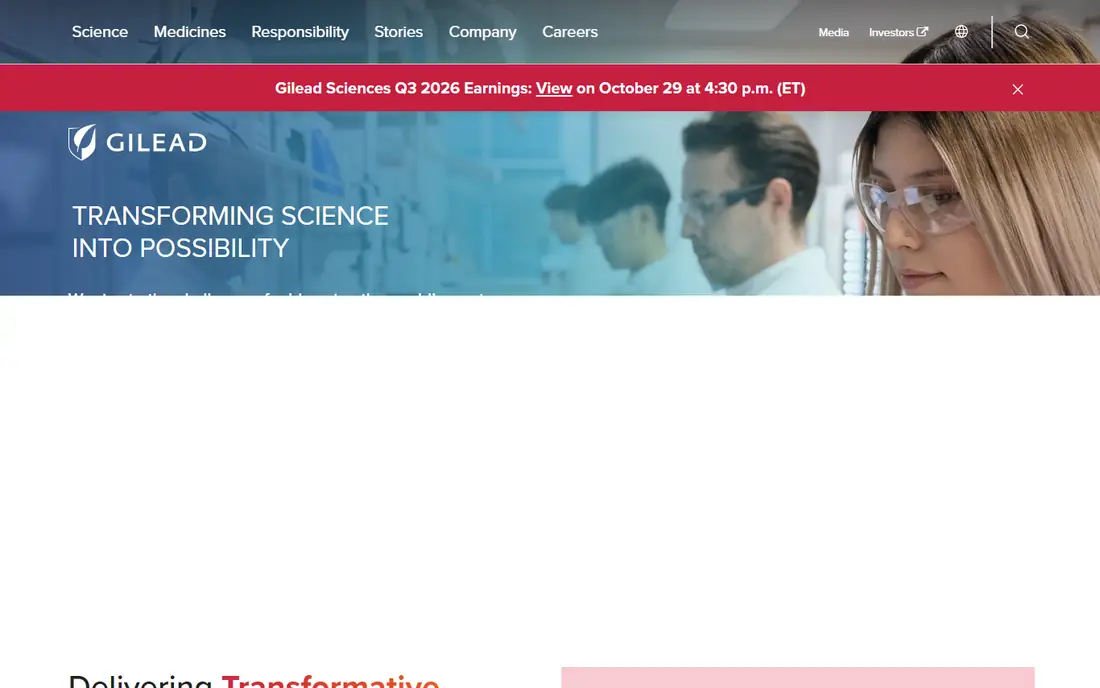
Gilead built its name on antiviral medicines and still earns much of its revenue from HIV treatments. Its strengths include strong hiv franchise; growing oncology and liver work; large cash generation For readers comparing options, that mix explains why Gilead Sciences fits hiv and liver disease leader so well, and why it appears on shortlists for this topic. We compared its official pages and public reviews, and we kept it on this list because its core offer is clear and current.
Its challenge is to prove that newer cancer and liver programs can add a second growth engine over time. In practice, that means checking the fine print before you commit: price, included features and limits all shape the real value. If that catch matters little to you, Gilead Sciences is a strong pick. If it matters a lot, one of the other firms on this list may fit better, so use the comparison table above to weigh the trade-off.
- Strong HIV franchise
- Growing oncology and liver work
- Large cash generation
- Heavy reliance on HIV sales
- Oncology results can be uneven
Regeneron pairs a major eye disease business with antibody science used across several conditions. Its strengths include leading eye treatment franchise; antibody platform; active research pipeline For readers comparing options, that mix explains why Regeneron Pharmaceuticals fits eye disease and antibody medicines so well, and why it appears on shortlists for this topic. We compared its official pages and public reviews, and we kept it on this list because its core offer is clear and current.
Investors and patients alike watch whether its next wave of products can match the success of its current leaders. In practice, that means checking the fine print before you commit: price, included features and limits all shape the real value. If that catch matters little to you, Regeneron Pharmaceuticals is a strong pick. If it matters a lot, one of the other firms on this list may fit better, so use the comparison table above to weigh the trade-off.
- Leading eye treatment franchise
- Antibody platform
- Active research pipeline
- Eye competition is rising
- Some growth depends on a small set of products
Vertex transformed cystic fibrosis care and now uses that base to move into pain treatment and kidney disease. Its strengths include dominant cystic fibrosis portfolio; expansion into pain and kidney disease; strong margins For readers comparing options, that mix explains why Vertex Pharmaceuticals fits cystic fibrosis leader so well, and why it appears on shortlists for this topic. We compared its official pages and public reviews, and we kept it on this list because its core offer is clear and current.
The main risk is price: the market already expects a great deal of future success from its pipeline. In practice, that means checking the fine print before you commit: price, included features and limits all shape the real value. If that catch matters little to you, Vertex Pharmaceuticals is a strong pick. If it matters a lot, one of the other firms on this list may fit better, so use the comparison table above to weigh the trade-off.
- Dominant cystic fibrosis portfolio
- Expansion into pain and kidney disease
- Strong margins
- High valuation
- Cystic fibrosis market is finite
Moderna proved mRNA at scale during the pandemic and now aims to apply the same platform to cancer and rare diseases. Its strengths include proven mrna platform; broad vaccine and cancer pipeline; large research budget For readers comparing options, that mix explains why Moderna fits mrna medicines so well, and why it appears on shortlists for this topic. We compared its official pages and public reviews, and we kept it on this list because its core offer is clear and current.
Its story depends on turning promising early data into approved products beyond its first vaccine franchise. In practice, that means checking the fine print before you commit: price, included features and limits all shape the real value. If that catch matters little to you, Moderna is a strong pick. If it matters a lot, one of the other firms on this list may fit better, so use the comparison table above to weigh the trade-off.
- Proven mRNA platform
- Broad vaccine and cancer pipeline
- Large research budget
- Revenue still concentrated in vaccines
- Many programs are early stage
BioNTech, known for its COVID vaccine work with Pfizer, now focuses much of its research on personalized cancer vaccines. Its strengths include mrna expertise; cancer vaccine partnerships; strong cash position For readers comparing options, that mix explains why BioNTech fits mrna and cancer vaccines so well, and why it appears on shortlists for this topic. We compared its official pages and public reviews, and we kept it on this list because its core offer is clear and current.
That shift is exciting but uncertain, since cancer vaccines must clear long and demanding trials. In practice, that means checking the fine print before you commit: price, included features and limits all shape the real value. If that catch matters little to you, BioNTech is a strong pick. If it matters a lot, one of the other firms on this list may fit better, so use the comparison table above to weigh the trade-off.
- MRNA expertise
- Cancer vaccine partnerships
- Strong cash position
- Cancer programs are unproven at scale
- Competition in mRNA is intense
CRISPR Therapeutics helped bring gene editing from the lab to an approved treatment for blood disorders. Its strengths include first approved gene-edited therapy in its field; deep editing platform For readers comparing options, that mix explains why CRISPR Therapeutics fits gene editing so well, and why it appears on shortlists for this topic. We compared its official pages and public reviews, and we kept it on this list because its core offer is clear and current.
The question now is whether it can repeat that success in other diseases and at commercial scale. In practice, that means checking the fine print before you commit: price, included features and limits all shape the real value. If that catch matters little to you, CRISPR Therapeutics is a strong pick. If it matters a lot, one of the other firms on this list may fit better, so use the comparison table above to weigh the trade-off.
- First approved gene-edited therapy in its field
- Deep editing platform
- Single-product dependence
- Gene editing carries clinical and regulatory risk
Alnylam uses RNA interference to silence disease-causing genes, a method now proven in several approved medicines. Its strengths include leading rna interference platform; several approved rare-disease drugs For readers comparing options, that mix explains why Alnylam Pharmaceuticals fits rna interference medicines so well, and why it appears on shortlists for this topic. We compared its official pages and public reviews, and we kept it on this list because its core offer is clear and current.
Its growth path runs through wider use of current drugs plus new programs in heart and brain conditions. In practice, that means checking the fine print before you commit: price, included features and limits all shape the real value. If that catch matters little to you, Alnylam Pharmaceuticals is a strong pick. If it matters a lot, one of the other firms on this list may fit better, so use the comparison table above to weigh the trade-off.
- Leading RNA interference platform
- Several approved rare-disease drugs
- Narrow disease focus
- Pricing and access debates affect rare-disease drugs
How we picked these
We compared official company pages, investor reports and public trial and regulatory records, and we favored firms with approved products or late-stage programs over firms with only early ideas. We also weighed breadth of pipeline, because a single trial result can change a small biotech firm fast. No company paid for a place on this list.
What to look for in a biotech company
Start with the product base. A firm with several approved drugs can fund research from sales, while a firm with no approved drug depends on raising money or finding a partner. Both models can work, but they carry very different risk.
Then look at the pipeline by stage. Phase 3 programs are closer to approval than Phase 1 programs, and they usually have more human data behind them. Read trial readouts in full where possible, and note whether a result met its main goal or only a secondary goal.
Finally, check cash, partnerships and patent timing. A firm with years of funding can survive a failed trial, while a firm with a short cash runway may need to raise money soon. Patent expiries matter too, since they open the door to cheaper rivals.
FAQ
What is the best biotech company?
There is no single best answer, since it depends on your goal. Amgen and Gilead suit readers who want scale and approved products, while Vertex suits readers focused on rare-disease leadership. Smaller firms such as CRISPR Therapeutics suit readers comfortable with higher risk.
Which biotech company is biggest?
By revenue and scale, Amgen is the largest firm on this list, followed by Gilead. Size alone does not mean faster growth, though, and smaller firms can grow faster from a lower base if their trials succeed.
Are biotech stocks risky?
Yes, they can be. Trial failures, regulatory delays and patent losses can move shares sharply in a short time. This article is general information only and is not financial advice, so consider speaking with a qualified adviser before investing.
What areas are biotech firms working on now?
Gene editing, mRNA medicines, RNA interference, cancer immunotherapy and rare-disease treatments are among the most active areas. Many firms now combine several of these methods in one pipeline.
How do I follow a biotech company?
Follow its investor relations page for earnings, trial announcements and regulatory filings. Patient groups and medical news sites can also help explain what a result means in plain terms.