Best App for Strength Training in 2026: 8 Apps Compared
Searching for the best app for strength training? We compare 8 strength training apps for logging, plans, and progress tracking, with free and paid options.
- Editor's choice
 Strong
Fast gym logging
Starts atFreeVisit strong.appFull review - Great alternative
 Hevy
Social logging on a free plan
Starts atFreeVisit hevyapp.comFull review - Also consider
 JEFIT
Large exercise library
Starts atFreeVisit jefit.comFull review
TL;DR:
- The best app for strength training depends on whether you want a simple log, a ready-made plan, or coaching-style guidance.
- Strong and Hevy are our top free-first picks for lifters who already know their program and mainly need fast logging.
- Fitbod and JEFIT suit lifters who want the app to build sessions or offer a deep exercise library and detailed reports.
- Caliber and Boostcamp are worth a look if you want structured programs, while Nike Training Club is a strong free option for guided sessions.
- This article gives general information only, not medical advice. Talk to a qualified professional before starting a new training program, especially if you have an injury or a health condition.
Quick comparison
| Tool | Best for | Starts at | Free plan? | |
|---|---|---|---|---|
| Strong | Fast gym logging | Free | Yes | Visit |
| Hevy | Social logging on a free plan | Free | Yes | Visit |
| JEFIT | Large exercise library | Free | Yes | Visit |
 Fitbod | Sessions built for you | See website | Free trial | Visit |
 Caliber | Structured strength programs | Free | Yes | Visit |
 Boostcamp | Ready-made proven programs | Free | Yes | Visit |
 Alpha Progression | Planned progression for muscle growth | Free | Yes | Visit |
 Nike Training Club | Free guided workouts | Free | Yes | Visit |
The best app for strength training
A good strength app should make logging fast, show progress clearly, and match the way you train. These eight cover simple logs, planned programs, and guided sessions.
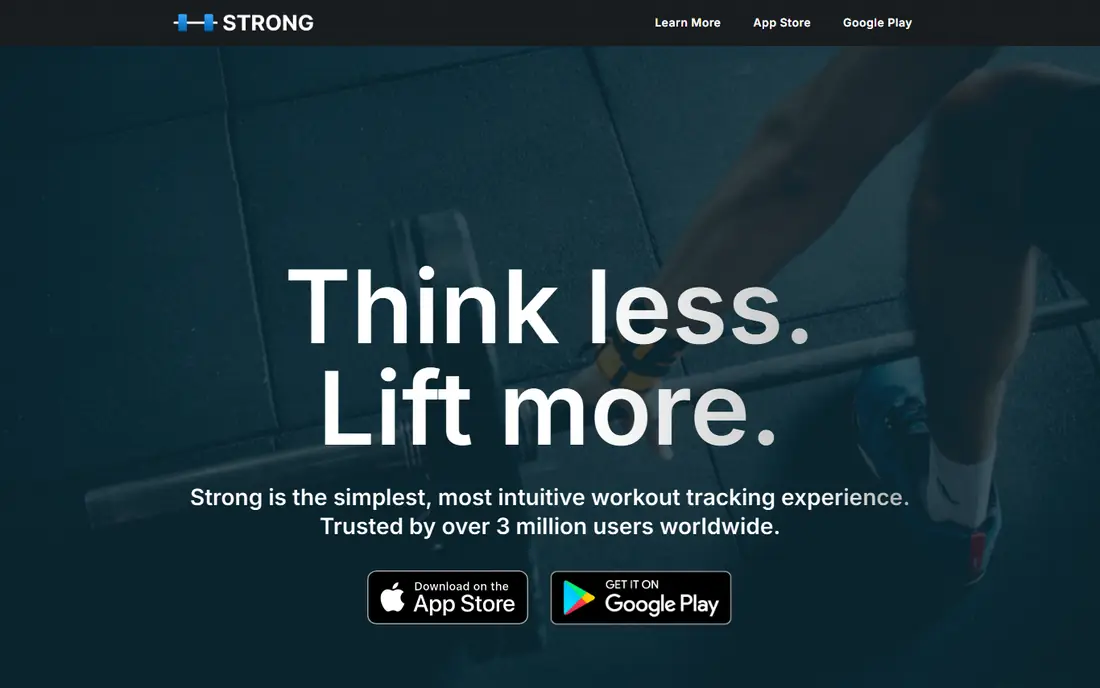
Strong is built for lifters who walk into the gym with a plan already in mind. Logging a set takes a few taps, and the app handles warm-up sets, plate calculations, and rest timers without getting in the way. That speed matters when you are between sets and do not want to fight a menu.
The limit to know is the routine cap on the free plan. If you run several programs at once, you may need the paid plan to save them all. For most lifters with one main program, the free version is enough, and the paid upgrade mainly adds more routines, advanced charts, and export options.
- Very fast set and rep entry
- Plate math and rest timers built in
- Clear charts for volume and personal records
- Free plan limits the number of saved routines
- No built-in program builder for beginners
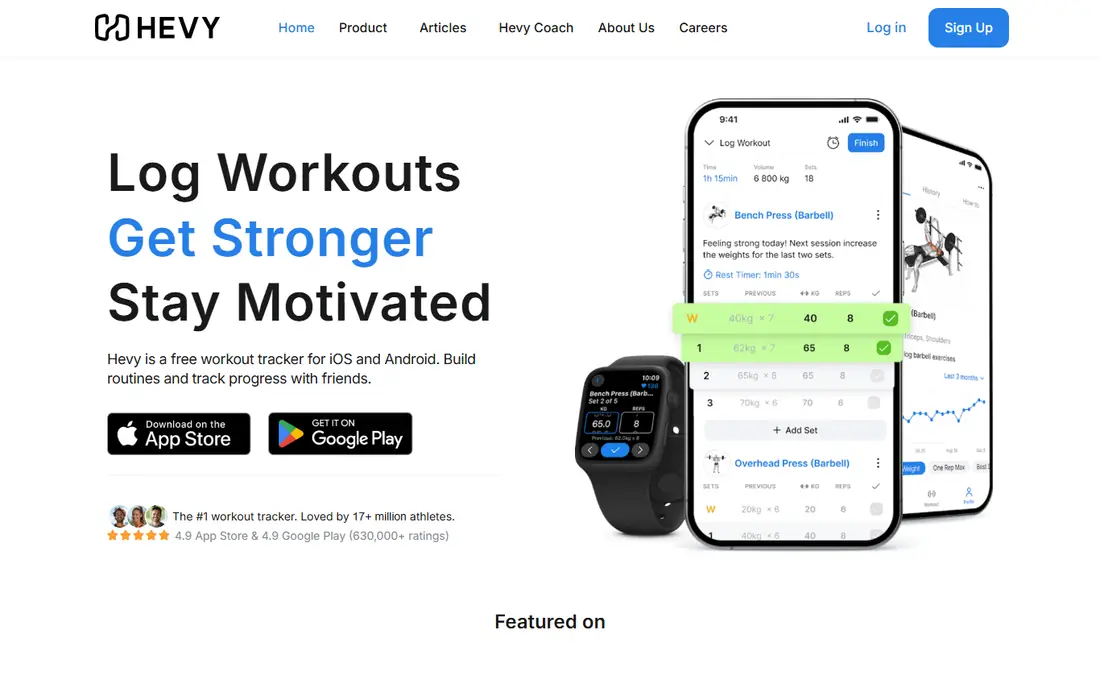
Hevy pairs a clean workout log with a social feed, so you can follow friends, see their sessions, and stay motivated without leaving the app. Logging is quick, and the free plan covers the core features most lifters use every week, including routines, timers, and basic progress charts.
The social side is not for everyone. If you prefer private training, you can keep your profile low-key and ignore the feed. The paid plan adds more routines, deeper graphs, and longer history, but casual lifters may never need it.
- Generous free tier with routines and progress graphs
- Social feed for training with friends
- Apple Watch support
- Free plan caps saved routines
- Advanced graphs and history need the paid plan
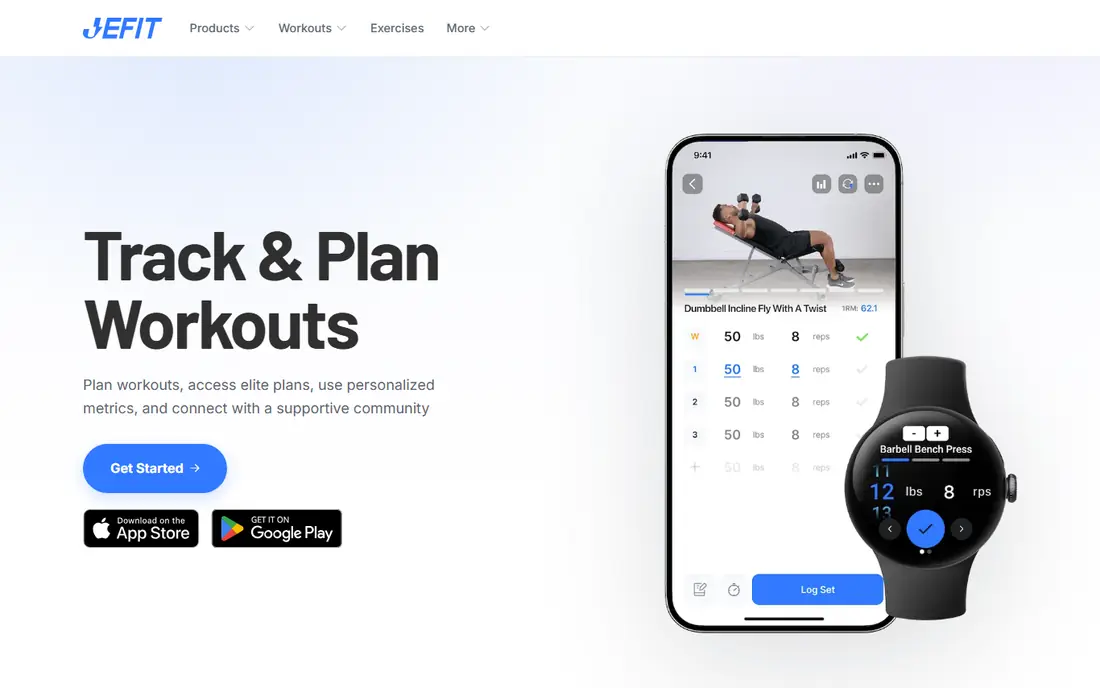
JEFIT is a good pick if you want to learn new exercises or follow a routine built by someone else. The exercise library includes form notes and videos for many lifts, which helps newer lifters pick movements with confidence. Community routines cover common goals, from general strength to bodybuilding splits.
The trade-off is complexity. The app has many menus, reports, and options, and it can take a few sessions to learn where everything lives. If you want the simplest log possible, Strong or Hevy will feel lighter. If you want depth and data, JEFIT rewards the extra setup.
- More than 1,400 exercises with instructions
- Large library of community routines
- Detailed reports by muscle group
- Interface can feel busy for new users
- Free version includes ads
Fitbod is for lifters who do not want to plan every session themselves. You tell it what equipment you have, which muscles you want to train, and how hard you want to work, and it builds a session with sets, reps, and weights. As you log results, it adjusts future sessions based on your progress and recovery.
That convenience comes with a subscription. There is a trial to test the app, but no lasting free plan. Lifters who already follow a fixed program may find the auto-built sessions less appealing than a simple log. Lifters who want variety and progression without writing their own plan will get more value here.
- Builds each session around your equipment, goals, and recovery
- Adjusts weights as you progress
- Works for home and gym training
- No permanent free tier, only a trial
- Subscription cost adds up over a year
Caliber combines free workout tracking with programs designed around strength science. The free tier lets you log sessions and follow structured plans, while paid coaching adds a human coach who reviews your training and adjusts your program. That middle ground suits lifters who want structure but do not want a fully automated plan.
The app feels more guided than Strong or Hevy, which is a benefit if you want direction and a drawback if you like to improvise. Coaching prices vary, so check the current offer before you sign up. For many users, the free tracking and programs are enough.
- Free tracking with structured programs
- Science-based programming options
- Optional coaching for lifters who want guidance
- Coaching can be costly
- App is more structured than a free-form log
Boostcamp is built around programs that lifters already trust, including well-known strength and hypertrophy templates. You pick a program, and the app handles the schedule, logging, and progression rules for you. A plate calculator and rest timer keep sessions moving without extra tools.
The catalog approach means you are choosing someone else's program, not building your own from scratch. That is ideal for beginners and intermediate lifters who want a proven path. Advanced lifters with highly specific programs may prefer a blank log that lets them write every detail themselves.
- Large catalog of vetted strength programs
- Built-in logging, timers, and plate calculator
- Free access to many full programs
- Less flexible than a blank log for custom programs
- Program quality varies by author
Alpha Progression focuses on hypertrophy, or muscle growth, with a plan generator that sets exercises, sets, and reps, then progresses weights over time. It supports RPE and RIR logging, which helps lifters judge how hard each set felt. The exercise library includes videos, which helps with form for less familiar lifts.
The app has more settings than a basic log, so the first setup takes longer. Once your plan is set, daily logging is straightforward. Lifters who want a science-based plan without paying for coaching will find this a strong middle option between a free log and a full coaching service.
- Plan generator with automatic progression
- Large exercise library with videos
- No account needed for basic use on some platforms
- Some advanced features need the paid plan
- Interface is more detailed than a simple log
Nike Training Club is the best free option if you want a coach talking you through a session. Workouts include strength, core, mobility, and conditioning, with clear video guidance and session plans for different levels. The app is free, which makes it easy to try without a trial clock running.
The limit is logging depth. It is a guided workout app first, not a barbell log, so lifters who track every set, rep, and plate in detail will still want Strong, Hevy, or JEFIT alongside it. Used together, Nike Training Club can cover guided sessions while a log app covers your main lifts.
- Large library of free guided workouts
- Sessions for strength, mobility, and conditioning
- No subscription needed for core content
- Less detailed barbell logging than dedicated lifting apps
- Programs are less personalized than Fitbod or Caliber
How we picked these
We compared official pricing pages, app store listings, and public feature descriptions for strength training apps available in October 2026. We favored apps with a usable free tier or trial, clear logging or programming, and progress tracking that goes beyond a simple list of past workouts. We also mixed simple logs with plan builders and guided apps, because lifters train in different ways.
How to choose the right strength app
Start with how you train now. If you already follow a program, pick a fast log and do not pay for planning you will not use. If you need a plan, pick an app that builds one around your equipment and schedule, and test it for two weeks before you commit to a year.
Check logging speed in the gym
The best test is a real session. Time how long it takes to log a set, change a weight, and start a rest timer. If logging slows your workout, the app is wrong for you, even if its charts look good at home.
Check progression and safety basics
Look for rest timers, warm-up guidance, and a clear way to see last session's weights. Good progression is gradual, and a good app makes it easy to repeat or slightly increase a lift rather than jumping to a weight you are not ready for. This is general information only, not medical advice, and a qualified coach or clinician can help if you are returning from injury.
FAQ
What is the best strength training app for beginners?
Boostcamp and Caliber are strong beginner picks because they offer structured programs to follow. Nike Training Club is also good if you want guided sessions with video coaching and no cost.
Is Strong really free?
Yes, Strong has a free plan that covers core logging, charts, and timers. The free plan limits saved routines, and the paid plan adds more routines, advanced stats, and export features.
Do I need a paid app to get stronger?
No. A free log plus a proven program is enough for most lifters. Paid apps add convenience, such as auto-built sessions or coaching, but they do not replace consistent training, rest, and gradual progression.
Can I use these apps for home workouts?
Yes, Fitbod, Nike Training Club, and Alpha Progression all support home training with limited equipment. Check the equipment filter in each app before you start, so sessions match what you actually own.
What is the difference between Hevy and Strong?
Both are fast logs, but Hevy adds a social feed and generous free graphs, while Strong focuses on speed and simplicity. Try both for a week and keep the one whose logging feels faster in the gym.
Are these apps safe for people with injuries?
These apps are training tools, not medical devices. If you have an injury, pain, or a health condition, talk to a qualified professional before starting or changing a program, and stop any exercise that causes sharp pain.