Best Airline Reservations Software in 2026: 8 Systems Compared
We compared the best airline reservations software for inventory, ticketing, and distribution, so carriers of every size can find a system that fits well.
- Editor's choice
 Amadeus Altéa
Large scheduled carriers
Starts atSee websiteVisit amadeus.comFull review - Great alternative
 SabreSonic
Global carriers and distribution
Starts atSee websiteVisit sabre.comFull review - Also consider
 Travelport
Agencies and airline distribution
Starts atSee websiteVisit travelport.comFull review
TL;DR:
- Large scheduled carriers need full passenger service systems, while regional and low-cost carriers do better with modular, cloud-based platforms.
- Distribution matters as much as booking: check GDS, direct, and NDC support before shortlisting.
- Most enterprise pricing is quote-based and tied to passengers boarded or transactions, so budget with your traffic in mind.
- A reservation system touches check-in, loyalty, and revenue, so plan for a long implementation and staff training.
Quick comparison
| Tool | Best for | Starts at | Free plan? | |
|---|---|---|---|---|
| Amadeus Altéa | Large scheduled carriers | See website | No | Visit |
| SabreSonic | Global carriers and distribution | See website | No | Visit |
| Travelport | Agencies and airline distribution | See website | No | Visit |
 Navitaire | Low-cost and hybrid carriers | See website | No | Visit |
 Radixx | Low-cost carriers wanting modular retail | See website | No | Visit |
 Hitit | Growing carriers on a cloud platform | See website | No | Visit |
 Videcom VRS | Regional carriers and check-in | See website | No | Visit |
 IBS iFly Res | Modern cloud passenger service | See website | No | Visit |
The best airline reservations software
Airline reservations software manages inventory, fares, bookings, ticketing, and passenger records, and connects those to check-in, departure control, and distribution channels. It is the core system of any airline, and choosing it shapes everything from pricing to the passenger experience. The systems below span global giants to regional specialists.
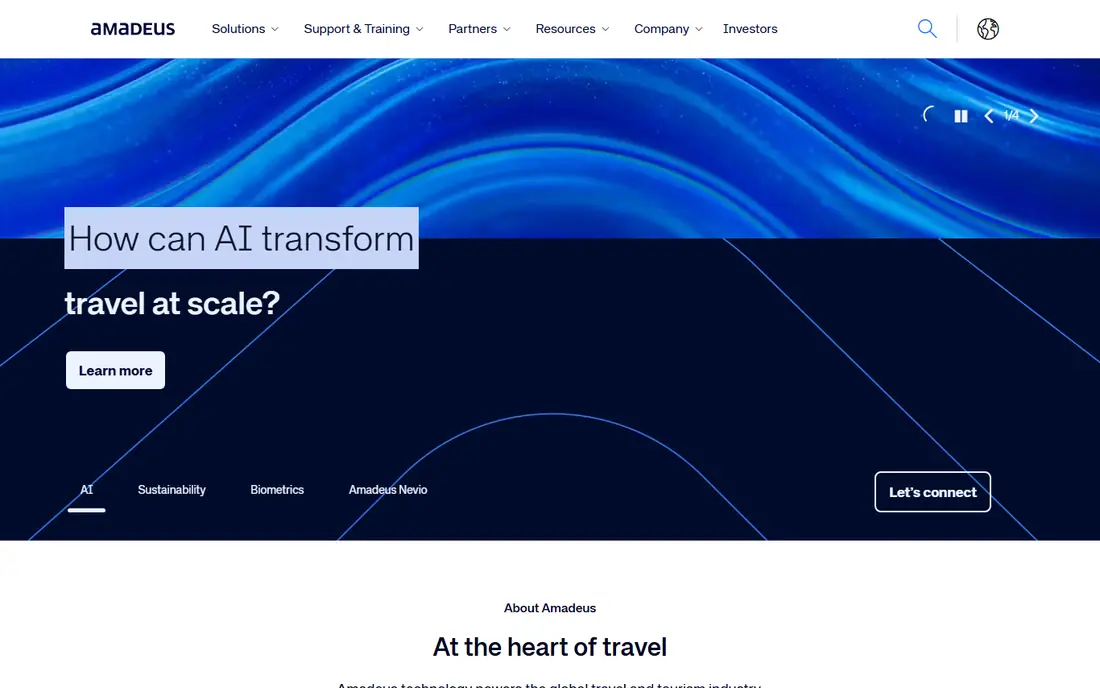
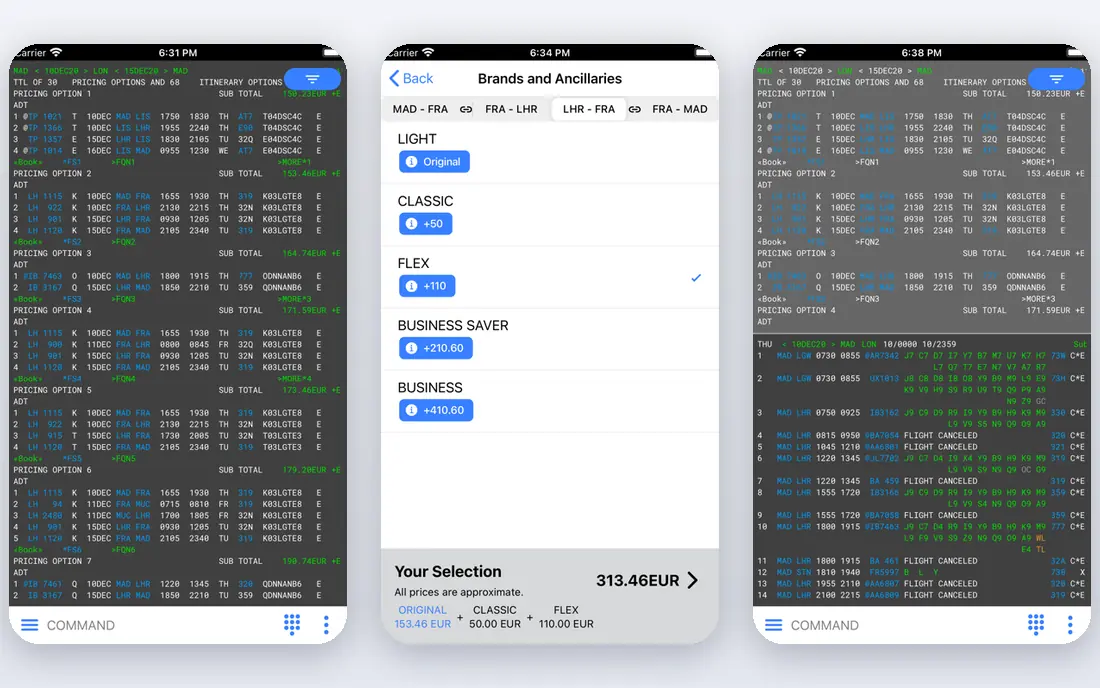
Amadeus Altéa is the passenger service system behind many of the world's large airlines. It handles reservations, inventory, fares, ticketing, check-in, and departure control in one suite, with distribution through Amadeus channels and partners. For a full-service carrier with complex networks, alliances, and fare structures, that depth is the point.
The trade-off is scale. Altéa suits carriers with the staff and budget for an enterprise rollout, and smaller airlines will find it heavy. Implementation takes months of planning, testing, and training. For a large scheduled carrier, though, few systems match its breadth.
- Full passenger service suite for reservations, inventory, and departure
- Huge global distribution reach
- Strong airline customer base
- Enterprise cost and complexity
- Long implementation for new carriers
SabreSonic, from Sabre, is the other giant of airline reservations, pairing a passenger service system with one of the largest travel distribution networks. Reservations, inventory, ticketing, and departure control connect to agency and online channels through Sabre, giving carriers wide sales reach. Its customer list spans full-service and hybrid carriers worldwide.
Like Altéa, SabreSonic is an enterprise commitment with quote-based pricing and a long rollout. Some modules feel older than cloud-native rivals, though Sabre continues to modernize the platform. For a carrier that values distribution depth and proven scale, SabreSonic remains a top contender.
- Proven passenger service system at global scale
- Strong distribution through Sabre GDS
- Broad airline customer base
- Enterprise pricing
- Modernization varies by module
Travelport is best understood as distribution muscle. Its platforms, including Galileo, Apollo, and Worldspan, connect airlines with travel agencies and online sellers, with modern retailing and NDC capabilities. Airlines use Travelport to sell through agency channels alongside their direct sites.
It is not a full replacement for a passenger service system, since carriers still need a core reservations and inventory engine. Buyers should shortlist Travelport for distribution strategy, then pair it with a PSS like Amadeus, Sabre, or a regional system. For agencies, Travelport is a primary content source.
- Connects airlines with agencies through major GDS platforms
- Modern retailing tools
- Broad content coverage
- More distribution platform than full airline PSS
- Carriers still need a core reservation system
Navitaire, part of Amadeus, powers many of the world's low-cost carriers through its New Skies platform. It handles reservations, ancillary sales, and revenue features tuned to the low-cost model, where bag fees, seat selection, and bundles drive profit. The cloud design helps carriers launch and scale without heavy infrastructure.
Full-service carriers with complex alliances and interline agreements may find Altéa or SabreSonic a better fit. For a low-cost or hybrid carrier that lives on direct sales and ancillaries, Navitaire is purpose-built and proven at scale.
- Built for low-cost models with ancillary retailing
- Cloud-based New Skies platform
- Strong low-cost customer base
- Less fit for complex full-service alliance networks
- Enterprise pricing
Radixx offers modular passenger service and retailing functions built for low-cost and hybrid carriers. Airlines can adopt reservations, inventory, and merchandising in stages rather than replacing everything at once, which suits carriers modernizing gradually. The cloud platform supports direct sales, ancillaries, and distribution.
The vendor is smaller than the global giants, so buyers should check support coverage and roadmap fit carefully. For a low-cost carrier that wants flexibility without an enterprise monolith, Radixx gives a practical middle path between a regional tool and a global suite.
- Modular retailing and PSS functions
- Flexible for hybrid models
- Cloud-based deployment
- Smaller vendor than Amadeus or Sabre
- Integration planning still needed
Hitit provides a cloud-based passenger service system covering reservations, inventory, ticketing, departure control, and loyalty. It appeals to growing and mid-size carriers that want modern cloud architecture without the cost and weight of the largest suites. Its customer base spans scheduled, charter, and hybrid operators.
North American buyers may know it less well than Amadeus or Sabre, so reference checks matter. For a carrier in growth mode that wants a full PSS on a cloud platform, Hitit is worth a serious look alongside Radixx and IBS.
- Cloud-based PSS with reservations, ticketing, and loyalty
- Scalable for growing carriers
- Competitive for mid-size airlines
- Less brand recognition in North America
- Implementation still a major project
Videcom VRS suits regional and smaller scheduled carriers that need reservations, inventory, fares, and departure control in one integrated system. It covers the core workflow without the enterprise overhead of larger suites, and its deployment options fit carriers with limited IT teams.
Alliance and interline depth is thinner than at Amadeus or Sabre, which matters less for point-to-point regional flying. For a regional carrier that wants a complete, manageable system, Videcom is a strong and often overlooked option.
- Integrated reservations, inventory, fares, and departure control
- Good fit for regional carriers
- Flexible deployment
- Smaller scale than global suites
- Fewer alliance features
IBS iFly Res is a next-generation passenger reservation platform from IBS Software, built cloud-native with AI-assisted workflows. It supports reservations, ancillary revenue, and omnichannel engagement across web, mobile, and call center channels. Full-service and low-cost carriers both appear in its customer base.
As a newer platform, it has fewer decades-long track records than Altéa or SabreSonic, so buyers should ask for references in their carrier model. For an airline modernizing its reservations stack with cloud architecture and retailing in mind, iFly Res is a forward-looking choice.
- Cloud-native, AI-assisted reservations platform
- Ancillary revenue support
- Omnichannel customer engagement
- Enterprise pricing
- Newer platform means fewer decades-long references than legacy suites
How we picked these
We compared official product pages, industry guides, and public references for airline reservation systems actively used in 2026. We favored systems with real airline customers, covering reservations, inventory, ticketing, and distribution in some form. We left out corporate travel booking tools and generic travel agency software, since they serve travelers and agencies rather than airline inventory itself.
What to check before you buy
Start with your operating model. A full-service carrier with alliances needs different depth than a point-to-point low-cost carrier or a regional operator. List your must-haves: interline agreements, codeshares, ancillary bundles, loyalty integration, and departure control, then check each system against that list.
Next, map distribution. How will you sell: direct website, app, agencies, GDS, and NDC connections? A system with weak distribution forces costly workarounds. Ask vendors for live distribution references in markets like yours, not just feature sheets.
Finally, plan the migration honestly. Reservation migrations touch bookings, tickets, loyalty balances, and check-in, and they need months of testing, parallel running, and staff training. Get the vendor's migration plan, reference carriers of your size, and total cost including training and integration before signing.
Questions to ask every vendor
Ask how fares and inventory are managed during irregular operations, how ancillary products are priced and bundled, and how the system handles disruptions and rebooking at scale. Ask for uptime figures, support hours across your time zones, and the upgrade path for retailing features. The answers reveal more than a demo ever will.
FAQ
What is the best airline reservation system software?
For large full-service carriers, Amadeus Altéa and SabreSonic lead. For low-cost carriers, Navitaire and Radixx fit best. For regional carriers, Videcom VRS and Hitit offer complete systems at a more manageable scale.
What is the best airline reservation software for small airlines?
Small and regional airlines do best with Videcom VRS, Hitit, or Radixx, which offer full reservations without enterprise overhead. The right pick depends on route structure, sales channels, and whether ancillary retailing drives revenue.
How long does it take to implement an airline reservation system?
Simple regional deployments can take a few months, while large carrier migrations often take a year or more including testing and training. Cloud-native systems can shorten infrastructure work, but data migration and staff readiness still set the timeline.
Do airline reservation systems support NDC and GDS distribution?
Most modern systems support GDS distribution, and leading platforms support NDC-based retailing as well. Confirm the exact NDC capabilities and agency partners for your markets, since depth varies by vendor and region.
What does airline reservation software cost?
Enterprise systems use quote-based pricing, often tied to passengers boarded, transactions, or modules chosen. Smaller regional systems may offer clearer subscription pricing. Get a quote based on your passenger volume and required modules before comparing.