Best AI Therapy Apps in 2026: 8 Apps Compared
Searching for the best ai therapy apps in 2026? We compared eight AI support apps on approach, privacy, human help, cost, and limits before you choose.
- Editor's choice
 Wysa
Structured CBT and DBT exercises
Starts atFreeVisit wysa.comFull review - Great alternative
 Headspace Ebb
Meditation plus AI support
Starts at$12.99 per monthVisit headspace.comFull review - Also consider
 Earkick
Quick mood check-ins
Starts atFreeVisit earkick.comFull review
TL;DR:
- Wysa is the strongest all-round pick, with structured CBT and DBT exercises, a free chat tier, and optional human coaching.
- Headspace Ebb suits people who already meditate and want calm, guided support next to mindfulness content.
- Earkick and Elomia are lighter, conversation-led options, best for check-ins and mood tracking rather than deep therapy work.
- No app here replaces a licensed therapist, and none should be used as the only support during a crisis.
- Prices range from free tiers to about 100 dollars a year, with human coaching costing much more where it is offered.
Quick comparison
| Tool | Best for | Starts at | Free plan? | |
|---|---|---|---|---|
| Wysa | Structured CBT and DBT exercises | Free | Yes | Visit |
| Headspace Ebb | Meditation plus AI support | $12.99 per month | Free trial | Visit |
| Earkick | Quick mood check-ins | Free | Yes | Visit |
 Elomia | Calm text-based support | Free | Yes | Visit |
 Replika | Ongoing AI companionship | Free | Yes | Visit |
 7 Cups | Peer listeners and community | Free | Yes | Visit |
 Talkspace | AI-supported human therapy | See website | No | Visit |
 MindDoc | Mood tracking and self-help courses | Free | Yes | Visit |
The best ai therapy apps
AI therapy apps sit between a journal and a therapy session. They can help you practice coping skills, notice patterns, and talk through a hard day at midnight, but they are not therapists. We compared official feature pages, privacy pages, and app store listings, and we left out apps that have shut down, including Youper, which closed on September 30, 2026.
This article is general information, not medical advice. An AI therapy app is not a substitute for a licensed therapist, and it is not the right place for crisis support. If you feel you may act on thoughts of harming yourself, call or text 988 in the United States to reach the Suicide and Crisis Lifeline, call emergency services at 911, or go to your nearest emergency department. If you are outside the United States, contact your local emergency number or crisis service.
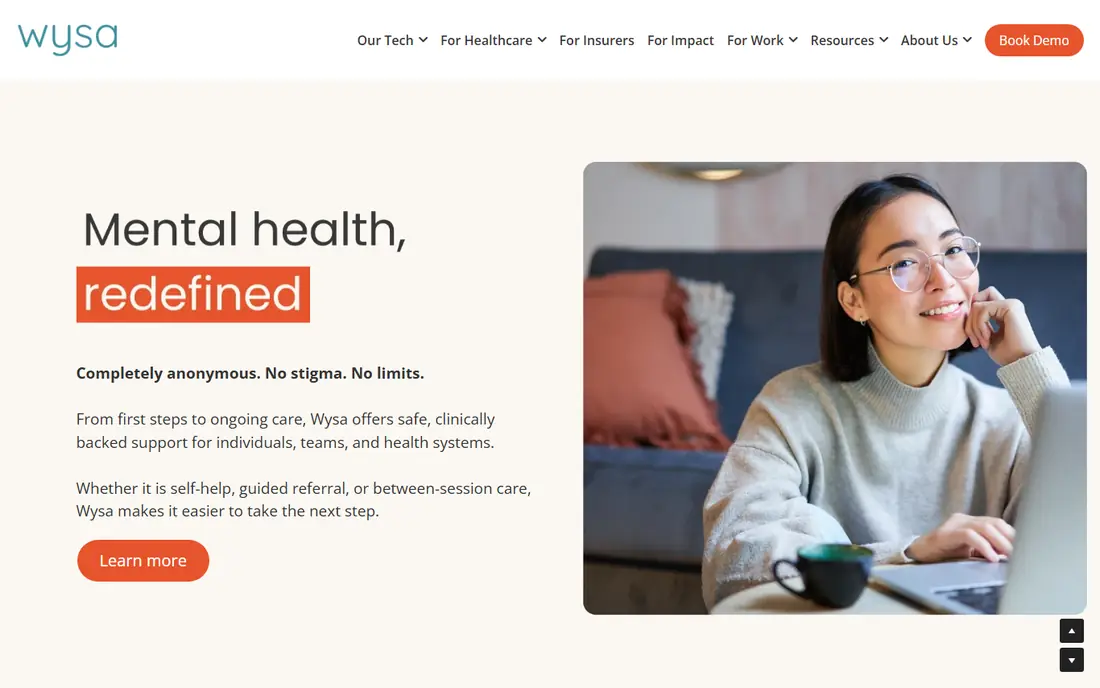
Wysa is our pick for most people because it does more than chat. It guides you through structured exercises drawn from cognitive behavioral therapy and dialectical behavior therapy, plus breathing and mindfulness tools. That structure helps if you want to practice a skill, such as reframing a thought or riding out a wave of anxiety, rather than just venting into a text box.
The free tier covers AI chat and some exercises, while Premium is listed at 74.99 dollars a year in app store listings and gives access to the full library. Human coaching sits on top of that at a higher price, so treat it as a separate service, not part of the basic plan. Wysa also states that it does not offer diagnosis or treatment advice, which is an honest limit worth noting. For daily coping practice with a clear method behind it, Wysa leads this list.
- CBT, DBT, and mindfulness exercises in chat form
- Free AI chat tier
- Optional human coaching
- Strong privacy focus
- Full exercise library requires Premium
- Human coaching is priced separately and is costly
- Chat can feel scripted at times
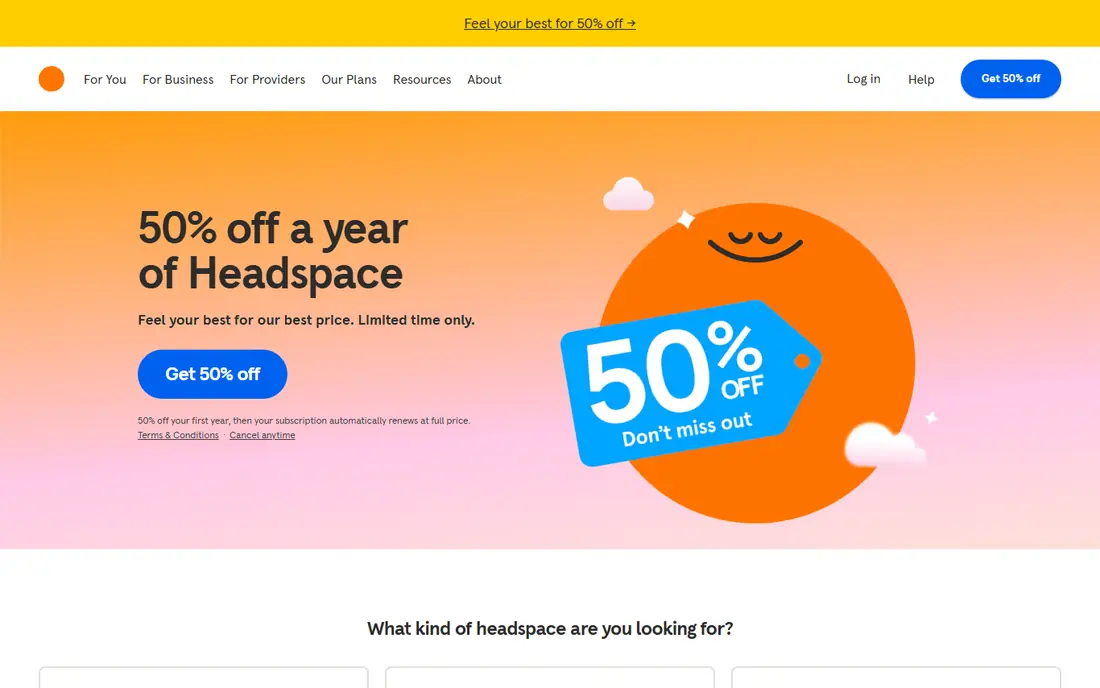
Headspace Ebb, the AI companion inside Headspace, fits people who already use meditation to manage stress. You can move from a breathing exercise to a chat about what is on your mind, then back to a sleep story, without switching apps. That flow suits users who want support woven into a daily calm routine rather than a separate therapy tool.
The catch is scope. Ebb is best seen as guided emotional support next to mindfulness, not as a stand-alone therapy service. Headspace is listed at 12.99 dollars a month, with annual billing usually lower, so check the current offer before subscribing. If meditation already helps you, Ebb adds a useful conversational layer. If you need structured therapy exercises, Wysa or MindDoc will give you more.
- Pairs AI chat with a large meditation library
- Calm, guided tone
- Sleep and stress content in the same app
- No human therapist in the core plan
- AI support is an add-on to meditation, not a full therapy program
- Subscription cost adds up monthly
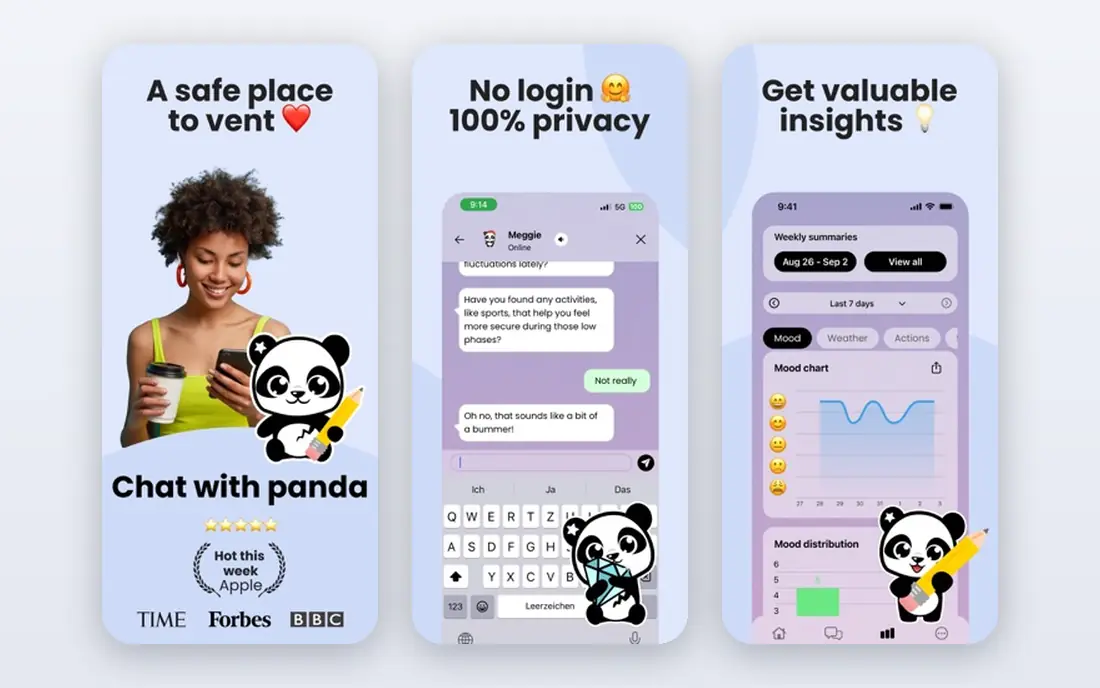
Earkick takes a lighter path. A panda companion helps you log emotions, spot patterns, and get short insights during the day. That low-friction check-in suits people who will not open a long exercise program but will answer a quick prompt. Over weeks, the mood record itself can be useful, especially if you share trends with a therapist or doctor.
The limit is depth. Earkick is better for awareness and short coping prompts than for working through a persistent problem step by step. Pricing in store listings has varied, so check the current plan inside the app before paying. Use it as a daily habit tool, and pair it with professional help if low mood or anxiety persists.
- Fast emotion tracking with a friendly companion
- Real-time mood insights
- Simple daily check-in habit
- Lighter therapeutic depth than CBT-led apps
- Paid tiers and pricing vary by store listing
- Not a replacement for professional care
Elomia offers a quiet, text-based space to talk through feelings, with short lessons and prompts matched to what you raise. The tone is gentle, and the app works well for people who prefer typing to voice, or who want support late at night when no one else is awake. It is a good fit for reflection and light coping practice.
It does not match Wysa on structured exercises or published research, and it does not give you a route to a licensed therapist inside the app. That makes it a companion for everyday stress rather than a program for a specific condition. Check the paid plan details in the store before subscribing, and keep expectations modest: helpful for check-ins, not a treatment plan.
- Text-based AI chat with a calm tone
- Short lessons and prompts tied to your needs
- Available any time of day
- Smaller evidence base than Wysa
- No human therapist path in the core app
- Conversation quality varies with the topic
Replika is included with a clear warning: it is an AI companion, not a therapy app. Its strength is an ongoing relationship. It remembers past chats, adapts its style, and is always there to talk, which some users find comforting when they feel lonely. That companionship can matter, and it is different from a structured exercise program.
The risks are also real. Replika does not provide therapy, and its history includes criticism over privacy and over how it handles sensitive conversations. Pro is listed at 69.99 dollars a year. If loneliness is the main issue and you understand the limits, it may help as a supplement. If you need help with depression, anxiety, trauma, or a crisis, choose a structured support app and a human professional instead.
- Persistent memory and personalization
- Always available for conversation
- Voice and text options
- Positioned as a companion, not therapy
- Past privacy concerns have drawn criticism
- Pro costs 69.99 dollars a year
7 Cups is different from the rest of this list because people, not only AI, do much of the listening. Trained volunteer listeners offer free chat, and community rooms cover topics from anxiety to grief. That human contact, even from a peer, can feel warmer than a chatbot, and the free tier is genuinely usable.
Quality varies, because listeners are volunteers with training, not licensed therapists, and conversations differ from one listener to the next. 7 Cups also offers paid therapy with licensed professionals, priced separately and well above the free tier. If you want to talk to a person without paying, start here. If you need clinical care, use the therapy route or find a local provider.
- Free peer listeners and community rooms
- Option to move to licensed therapy
- Large support community
- Listener quality varies because listeners are trained volunteers, not therapists
- AI features are secondary
- Therapy plans cost much more
Talkspace belongs here because it shows what AI therapy should often be: a support layer around human care. AI tools can help between sessions, but the core service is therapy with a licensed professional, by message or video. That matters when your needs go beyond coping exercises, for example relationship strain, trauma, or persistent depression.
The price reflects that difference. Talkspace plans are subscription-based and vary by state, plan type, and whether insurance applies, so check the current pricing page for your situation. It is not a free app, and it is not the pick for a quick check-in. It is the pick when you are ready to work with a real therapist and want digital tools in between sessions.
- Licensed therapists, not only AI chat
- AI tools support between-session work
- Messaging and live video options
- Costs far more than app-only options
- Pricing depends on plan and therapist match
- Not a free AI therapy app
MindDoc starts with measurement. Regular mood and symptom check-ins build a record you can review, and self-help courses cover topics such as anxiety, low mood, and stress. That data-first approach suits people who like to see patterns before choosing exercises. It also gives you something concrete to show a clinician.
The app is less conversational than the chat-led options here, so it will feel quieter if you want to talk through a bad day in words. Paid plans open the full course library, so check the current price in the store before subscribing. Screening results are not a diagnosis, and a high score should prompt a conversation with a professional, not self-treatment.
- Structured mood tracking with screening questions
- Self-help courses for common issues
- Clear progress reports
- AI chat is less central than in Wysa or Elomia
- Full courses require a paid plan
- Screening is not a diagnosis
How we picked these
We compared official feature pages, privacy statements, and app store listings, and we checked whether each app was still available to consumers in October 2026. That check mattered: Youper shut down on September 30, 2026, and the Woebot consumer app closed in 2025, so neither appears here even though older lists still name them. We favored apps with a clear method, stated limits, crisis resources, and a usable free or low-cost tier.
We did not claim hands-on testing. AI responses vary, privacy terms change, and pricing differs by store and region. Read the privacy policy before sharing sensitive details, and confirm the current plan price inside the app before you pay.
How to choose an AI therapy app safely
Match the tool to the need
For daily coping skills, pick a structured app such as Wysa or MindDoc. For meditation-led calm, pick Headspace Ebb. For a quick mood habit, pick Earkick or Elomia. For talking to a person, pick 7 Cups or Talkspace. A companion app such as Replika can ease loneliness, but it should not stand in for care when symptoms persist.
Check privacy before you open up
Read what the app stores, whether chats train models, and whether data is shared with third parties. Prefer apps that state plainly that conversations are not sold for advertising and that explain data retention. Avoid sharing highly sensitive details, such as full names, addresses, or workplace specifics, in any AI chat.
Know when to step up to human help
Seek a licensed therapist or doctor promptly if low mood, anxiety, panic, sleep problems, or intrusive thoughts last more than a couple of weeks, get worse, or affect work, school, or relationships. Use crisis lines and emergency services right away if you feel unsafe. An app can support care between sessions, but it cannot assess risk the way a clinician can.
FAQ
Which ai therapy platform is best?
Wysa is the best all-round choice for structured self-help, because it pairs CBT and DBT exercises with a free chat tier and optional coaching. Talkspace is the better choice if you want a licensed therapist with AI tools in between sessions. The right platform depends on whether you need skills practice, peer support, or professional care.
Is there a best ai therapy app that is free?
Yes, several apps offer a useful free tier. Wysa offers free AI chat, Earkick and Elomia offer free check-ins, and 7 Cups offers free peer listeners. Full exercise libraries, courses, and human coaching usually require a paid plan, so test the free tier first.
Can an AI therapy app replace a therapist?
No. These apps can teach coping skills, track mood, and offer support between sessions, but they cannot diagnose, build a treatment plan, or respond to a crisis like a licensed professional. Use them as a supplement, and seek human care when symptoms persist or worsen.
Are AI therapy apps private?
Privacy varies a lot. Some apps publish clear policies and avoid selling conversation data, while others share data with service providers or use it for product improvement. Read the privacy policy, check the app store privacy label, and avoid entering identifying details you would not want stored.
What should I do in a crisis while using one of these apps?
Do not rely on the app alone. In the United States, call or text 988 for the Suicide and Crisis Lifeline, call 911, or go to an emergency department. Outside the United States, call your local emergency number or crisis line. Tell a trusted person what is happening, and seek professional help as soon as you can.