Best AI Sales Roleplay Tools in 2026: 8 Tools Compared
Best AI sales roleplay tools compared in 2026, with AI buyers, coaching feedback, scorecards, voice practice and certification tools for sales teams now.
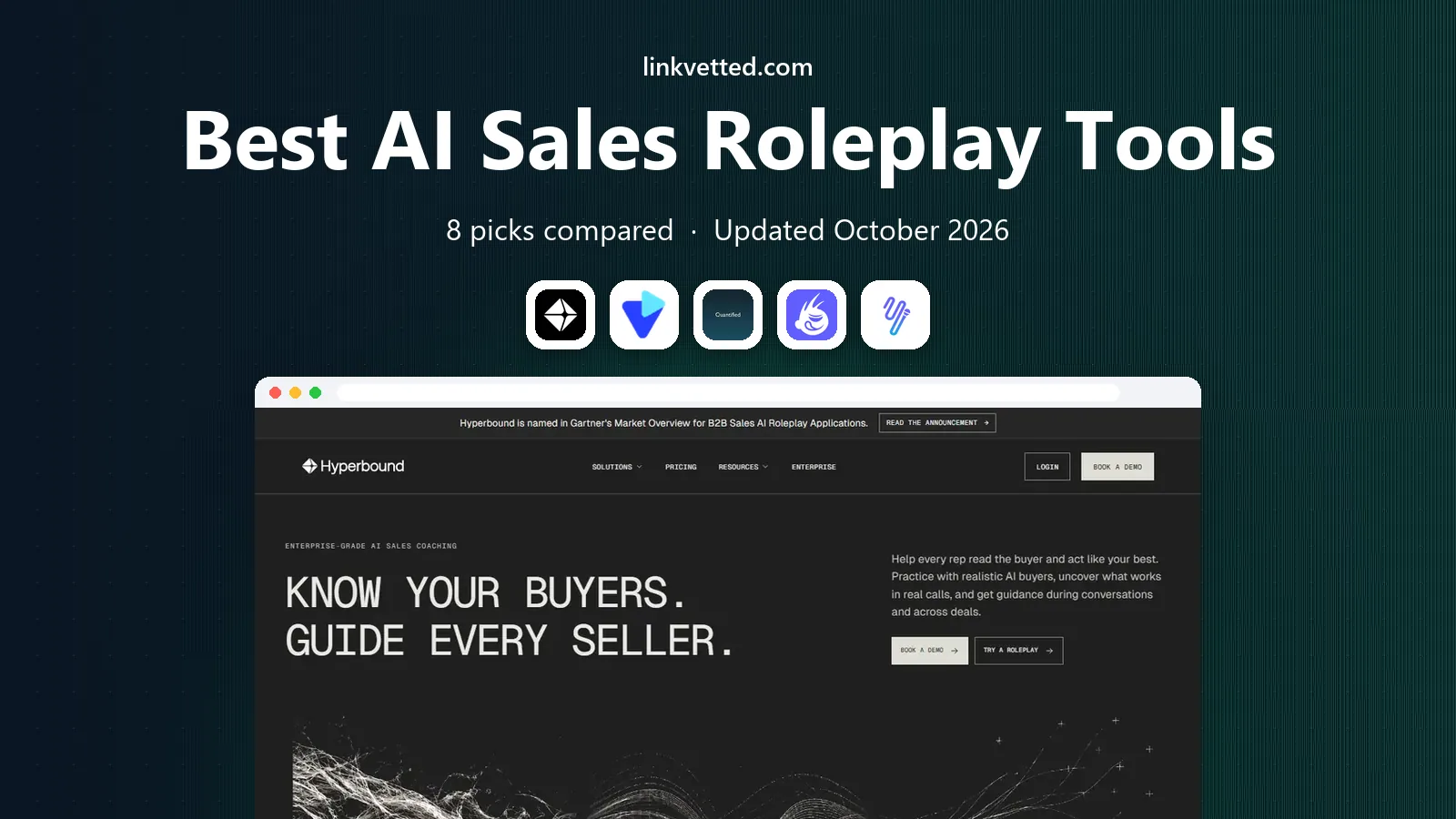
- Editor's choice
 Hyperbound
Cold-call practice with AI buyers
Starts atSee websiteVisit hyperbound.aiFull review - Great alternative
 Second Nature
Avatar practice from your playbooks
Starts atSee websiteVisit secondnature.aiFull review - Also consider
 Quantified
Video-based delivery scoring
Starts atSee websiteVisit quantified.aiFull review
TL;DR:
- Hyperbound offers a free tier with AI buyer bots, which makes it the easiest tool to try for cold-call practice.
- Second Nature builds scenarios from your own sales materials, which shortens setup for enablement teams.
- Quantified suits regulated and enterprise teams that need video-based delivery scoring.
- Most pricing in this category is quote-based, so trial the scoring rubric on your own objections before buying.
Quick comparison
| Tool | Best for | Starts at | Free plan? | |
|---|---|---|---|---|
| Hyperbound | Cold-call practice with AI buyers | See website | Yes | Visit |
| Second Nature | Avatar practice from your playbooks | See website | Free trial | Visit |
| Quantified | Video-based delivery scoring | See website | No | Visit |
 PitchMonster | Pitch practice with AI coaching | See website | Yes | Visit |
 Yoodli | Speech coaching for reps | $20 per month | Yes | Visit |
 Allego | Roleplay inside enablement | See website | No | Visit |
 Mindtickle | Enterprise readiness and coaching | See website | No | Visit |
 Zenarate | Scripted practice for contact centers | See website | No | Visit |
The best AI sales roleplay tools
We compared official pricing pages, feature lists and public reviews to shortlist these options for best ai sales roleplay tools. Each pick below fits a different budget, team size or workflow, so use the comparison table to narrow the list before you read the full reviews.
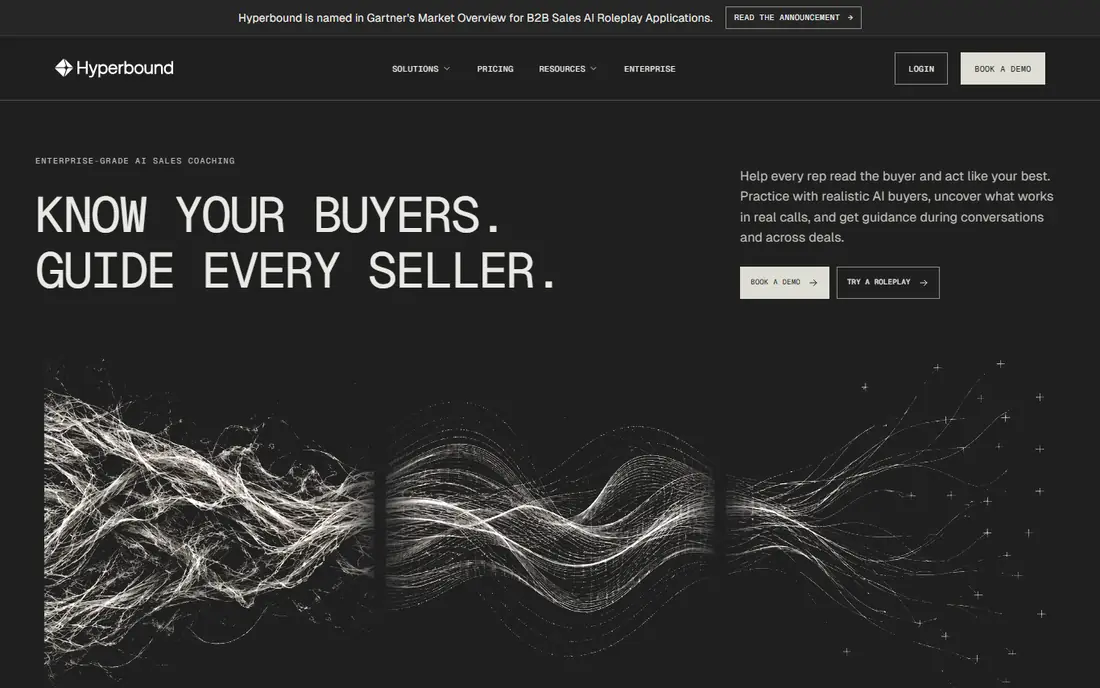
Hyperbound focuses on cold-call practice, with AI buyers covering cold, warm and discovery calls. The free tier gives several bots with unlimited call time, transcription and objection feedback, which is generous for a first trial.
It fits SDR teams that live on outbound calls. The trade-off is pricing clarity on paid plans and occasional lag in live calls, so test voice quality on your own network before rolling it out.
- Free tier with AI bots
- Unlimited call time on free bots
- AI coaching feedback
- Paid pricing is quote-based, and occasional call lag is reported
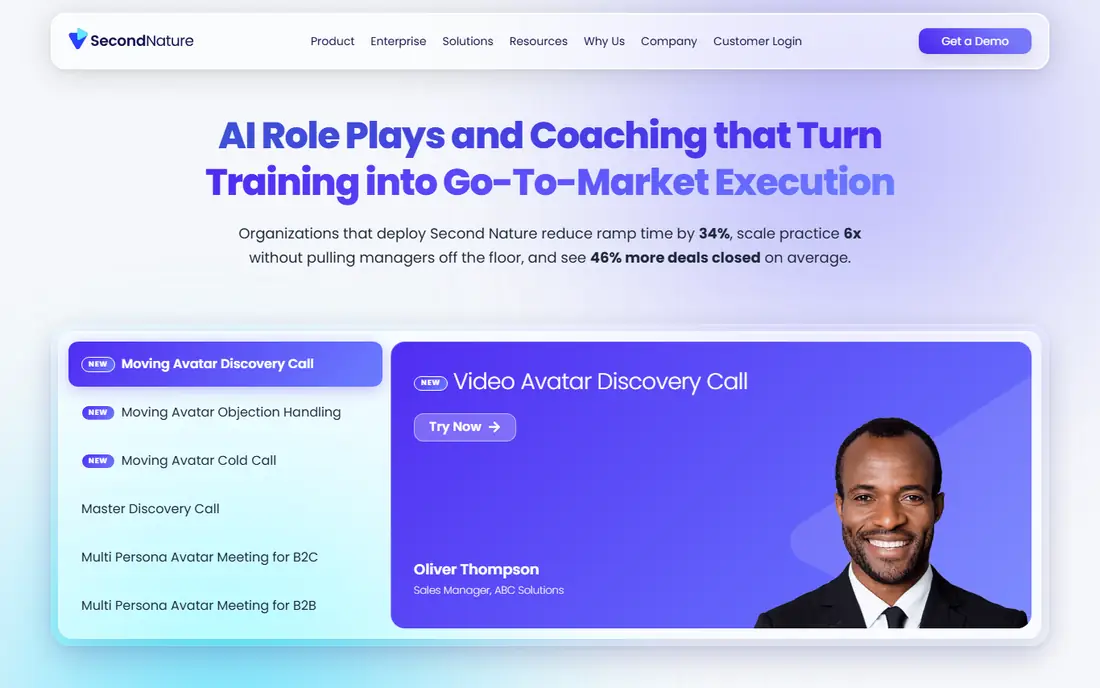
Second Nature turns playbooks, battle cards and product docs into avatar-led roleplay scenarios, so reps can practice with material that matches your actual deals. Short experiences let a rep try the platform quickly, and managers can track completion and scores.
It fits mid-market and enterprise onboarding. The trade-off is depth for very complex deals: teams with multi-stakeholder motions should test scenario flexibility before committing.
- Scenario generation from sales materials
- Avatar-led conversations
- Coaching
- Customization depth may fall short for complex multi-stakeholder deals

Quantified uses video avatars and delivery scoring to judge how a rep presents, not only what they say. That focus suits regulated industries and enterprise teams that need consistent, auditable coaching for high-stakes conversations.
It fits large teams in life sciences, finance and similar fields. The trade-off is access: pricing is quoted and the platform is aimed at larger teams, so small teams may find it out of reach.
- Photorealistic avatars
- Delivery scoring
- Compliance-focused scorecards
- Enterprise focus and quote-based pricing
PitchMonster pairs custom buyer-persona roleplay with an AI coach that asks questions rather than only giving a score. Gamification and leaderboards help managers keep practice habitual, which is often the hardest part of any training rollout.
It fits mid-market teams that want low-friction pitch practice. The trade-off is plan gates: check minimum team size and whether the free or entry plan covers the personas you need.
- Buyer-persona roleplay
- Socratic AI coach
- Gamification and leaderboards
- Team size gates on some plans may exclude very small teams
Yoodli coaches communication itself, with real-time speech analytics that flag filler words, pace and clarity. Reps can practice privately, which lowers the embarrassment barrier that stops many new reps from rehearsing at all.
It fits individual reps and small teams focused on delivery. The trade-off is scope: it improves how you speak, but it does not simulate a full buyer negotiation on its own.
- Real-time speech analytics
- Filler-word tracking
- Private practice
- Focus is delivery, not full deal simulation
Allego embeds roleplay and coaching inside a broader sales enablement platform, alongside content, training and manager feedback. That consolidation helps firms that already manage playbooks and courses in one place.
It fits firms consolidating enablement tools. The trade-off is price and breadth: if you only need roleplay, a standalone tool may be cheaper and faster to adopt.
- Practice and coaching inside a content platform
- Manager feedback
- Content library
- Full platform cost may exceed a standalone roleplay tool
Mindtickle offers AI roleplay as one module inside a large readiness platform, with coaching, content and assessments alongside it. Managers can link practice scores to readiness gaps and assign follow-up learning in the same system.
It fits large enterprises consolidating training. The trade-off is implementation: a broad platform takes more setup and change management than a single-purpose roleplay tool.
- AI roleplay as part of readiness
- Coaching
- Content and assessments
- Enterprise pricing and a broad platform to implement
Zenarate focuses on scripted, contact-center conversations with compliance checks and audit trails. Agents can practice regulated scripts repeatedly, which helps centers that must follow exact wording and process steps.
It fits contact centers in regulated industries. The trade-off is fit for field sales: B2B reps who need open discovery calls may prefer a less scripted, persona-driven tool.
- Scripted contact-center conversations
- Compliance-focused practice
- Audit trails
- Narrower fit for B2B field sales teams
How we picked these
We started from the main keyword, best ai sales roleplay tools, and checked official vendor pages for pricing, plans and core features, plus app store listings and public reviews where they added useful detail. We kept only products that exist and work today, that truly fit the topic, and that offer a clear route to buy, trial or contact the vendor.
We did not claim hands-on testing we did not do. Instead, we compared what each vendor publishes, how pricing works in practice, and where each product has an honest limit. A product that fits one team well may be a poor fit for another, so the reviews above note the trade-off for each pick.
How to choose an AI sales roleplay tool
Score on your own rubric. Pick three real objections, run the same scenario in two tools and compare feedback quality, voice realism and manager reporting. A tool that scores well on a vendor demo may score poorly on your hardest objection.
Start with the job, not the feature list
Write down the one job this tool must do in the first month, then check that job on a trial or demo before you look at extra features. If the core job feels slow or confusing, extra features will not fix it. Ask who will own the tool day to day, since an unowned tool is rarely used well.
Check total cost, not only the headline price
Add seats, usage limits, setup help and any percentage fees to the headline price. A cheap entry tier can cost more once your team grows, while a quote-based tool can be good value if it replaces two other subscriptions. Get the full cost in writing before you sign a yearly plan.
Trial with real work before you commit
Run a real task, a real list or a real campaign in the trial, not only a guided demo. Invite the people who will use the tool daily, and ask them to note friction in the first week. That short trial usually reveals more than a long feature comparison.
A short trial checklist
Use the same checklist for every option you trial, so the comparison stays fair. Note setup time, how long support takes to reply, whether exports work cleanly, and whether the price changes when you add a second user or a second location. Write down any feature that only appears on a higher tier, since that detail often decides the final cost.
Keep notes from the people who will use the tool each day, not only from the person who chose it. Ask them which step felt slow, which report they actually opened, and whether they would keep using the tool after the first month. If the answer is unclear, run a second short trial with a different option before you sign a yearly contract, since switching later usually costs more time than a careful trial now.
FAQ
What is the best AI sales roleplay platform?
For best ai sales roleplay tools, the right choice depends on your budget, team size and main job. Shortlist two or three options from the list above, trial them with real work, and pick the one your team will actually use each week.
How much do AI sales roleplay tools cost?
Prices vary widely in this category, from free plans to quote-based enterprise tiers. Use the comparison table for starting prices, then ask each vendor for an all-in quote that covers seats, usage and support.
Can AI roleplay replace manager coaching?
Start with the comparison table, read the two or three reviews that match your budget and workflow, and trial the best fit with real work before you buy.
Do AI roleplay tools work for cold calling?
It depends on your situation and on the product you choose. Check the free plan or trial terms, read the privacy and contract terms, and test the tool with a small job before you commit to a larger plan.
How do teams measure roleplay results?
Prices vary widely in this category, from free plans to quote-based enterprise tiers. Use the comparison table for starting prices, then ask each vendor for an all-in quote that covers seats, usage and support.