AI Platforms for Real-Time Threat Detection in 2026: The 5 Best Options Side by Side
5 products for the best AI platforms for Real-Time threat detection, ranked by fit, with starting costs and free tiers. Short verdicts, no fluff. Quick to scan.
- Editor's choicePalo Alto Networks Cortex XSIAM
AI-driven SOC automation and analytics
Starts atSee websiteVisit paloaltonetworks.comFull review - Great alternative
 Splunk Enterprise Security
Unified TDIR with integrated SIEM and SOAR
Starts atSee websiteVisit splunk.comFull review - Also consider
 CrowdStrike Falcon
Unified endpoint, identity, and cloud defense
Starts at$7.99 per device per monthVisit crowdstrike.comFull review
Direct answer
Palo Alto Networks Cortex XSIAM leads the list, best for AI-driven SOC automation and analytics. Listed starting prices: CrowdStrike Falcon from $7.99 per device per month. Splunk Enterprise Security fits unified TDIR with integrated SIEM and SOAR; CrowdStrike Falcon fits unified endpoint, identity, and cloud defense. Details, prices and limits for the rest of the 5 tools are below.
TL;DR:
- Top of the list is Palo Alto Networks Cortex XSIAM, which targets AI-driven SOC automation and analytics.
- A permanent free plan is missing from all 5 tools, Palo Alto Networks Cortex XSIAM and Microsoft Sentinel included; plan for a trial or a premium start.
- CrowdStrike Falcon is the lowest-priced starter here at $7.99 per device per month.
- Microsoft Sentinel is the one to check for cloud-native SIEM with automated response.
- A fair warning about CrowdStrike Falcon: full system value relies on adopting several modules.
Last checked November 2026. Prices and plan details were read from the vendors' own pages in November 2026; vendors change plans often, so confirm the current price on the vendor site before you buy.
Quick comparison
| Tool | Best for | Starts at | Free plan? | |
|---|---|---|---|---|
| Palo Alto Networks Cortex XSIAM | AI-driven SOC automation and analytics | See website | Not stated | Visit |
| Splunk Enterprise Security | Unified TDIR with integrated SIEM and SOAR | See website | Not stated | Visit |
| CrowdStrike Falcon | Unified endpoint, identity, and cloud defense | $7.99 per device per month | Free trial | Visit |
 Darktrace | Interrupting in-progress attacks rapidly | See website | Not stated | Visit |
 Microsoft Sentinel | Cloud-native SIEM with automatic response | See website | Not stated | Visit |
Tool-by-tool breakdown
LinkVetted put together this guide to AI platforms for Real-Time threat detection for readers who want a clear shortlist without reading every vendor page. It compares 5 tools on starting price, free plans, who each one suits and where each one falls short.
Palo Alto Networks Cortex XSIAM
Best for: AI-driven SOC automation and analytics
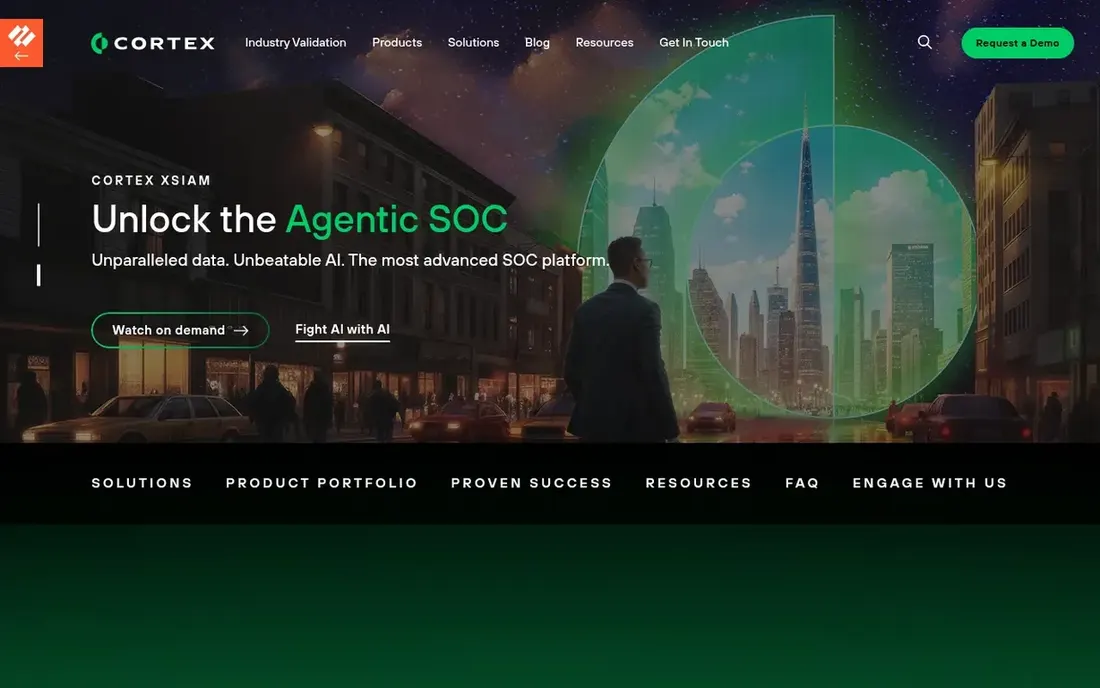
Palo Alto Networks Cortex XSIAM was built for AI-driven SOC automation and analytics. Cortex XSIAM is a substantial system, so teams without mature SOC workflows may face a ramp-up time.
Palo Alto Networks Cortex XSIAM does not show a starting price in this comparison, so check the vendor site for current pricing. Trial and free access: Not stated.
Trade-offs to know: Product depth may need ramp-up time.
- Centralizes security data for improved detection
- Uses AI to accelerate incident response
- Best fit for organizations with established SOC processes
Splunk Enterprise Security is aimed squarely at unified TDIR with integrated SIEM and SOAR. Splunk Enterprise Security is a unified threat detection, investigation, and response product that integrates SIEM, SOAR, UEBA, and agentic AI capabilities. It is aimed at security teams that want a single product to simplify detection and response across diverse data sources.
Points against: Data ingestion costs can grow with volume.
Smaller teams may find it heavy for their needs. From a buyer's view, Splunk Enterprise Security can be complicated to deploy and operate, and data ingestion costs can scale with volume. This comparison lists no price for Splunk Enterprise Security; ask the vendor. Free options: Not stated.
- Simplifies threat detection, investigation, response
- Agentic AI
- Can be complicated to deploy and handle
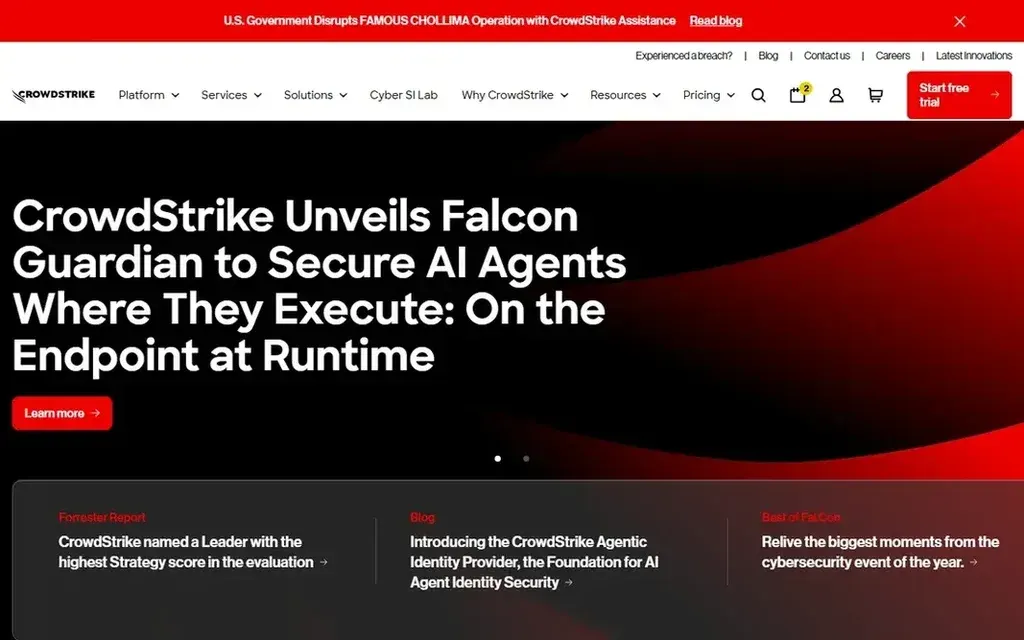
CrowdStrike Falcon is designed for unified endpoint, identity, and cloud defense. Smaller teams with narrow needs might find a focused endpoint tool more straightforward. In daily use, if your priority is log-centric SIEM rather than endpoint and workload protection, a dedicated SIEM like Microsoft Sentinel may be a better fit.
As for the details, CrowdStrike Falcon is an AI-native security platform that secures endpoint, identity, cloud, and AI assets through one unified console and a single sensor. It is built to stop breaches in live, making it a fit for organizations that want consolidated visibility and response across several attack surfaces without juggling separate tools. The starting price for CrowdStrike Falcon: $7.99 per device per month. As for free access: Free trial.
What to check first: Full product value relies on adopting several modules.
- Single sensor and console for several security domains
- AI-native system aimed at live breach prevention
- May be more than needed for small, simple environments
In short, Darktrace is for interrupting in-progress attacks rapidly. Darktrace is an AI cybersecurity system that aims to interrupt in-progress cyber attacks in seconds, including ransomware, email phishing, and threats to cloud environments and critical infrastructure.
If centralized log analytics is your core requirement, consider Splunk Enterprise Security or IBM QRadar. Check the vendor site for Darktrace pricing; none is listed in this comparison. On free options: Not stated.
The main drawbacks: Detection-centric approach may not replace a full SIEM.
- Infrastructure threats
- Spans ransomware, phishing, cloud
- Autonomous response may need tuning for some environments
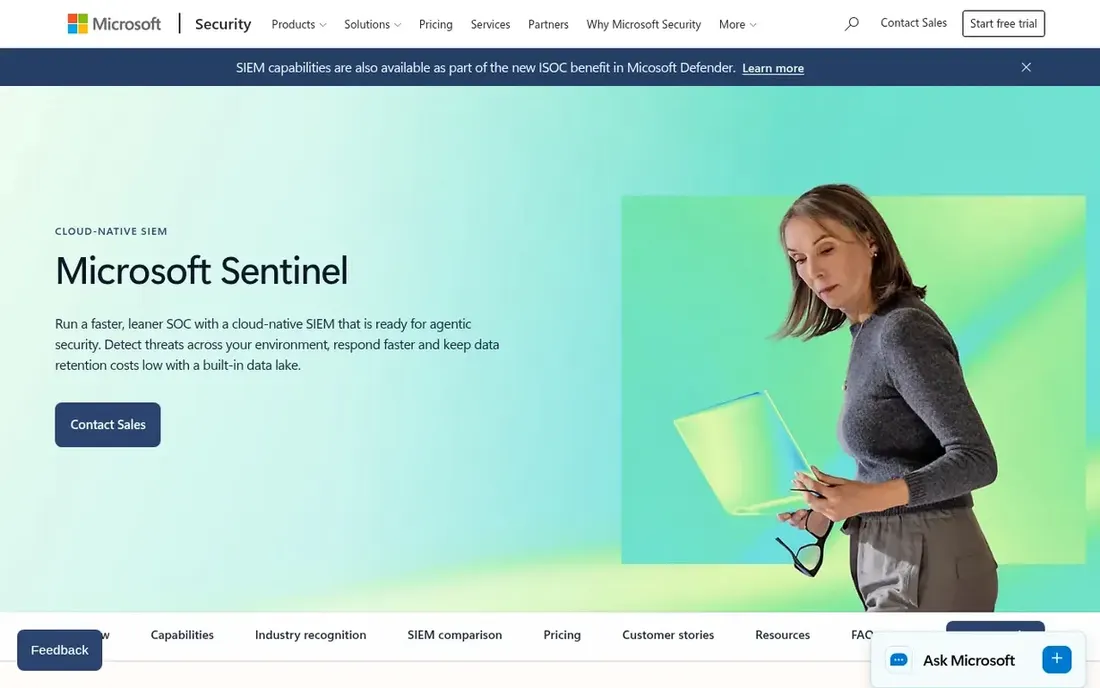
Microsoft Sentinel serves cloud-native SIEM with automatic response. If you need a highly customized, on-premises SIEM, consider alternatives like Splunk or IBM QRadar instead. Microsoft Sentinel is a cloud-native SIEM built to help security operations centers detect threats quicker and automate response.
It uses a data lake architecture intended to lower SIEM costs whereas supporting leaner SOC workflows. Data ingestion and retention costs can also need planning. Sentinel's strengths are closely tied to the Microsoft ecosystem, so mixed-vendor environments may need extra integration effort. Microsoft Sentinel shows no starting price here, so confirm the cost on the vendor site. Free options: Not stated.
What works well: Automates threat response to cut manual work.
Downsides: Deep integration favors Microsoft-centric environments.
- Cloud-native SIEM built for quicker SOC operations
- Data lake approach aims to lower SIEM costs
- Cost management can need careful data planning
Selection criteria
Each tool was reviewed on what its vendor publishes: price, plan limits, core features and stated drawbacks. We did not run hands-on tests. Prices and plan limits come from vendor pages and can change, so confirm them on the vendor site before you buy. Tools are placed by general fit for AI platforms for Real-Time threat detection, with price clarity and free access as tie-breakers. A different team can reasonably rank them differently.
What to confirm before you sign up
- Confirm the entry price on the vendor page. For Palo Alto Networks Cortex XSIAM, Splunk Enterprise Security, Darktrace and Microsoft Sentinel that means a quote rather than a fixed price.
- Take the trial from CrowdStrike Falcon and push a live task through it before you pay.
- Before choosing Palo Alto Networks Cortex XSIAM, weigh its main limit: system depth may need ramp-up time.
- Confirm that CrowdStrike Falcon connects to the apps your team already uses, on the plan you would actually buy.
- Look at the help docs and support options for Darktrace before you commit.
FAQ
What should I look for in an AI system for live threat detection?
Focus on detection speed, automation of response, and integration with your existing tools. Also consider the deployment model and how well the system suits your team's skills and workflows.
How do SIEM platforms like Microsoft Sentinel differ from endpoint-focused tools like CrowdStrike Falcon?
SIEM products centralize and analyze log data from numerous sources, whereas endpoint-focused tools like CrowdStrike Falcon protect devices and workloads straight. Plenty of organizations use both for layered defense.
Does any tool for AI platforms for Real-Time threat detection here have a free plan?
No tool in this list, Palo Alto Networks Cortex XSIAM and Microsoft Sentinel included, has a permanent free plan. CrowdStrike Falcon offer a trial. Trials and quotes are the usual route, so plan a short evaluation period.
Can Darktrace replace a traditional SIEM?
It may not offer the long-term log retention and wide data correlation that a full SIEM gives you. So some teams pair it with a SIEM.
How are the tools for AI platforms for Real-Time threat detection ordered?
Palo Alto Networks Cortex XSIAM sits first and Microsoft Sentinel last because the order follows typical fit for AI platforms for Real-Time threat detection, then price clarity and free access. It is a judgement call, so read each profile for fit and limits.
Can I try these tools before paying?
Often, yes. CrowdStrike Falcon offers a free trial. Use your own data and a real task during the test, and check what the free tier or trial limits before you rely on it. For the full picture, the cards above cover all 5 entries of this AI platforms for Real-Time threat detection list, including price, free plan and limits.
Sources
- https://www.paloaltonetworks.com/cortex/cortex-xsiam
- https://www.splunk.com/en_us/products/enterprise-security.html
- https://www.crowdstrike.com/platform
- https://darktrace.com
- https://www.microsoft.com/en-us/security/business/siem-and-xdr/microsoft-sentinel