Best Cybersecurity Threat Intel Software in 2026: 9 Platforms Compared
Compare the best cybersecurity threat intel software for your SOC. We review 9 platforms on feeds, actor context, integrations, and pricing clarity now.

- Editor's choice
 Recorded Future
Enterprise SOCs needing analyst context
Starts atSee websiteVisit recordedfuture.comFull review - Great alternative
 CrowdStrike Falcon Adversary Intelligence
Falcon customers needing adversary context
Starts atSee websiteVisit crowdstrike.comFull review - Also consider
 Mandiant Advantage
Incident-driven actor and campaign research
Starts atSee websiteVisit cloud.google.comFull review
TL;DR:
- Recorded Future and Mandiant lead on analyst research and actor context, but both are enterprise-priced and quote-based.
- CrowdStrike Falcon Adversary Intelligence is the strongest choice if you already run Falcon endpoints, since intel ties directly to your detections.
- AlienVault OTX is the best free starting point, with community pulses and indicators you can use before buying a commercial feed.
- Most commercial threat intel pricing is quoted, so compare the modules, data sources, and integrations included, not just the headline price.
Quick comparison
| Tool | Best for | Starts at | Free plan? | |
|---|---|---|---|---|
| Recorded Future | Enterprise SOCs needing analyst context | See website | No | Visit |
| CrowdStrike Falcon Adversary Intelligence | Falcon customers needing adversary context | See website | No | Visit |
| Mandiant Advantage | Incident-driven actor and campaign research | See website | No | Visit |
 Anomali ThreatStream | STIX-based intel operationalization | See website | No | Visit |
 ThreatConnect | Mid-market teams with SOAR workflows | See website | No | Visit |
 EclecticIQ Intelligence Center | Regulated European buyers | See website | No | Visit |
 Microsoft Defender Threat Intelligence | Microsoft-centric security teams | See website | No | Visit |
 AlienVault OTX | Free community threat sharing | Free | Yes | Visit |
 Flashpoint | Dark web and illicit community research | See website | No | Visit |
The best cybersecurity threat intel software
Threat intel software turns raw indicators into decisions: which IP to block, which vulnerability to patch first, and which actor is targeting your industry. The platforms below range from free community feeds to enterprise intelligence clouds, and the right pick depends on your team size, existing tools, and how much analyst context you need.

Recorded Future is our pick for a mature SOC that needs context, not just indicators. Its Intelligence Graph links IPs, domains, malware, vulnerabilities, and actors, and Intelligence Cards give analysts evidence behind each verdict. The Insikt Group research adds human analysis to automated collection, which helps when a new campaign or vulnerability needs a judgment call.
The drawbacks are price and complexity. Pricing is quoted and sized to your organization, and smaller teams can find the platform expensive once modules are added. The query language and report options also take training. If you have dedicated analysts and a SIEM to feed, Recorded Future is hard to beat. If you do not, start with OTX and a narrower commercial feed.
- Broad open, dark web, and technical collection
- Analyst research from Insikt Group
- Strong SIEM and SOAR integrations
- Enterprise pricing with no public list price
- Large data set takes time to learn
- Some modules are licensed separately
CrowdStrike Falcon Adversary Intelligence
Best for: Falcon customers needing adversary context
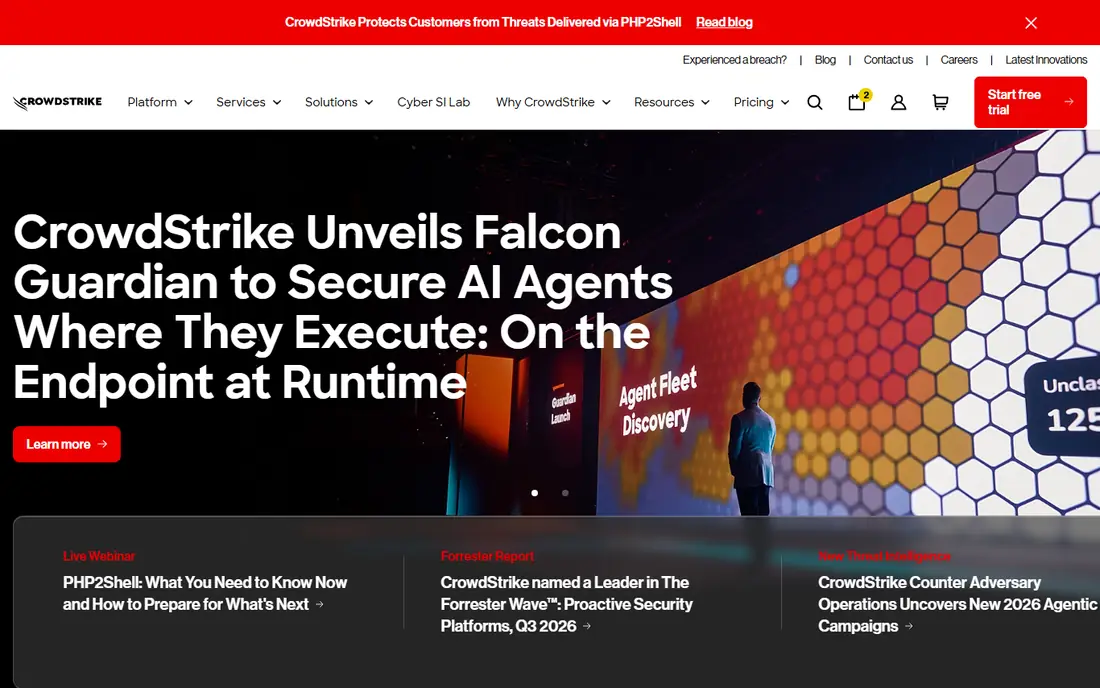
CrowdStrike Falcon Adversary Intelligence, formerly Falcon Intelligence, suits teams already running Falcon endpoints. Intel is personalized to your industry, tech stack, and live detections, so a profile is prioritized when it matches something your sensors actually saw. Adversary profiles cover tactics, targeting patterns, and intrusion details, and the premium tier adds threat hunting guides.
The catch is ecosystem fit. If you do not run Falcon, you lose the detection tie-in that makes this product distinctive, and you should compare Recorded Future or Mandiant instead. Confirm whether the intel features you need are included in your endpoint license or sold as an add-on. For Falcon shops, it is the most direct path from intel to action.
- Ties intel to your Falcon detections
- Tracks hundreds of named adversaries
- Malware sandbox and dark web tracking included
- Best value inside the Falcon ecosystem
- Premium guides sit on the higher tier
- Licensing needs careful checking
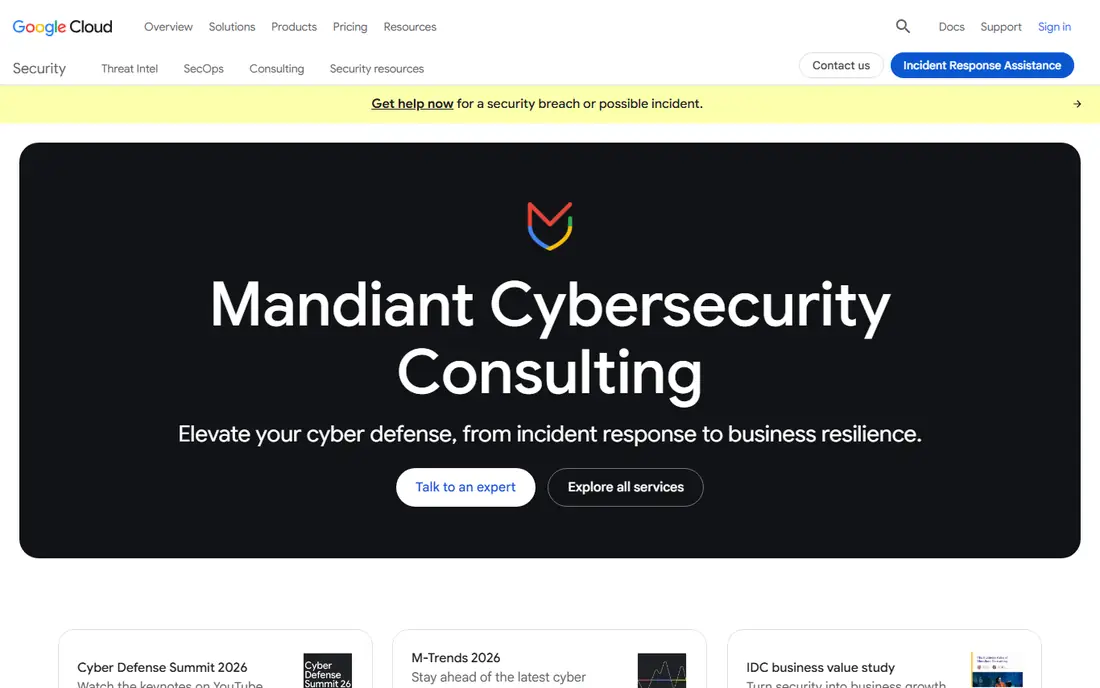
Mandiant Advantage, now part of Google Cloud security, brings incident response experience into threat intel. Its actor profiles and campaign reports draw on investigations, not only open sources, which gives teams a clearer view of how an actor actually operates. Custom threat profiles narrow the feed to your industries and regions, cutting noise for busy analysts.
Pricing is not published and runs through Google Cloud sales, so budgeting takes a conversation. Teams outside the Google ecosystem may also face extra procurement steps to pair Mandiant with their SIEM or SOAR. For DFIR-heavy teams and Google Cloud shops, Mandiant is one of the most credible research sources available.
- Research grounded in incident investigations
- Detailed actor and campaign profiles
- MITRE ATT and CK mapped techniques
- Pricing is quoted through Google Cloud sales
- Full value may need other Google security products
- Enterprise focus
Anomali ThreatStream helps teams turn feeds into detections. It collects and curates threat data, enriches indicators with context, and pushes relevant items into SIEM, firewall, and endpoint tools. Organizations that take part in industry sharing groups will value its ISAC integrations and STIX support, which make sharing and consuming intel in a standard format simpler.
ThreatStream is an enterprise product with quoted pricing, so small teams should expect a sales process. It also needs tuning: feeds must be filtered to your industry and tools, or analysts will drown in low-value indicators. For a mid-size to large SOC with a sharing mandate, Anomali is a proven operational platform.
- STIX-native platform
- Strong ISAC and sharing integrations
- Curated feeds with enrichment and detection rules
- Enterprise pricing is quoted
- Setup and tuning need analyst time
- Interface can feel dense for new users
ThreatConnect appeals to teams that want intel and response in one place. Its platform manages indicators, actor profiles, and cases, while orchestration tools automate enrichment and response steps across your security stack. That combination suits a mid-market SOC that cannot afford separate intel, case, and SOAR tools for every job.
The trade-off is design work. Orchestration only pays off if you map your processes first, and the research depth is narrower than Recorded Future or Mandiant. Pricing is quoted, so compare the intel and orchestration modules you actually need. For a team ready to automate triage, ThreatConnect is a practical middle option.
- Combines intel management with orchestration
- Good fit for mid-market SOCs
- Broad integration library
- Quote-based pricing
- Orchestration features need process design
- Smaller research team than the largest rivals
EclecticIQ Intelligence Center is an analyst workbench built around structured intel. It supports STIX models, analyst collaboration, and sharing workflows that suit regulated industries and government-adjacent teams, especially in Europe. Analysts can build, link, and publish intelligence products in a consistent format, which helps teams that must show their work.
EclecticIQ is less visible in the US market than Recorded Future or CrowdStrike, so integration coverage should be checked against your stack. Pricing is quoted, and the platform rewards teams with trained analysts. For a regulated buyer that values structured analysis and sharing, it is a strong specialist choice.
- STIX-native analyst workbench
- Strong fit for regulated sectors
- Good collaboration and sharing tools
- Quote-based enterprise pricing
- Smaller US presence than rivals
- Implementation takes analyst time
Microsoft Defender Threat Intelligence
Best for: Microsoft-centric security teams
Microsoft Defender Threat Intelligence suits teams already licensed for Microsoft security products. It draws on Microsoft telemetry and the Defender graph to give context on IPs, domains, and actors, and it pairs with Security Copilot for analyst workflows. If you already pay for E5, check whether the intel features you need are included before buying a separate feed.
Outside Microsoft licensing, the value case is weaker, since standalone pricing and scope are less clear than with dedicated intel vendors. It also leans on Microsoft data rather than the independent research depth of Mandiant. For a Microsoft shop, it is a low-friction addition. For others, a dedicated platform will usually fit better.
- Deep Microsoft telemetry and graph data
- Included with some E5 licensing
- Works with Security Copilot workflows
- Best value inside Microsoft licensing
- Standalone pricing is unclear
- Less independent research than Mandiant or Recorded Future
AlienVault OTX, run by LevelBlue, is the best free threat intel starting point. Anyone can browse pulses, search indicators, and use the API to pull community-shared data into a SIEM or script. For a small team or a student SOC, OTX gives you real, current indicators without a budget or a sales call.
The catch is curation. Community pulses vary in quality, so you must validate indicators before you block on them, or you risk false positives. There is no analyst research team behind each pulse, and no support contract. Used as a supplement to a commercial feed, or as a learning tool, OTX is excellent. Used alone for automated blocking, it needs careful filtering.
- Free community pulses and indicators
- API access for programmatic use
- Easy to start with no sales process
- Community quality varies
- No vendor support or analyst research
- You must curate pulses before blocking
Flashpoint focuses on where threats are planned and traded: illicit forums, chat groups, and dark web markets. Its research helps teams track actors, leaked credentials, fraud, and brand abuse that never appear in a standard indicator feed. Security and fraud teams that need early warning from underground sources will find value here that broader platforms cover less deeply.
Flashpoint is not a general-purpose replacement for a broad intel platform, since its strength is underground coverage rather than vulnerability or endpoint context. Pricing is quoted, and the data rewards analysts who know how to investigate actors. Pair it with a broad feed for coverage, or use it alone if underground research is your main need.
- Deep illicit community and dark web coverage
- Strong actor and fraud research
- Useful for brand and credential monitoring
- Quote-based pricing
- Narrower general intel scope than Recorded Future
- Needs analyst time to use well
How we picked these
We compared official product pages, vendor documentation, and 2026 comparisons of threat intel platforms, focusing on data sources, analyst research, integrations, and pricing transparency. We favored platforms that are live today and serve a distinct need, from free community sharing to enterprise intelligence clouds. We did not claim hands-on SOC testing, and we treated quoted pricing as quoted.
How to choose without buying twice
Start with the question your team must answer most often. If it is which vulnerability to patch first, you need vulnerability context and exploit data. If it is who is targeting you, you need actor and campaign research. If it is what to block now, you need high-confidence indicators that feed your firewall and SIEM automatically.
Feed your existing tools first
Check native integrations for your SIEM, SOAR, firewall, and endpoint tools before you buy. A feed that cannot push indicators into your stack will sit in a portal while analysts copy data by hand. Ask for a trial that includes an integration test, not just portal access.
Measure value in analyst hours saved
Track how many indicators your team validates, how often intel changes a decision, and how much triage time automation saves. A cheaper feed that floods analysts with low-confidence indicators can cost more in labor than a pricier feed with better curation. Review feed value each quarter and cut sources that never change a decision.
FAQ
What is cybersecurity threat intel software?
It is software that collects, analyzes, and shares information about threats, actors, malware, and vulnerabilities, so security teams can prevent, detect, and respond faster. Good intel includes context and evidence, not just lists of IPs and domains, and it feeds tools such as SIEMs, firewalls, and endpoint platforms.
Is free threat intel enough for a small business?
Free sources such as AlienVault OTX can be enough for basic awareness and indicator checks, especially when paired with good patching and endpoint protection. Larger or targeted organizations usually need a commercial feed for analyst research, higher-confidence indicators, and support.
How is threat intel different from antivirus?
Antivirus and endpoint protection block known malicious files and behavior on a device. Threat intel is broader: it tells you which actors, campaigns, and vulnerabilities matter to your organization, so you can prioritize patches, hunting, and defenses before an attack reaches a device.
Should threat intel feed my SIEM automatically?
Yes, for high-confidence indicators, automatic feeding saves analyst time and speeds blocking. Low-confidence or community indicators should be validated first, or you risk blocking legitimate traffic. Use confidence scores and your industry relevance to decide what flows automatically.
How much does threat intel software cost?
Free community tools cost nothing, while commercial platforms are usually quoted and can run from tens of thousands to hundreds of thousands of dollars a year, depending on modules and organization size. Always confirm which modules, users, and integrations are included in a quote.
Sources
- https://www.recordedfuture.com
- https://www.crowdstrike.com
- https://cloud.google.com/security/mandiant
- https://www.anomali.com
- https://threatconnect.com
- https://www.eclecticiq.com
- https://www.microsoft.com/en-us/security/business/threat-protection/microsoft-defender-threat-intelligence
- https://otx.alienvault.com
- https://flashpoint.io