Best AI Optimization Tools in 2026: 8 Platforms Compared
Compare the best AI optimization tools for AI search visibility, content scoring and prompt tracking, with pricing, strengths and limits for each platform.
- Editor's choice
 Otterly AI
Small teams starting AI tracking
Starts at$29 per monthVisit otterly.aiFull review - Great alternative
 Profound
Enterprise AI visibility analytics
Starts atSee websiteVisit tryprofound.comFull review - Also consider
 Surfer
Content optimisation for search and AI
Starts at$89 per monthVisit surferseo.comFull review
TL;DR:
- AI optimisation splits into three jobs: tracking how AI answers mention you, fixing the content those answers cite, and making sure AI crawlers can read your pages.
- No single tool covers all three jobs well, so many teams pair a tracking platform with a content optimiser.
- Prompt coverage, citation tracking and competitor comparison matter more than a single visibility score.
- Prices rise fast with prompt volume and seats, so check what is included before you judge a starting price.
- Content tools still need human review, since AI search rewards clear facts, sources and direct answers.
Quick comparison
| Tool | Best for | Starts at | Free plan? | |
|---|---|---|---|---|
| Otterly AI | Small teams starting AI tracking | $29 per month | Free trial | Visit |
| Profound | Enterprise AI visibility analytics | See website | Free trial | Visit |
| Surfer | Content optimisation for search and AI | $89 per month | No | Visit |
 Clearscope | Editorial content scoring | $129 per month | Free trial | Visit |
 Frase | Affordable briefs and drafting | $49 per month | Free trial | Visit |
 MarketMuse | Topical authority and strategy | See website | Free trial | Visit |
 Goodie AI | End-to-end GEO for larger brands | $495 per month | No | Visit |
 Peec AI | Prompt-level benchmarking | $89 per month | Free trial | Visit |
The best AI optimization tools
AI optimisation tools help brands appear in answers from ChatGPT, Perplexity, Gemini, Copilot and Google AI Overviews, not only in classic search results. We compared official pricing pages, feature lists and public product documentation for the platforms below. Prices are starting prices where published, and See website is used where a vendor does not publish a fixed entry price.
Otterly AI is a practical starting point if you mainly need to know where your brand shows up in AI answers. It tracks prompts, mentions and citations across major engines, which gives a team a shared baseline instead of anecdotal checks in a chatbot. That baseline is useful for monthly reporting and for spotting competitors that appear more often for the same questions. The catch is that insight is only half the job. Once Otterly AI shows a gap, you still need to update pages, add clear facts and improve structure, often with a content tool. Check prompt limits and refresh frequency on your plan, since both affect how useful the data is for a busy site.
- Covers major AI engines in one dashboard
- Prompt and citation tracking
- Approachable entry price
- Tracking alone does not fix content gaps
- Higher prompt volumes cost more
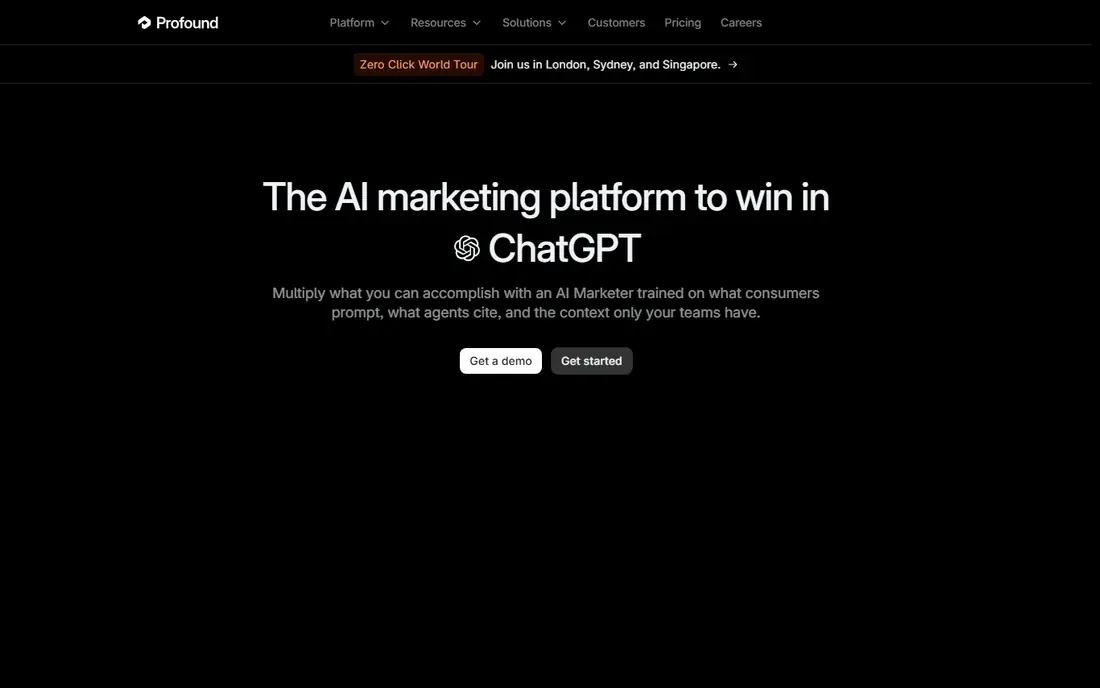
Profound is aimed at larger brands that need defensible AI visibility data across many prompts, markets and competitors. Its analytics focus helps marketing leaders connect AI mentions to pages, topics and share of voice, rather than relying on a single score. That depth suits teams that report to senior staff or manage many product lines. For a small business, the platform may feel heavy and the cost may be hard to justify before the basics are in place. Ask for a demo using your own brand prompts, and check how data can be exported for reporting. A trial is useful, but only if you test prompts that match real customer questions.
- Deep AI visibility analytics
- Enterprise reporting
- Broad engine coverage
- Pricing is not published for entry plans
- May be more than small teams need

Surfer helps writers shape pages around the terms, entities and structure that top results already use. That makes it a strong partner to a tracking tool, because it turns a visibility gap into a concrete edit list. It works well for updating older pages that rank but are rarely cited in AI answers, since those pages often lack direct answers, clear headings or supporting facts. The risk is over-optimisation. Chasing a perfect score can produce stiff copy that reads well to a tool and poorly to a person. Use Surfer as a checklist, then edit for clarity and accuracy. Also check whether AI features are included in your plan or charged separately.
- Clear content scores and entity guidance
- Audit tools
- Strong for updating existing pages
- No free plan
- Scores should not replace editorial judgement
Clearscope is best known for content grading that helps editors cover a topic fully without stuffing keywords. Its reports show relevant terms and readability signals, which helps a writer produce a page that answers the question in full. For teams that publish fewer, higher-quality articles, that focus can be worth the price. It is not a replacement for AI visibility tracking, since its strength is the page itself rather than prompt-level monitoring across engines. If you buy Clearscope, pair it with a tracking tool or a regular manual check of AI answers for your main topics. Also check credit limits, since each report or optimisation run may use credits.
- Precise editorial optimisation
- Clear term guidance
- Good for quality-focused teams
- Higher entry price
- Less of a full tracking suite
Frase suits small teams that need briefs quickly and want AI help with first drafts. It can pull together questions, headings and competing page structure, which cuts the blank-page stage for many articles. That speed matters for firms that publish regularly but do not have a large editorial team. The trade-off is quality control. AI drafts can sound confident while getting facts, dates or product details wrong, so every draft needs checking against primary sources. Frase also works best when the brief is reviewed by someone who knows the topic, rather than handed straight to publication. Check document limits and whether AI writing credits are shared across your team.
- Affordable briefs
- AI drafting support
- Fast for small content teams
- Drafts need careful fact checking
- Depth varies by topic
MarketMuse looks at content strategy across a whole site, not just one page. It helps teams spot topic gaps, prioritise clusters and decide which pages to create or improve first. That site-level view is valuable for publishers and B2B firms with hundreds of pages, where random article ideas waste effort. For a small site with a handful of pages, the analysis may feel like more than you need, and the price may be harder to justify. Ask for a demo on your own site structure, and check how recommendations are updated as you publish. The best use is as a planning layer, with a writing tool handling the page-level work.
- Strong topical authority analysis
- Content planning at site level
- Useful for large content programmes
- Pricing is not simple to compare
- Learning curve for new users
Goodie AI aims to cover monitoring, optimisation recommendations and attribution in a single platform. That breadth appeals to mid-market and enterprise brands that want one workflow from prompt data to content tasks to reporting. Its coverage across many AI engines and languages also helps global brands that need regional views. The clear drawback is price. At this entry level, a small team should be sure it will use the optimisation and attribution features, not just the tracking dashboard. Ask what onboarding includes, how prompt libraries are built, and how attribution is calculated, since those definitions vary a lot between vendors.
- Monitoring plus optimisation and attribution in one platform
- Broad engine coverage
- Multilingual tracking
- High entry price
- Overkill for small sites
Peec AI focuses on prompt-level tracking and benchmarking, which helps teams compare their visibility with named competitors for the same questions. That is useful when a buying decision depends on a small set of high-value prompts, such as product comparisons or service questions. Its international coverage also suits brands that sell in more than one language or market. Peec AI is less of an all-in-one content suite, so you may still need a separate tool to rewrite pages. Check how many prompts and competitors are included, how often data refreshes, and whether sentiment or citation detail is included at your tier.
- Prompt-level benchmarking across languages
- Competitor comparison
- Clear entry price
- Smaller brand than some rivals
- Optimisation workflow is less central
How we picked these
We compared official feature pages, pricing pages and public documentation for tools that track AI search visibility, score content or plan topical coverage. We favoured platforms with clear engine coverage, prompt-level reporting and current pricing information, and we included both tracking platforms and content tools because most teams need both. We did not include tools that only generate text with no search or visibility function. Where pricing was not published, we used See website rather than guessing a figure.
How to choose an AI optimisation tool
Start with the job you need done this quarter. If you do not know how AI answers currently treat your brand, start with tracking. Build a prompt list from real customer questions, sales calls and support tickets, then add competitor prompts for the same topics. Run that list for a month before buying content tools, since the gaps you find will tell you which pages need work. If you already know the gaps, a content tool may deliver faster value.
Next, check data quality and limits. Ask which engines are tracked, how often prompts refresh, how citations are counted and whether you can export raw data. A single visibility percentage can hide useful detail, such as appearing in an answer but not being cited as a source. Also check seat limits, prompt limits and API access, since those are common reasons for surprise upgrades. For content tools, test one real page from your site, not a demo topic, and judge the output on accuracy and readability.
Finally, set a simple workflow. Tracking without action wastes money, and content edits without tracking waste effort. Assign one owner for prompt data, one for page updates and a monthly review where gaps become tasks. Keep pages factual, cite primary sources where possible, and answer the core question near the top of the page. AI answers favour pages that are clear, current and easy to quote, and no tool can fix a page that is vague or out of date.
FAQ
What are the best AI optimization tools for a small business?
Otterly AI and Frase are sensible starting points, since they cover tracking and content work at lower entry prices than enterprise platforms. Start with a small prompt list and a few key pages, then expand only if the data leads to clear content tasks. A small team should avoid paying for enterprise attribution before the basics are covered.
What is the difference between best AI optimization platforms and classic SEO tools?
Classic SEO tools mainly track Google rankings, keywords and backlinks. AI optimisation platforms track how brands appear inside AI answers, including mentions, citations and share of voice across chatbots and AI Overviews. Many teams use both, since classic rankings still drive traffic while AI answers shape early research.
Do AI optimization tools guarantee visibility in ChatGPT or Perplexity?
No tool can guarantee a mention or citation, since AI answers depend on many sources, prompt wording and model behaviour. A good tool shows where you appear, where competitors appear and which pages might improve your chances. Treat any guarantee of AI rankings with caution and ask for the method behind the claim.
How many prompts should I track?
Start with 20 to 50 prompts that reflect real buying questions, then expand to competitor and comparison prompts. Too few prompts give a noisy picture, while too many prompts raise cost without adding decisions. Review the list each quarter and remove prompts that no longer match customer language.
Can I use Surfer or Clearscope alone for AI optimisation?
You can improve pages with either tool, but you will not know how AI engines treat those pages without tracking. Content scoring helps with coverage and structure, while tracking shows mentions and citations. Pairing one content tool with one tracking tool usually gives a clearer picture than either alone.