Best Agentic Tools in 2026: 8 Tools Compared
Compare the best agentic tools for building AI agents, from LangGraph and CrewAI to Copilot Studio, Agentforce, and UiPath, with pricing notes and guidance.
- Editor's choice
 LangGraph
Stateful developer agents
Starts atFreeVisit langchain.comFull review - Great alternative
 CrewAI
Multi-agent role teams
Starts atFreeVisit crewai.comFull review - Also consider
 Microsoft Copilot Studio
Microsoft 365 agents
Starts atSee websiteVisit microsoft.comFull review
TL;DR:
- LangGraph and CrewAI suit developer teams building custom agents.
- Copilot Studio and Agentforce suit teams already on Microsoft or Salesforce.
- Zapier Agents and Lindy suit business teams that need agents without code.
- Watch model, hosting, and per-action costs, since framework prices often exclude them.
Quick comparison
| Tool | Best for | Starts at | Free plan? | |
|---|---|---|---|---|
| LangGraph | Stateful developer agents | Free | Yes | Visit |
| CrewAI | Multi-agent role teams | Free | Yes | Visit |
| Microsoft Copilot Studio | Microsoft 365 agents | See website | Free trial | Visit |
 Salesforce Agentforce | Salesforce CRM agents | See website | Free trial | Visit |
 UiPath Agentic Automation | RPA plus agent automation | See website | Free trial | Visit |
 ServiceNow AI Agents | IT and employee workflows | See website | Free trial | Visit |
 Zapier Agents | No-code agents across apps | $19.99 per month | Yes | Visit |
 Lindy | No-code business agents | $49.99 per month | Yes | Visit |
The best agentic tools
Agentic tools range from developer frameworks to no-code builders, so we mixed both and noted who each tool is really built for.
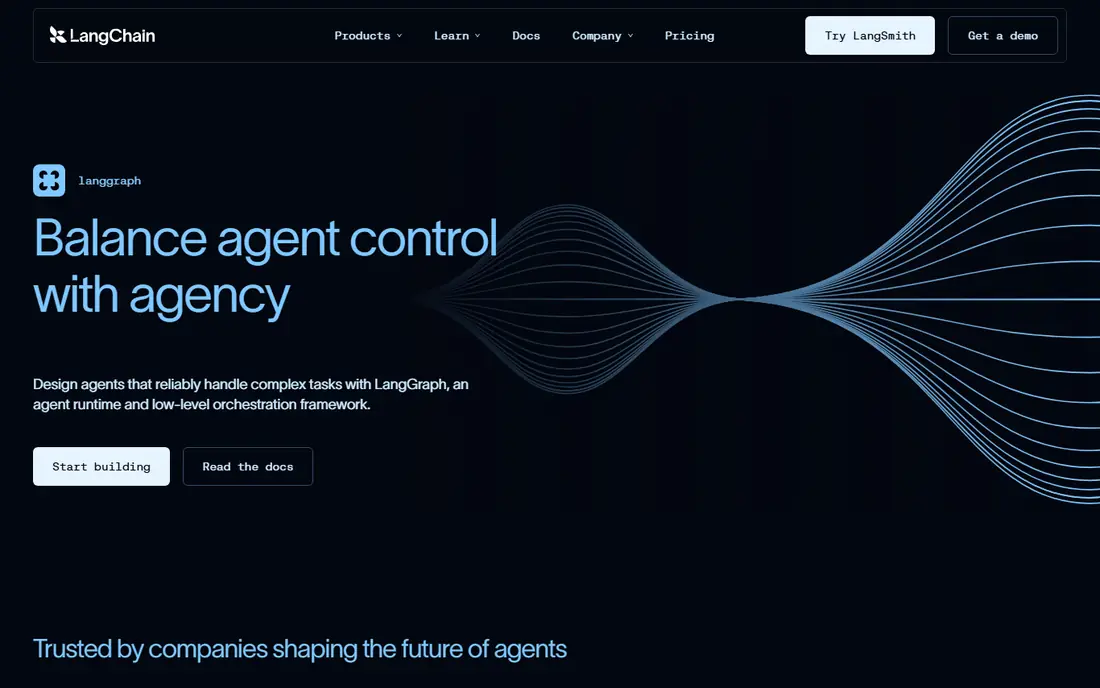
For teams that need stateful developer agents, LangGraph stands out because it gives developers a graph model for agents that must remember state and recover from failures. its checkpoints and human-in-the-loop controls suit long workflows such as research and document handling That combination makes it a clear fit for the use case in its best-for line, rather than a general tool that happens to cover the topic in passing. We compared its official feature pages and pricing notes against the other options here, and it held up on the core job, even where some advanced features sit on higher tiers.
The honest catch is that business teams wanting a ready agent in a day should look at a no-code builder instead Ask for a trial or a guided demo on your own data before you commit, and check contract terms, support hours, and any usage limits that could change the total cost. If that catch touches a daily workflow for your team, weigh the next option on this list before you decide.
- Graph model for branching and retries
- Persistent state and checkpoints
- Large ecosystem
- Developer only
- Hosting and model costs are separate
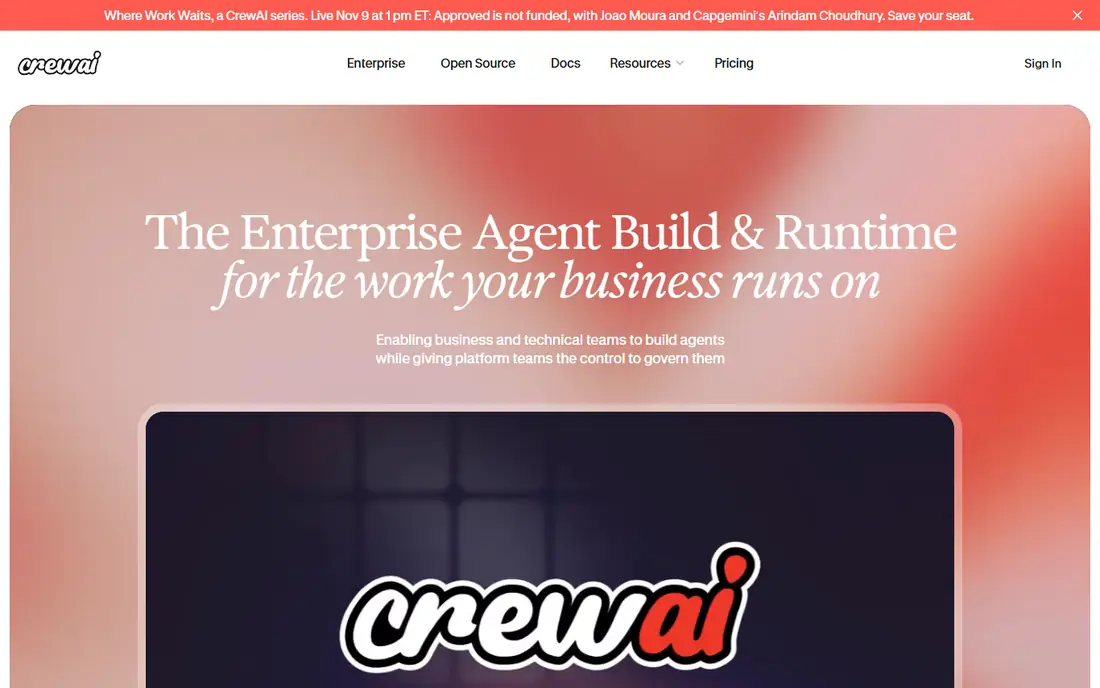
If multi-agent role teams is your main job to solve, CrewAI is worth a close look, since it lets teams define agents with roles, goals, and tools that work together. its role model is easy to explain to stakeholders, which helps when scoping a multi-agent project That combination makes it a clear fit for the use case in its best-for line, rather than a general tool that happens to cover the topic in passing. We compared its official feature pages and pricing notes against the other options here, and it held up on the core job, even where some advanced features sit on higher tiers.
The honest catch is that teams needing enterprise governance out of the box may need added controls and monitoring Ask for a trial or a guided demo on your own data before you commit, and check contract terms, support hours, and any usage limits that could change the total cost. If that catch touches a daily workflow for your team, weigh the next option on this list before you decide.
- Role-based agent teams
- Fast setup for research and analysis
- Open source core
- Production hosting and evaluation need extra work
- Model costs are separate
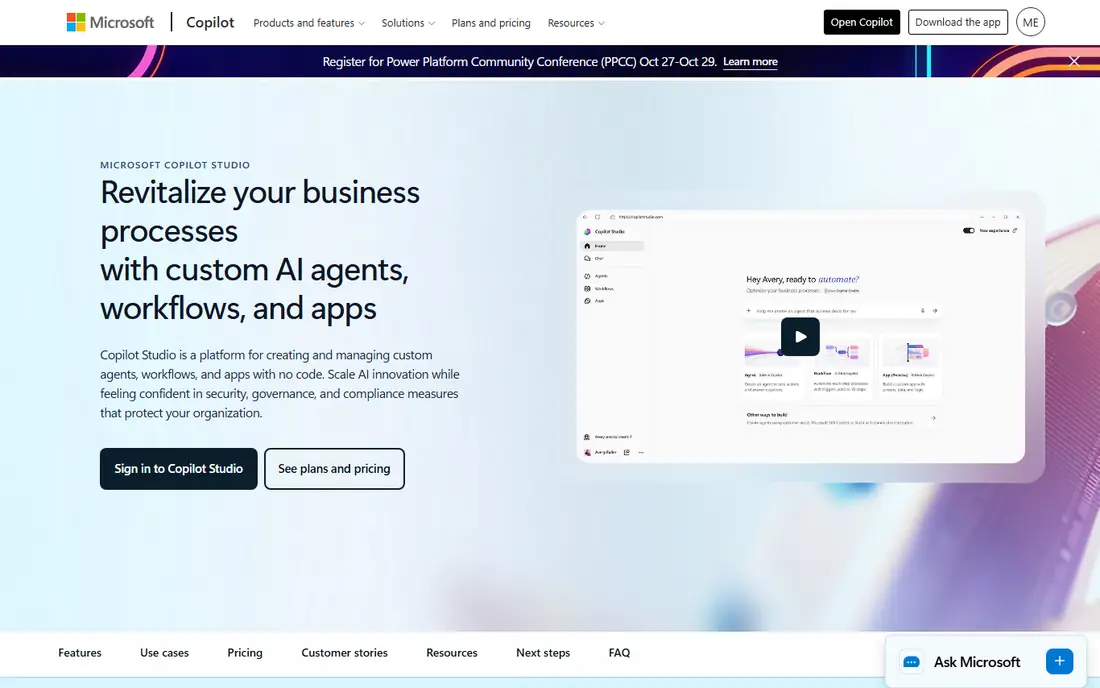
We place Microsoft Copilot Studio here for buyers focused on microsoft 365 agents, because it lets Microsoft shops build agents inside tools staff already use. its connectors to Microsoft 365 data help agents answer from internal documents and systems That combination makes it a clear fit for the use case in its best-for line, rather than a general tool that happens to cover the topic in passing. We compared its official feature pages and pricing notes against the other options here, and it held up on the core job, even where some advanced features sit on higher tiers.
The honest catch is that teams not standardised on Microsoft should check connector coverage and total licence cost Ask for a trial or a guided demo on your own data before you commit, and check contract terms, support hours, and any usage limits that could change the total cost. If that catch touches a daily workflow for your team, weigh the next option on this list before you decide.
- Visual agent builder
- Microsoft 365 and Power Platform links
- Governance options
- Pricing mixes licences and consumption
- Depth outside Microsoft varies
Salesforce Agentforce suits organisations where salesforce crm agents matters most, and it builds agents that can act on Salesforce records and workflows. its CRM context helps agents handle service, sales, and support tasks with account history in view That combination makes it a clear fit for the use case in its best-for line, rather than a general tool that happens to cover the topic in passing. We compared its official feature pages and pricing notes against the other options here, and it held up on the core job, even where some advanced features sit on higher tiers.
The honest catch is that organisations outside Salesforce will get less value, and per-conversation costs need testing Ask for a trial or a guided demo on your own data before you commit, and check contract terms, support hours, and any usage limits that could change the total cost. If that catch touches a daily workflow for your team, weigh the next option on this list before you decide.
- CRM-native agents
- Guided setup
- Salesforce data and workflow links
- Consumption pricing needs careful modelling
- Best value inside Salesforce
When rpa plus agent automation is the deciding factor, UiPath Agentic Automation deserves a demo, because it joins agent reasoning with proven automation for legacy and modern systems. its ability to drive existing applications suits firms with older systems that lack APIs That combination makes it a clear fit for the use case in its best-for line, rather than a general tool that happens to cover the topic in passing. We compared its official feature pages and pricing notes against the other options here, and it held up on the core job, even where some advanced features sit on higher tiers.
The honest catch is that smaller teams may find the platform and pricing heavier than a simple agent builder Ask for a trial or a guided demo on your own data before you commit, and check contract terms, support hours, and any usage limits that could change the total cost. If that catch touches a daily workflow for your team, weigh the next option on this list before you decide.
- Combines agents with RPA
- Strong enterprise controls
- Broad system coverage
- Pricing is quote-based
- Projects need automation expertise
Buyers who rank it and employee workflows first will find a lot to like in ServiceNow AI Agents, since it places agents inside ServiceNow workflows for IT, HR, and service tasks. its workflow controls and audit trails suit regulated firms that need clear approval paths That combination makes it a clear fit for the use case in its best-for line, rather than a general tool that happens to cover the topic in passing. We compared its official feature pages and pricing notes against the other options here, and it held up on the core job, even where some advanced features sit on higher tiers.
The honest catch is that teams without ServiceNow will face a larger adoption step than with a standalone builder Ask for a trial or a guided demo on your own data before you commit, and check contract terms, support hours, and any usage limits that could change the total cost. If that catch touches a daily workflow for your team, weigh the next option on this list before you decide.
- Workflow-native agents
- Strong governance
- ITSM and HR links
- Enterprise contracts
- Longer rollout for large estates
For a practical shortlist built around no-code agents across apps, Zapier Agents earns its place because it lets business users connect agents to the apps they already use. its broad app library means many first agents can be built without custom code That combination makes it a clear fit for the use case in its best-for line, rather than a general tool that happens to cover the topic in passing. We compared its official feature pages and pricing notes against the other options here, and it held up on the core job, even where some advanced features sit on higher tiers.
The honest catch is that developer teams needing deep control, custom memory, or complex branching may outgrow it Ask for a trial or a guided demo on your own data before you commit, and check contract terms, support hours, and any usage limits that could change the total cost. If that catch touches a daily workflow for your team, weigh the next option on this list before you decide.
- Thousands of app links
- Simple builder
- Quick first agents
- Complex reasoning and long memory are limited
- Usage limits apply
If you are weighing options mainly on no-code business agents, start with Lindy, because it offers ready templates that business teams can adapt quickly. its focus on everyday business tasks helps small teams automate follow-up and scheduling That combination makes it a clear fit for the use case in its best-for line, rather than a general tool that happens to cover the topic in passing. We compared its official feature pages and pricing notes against the other options here, and it held up on the core job, even where some advanced features sit on higher tiers.
The honest catch is that teams needing strict enterprise governance or custom integrations should test those limits early Ask for a trial or a guided demo on your own data before you commit, and check contract terms, support hours, and any usage limits that could change the total cost. If that catch touches a daily workflow for your team, weigh the next option on this list before you decide.
- Template agents for sales, support, and admin
- Simple setup
- Meeting and inbox links
- Monthly price rises with usage
- Custom logic is limited
How we picked these
We compared official product pages, pricing pages, documentation, and public reviews for tools that exist and work in October 2026, and we kept only products that truly fit the topic. We favoured tools with clear documentation, current pricing or a clear quote route, and a track record of serving real teams, and we noted where pricing depends on seats, usage, or contract size. We did not claim hands-on testing we did not do, and we checked that each website below is the product's own official homepage.
How to choose an agentic tool
Start with the job you need done each week, not the longest feature list. For agentic tools, write down who will use the tool daily, what data it must connect to, and what a good result looks like after 90 days. That short brief will rule out several options at once, because some tools are built for large teams with dedicated admins while others are built for small teams that need a fast start. Next, test the parts that matter most in a trial: setup time, import quality, permission controls, and reporting. Ask how pricing changes as seats, volume, or data grow, and ask what support is included on the plan you would actually buy. Finally, check security and data handling in plain terms, including single sign-on, audit logs, data location, and export options. Test guardrails early, including human approval for risky actions, tool permissions, logging, and rollback, since an agent that acts without limits is a risk. A tool that is easy to leave, with data you can export, is usually a safer long-term choice than a tool that locks your history inside one system.
FAQ
What are the best agentic platforms?
The best agentic platforms include LangGraph for developers, CrewAI for multi-agent teams, Microsoft Copilot Studio for Microsoft shops, and Salesforce Agentforce for Salesforce teams.
What are the best agentic systems platforms for enterprises?
Enterprise buyers often shortlist ServiceNow AI Agents, UiPath, IBM watsonx Orchestrate, and the major cloud agent builders, because they offer governance, audit trails, and admin controls.
What are the best agentic platform solutions for non-developers?
Non-developers often do better with Lindy, Zapier Agents, or Copilot Studio, which offer visual builders and templates, rather than a code framework.
Do agentic tools cost more than chatbots?
They can, because agents use model calls, tools, and sometimes per-conversation or per-action pricing. Budget for model and hosting costs separately from any platform licence.
How do I keep an agent safe?
Limit tool permissions, require human approval for money, data changes, or external messages, log every action, and test edge cases before a wide rollout.