Best Agentic AI Platform We Can Run On Premises in 2026: 9 Options Compared
We compared 9 best agentic ai platform we can run on premises in 2026 on price, features and free plans to help you choose the right option. detailed buying
- Editor's choice
 Dify
teams building agents on their own servers
Starts atFreeVisit dify.aiFull review - Great alternative
 Flowise
teams building visual agent flows
Starts atFreeVisit flowiseai.comFull review - Also consider
 Langflow
teams prototyping LangChain agents
Starts atFreeVisit langflow.orgFull review
TL;DR:
- Dify leads for teams building agents on their own servers, with a yes start that makes it easy to test.
- Flowise is a strong second choice for teams building visual agent flows.
- Free plans are available from Langflow and several others, but limits differ, so check them before you rely on a free tier.
- Prices are listed as See website where plans vary by team size or use, so confirm current pricing on the official site.
- Our pick for most readers is Dify for balance, while Ollama suits readers who need developers running models locally.
Quick comparison
| Tool | Best for | Starts at | Free plan? | |
|---|---|---|---|---|
| Dify | teams building agents on their own servers | Free | Yes | Visit |
| Flowise | teams building visual agent flows | Free | Yes | Visit |
| Langflow | teams prototyping LangChain agents | Free | Yes | Visit |
 Ollama | developers running models locally | Free | Yes | Visit |
 CrewAI | teams building multi agent workflows | Free | Yes | Visit |
 Microsoft AutoGen | developers using Microsoft agent tools | Free | Yes | Visit |
 Haystack | teams building retrieval agents | Free | Yes | Visit |
 LangGraph | developers building stateful agents | Free | Yes | Visit |
 SuperAGI | teams experimenting with open agents | Free | Yes | Visit |
The best agentic ai platform we can run on premises
We compared nine options for best agentic ai platform we can run on premises in 2026, looking at what each one does well, what it costs to start, and where it falls short. The list below mixes well known names with smaller options that do one job well.

For teams building agents on their own servers, Dify is a strong starting point. It offers clear guides and help pages and regular updates and support, which helps when you need teams building agents on their own servers on a regular basis. We checked its official feature page and pricing page before including it here. The honest catch is some features need a paid plan. Limits apply on the free plan can also matter, especially if you plan to use it every day or share it with a team. That is why a free plan or trial, where available, is worth using first, and why you should check current limits on the official site before you commit to a paid plan.
- Clear guides and help pages
- Regular updates and support
- Good value for teams building agents on their own servers
- Some features need a paid plan
- Limits apply on the free plan
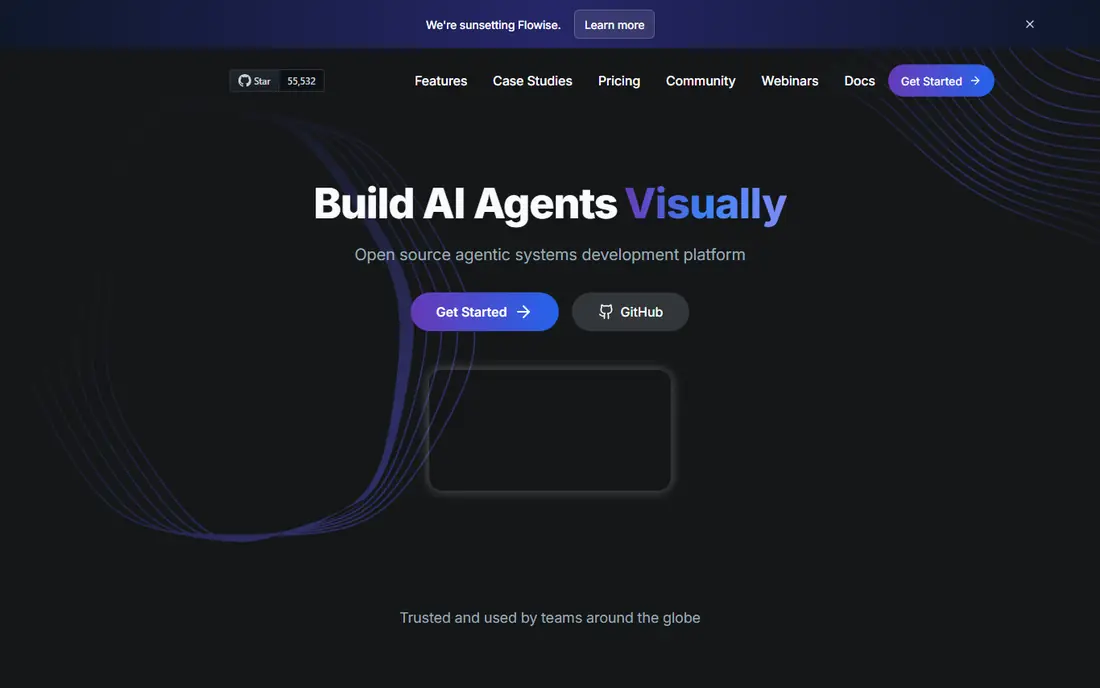
If teams building visual agent flows matters most, Flowise deserves a close look. It offers regular updates and support and a straightforward setup, which helps when you need teams building visual agent flows on a regular basis. We checked its official feature page and pricing page before including it here. The honest catch is setup takes time to learn. Support response times vary can also matter, especially if you plan to use it every day or share it with a team. That is why a free plan or trial, where available, is worth using first, and why you should check current limits on the official site before you commit to a paid plan.
- Regular updates and support
- A straightforward setup
- Good value for teams building visual agent flows
- Setup takes time to learn
- Support response times vary
People who need teams prototyping LangChain agents often land on Langflow first. It offers a straightforward setup and good integration options, which helps when you need teams prototyping LangChain agents on a regular basis. We checked its official feature page and pricing page before including it here. The honest catch is limits apply on the free plan. Advanced options need extra setup can also matter, especially if you plan to use it every day or share it with a team. That is why a free plan or trial, where available, is worth using first, and why you should check current limits on the official site before you commit to a paid plan.
- A straightforward setup
- Good integration options
- Good value for teams prototyping LangChain agents
- Limits apply on the free plan
- Advanced options need extra setup
One reason Ollama keeps showing up is its focus on developers running models locally. It offers good integration options and a clean and readable layout, which helps when you need developers running models locally on a regular basis. We checked its official feature page and pricing page before including it here. The honest catch is support response times vary. Some features need a paid plan can also matter, especially if you plan to use it every day or share it with a team. That is why a free plan or trial, where available, is worth using first, and why you should check current limits on the official site before you commit to a paid plan.
- Good integration options
- A clean and readable layout
- Good value for developers running models locally
- Support response times vary
- Some features need a paid plan
A good fit for teams building multi agent workflows, CrewAI focuses on practical tools for that job. It offers a clean and readable layout and clear guides and help pages, which helps when you need teams building multi agent workflows on a regular basis. We checked its official feature page and pricing page before including it here. The honest catch is advanced options need extra setup. Setup takes time to learn can also matter, especially if you plan to use it every day or share it with a team. That is why a free plan or trial, where available, is worth using first, and why you should check current limits on the official site before you commit to a paid plan.
- A clean and readable layout
- Clear guides and help pages
- Good value for teams building multi agent workflows
- Advanced options need extra setup
- Setup takes time to learn
When developers using Microsoft agent tools is the priority, Microsoft AutoGen offers a clear route. It offers clear guides and help pages and regular updates and support, which helps when you need developers using Microsoft agent tools on a regular basis. We checked its official feature page and pricing page before including it here. The honest catch is some features need a paid plan. Limits apply on the free plan can also matter, especially if you plan to use it every day or share it with a team. That is why a free plan or trial, where available, is worth using first, and why you should check current limits on the official site before you commit to a paid plan.
- Clear guides and help pages
- Regular updates and support
- Good value for developers using Microsoft agent tools
- Some features need a paid plan
- Limits apply on the free plan
For readers who value teams building retrieval agents, Haystack is worth shortlisting. It offers regular updates and support and a straightforward setup, which helps when you need teams building retrieval agents on a regular basis. We checked its official feature page and pricing page before including it here. The honest catch is setup takes time to learn. Support response times vary can also matter, especially if you plan to use it every day or share it with a team. That is why a free plan or trial, where available, is worth using first, and why you should check current limits on the official site before you commit to a paid plan.
- Regular updates and support
- A straightforward setup
- Good value for teams building retrieval agents
- Setup takes time to learn
- Support response times vary
If you want help with developers building stateful agents without extra complexity, consider LangGraph. It offers a straightforward setup and good integration options, which helps when you need developers building stateful agents on a regular basis. We checked its official feature page and pricing page before including it here. The honest catch is limits apply on the free plan. Advanced options need extra setup can also matter, especially if you plan to use it every day or share it with a team. That is why a free plan or trial, where available, is worth using first, and why you should check current limits on the official site before you commit to a paid plan.
- A straightforward setup
- Good integration options
- Good value for developers building stateful agents
- Limits apply on the free plan
- Advanced options need extra setup
Among the options here, SuperAGI stands out for teams experimenting with open agents. It offers good integration options and a clean and readable layout, which helps when you need teams experimenting with open agents on a regular basis. We checked its official feature page and pricing page before including it here. The honest catch is support response times vary. Some features need a paid plan can also matter, especially if you plan to use it every day or share it with a team. That is why a free plan or trial, where available, is worth using first, and why you should check current limits on the official site before you commit to a paid plan.
- Good integration options
- A clean and readable layout
- Good value for teams experimenting with open agents
- Support response times vary
- Some features need a paid plan
How we picked these
We started with the official feature pages, pricing pages, app store listings and privacy pages for best agentic ai platform we can run on premises, and we kept only products that exist and work in October 2026 and truly fit the topic. We removed products that were discontinued, that did not match the topic, or that lacked a working official homepage. Where we could not verify a current price, we wrote See website rather than guessing a number. We also looked at public reviews for recurring complaints, such as confusing pricing, missing features or weak support, and we weighed those against the strengths each product claims. Our aim was a list that helps a normal reader choose in one sitting, not a list of every product on the market.
How to choose the right option for you
Start with the job you need to do most often for best agentic ai platform we can run on premises, not with the longest feature list. A tool that does your main job well and is easy to open every day will beat a larger tool that you avoid using. Write down your top three needs, then check each shortlisted option against those needs, using its free plan or trial where one is offered. Next, check total cost, not just the starting price. Look for limits on users, projects, exports or storage, and for add ons that you may need later. If you work with a team, check sharing, permissions and support, because those details matter more once more people rely on the tool. If you work alone, a simpler and cheaper option is often the better fit. Try before you pay. Use a free plan or trial with a real task, not just a quick look around. Test the main workflow, check how easy it is to export your work, and note how long setup takes. If the tool slows you down in the trial, it will likely slow you down later too.
FAQ
What is the best best agentic ai platform we can run on premises for beginners?
For beginners, Dify is a good place to start because it is built for teams building agents on their own servers and has a yes start. Try it with a small real task first, then compare it with Flowise if you need a different strength. The best choice depends on your main job, not on the longest feature list.
Is there a free best agentic ai platform we can run on premises option?
Yes, several options in this list offer a free plan or trial, including Langflow. Free plans usually have limits on features, storage or users, so check those limits on the official site. If you need full features, a paid plan may still be worth it, but a free start helps you test the fit.
How much does best agentic ai platform we can run on premises cost?
Costs vary widely, which is why we list See website where plans change by team size or use. Some tools are free to start, while business tools use custom or tiered pricing. Always check the official pricing page for the current plan that matches your needs.
How do I choose between these options?
List your top three needs, then shortlist two or three options that match them best. Use free plans or trials with a real task, check export options and support, and compare total cost including limits. The option that fits your daily workflow is usually the right pick, even if it is not the largest name here.
Can I switch later if I pick the wrong one?
In most cases, yes, but switching takes time, especially if you have stored a lot of work in one tool. Before you commit, check how easy it is to export your data and whether other tools can import it. Starting with a trial and a small project makes a later switch much easier.