Best Argo CD Alternatives in 2026: 9 GitOps and Delivery Tools Compared
Compare the best Argo CD alternatives in 2026, from Flux CD and managed Argo platforms to full delivery suites for Kubernetes teams today. See details inside.
- Editor's choice
 Flux CD
Lightweight GitOps
Starts atFreeVisit fluxcd.ioFull review - Great alternative
 Akuity Platform
Managed Argo CD
Starts atSee websiteVisit akuity.ioFull review - Also consider
 Harness
Enterprise delivery
Starts atSee websiteVisit harness.ioFull review
TL;DR:
- Flux CD is the closest open source GitOps alternative to Argo CD, with a lighter controller model and strong Helm support.
- Managed Argo options such as Akuity and Codefresh suit teams that like Argo CD but do not want to run its control plane.
- Harness, Octopus Deploy, and GitLab fit teams that want deployment, approvals, and pipelines in one platform.
- Rancher Fleet stands out for fleets of many clusters, especially inside Rancher.
- Open source tools save licence fees, but they still need platform staff for upgrades, security, and on call work.
Quick comparison
| Tool | Best for | Starts at | Free plan? | |
|---|---|---|---|---|
| Flux CD | Lightweight GitOps | Free | Yes | Visit |
| Akuity Platform | Managed Argo CD | See website | Free trial | Visit |
| Harness | Enterprise delivery | See website | Free trial | Visit |
 Spinnaker | Multi cloud delivery | Free | Yes | Visit |
 Octopus Deploy | Release orchestration | See website | Yes | Visit |
 Codefresh | Managed GitOps platform | See website | Free trial | Visit |
 Rancher Fleet | Fleet GitOps | Free | Yes | Visit |
 GitLab CI/CD | All in one DevOps | Free | Yes | Visit |
 Jenkins | Flexible CI/CD pipelines | Free | Yes | Visit |
The best Argo CD alternatives
Argo CD made GitOps practical for many Kubernetes teams, but it is not the only way to deliver from Git. Some teams want a lighter controller, some want a hosted control plane, and others want a full delivery platform with approvals and pipelines. These nine alternatives to Argo CD cover that full range.
Flux CD is a set of GitOps controllers that reconcile Kubernetes clusters from Git repositories, Helm releases, and image updates. It is modular, so teams can run only the controllers they need, and it fits well in clusters where a small footprint matters. Its Helm support is a particular strength for teams that already package applications as charts.
The main gap compared with Argo CD is the user interface. Flux core is CLI and Git driven, so teams that want a rich dashboard need a separate UI project or a platform built on Flux. Flux also does not provide CI, so build pipelines live elsewhere. For platform teams comfortable with Git driven workflows, Flux is the most direct Argo CD alternative.
- Lightweight controllers
- Strong Helm and Kustomize support
- Active CNCF community
- No built in web UI in the core project
- GitOps only, with no native CI
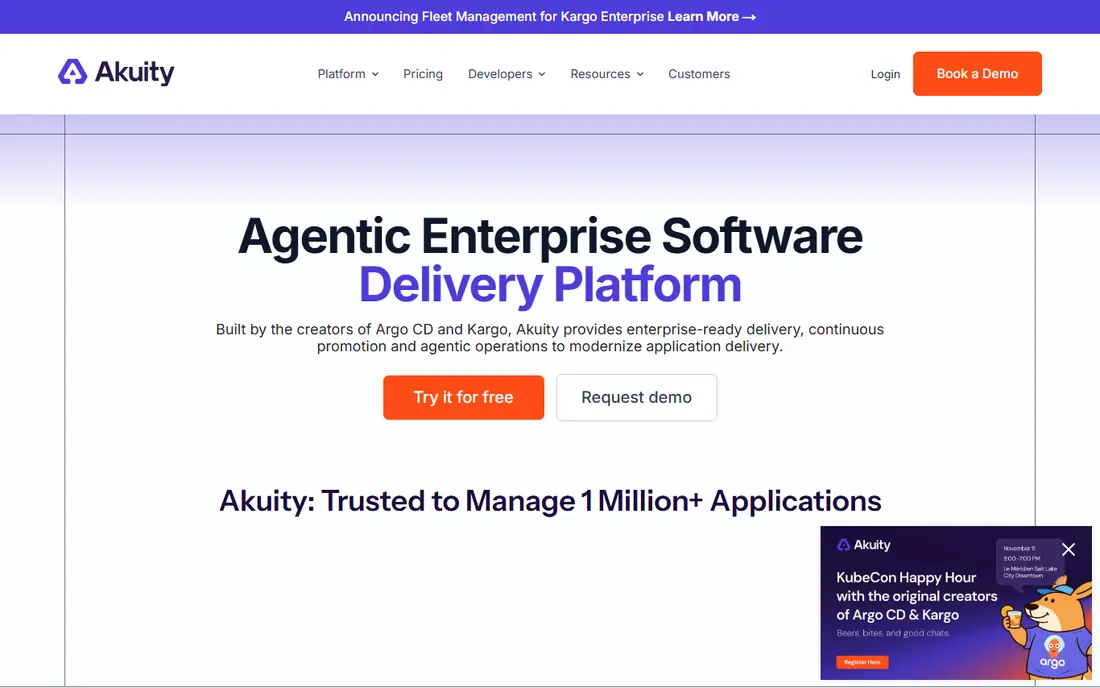
Akuity Platform is built for teams that like Argo CD but do not want to operate its control plane themselves. It hosts the control plane and connects to clusters through an agent, so teams keep Argo semantics, Application manifests, and sync behaviour while handing day to day operation to a managed service. That can shorten setup time and reduce on call load for small platform teams.
The trade off is dependence on a vendor for a critical path. Teams should check data residency, availability terms, and how promotion and multi cluster work fits their model. If your team already runs Argo CD well, the benefit may be modest. If operating Argo CD is the pain point, Akuity is one of the cleanest ways to keep Argo while removing that burden.
- Hosted Argo control plane
- Built by Argo contributors
- Agent based cluster access
- Adds a vendor to the deploy path
- Pricing is quote based for larger use
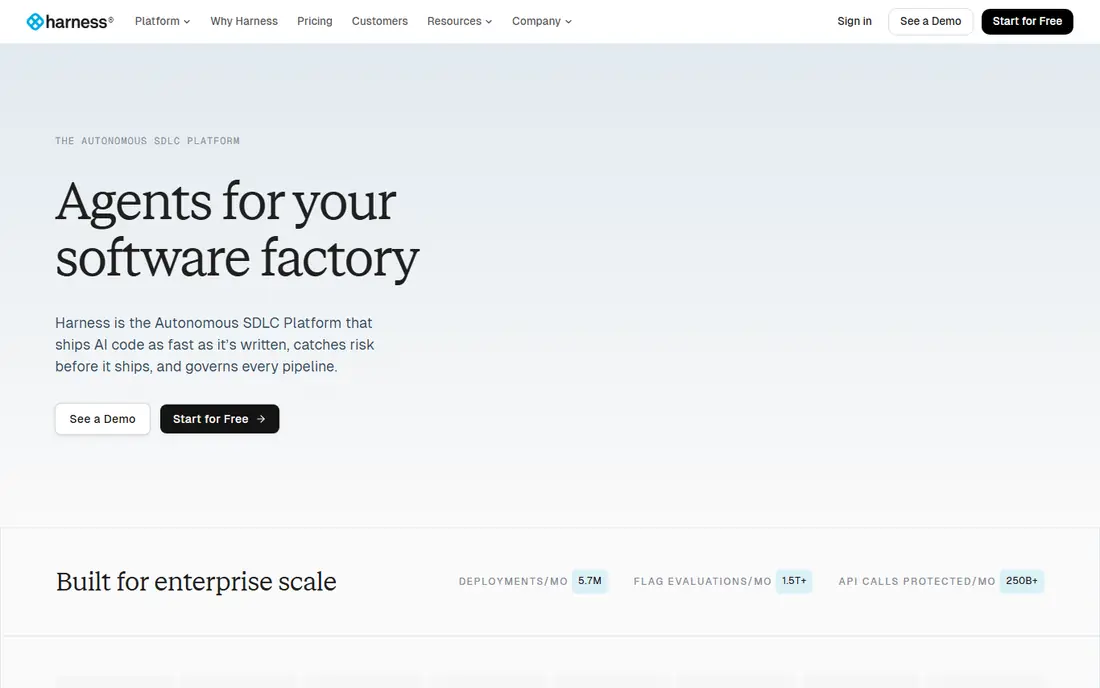
Harness is a delivery platform that covers continuous delivery, feature flags, and related modules, with GitOps built in through Argo CD. That breadth suits enterprises that want pipelines, approvals, progressive rollouts, and policy controls in one place, rather than stitching several tools together. Its verification features can also help teams catch bad deploys earlier.
The cost is complexity and price. Harness is an enterprise platform, and pricing is typically quote based, so small teams may find it more than they need. It also asks teams to adopt its pipeline model, which is a bigger change than swapping one GitOps controller for another. For large organisations with governance needs, that breadth is often the point.
- Full CD pipelines
- Progressive delivery and verification
- GitOps module included
- Large platform with enterprise pricing
- Smaller teams may find it heavy
Spinnaker is an open source multi cloud delivery platform used for complex pipelines across clouds and Kubernetes clusters. It supports canary analysis, manual judgements, and staged rollouts, which helps teams that deploy high risk services to many environments. Its multi cloud roots still matter for organisations that are not Kubernetes only.
Operating Spinnaker is a serious commitment. Installation, upgrades, and tuning need experienced staff, and the user interface is less polished than newer tools. Teams should weigh that operational cost against the licence saving. Spinnaker fits best where multi cloud delivery and advanced rollout control justify a dedicated platform team.
- Multi cloud pipelines
- Mature progressive delivery
- Strong for large fleets
- Complex to install and operate
- Interface feels dated to some teams
Octopus Deploy focuses on release orchestration, with environments, approvals, variables, and audit trails that operations teams can follow easily. It works across virtual machines, containers, and Kubernetes, which helps organisations with mixed infrastructure. Its free tier also lets small teams try the core model before paying.
It is not GitOps native in the same way as Argo CD. Teams that want Git as the single source of truth for cluster state will need to combine Octopus with GitOps tooling or accept a different model. For teams whose main problem is controlled promotion across environments, Octopus is often easier to explain to non engineering stakeholders than a pure GitOps controller.
- Clear environments and approvals
- Strong release management
- Cloud and self hosted options
- Less GitOps native than Argo CD or Flux
- Kubernetes work needs extra setup
Codefresh provides GitOps built on Argo CD and Argo Rollouts, with a managed hosted runtime option, plus CI in the wider platform. That combination appeals to teams that want Argo semantics without running the runtime, and that also want build pipelines close to delivery. It is a practical middle path between self hosted Argo CD and a full enterprise suite.
Codefresh was acquired by Octopus Deploy, so teams should confirm current packaging and roadmap before a long term commitment. Pricing is also sales led for larger use, which makes budgeting less transparent than open source tools. If the managed Argo model fits, Codefresh remains a credible Argo CD alternative in 2026.
- Managed Argo runtime
- CI plus GitOps in one platform
- Hosted option available
- Now part of Octopus Deploy, so roadmap needs checking
- Pricing is sales led
Rancher Fleet is a GitOps controller designed to manage large numbers of Kubernetes clusters from Git. It uses bundles to group resources and target clusters by labels, which makes fleet wide rollouts and per cluster overrides easier to manage than handling each cluster by hand. Teams already running Rancher often find Fleet the simplest fleet option.
For a single cluster with a need for a detailed application dashboard, Argo CD or a managed Argo platform may feel richer. Fleet is a fleet tool first, and its interface reflects that. If your problem is dozens or hundreds of clusters, Fleet deserves a place at the top of the shortlist.
- Built for many clusters
- Git based bundle delivery
- Natural fit inside Rancher
- Less rich per application UI than Argo CD
- Best value inside Rancher
GitLab CI/CD covers source control, pipelines, and deployment in one platform, with a Kubernetes agent for cluster work and GitOps style workflows through integrations such as Flux. That breadth helps teams that want fewer vendors and a single place for code review, builds, and releases. The free tier also makes it easy to start small.
The trade off is focus. GitLab is a full DevOps platform, so adopting it only for GitOps may be more than a team needs. Teams that already use GitLab for code and CI get the most value, because delivery then fits a workflow they already know. Teams that only need a GitOps controller should compare Flux and managed Argo options first.
- Code, CI, and CD in one platform
- Agent based Kubernetes deploys
- Free tier available
- GitOps is one feature, not the whole product
- Large platform to adopt fully
Jenkins remains one of the most flexible automation servers, with pipelines that can build, test, and deploy to Kubernetes through plugins and scripts. Its plugin ecosystem covers almost every tool a team might already use, and it runs on premises or in the cloud. For teams with long Jenkins history, extending it to Kubernetes delivery can be cheaper than a full platform change.
Jenkins is not GitOps native, and a GitOps style workflow needs deliberate design, such as Git triggered pipelines and declarative manifests. Maintenance also grows with plugin count, so teams need upgrade discipline. Jenkins fits teams that value flexibility and already operate it well, rather than teams looking for a turnkey GitOps dashboard.
- Huge plugin ecosystem
- Flexible pipelines
- Runs almost anywhere
- Needs care to maintain at scale
- GitOps needs plugins and discipline
How we picked these
We compared official documentation, pricing pages, and project information for tools that are actively maintained in October 2026 and that can deliver Kubernetes applications from Git or through controlled pipelines. We kept a mix of open source controllers, managed Argo platforms, and full delivery suites, so the list reflects real switching reasons rather than only feature overlap. Where pricing was not published, we marked it as See website.
How to choose an Argo CD alternative
Start with how many clusters you run and who operates delivery. A single cluster team with GitOps skills will likely be happy with Flux CD. A team that likes Argo but hates operating it should shortlist Akuity and Codefresh. A large enterprise with approvals, policy, and multi cloud needs should look at Harness, Spinnaker, or Octopus Deploy.
Plan the migration honestly
Switching GitOps tools is more than installing a new controller. Budget time to move Application definitions, sync waves, hooks, secrets handling, SSO, and RBAC, and to retrain the people who carry the deploy pager. Run the new tool beside Argo CD on a non critical cluster first, and compare sync behaviour, rollback steps, and audit output before moving production workloads.
Check UI, approvals, and audit needs
Argo CD users often miss its UI most after switching. If your team relies on a visual sync view, confirm what the replacement offers before you commit. Also check approval workflows, environment promotion, and audit logs, because those features matter more in production than a demo of a simple sync. A tool that fits engineers but frustrates release managers will create friction later.
FAQ
What is the best alternative to Argo CD?
Flux CD is the best open source alternative for most Kubernetes teams, while Akuity Platform is the best managed Argo option. Harness and Octopus Deploy suit teams that want a broader delivery platform. The best pick depends on cluster count, staffing, and governance needs.
Is Flux CD better than Argo CD?
Flux CD is lighter and more modular, with strong Helm support, which suits platform teams that prefer CLI and Git driven work. Argo CD offers a richer built in UI and a different application model. Neither is better in every case, so test both on a real cluster before choosing.
Can I get managed Argo CD?
Yes. Akuity Platform and Codefresh both offer managed Argo runtimes, so you can keep Argo semantics without operating the control plane yourself. Check pricing, support terms, and data residency before committing to a managed path.
Do Argo CD alternatives support Helm and Kustomize?
Most do, including Flux CD, Akuity, Codefresh, and Rancher Fleet, though the exact workflow differs. Confirm Helm chart handling, value overrides, and Kustomize support for your packaging style during a trial.
How hard is it to migrate from Argo CD?
Migration effort depends on how much you rely on Argo specific features such as ApplicationSets, sync waves, and resource hooks. Simple applications move quickly, while complex fleets need careful planning. Run a pilot on a non critical cluster and keep Argo CD running until the new tool proves itself.